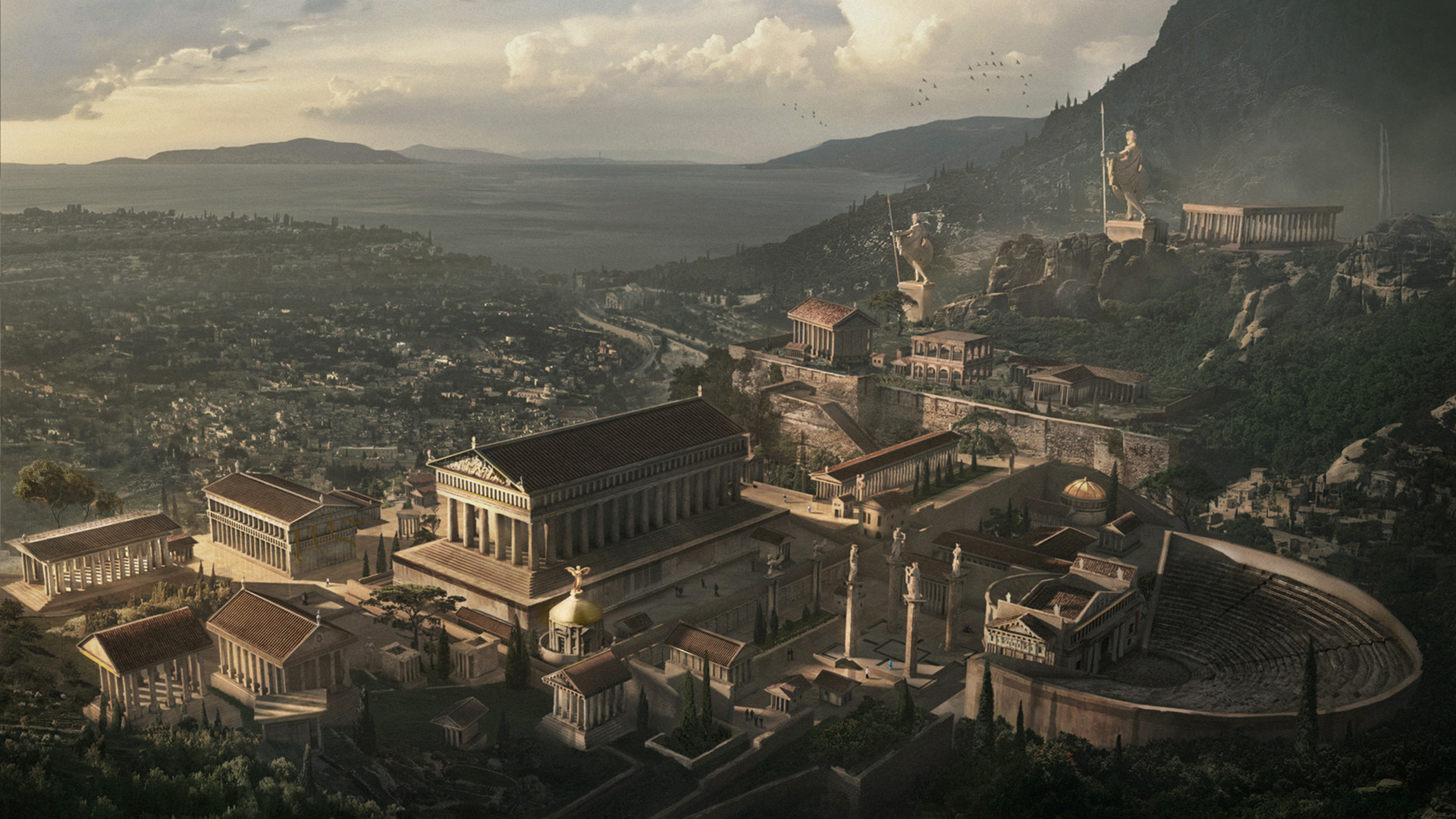
Delphi was the spiritual heart of the ancient Greek world. Perched on the slopes of Mount Parnassus, it was famously known as the Omphalos (the “Navel of the Earth”). People from across the Mediterranean—from commoners to kings—traveled here to consult the priestess of Apollo, the Pythia, on matters of war, politics, and fate.
As a UNESCO World Heritage site and the “Navel of the Ancient World,” this is the undisputed highlight of the region.
The Archaeological Site of Delphi: Walk the Sacred Way to see the Temple of Apollo, the remarkably well-preserved Ancient Theatre, and the Stadium where the Pythian Games were held.
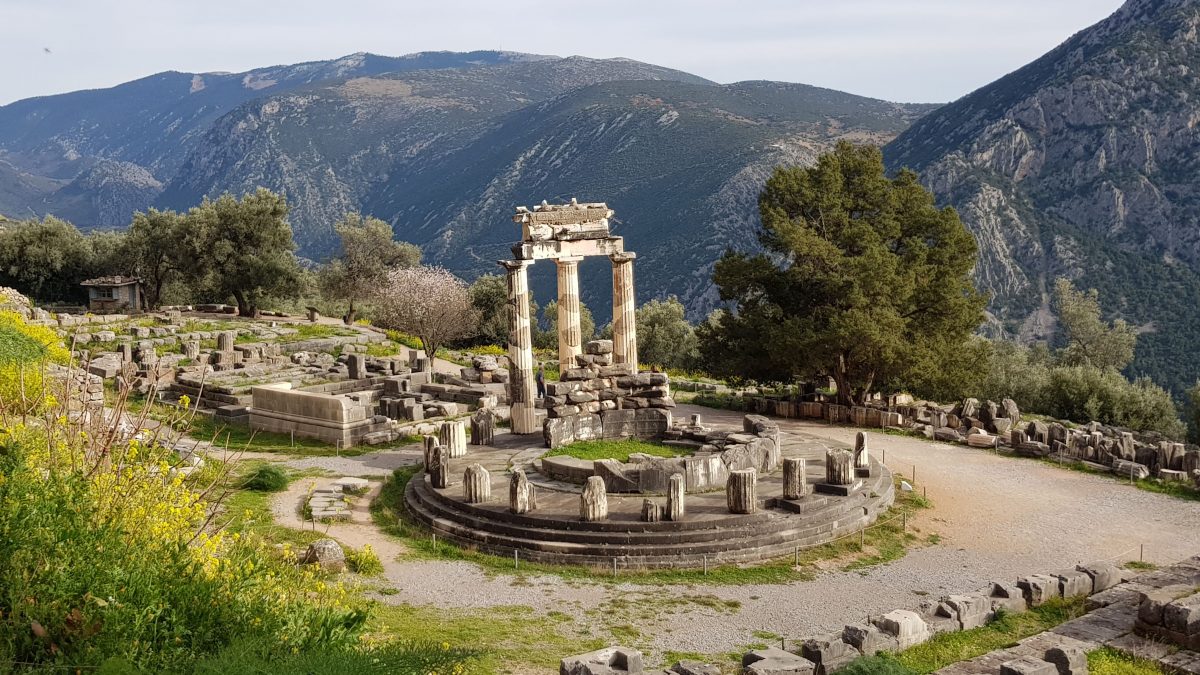
The Tholos of Athena Pronaia: Located just below the main site at Marmaria, this circular structure is one of the most photographed monuments in Greece.
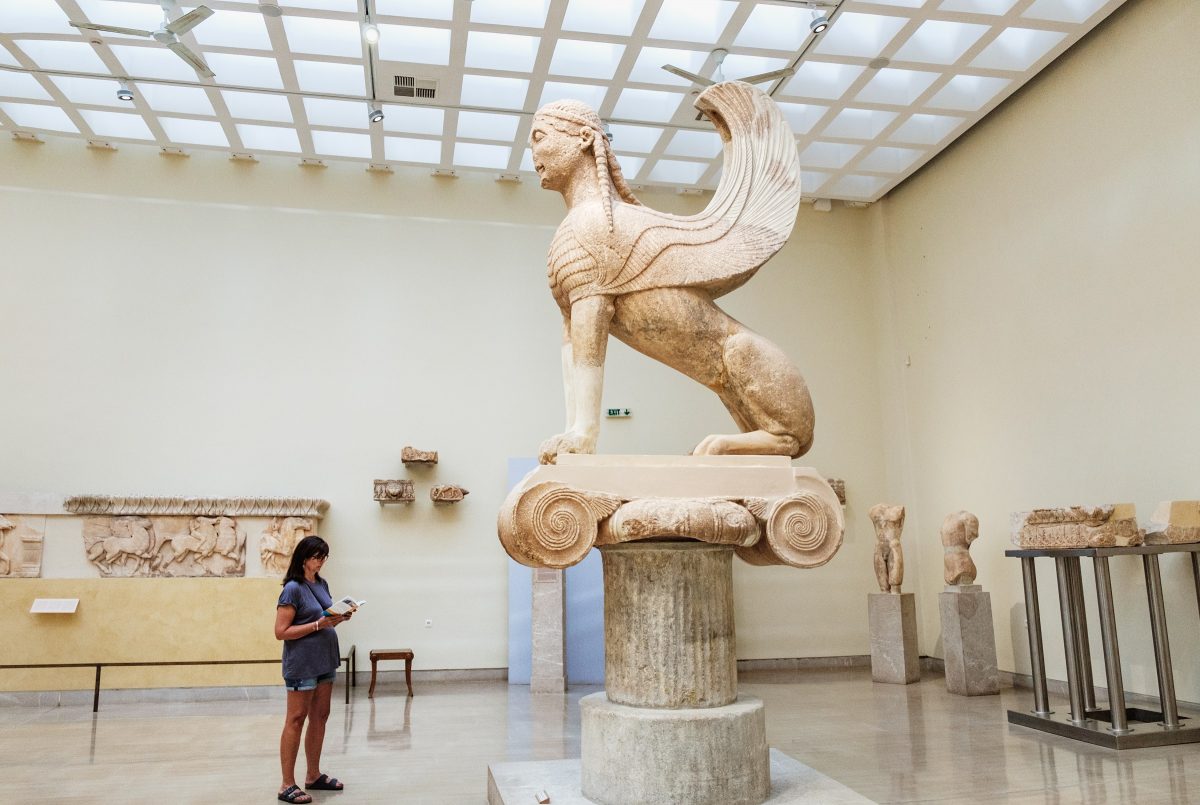
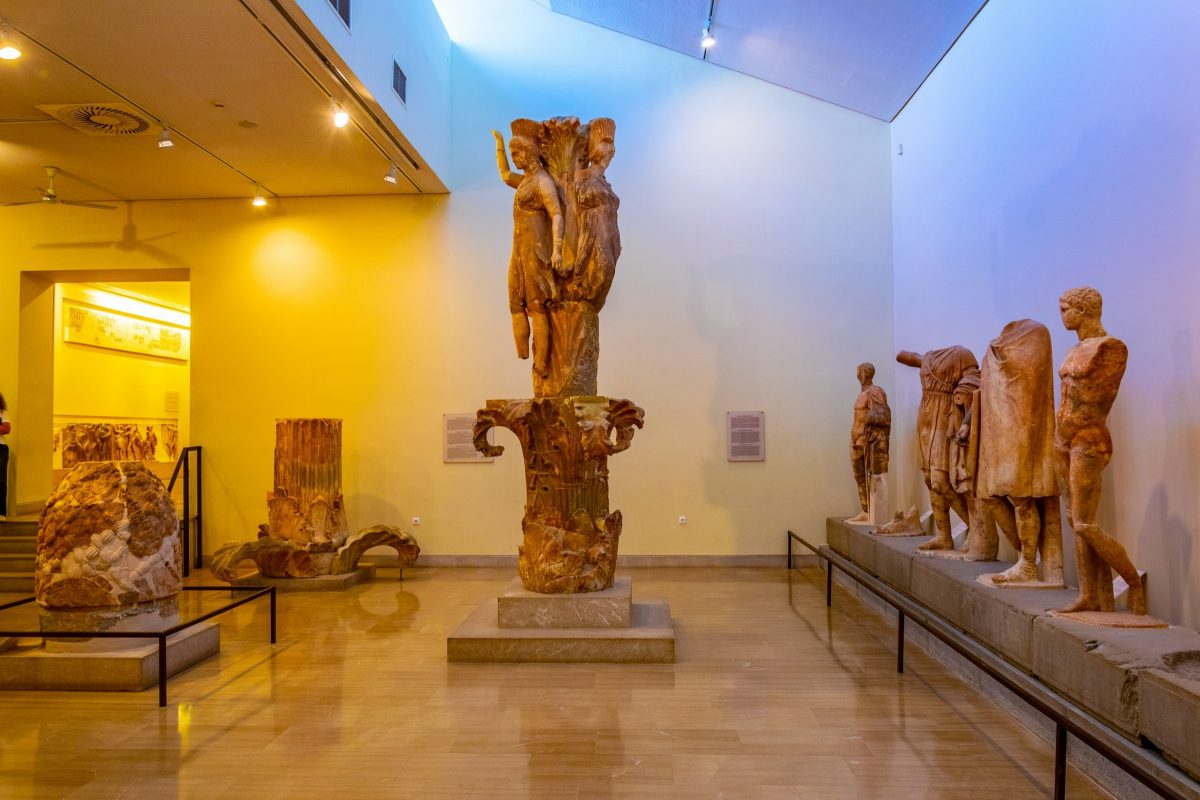
Delphi Archaeological Museum: Home to the world-famous Charioteer of Delphi, the Sphinx of Naxos, and the Twin Kouroi.
The Castalian Spring: The sacred spring where the Pythia (the Oracle) and pilgrims would purify themselves before entering the temple.
Delphi - Sphinx of Naxos
Delphi - column with three dancers
🏛️ The Sanctuary of Apollo (The Main Site)
This is the core of the archaeological park, where the most significant religious activities took place.
The Sacred Way: The main uphill path through the sanctuary, once lined with hundreds of statues and monuments dedicated by various city-states to show off their wealth and gratitude.
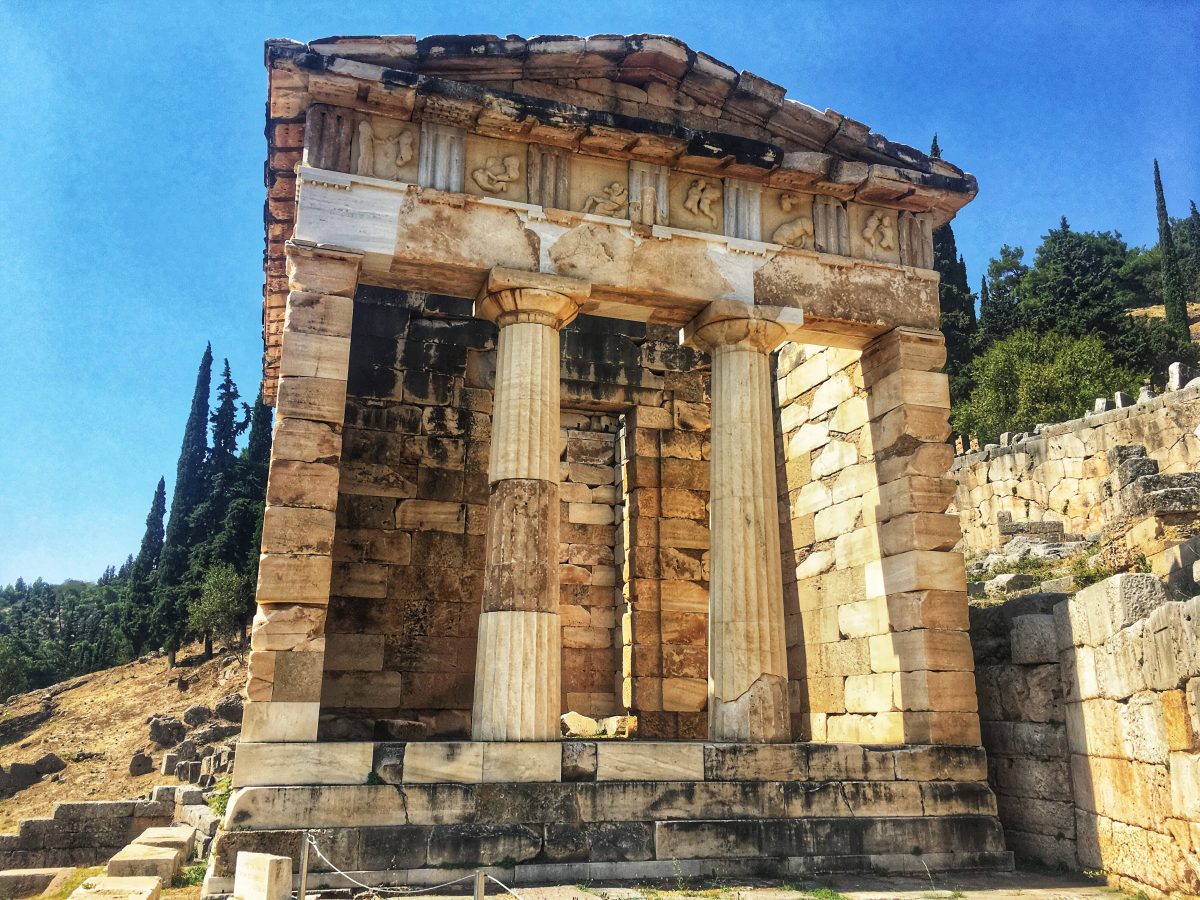
The Athenian Treasury: A beautifully reconstructed Doric building. It housed the trophies and offerings of Athens (notably from the Battle of Marathon) and is one of the most intact structures on-site.
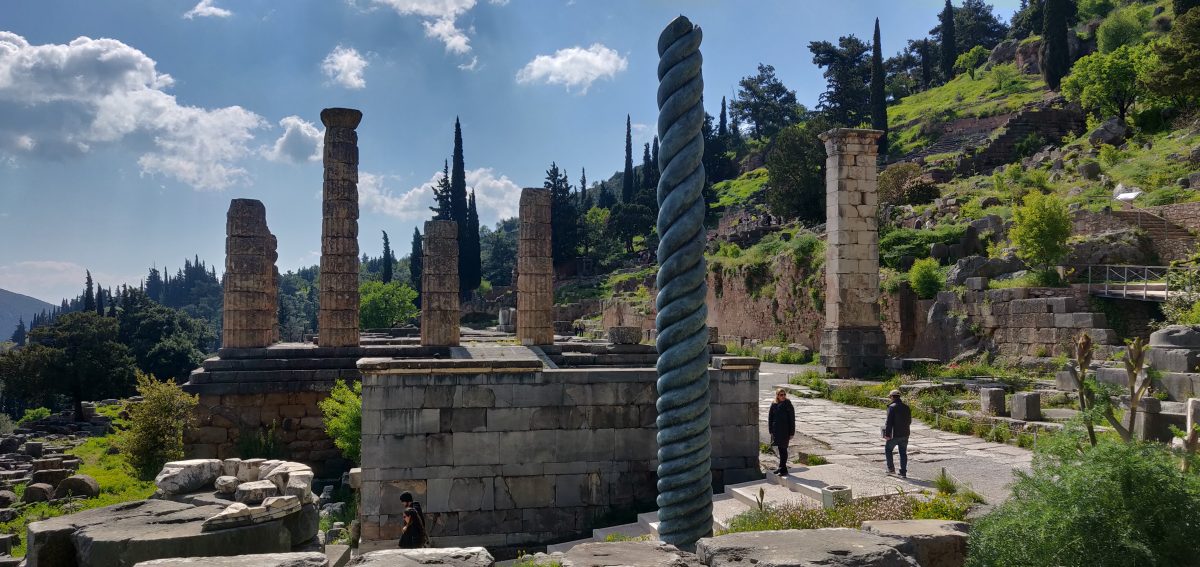
The Temple of Apollo: The heart of Delphi. While only a few columns stand today, this was the home of the Oracle. Deep inside was the Adyton, the restricted inner chamber where the Pythia delivered her prophecies.
The Stoa of the Athenians: An open-air portico that housed naval trophies captured during the Persian Wars.
The Theater: Located just above the temple, it seated about 5,000 spectators. It hosted the musical and theatrical contests of the Pythian Games and offers a stunning view of the valley below.
🏔️ The Upper & Lower Sites
Delphi is spread across several terraces; the higher you climb, the more “civic” the structures become.
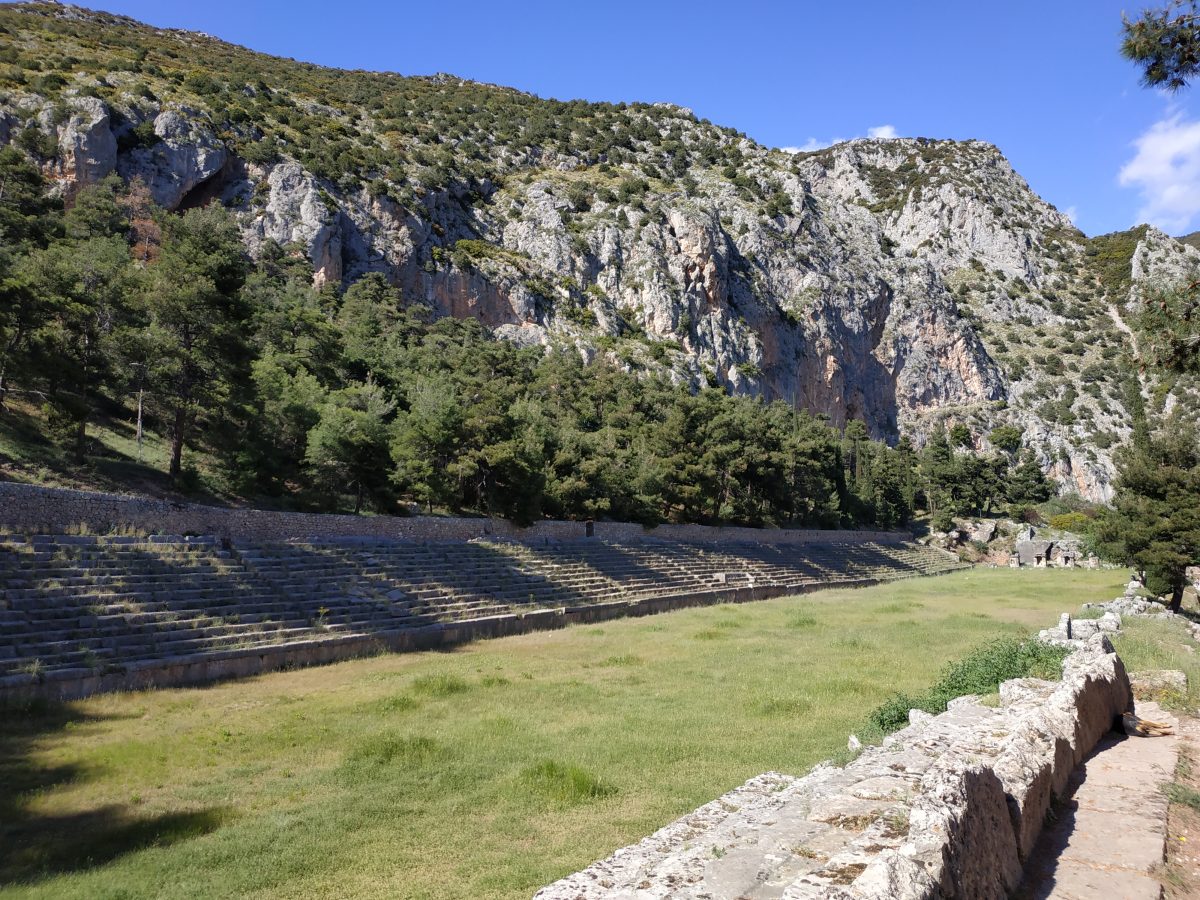
The Stadium: At the highest point of the site, this well-preserved arena hosted the athletic events of the Pythian Games. It could hold roughly 6,500 people.
The Sanctuary of Athena Pronaia (Marmaria): Located “before” the main temple. Its most famous feature is the Tholos, a mysterious circular building with three standing columns that has become the “postcard” image of Delphi.
The Gymnasium: A complex where athletes trained for the games, featuring a running track, a wrestling ring (palaestra), and circular baths.
The Castalian Spring: A sacred spring between the two sanctuaries. Every visitor, including the Pythia herself, was required to wash here to purify their soul before entering the Temple of Apollo.
🔮 The Legend & The Legacy
The site’s power wasn’t just in its stone, but in the mysticism that surrounded it.
The Pythia: A local woman chosen to be the voice of Apollo. She sat on a tripod over a fissure in the earth, reportedly inhaling vapors that put her into a trance. Her answers were often cryptic and interpreted into verse by priests.
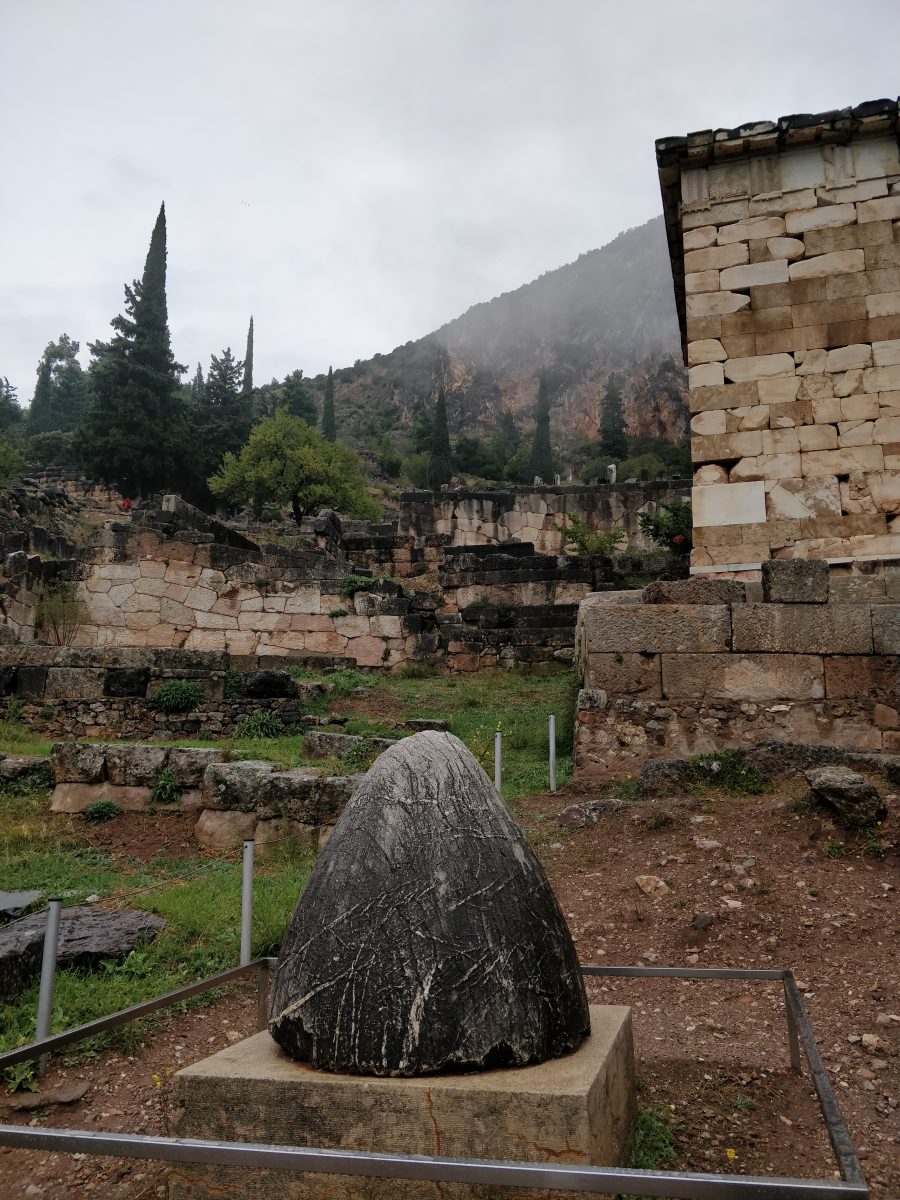
The Omphalos: A stone marking the center of the world. According to myth, Zeus released two eagles from opposite ends of the earth, and they met exactly at this spot.
The Pythian Games: The second most important Panhellenic games after the Olympics, held every four years to honor Apollo’s victory over the serpent Python.
The Delphic Maxims: Famous inscriptions once found at the temple entrance, including “Know Thyself” and “Nothing in Excess.”
🏺 Must-See Museum Highlights
If you’re visiting in 2026, the Delphi Archaeological Museum (located right next to the site) contains the original masterpieces that were once outside.
The Charioteer of Delphi: One of the most famous bronze statues in the world, showing a young driver in incredible detail.
The Sphinx of Naxos: A massive marble creature that once sat atop a 12-meter column.
The Serpent Column (Replica): Commemorating the Greek victory over the Persians; the original bronze column (now in Istanbul) was dedicated here.
Pro Tip: If you’re hiking up to the Stadium, bring water and wear sturdy shoes. It’s a steep climb of about 130 meters from the entrance, but the silence and the view from the top are worth the effort.
Delphi - navel of earth
Delphi - Dome
Delphi was one of the most important sites in Ancient Greece, known throughout the mediterranean world; spectacular museum.