Macedonia, land of Alexander the Great
The region of Macedonia is broken up in three sub-regions:
Western Macedonia, Central Macedonia and Eastern Macedonia.
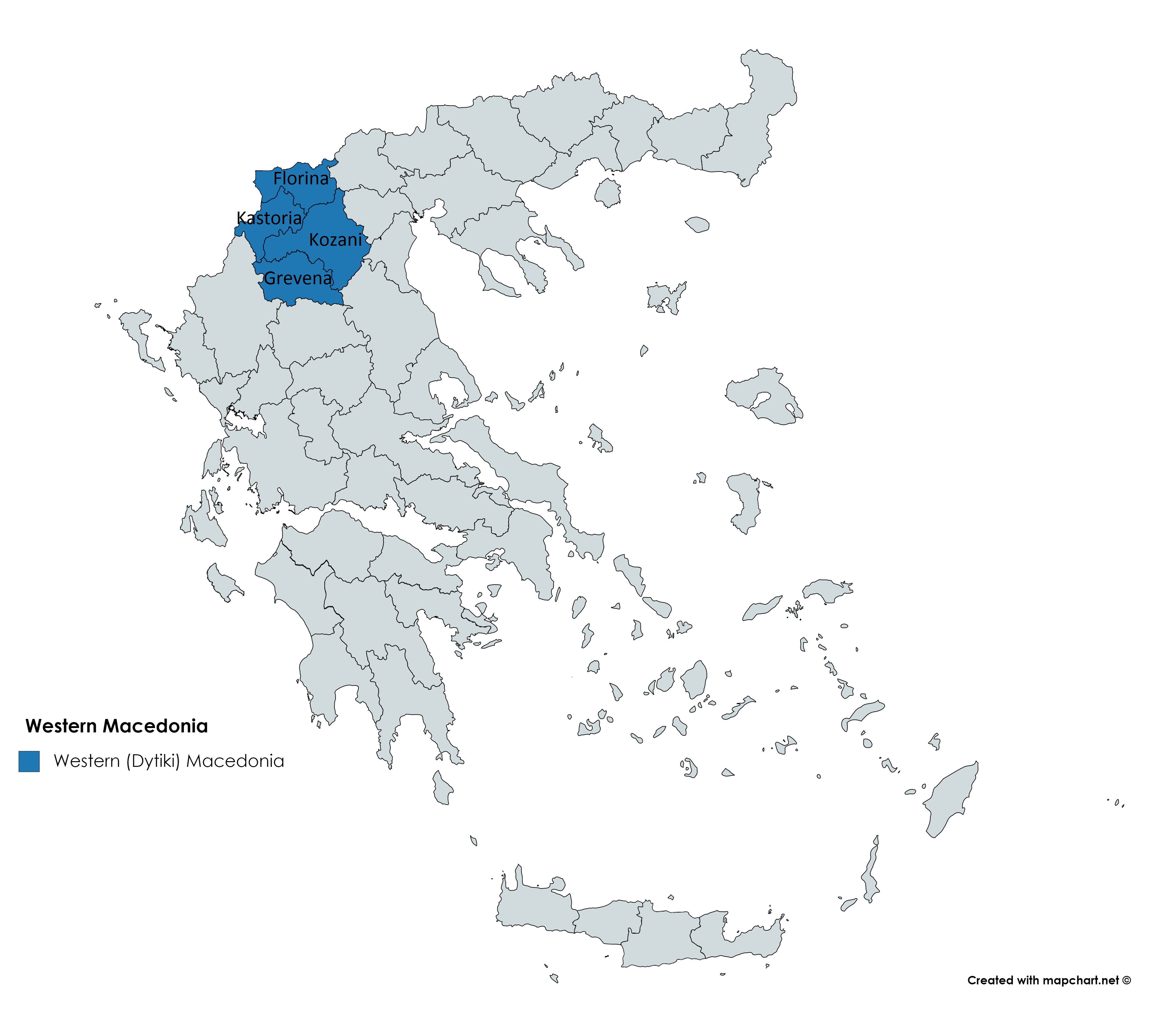
Western Macedonia
We begin our journey from Western Macedonia, encompassing the following prefectures:
Kastoria, Florina, Kozani, and Grevena.
Kastoria
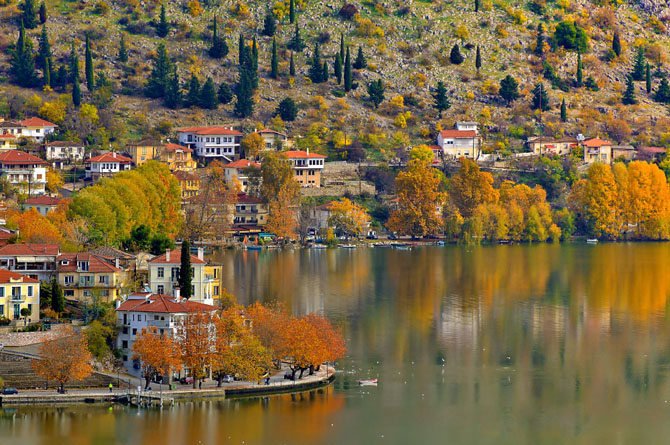
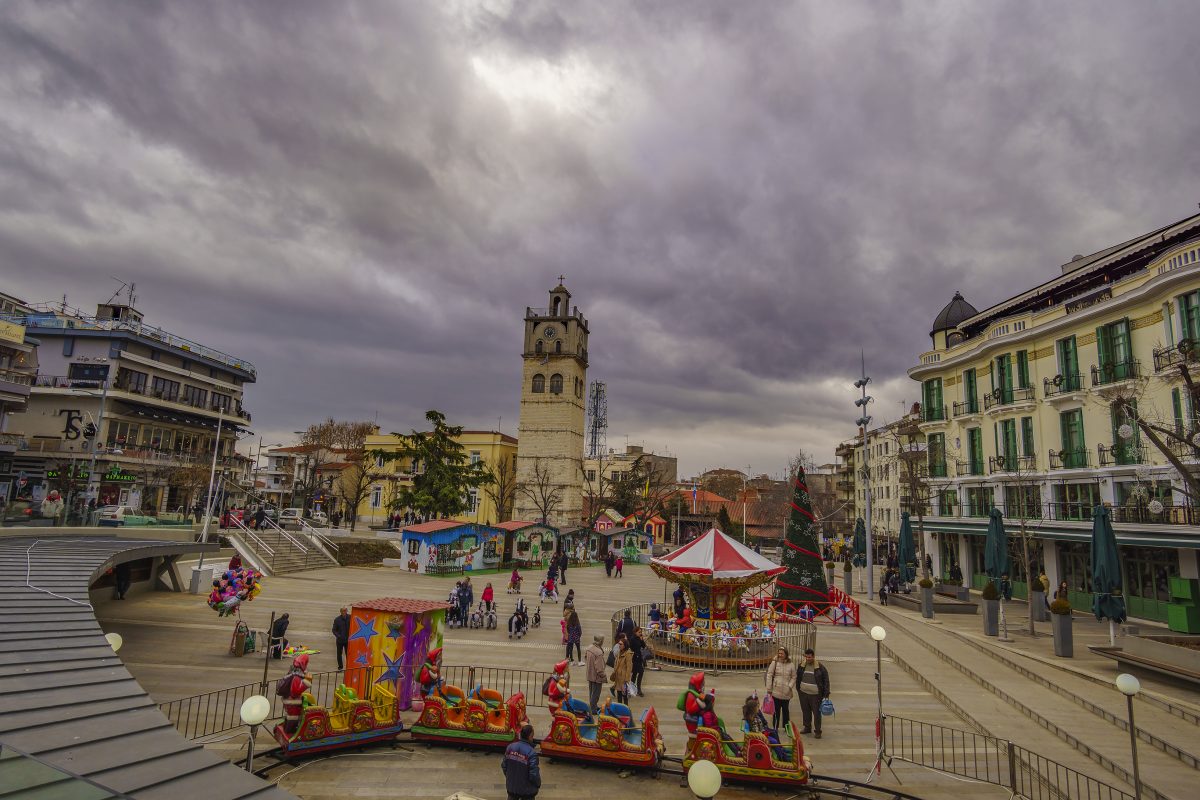
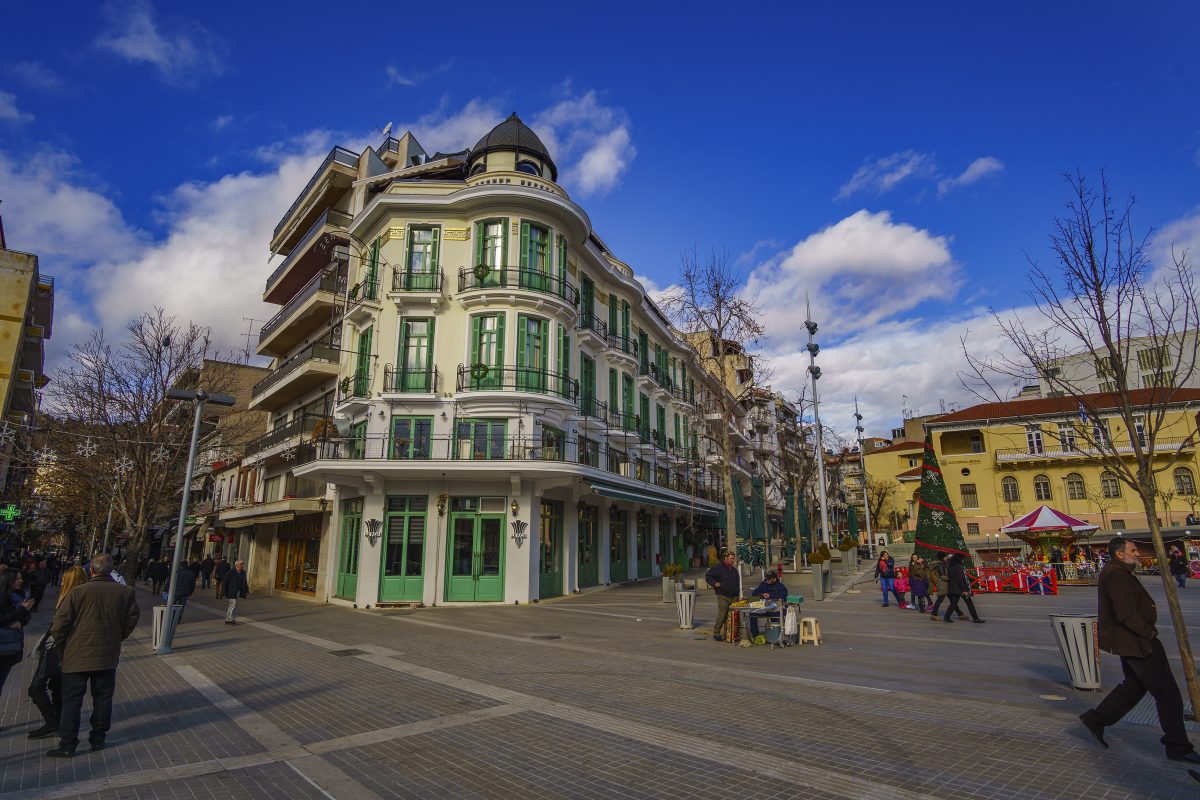
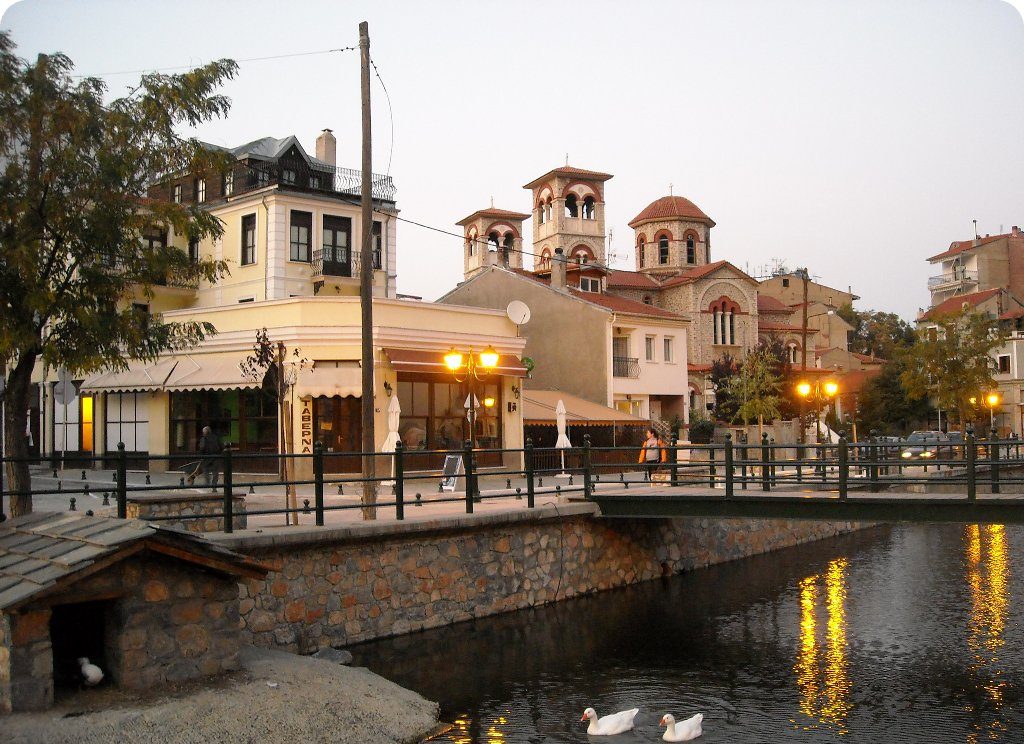
Perched on the edge of a stunning limestone promontory, Kastoria is often described as the “floating” gem of Northern Greece. It is a city where Byzantine history, a world-famous fur-trading legacy, and the tranquil waters of Lake Orestiada blend into a unique, atmospheric landscape.
History & Heritage
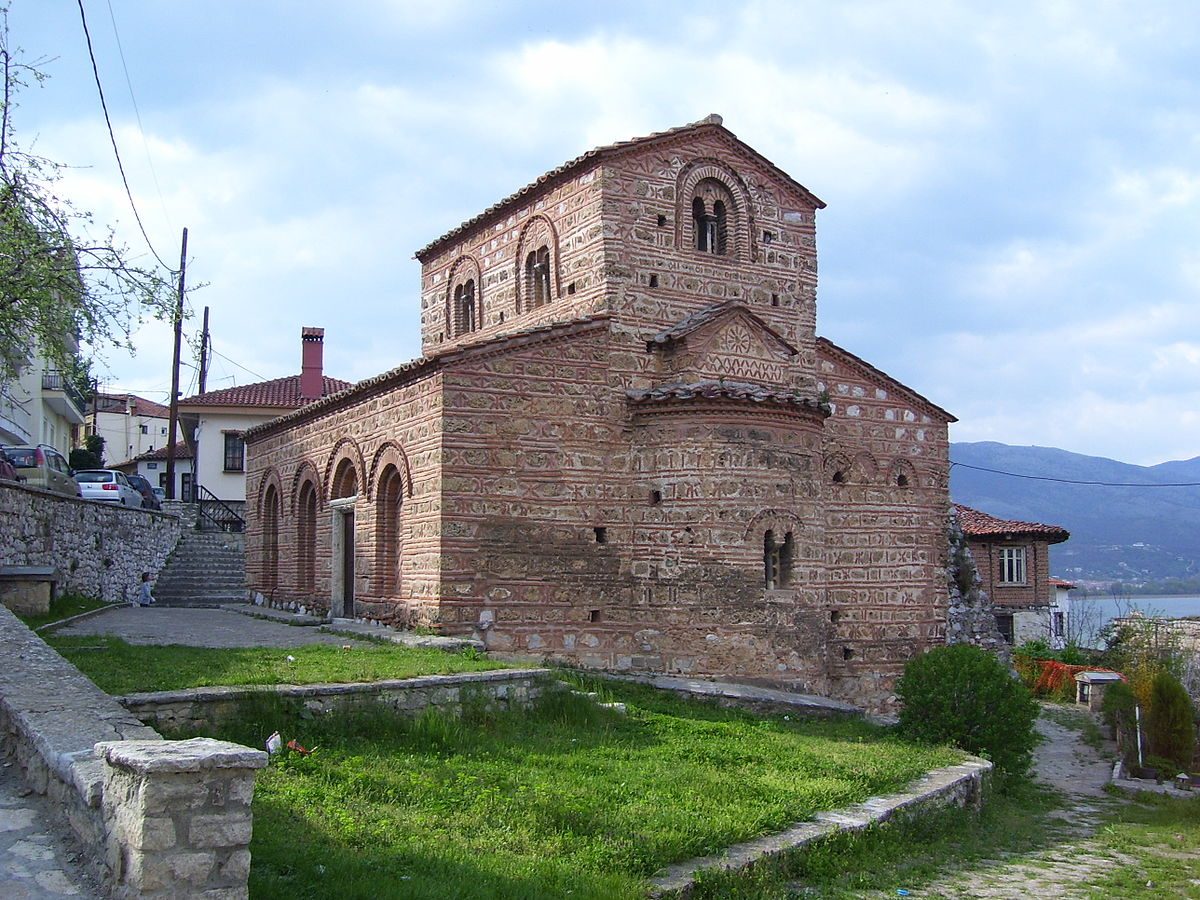
Kastoria is effectively an “open-air museum” of Byzantine and post-Byzantine culture.
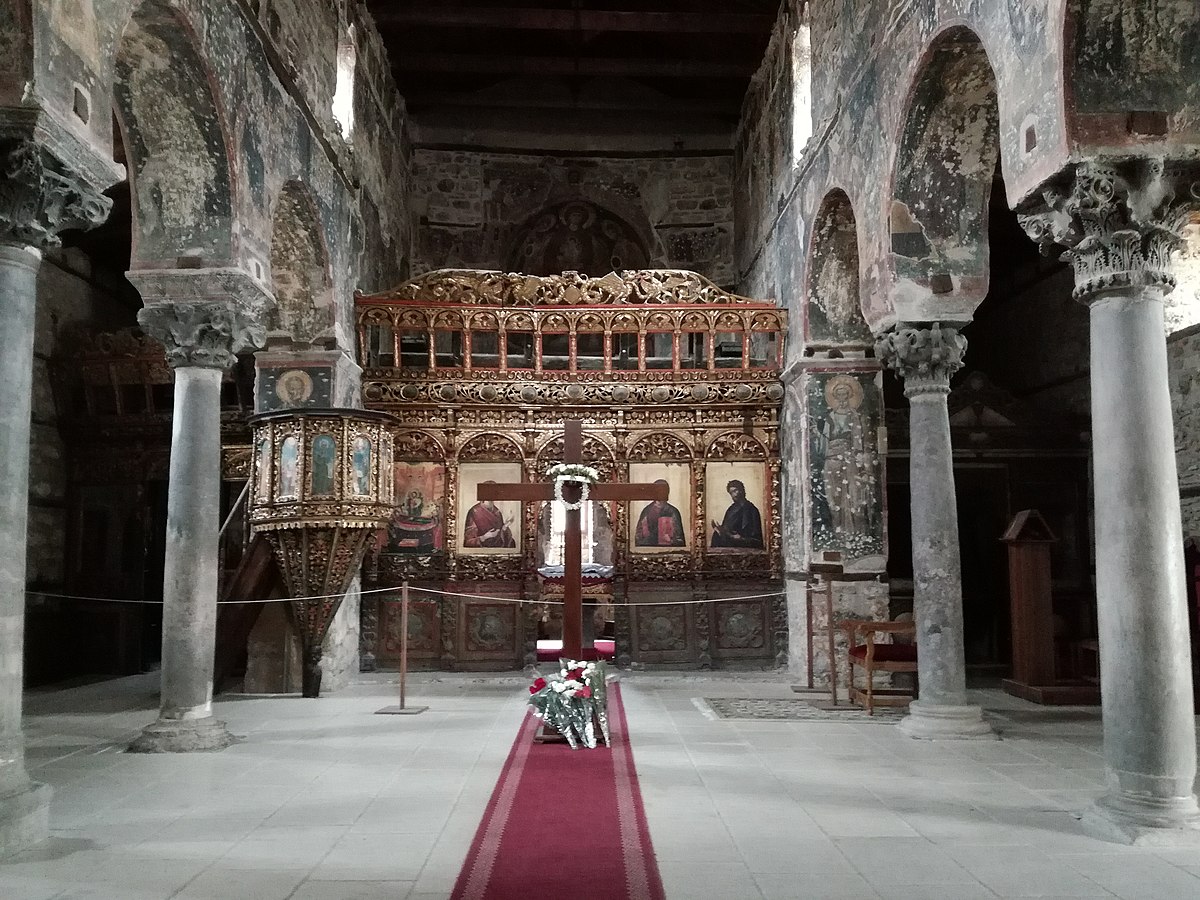
- The 70+ Churches: The city is famous for its incredible density of historic churches. Most date from the 9th to the 19th centuries, featuring rare, well-preserved frescoes.
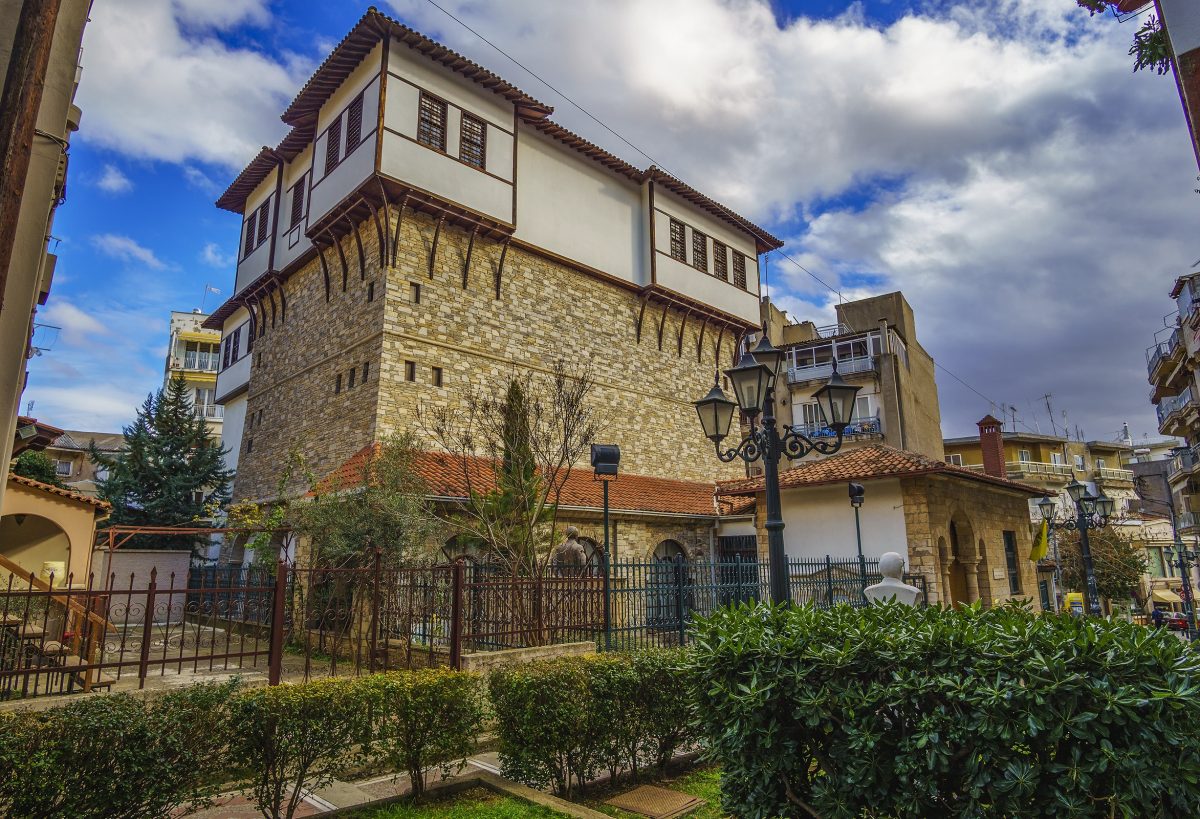
- The Fur Industry: Since the 14th century, Kastoria has been the global epicenter for the fur trade. Wealthy fur merchants built the city’s iconic Archontika (mansions) in the 17th and 18th centuries.
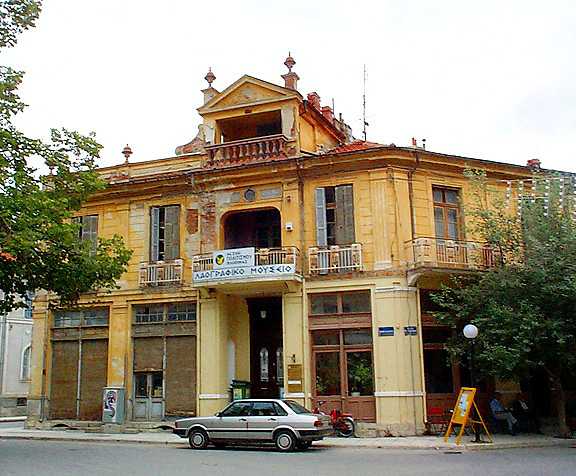
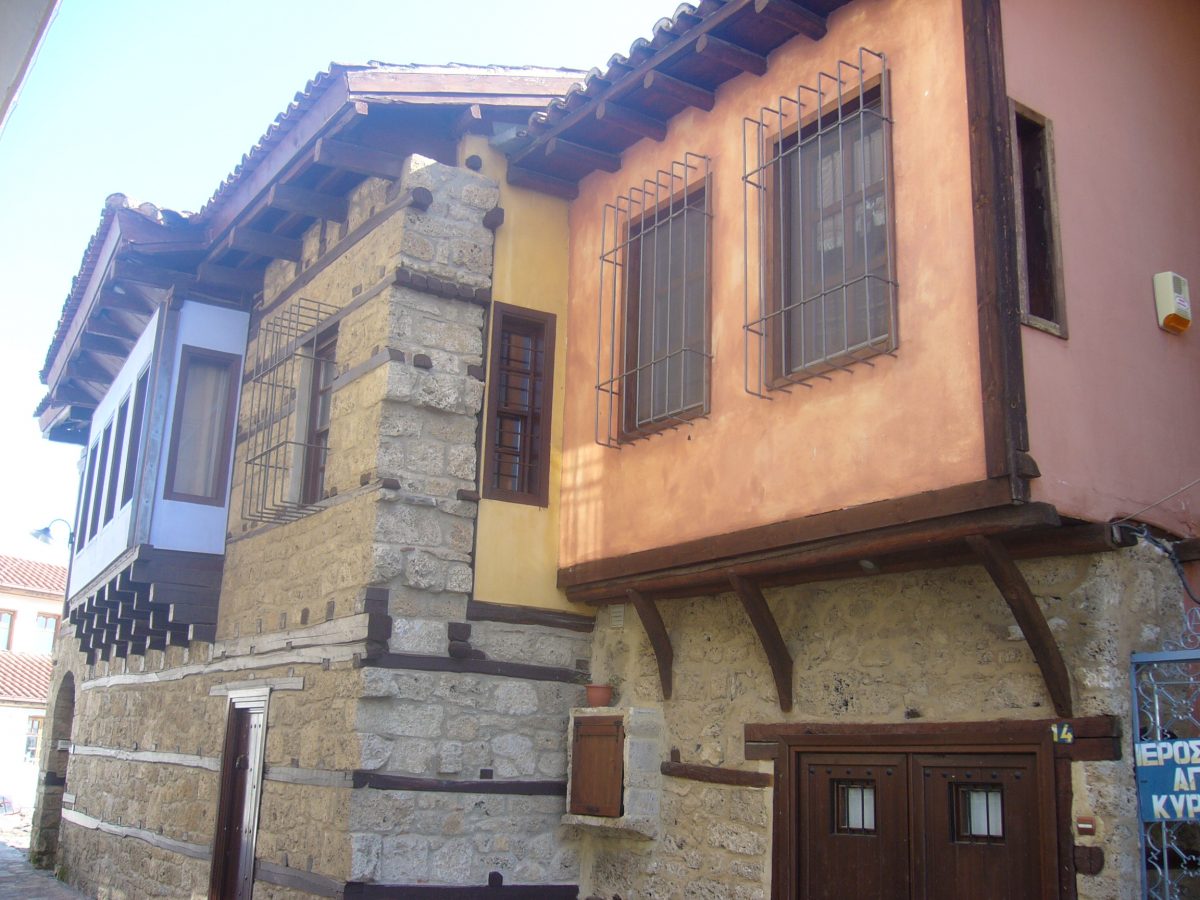
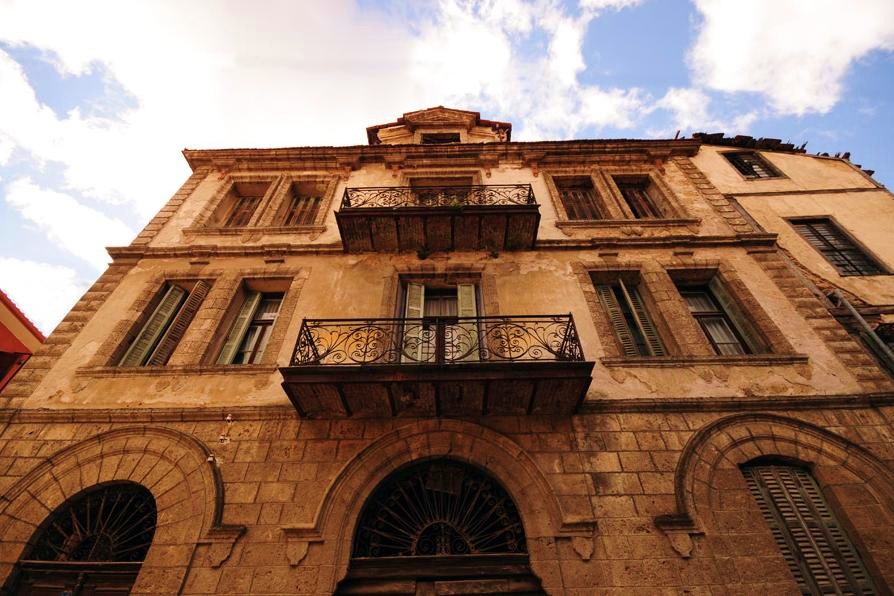
- Old Neighborhoods: Doltso and Apozari are the two oldest districts. Walking through their narrow cobblestone streets, you’ll see majestic three-story stone mansions that represent the peak of Macedonian architecture.
Natural Landmarks
The city’s identity is inseparable from its natural surroundings.
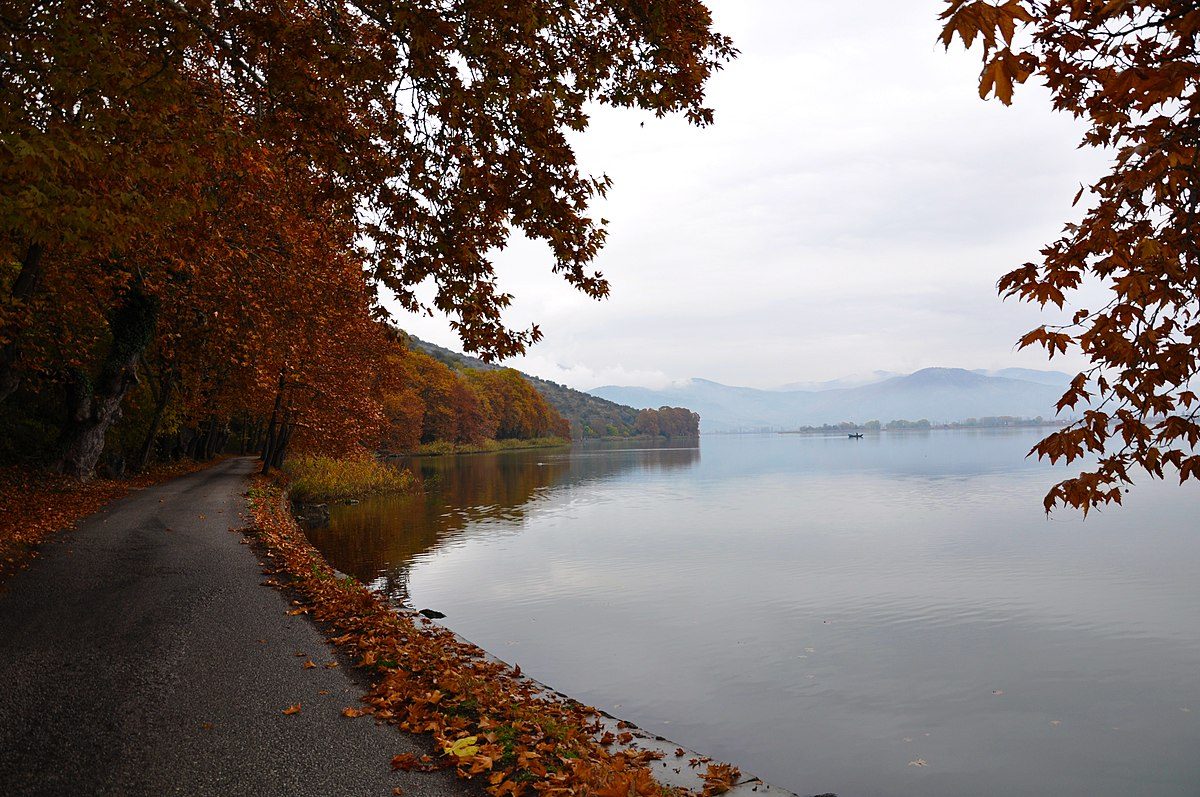
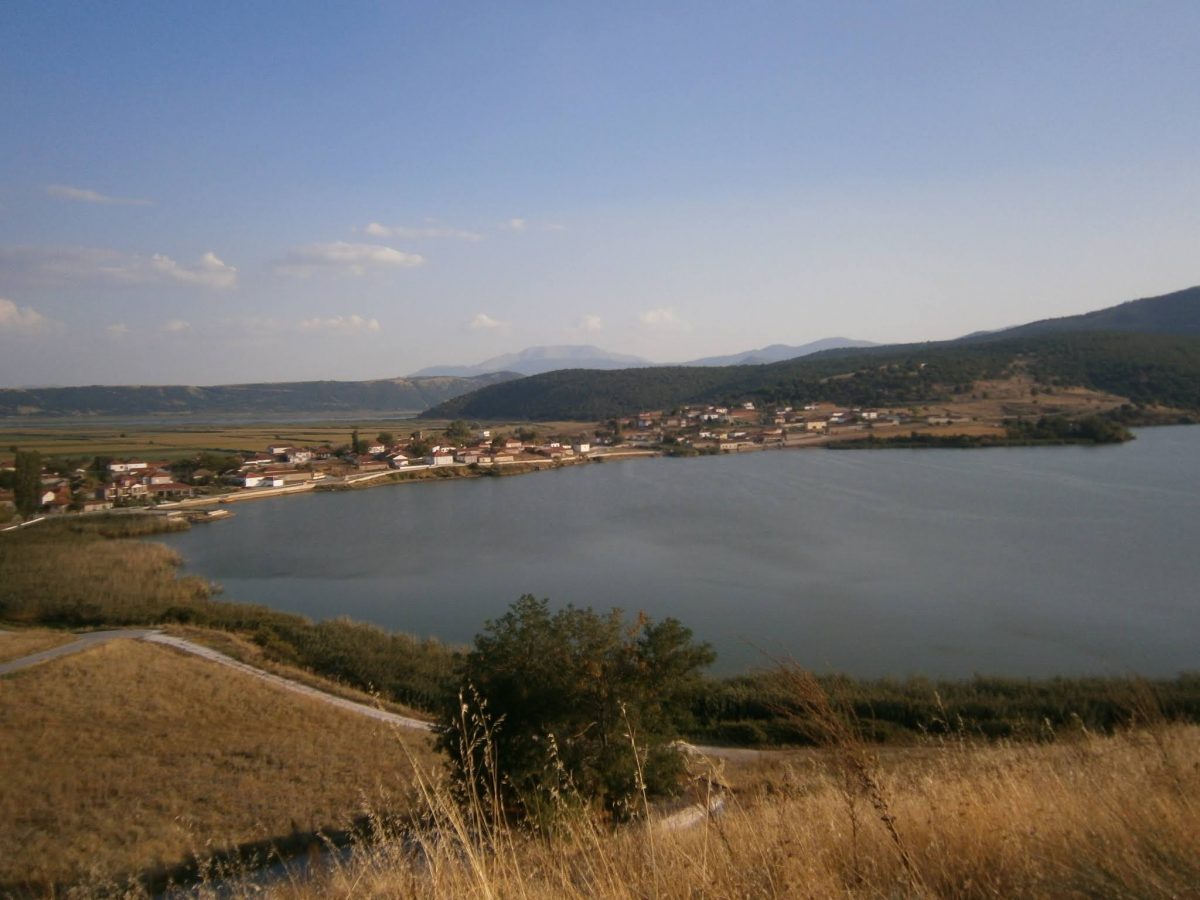
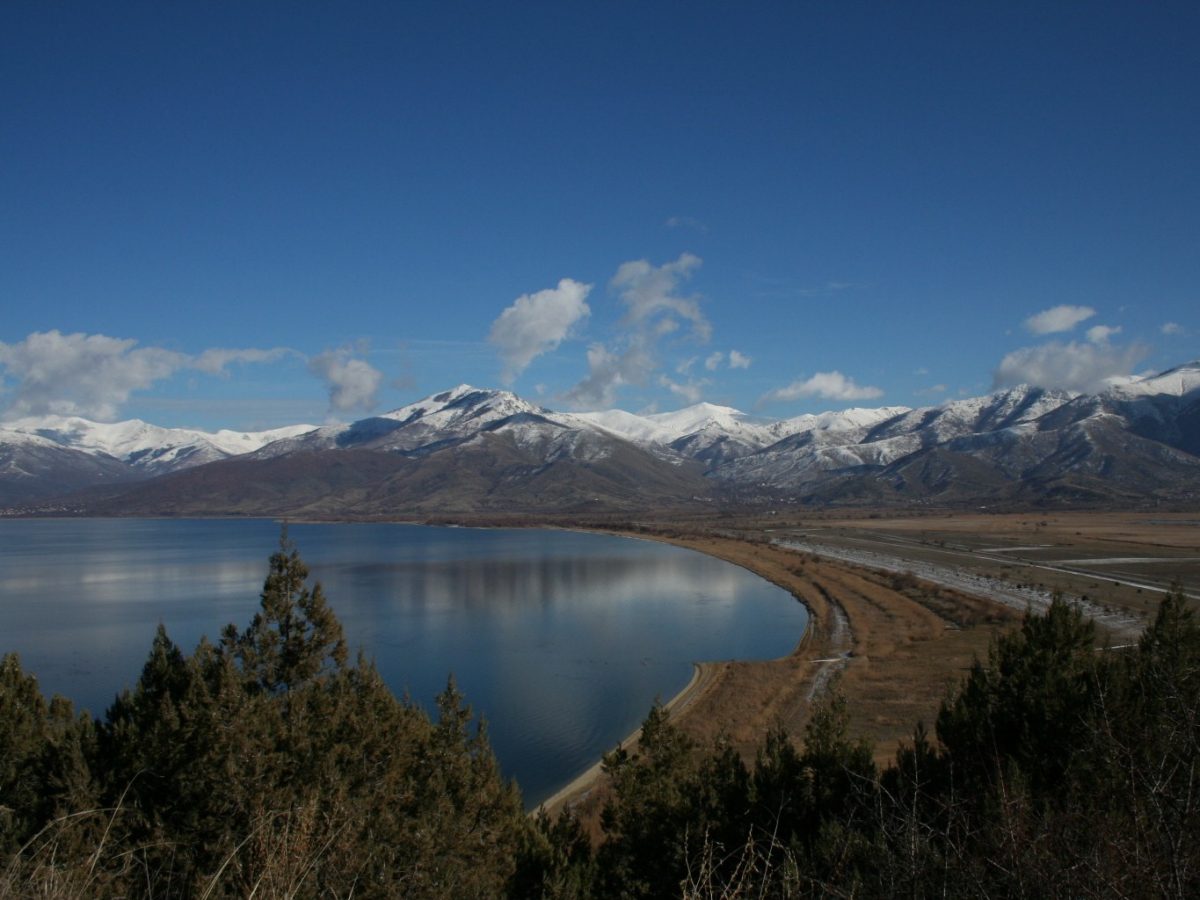
- Lake Orestiada: This high-altitude lake (630m) is a protected Natura 2000 site. It’s home to over 200 species of birds, including swans, pelicans, and herons. A 7km drive (or walk) around the lakeside peninsula is the quintessential Kastoria experience.
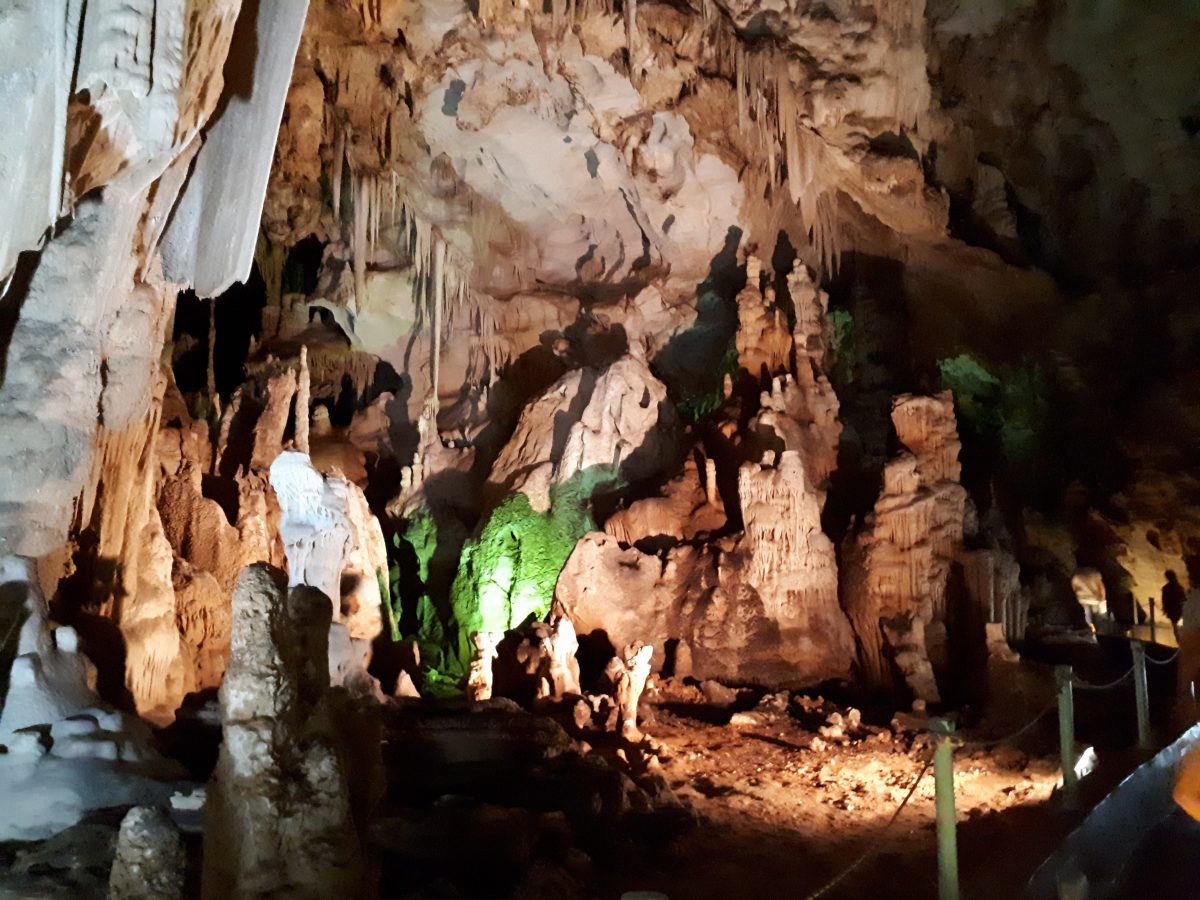
- Dragon’s Cave (Spilia tou Drakou): Located on the lake’s edge, this cave features seven underground lakes and ten chambers with impressive stalactites and stalagmites. It earned its name from a legend about a gold-guarding dragon.
- Dispilio Neolithic Settlement: Just outside the city, you can visit a reconstruction of a lakeside pile-dwelling settlement dating back to roughly 5,000 BC, one of the oldest in Europe.
Economy & Modern Life
While historically dependent on fur, Kastoria is modernizing and diversifying:
- The Fur Trade Decline: Though it remains an international hub for fur (hosting a major annual international exhibition), global shifts and environmental concerns have led the city to lean more heavily into eco-tourism and agri-food.
- Local Products: The region is famous for its “Gigantes” (giant beans), high-quality apples, and freshwater fish.
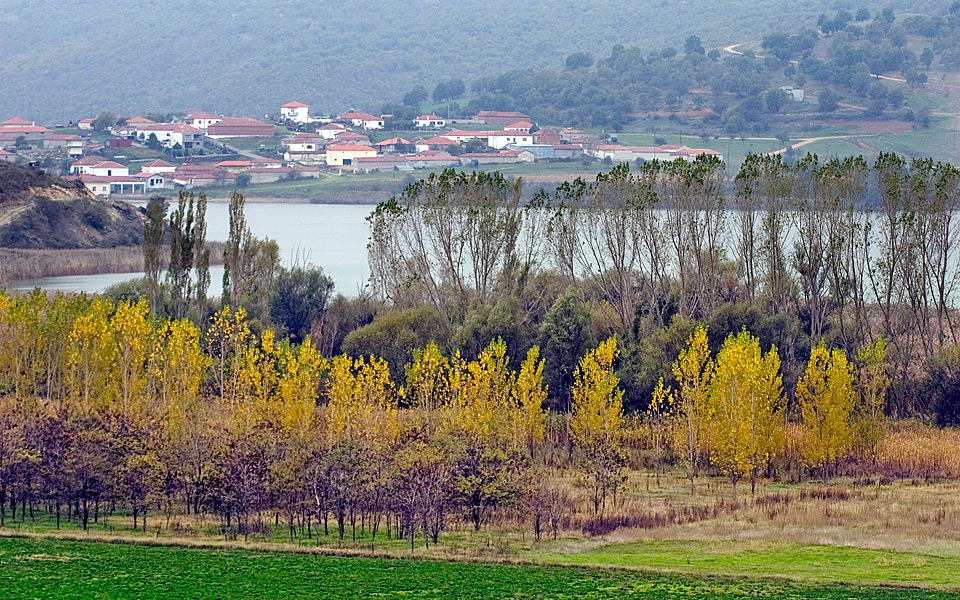
- Vibe: It is a year-round destination. In winter, it is cozy and often snow-covered; in autumn, the lake is framed by brilliant foliage; and in summer, it offers a cool mountain escape from the Greek heat.
Kastoria is a mood. It’s where Byzantine history meets a misty lakeside vibe that feels more Central European than “island hopping” Greece. If you’re short on time, here are the non-negotiables to hit.
The Lakeside Essentials
- Lake Orestiada (The Gyrolimni): Don’t just look at it—walk it. The “small circle” of the lake (about 7km) is the town’s heartbeat. It’s lined with ancient plane trees, swans that know they’re beautiful, and local fishermen in traditional “karavia” boats.
- Dragon’s Cave (Spilaio tou Drakou): Located right on the lakeside road, this cave features seven underground lakes and ten “rooms” of stalactites. Legend says a dragon guarded a gold mine here, but now it’s just very cool, very damp, and very impressive.
- Monastery of Panagia Mavriotissa: A 12th-century gem sitting right at the edge of the water. The external frescoes (though weathered by time) are hauntingly beautiful, and the massive centuries-old plane tree outside is a local celebrity.
The “Old Soul” Neighborhoods
- Doltso District: This is the Kastoria you see on postcards. It’s the old southern quarter filled with Archontika—massive, fortress-like fur-traders’ mansions from the 17th and 18th centuries.
- Apozari District: The northern counterpart to Doltso. It’s quieter, slightly more crumbled but equally atmospheric, with pebble-stone alleys and direct lake access.
History & Culture Bites
- Panagia Koumbelidiki: This is the city’s mascot. It’s a tiny, quirky 9th-century church with a unique cylindrical dome (the “koumbe”) that stands out against the more modern surroundings.
- Byzantine Museum: Kastoria has over 60 Byzantine churches, but since most are locked, this museum is your “cheat sheet.” It houses one of the most important collections of Byzantine icons in the world.
- Kastoria Aquarium: It’s the largest freshwater aquarium in the Balkans. It focuses specifically on the species living in the lake and the nearby Aliakmonas River—great if you want to see what’s swimming under those fishing boats.
Just Outside Town
- Dispilio Prehistoric Lake Settlement: A 10-minute drive away. It’s a faithful reconstruction of a Neolithic village built on wooden stilts over the water. It feels a bit like stepping into a prehistoric Greek version of The Flintstones, but with better research.
Beyond the picturesque lakeside city of Kastoria, the surrounding prefecture offers a rugged mix of prehistoric history, eerie “ghost” villages, and alpine landscapes.
Here are the quick must-sees in the Kastoria regional unit:
1. Dispilio Neolithic Lakeside Settlement
Located just 7km southeast of the city, this is one of the most important prehistoric sites in Europe. It features a faithful recreation of a lakeside village from 5600 BCE, with huts built on wooden platforms over the water.
2. The “Mud” Villages of Koresteia
A cluster of semi-abandoned villages (most notably Gavros, Kranionas, and Mavrokampos) known for their unique red mud-brick architecture. These “haunted” looking houses were built in the early 20th century and offer a surreal, cinematic atmosphere, especially in the winter fog.
3. Petrified Forest of Nostimo
Located 15km southwest of Kastoria, this site contains fossilized tree trunks and marine fossils (like shark teeth) dating back 20 million years. It’s a small but fascinating look into the region’s tropical prehistoric past.
4. Nestorio and the Aliakmonas River
A gateway to Mount Grammos, Nestorio is famous for the River Party, one of Greece’s largest summer music festivals. Even without the festival, the banks of the Aliakmonas River provide beautiful spots for hiking, camping, and rafting.
5. Mount Grammos & Gistova Dragon Lake
For serious hikers, Mount Grammos (on the border with Albania) offers pristine alpine scenery. Gistova, the highest dragon lake in Greece at $2,350m$, is a breathtaking destination that feels entirely disconnected from the modern world.
6. Monastery of Panagia Kleisouras
Perched high in the mountains near the historic village of Kleisoura, this monastery is a significant spiritual site. The village itself is famous for its heroic resistance during WWII and offers stunning views of the valley below.
7. Vitsi Ski Center & Mountain Villages
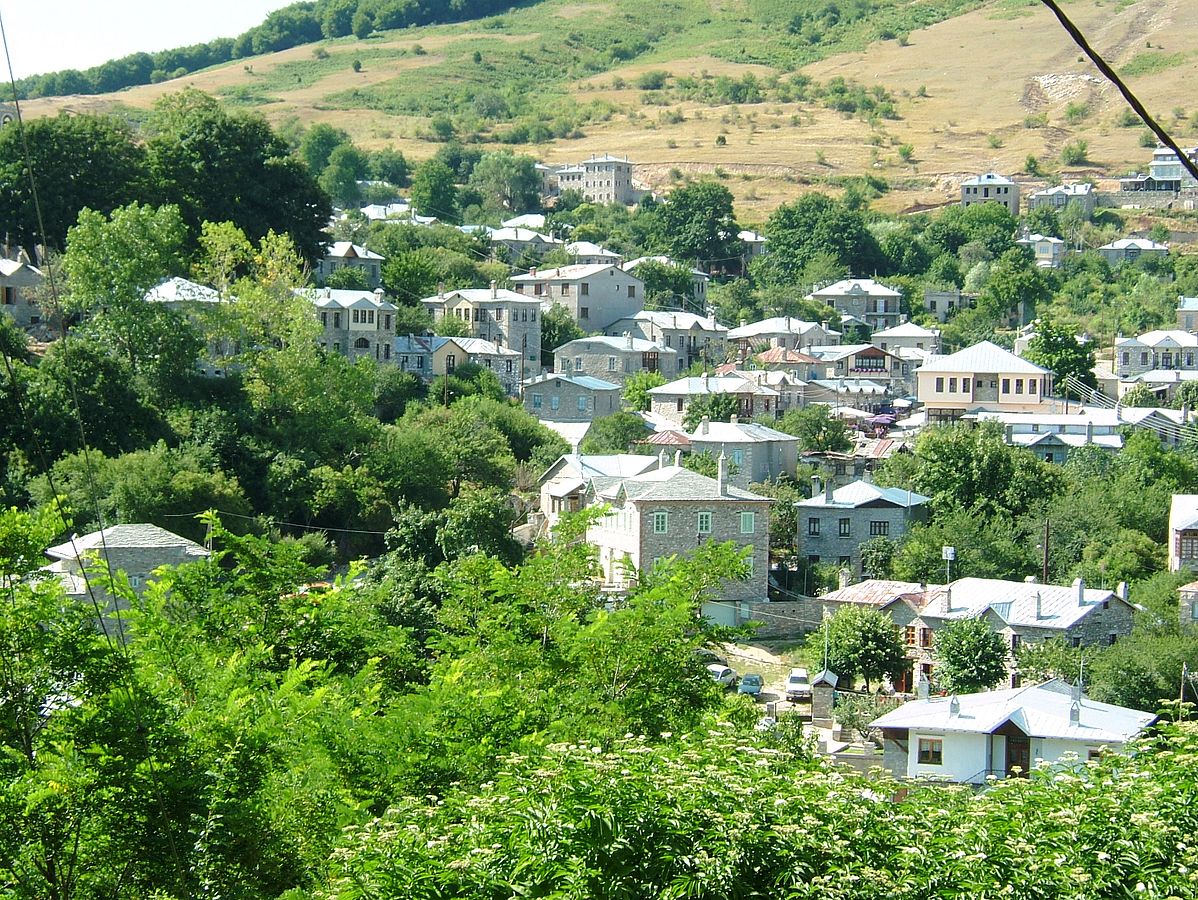
During winter, the Vitsi Ski Center is a local favorite. Nearby villages like Polykeraso are built entirely of stone and offer cozy guesthouses and traditional Macedonian cuisine far from the tourist crowds.
Grevena
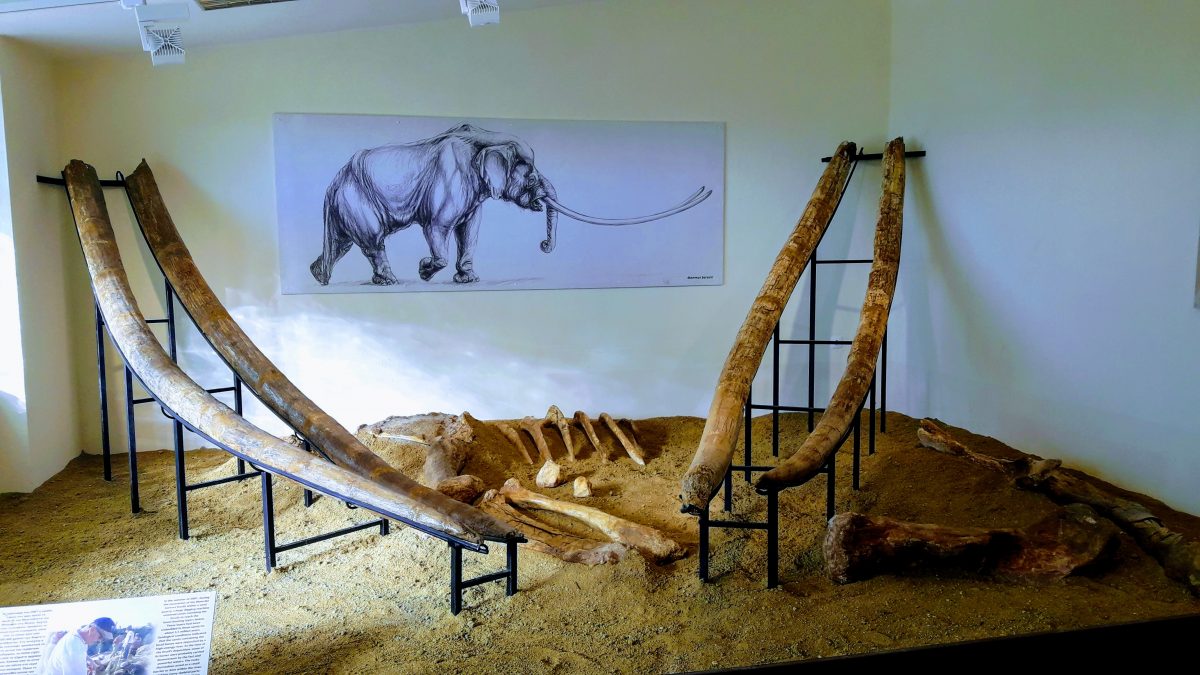
In the Museum of Natural History in Milea, Grevena the tusks and fossilized remains of a 3-million-year-old mastodon, a mammoth-like mammal, are displayed. The tusks weigh a ton each and are 5 meters in length, the longest ever found. The mammal, believed to have been a male aged around 25, was 3.5 meters tall and weighed over 6 tons.
Grevena is the “Mushroom Capital” of Greece, and while the surrounding mountains are famous, the town itself has a relaxed, authentic vibe perfect for a quick stroll.
Town Center Highlights
- Emilianou Square: The heartbeat of the city. It’s a wide, pedestrian-friendly space lined with cafes and bars—ideal for people-watching with a Greek coffee.
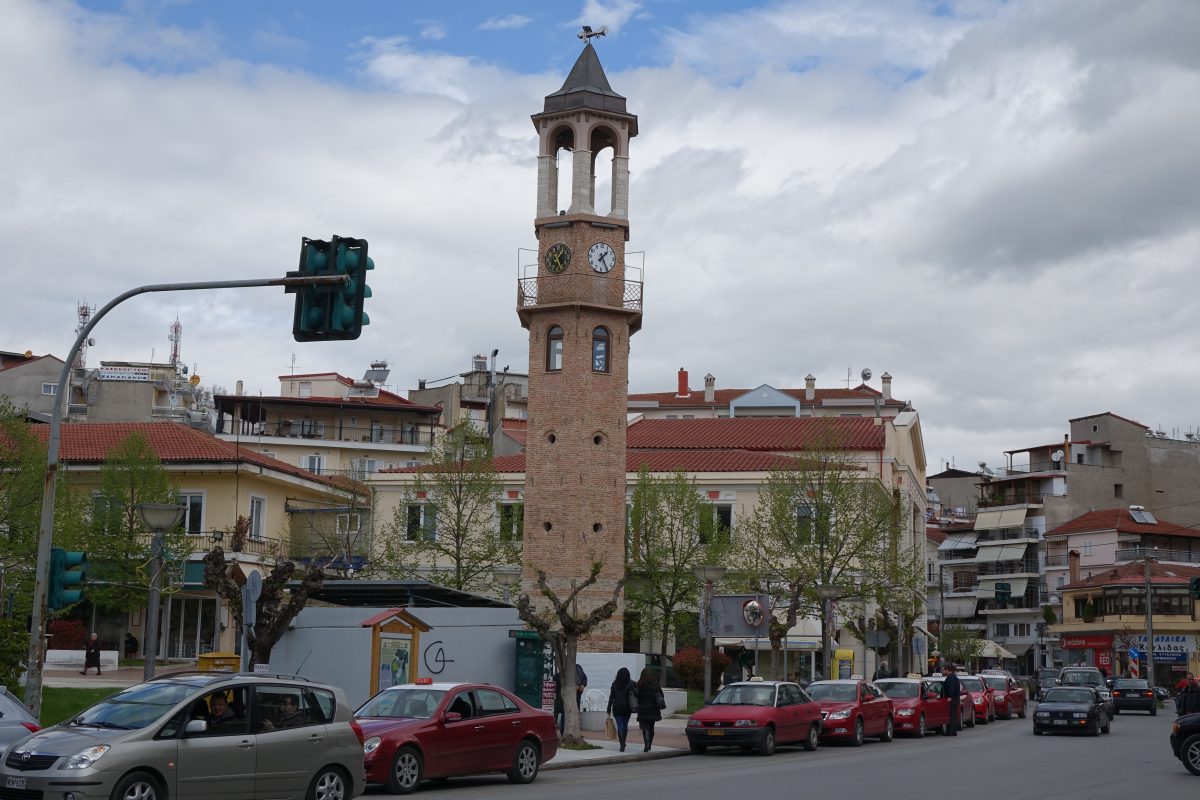
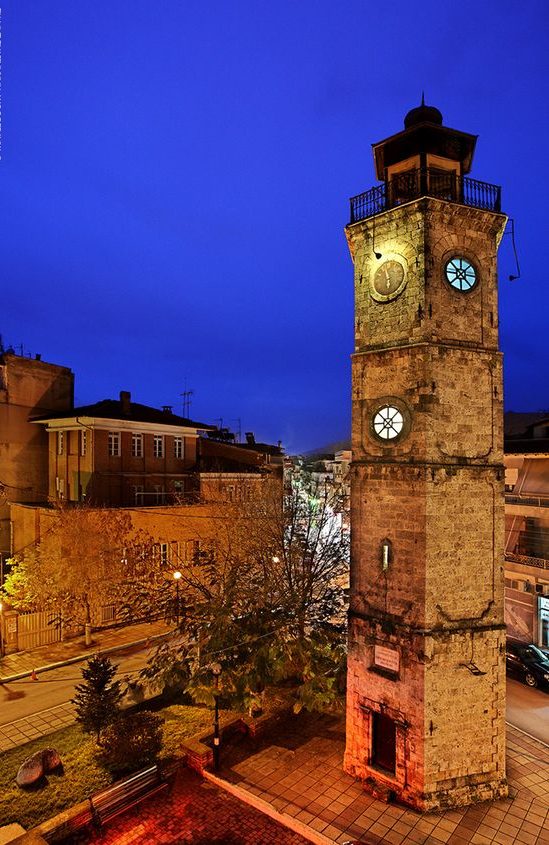
- The Clock Tower (Roloi): Located in the central square, this is the town’s most recognizable landmark and a great meeting point.
- The Park of Mushrooms: A unique park dedicated to the local “treasure.” You’ll find mushroom-shaped sculptures and information about the hundreds of species found in the region.
- Folklore Museum of Grevena: A small but rich collection of local costumes, tools, and historical artifacts that give you a sense of the Pindus mountain culture.
- Local Gastronomy: You haven’t seen Grevena if you haven’t eaten it. Look for local shops selling mushroom-flavored pasta, sweets, and liqueurs.
Just Outside the Town (15-20 mins)
- Milia Natural History Museum: Home to the world’s longest mammoth tusks (listed in the Guinness World Records). It’s a tiny detour that’s genuinely mind-blowing.
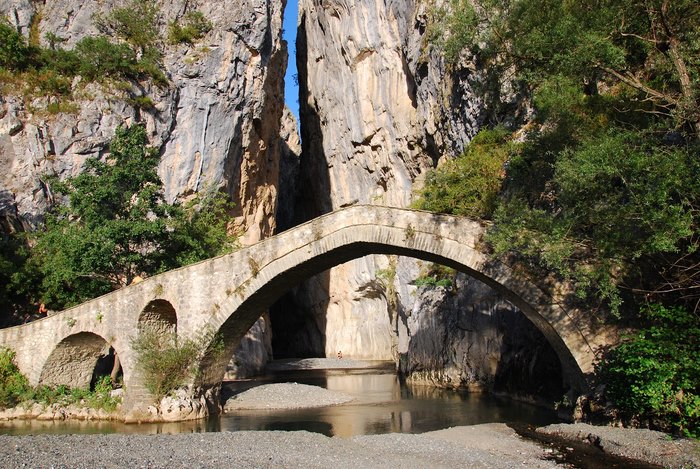
- Portitsa Bridge & Gorge: If you only have time for one stone bridge, make it this one. It sits at the mouth of a dramatic limestone gorge.
Pro Tip
If you are visiting in August, check if your dates align with the Panhellenic Mushroom Festival, which turns the whole town into a giant outdoor party with mushroom-based street food.
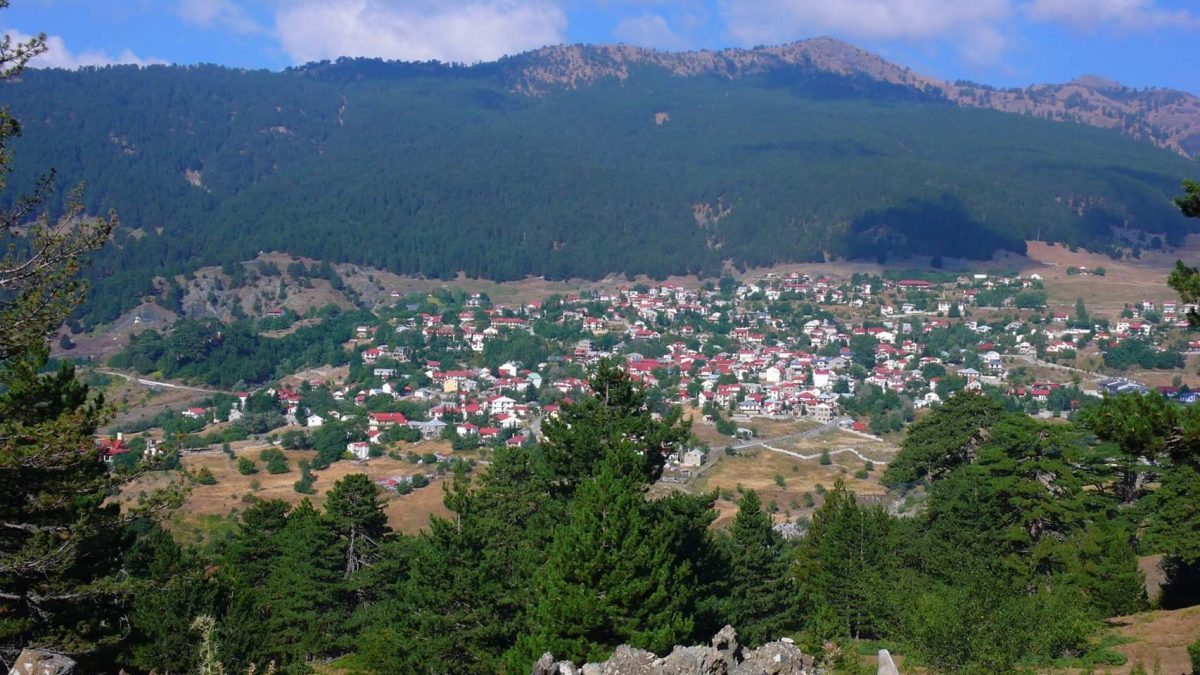
Grevena is famously known as the “Mushroom Capital” of Greece, but the prefecture’s true magic lies in its wild, rugged Pindus landscapes and ancient stone architecture.
Here is your quick list of must-sees:
1. Portitsa Bridge & Gorge
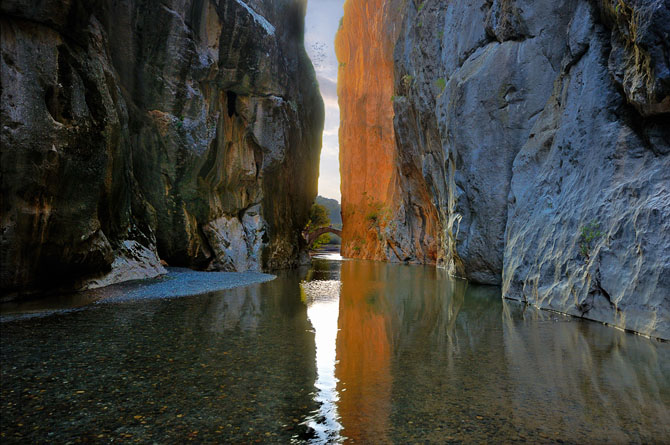
Located near the village of Spilaio, this is perhaps the most photographed spot in the region. The massive stone bridge sits at the narrow mouth of a deep limestone gorge where the Venetikos River flows. You can hike through the gorge or simply admire the “gate-like” appearance of the rocks.
2. Valia Calda (Pindus National Park)
Meaning “Warm Valley” in the local Vlach dialect, this is one of Greece’s most remote and beautiful national parks. It is a sanctuary for brown bears and rare black pine trees. For the best experience, visit the Arkoudorema stream or hike to the Flegga Lakes.
3. Milia Paleontology Museum
This museum holds the Guinness World Record for the longest mammoth tusks ever found (over 5 meters long). It’s a fascinating, quick stop to see fossils of prehistoric mastodons and rhinos that once roamed the Grevena plains.
4. Vasilitsa Ski Center
Even if you don’t ski, Vasilitsa offers some of the most striking alpine views in Greece. It is unique for its “snow-dusted” centuries-old black pines. In the summer, the area is perfect for mountain biking and high-altitude hiking.
5. The Mushroom Museum (Lavda)
In the village of Lavda, this museum celebrates Grevena’s fungi obsession. You’ll see lifelike replicas of hundreds of mushroom species. Afterward, head to Grevena town to try mushroom-infused everything—from pasta and soup to liqueurs and sweets.
6. The Stone Bridge of Dotsiko
While Grevena has many historic bridges, the one in Dotsiko is unique because it is the only one built in the center of a village, connecting its two neighborhoods. It’s incredibly charming and looks like a scene from a fairytale.
7. Samarina Village
Perched at 1,450 meters, Samarina is one of the highest villages in the Balkans. It is famous for its “Virgin Mary” church, which has a large pine tree growing out of its roof. It’s a great spot to try local meats and traditional Vlach hospitality.
Kozani
Kozani is a hidden gem in Northern Greece, famous for its saffron (Krokos), its massive municipal library, and its vibrant “Fanoi” carnival tradition. If you’re doing a quick sweep of the town, here is the essential hit list:
The Town Center & Landmarks
- Nikis Square & The Clock Tower (Mamatsios): This is the heart of the city. The 1855 clock tower is Kozani’s most iconic symbol. The surrounding pedestrian area is perfect for people-watching and grabbing a coffee.
- Agios Nikolaos Church: Located right next to the square, this 17th-century church is surprisingly grand. Inside, you’ll find incredible wood-carved details and frescoes that survived centuries of Ottoman rule.
- Koventareios Municipal Library: This is the second-largest library in Greece. It houses rare 15th-century manuscripts and the famous Charta of Rigas Feraios (a landmark document of the Greek Enlightenment).
History & Culture
- Historical-Folklore & Natural History Museum: Don’t let the long name scare you—it’s one of the best of its kind in the Balkans. It’s built in a traditional Macedonian style and covers everything from prehistoric fossils to the city’s role in the Greek Revolution.
- The Lassani Mansion: The former home of Georgios Lassanis (a local hero of the 1821 Revolution). It’s a beautiful example of local architecture and often hosts cultural events.
- Archaeological Museum of Kozani: A smaller, well-curated space housed in a restored mansion (the Panagiotidi building), focusing on finds from the surrounding region.
Quick Local Flavor
- Krokos Kozanis (Saffron): You can’t leave without it. Kozani is one of the few places in the world that produces high-quality organic saffron. Look for local shops selling the “Gold of the Earth.”
- Kozani “Kihi”: This is the local version of spanakopita—a spiral-shaped cheese pie. It’s the ultimate quick breakfast or snack while walking the center.
Outside of the main city, the Kozani prefecture offers a mix of dramatic engineering, Byzantine history, and traditional Macedonian architecture.
Nature & Landmarks
- The High Bridge of Servia & Lake Polyfytos
One of the longest bridges in Greece (1,372 meters), spanning the artificial Lake Polyfytos. The view of the bridge against the lake and the Pieria Mountains is the most iconic “postcard” shot of the region. - Servia Gorge & Byzantine Castle
Commonly called the “Little Grand Canyon,” this area features a trekking path through unique red rock formations leading up to the ruins of a 6th-century Byzantine fortress and several cave-churches. - Skepasmeno Waterfalls (Velventos)
Located just outside the town of Velventos, this natural site features impressive waterfalls, wooden bridges, and lush greenery at the foot of Mount Pieria.
Historic Towns & Villages
- Siatista
Famous for its 18th-century Mansions (like the Poulko and Mano mansions), which feature elaborate frescoes and stained glass. It is also the region’s center for fur-making and “Liasto” (sun-dried) wine. - Aiani
Home to one of the most important archaeological sites in Upper Macedonia. The Archaeological Museum of Aiani houses finds from the ancient city of Aiane, dating from the prehistoric to the Roman period. - Pentalofos
A stunning mountain village built entirely of stone. It was traditionally home to the region’s master stonemasons (mastores), whose handiwork is visible in every archway and cobblestone street. - Velventos
A picturesque town known for its traditional architecture, its production of high-quality peaches, and the Church of Agios Nikolaos, which boasts exceptional 14th-century frescoes.
Unique Stops
- Natural History Museum of Petrana
A small but fascinating stop featuring fossils found in the region, including the remains of prehistoric elephants and mammoths that roamed the area millions of years ago.
Florina
Florina is Greece’s “coolest” corner—both literally and figuratively. Nestled in the northwestern tip of the country, it’s a place of misty lakes, stone-built villages, and some of the best wine you’ll find in the Balkans. It’s less about marble ruins and more about melancholic riverfronts, snowy peaks, and authentic mountain hospitality.
The Heart of the Prefecture: Florina Town
The capital is famous for its cinematic atmosphere (famed director Theo Angelopoulos filmed several movies here).
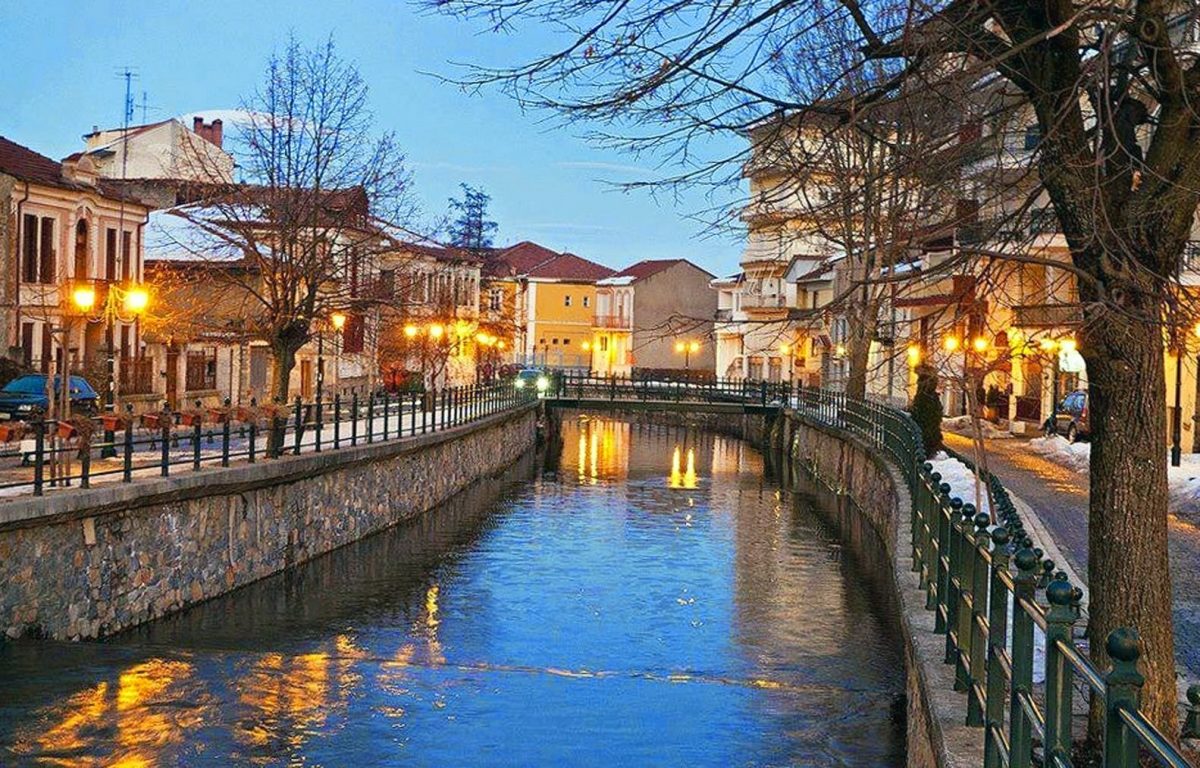
- Sakoulevas Riverfront: The soul of the city. Walk along the riverbanks lined with colorful 19th-century neoclassical mansions and artisan workshops.
- Archaeological Museum of Florina: Located near the train station, it houses impressive finds from the Hellenistic and Roman periods of the region.
- Museum of Contemporary Art: Reflecting the town’s artistic streak, this museum hosts works by famous Greek and international artists.
- Hill of Agios Panteleimon: Hike or drive up to the giant cross for a panoramic view of the town. You’ll also find the ruins of a Hellenistic-era city here.
Prespa Lakes: A Natural Borderland
A transboundary park shared by Greece, Albania, and North Macedonia, these lakes are a birdwatcher’s paradise and a spiritual retreat.
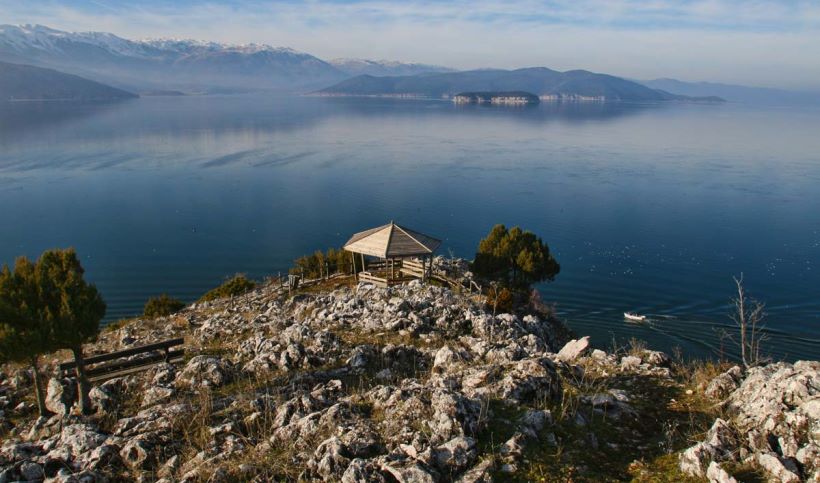
- Agios Achillios Island: Cross the long floating pedestrian bridge to visit this tiny island. It houses the ruins of the 10th-century Basilica of St. Achillios.
- Psarades Village: The only Greek village on the shores of Great Prespa. Rent a local “plava” (traditional boat) to see post-Byzantine frescoes painted directly onto the lakeside cliffs and hidden hermitages.
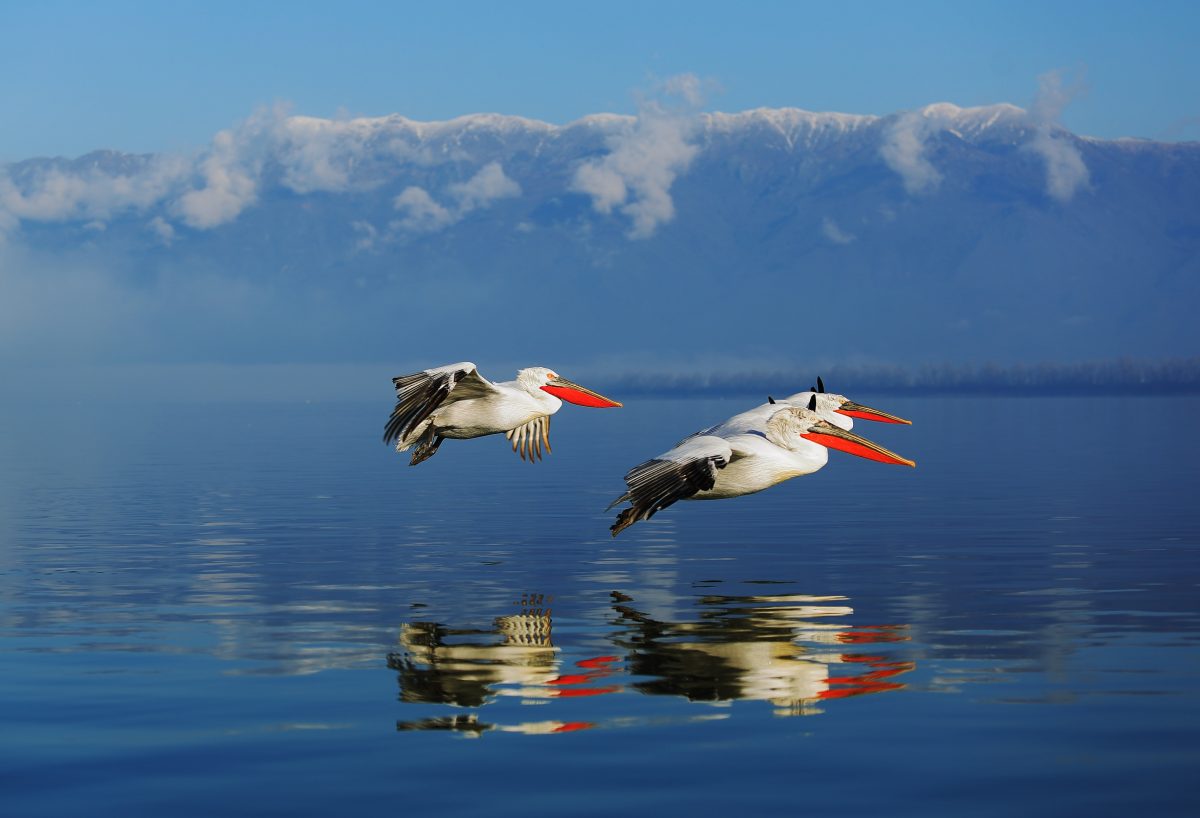
- Bird Watching: Home to the largest colony of Dalmatian Pelicans in the world. Bring binoculars!
Nymfaio: The Fairy-Tale Village
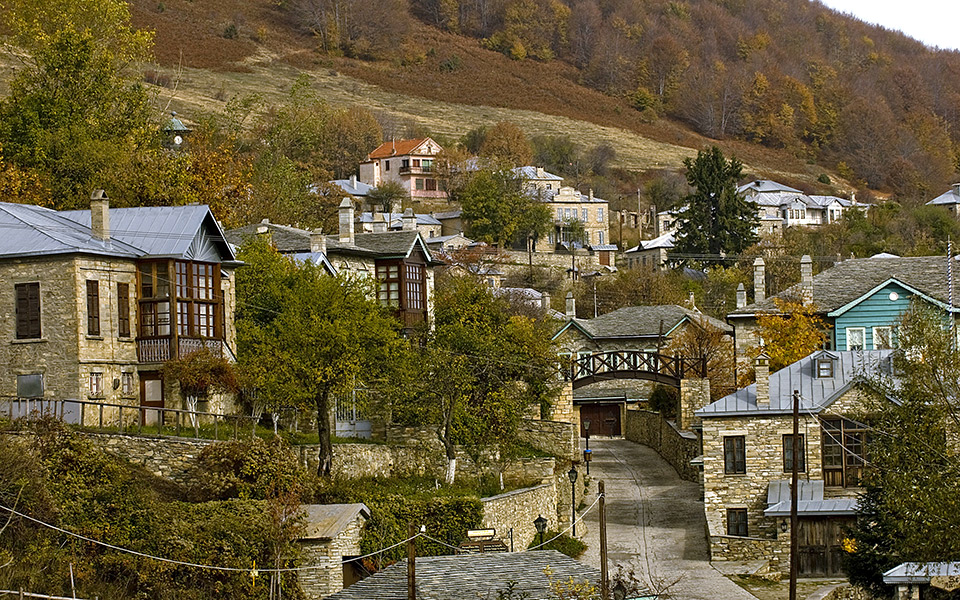
Consistently ranked as one of the most beautiful villages in Europe, Nymfaio is a preserved settlement of stone and silver.
- The Stone Mansions: Wander the car-free cobblestone streets to see the grand homes of the 18th-century silversmiths.
- Nikeios School: An architectural landmark that now serves as a conference and information center.
- Arcturos Sanctuary: A world-renowned refuge for rescued brown bears and wolves. It’s a short, scenic walk from the village and offers a rare look at these majestic animals in a natural forest environment.
Amyntaio: Wine & Wetlands
If you love a good glass of red, this is your home base.
- Alpha Estate Winery: One of Greece’s most modern and prestigious wineries. They offer tours and tastings of their famous Xinomavro varieties.
- Lakes Zazari and Vegoritida: Smaller and quieter than the Prespas, these lakes are perfect for lakeside dining in villages like Sklithro (famous for its potatoes) or Limnochori.
- Petres Village: Visit for the Hellenistic settlement ruins and incredible views over Lake Vegoritida.
Winter Escapes & Outdoor Adventure
Florina is a premier winter destination thanks to its high altitude and reliable snow.
- Vigla Pisoderi Ski Center: One of the oldest and best-organized ski resorts in Greece, featuring a stunning chalet and views that stretch all the way to the Prespa Lakes.
- Mount Varnountas: Offers exceptional hiking and trekking trails through dense beech and oak forests.
Regional Gastronomy: What to Eat
- Florina Peppers: The iconic long red peppers. Try them roasted, stuffed, or as a spread (Ajvar-style).
- Prespa Giant Beans (Elephants): These PDO beans are legendary—creamy, huge, and usually oven-baked with tomato and herbs.
- Wild Boar & Game: Common in mountain tavernas, often slow-cooked with local spices.
- Sklithro Potatoes: Known throughout Greece for their superior taste, usually served fried or baked with local cheese.
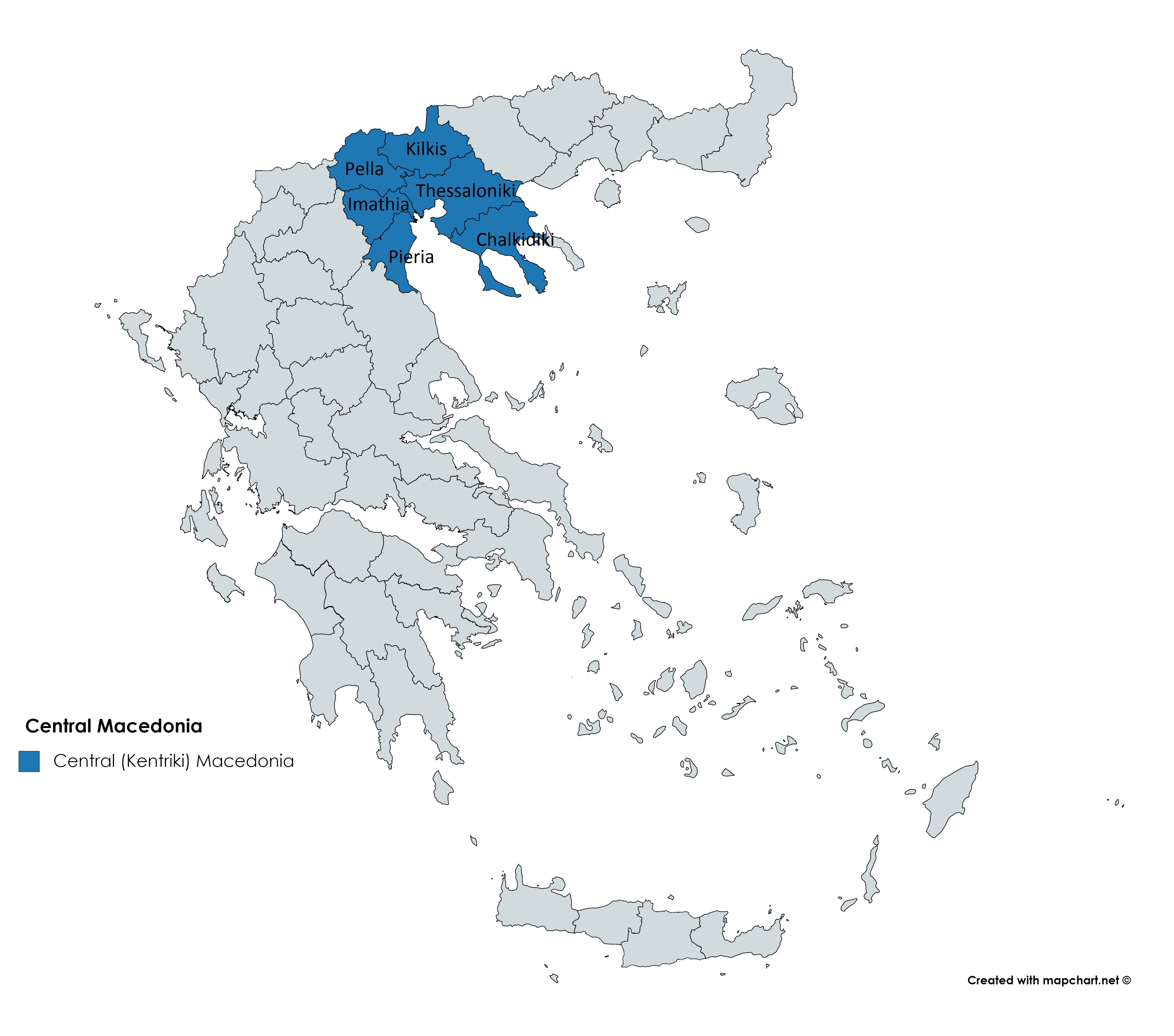
Central Macedonia
The region of Central Macedonia encompasses the following prefectures:
Pella, Imathia, Pieria, Thessaloniki, Chalkidiki, and Kilkis
Pella
Pella is far more than just its famous waterfalls. Since you’re bypassing Edessa, the rest of the prefecture offers a mix of heavy-hitting history, thermal relaxation, and alpine charm.
The Historical Heavyweight
- Ancient Pella & Archaeological Museum: This is the birthplace of Alexander the Great and the former capital of the Macedonian Kingdom. You can walk through the massive ruins of the ancient city and visit the modern museum to see world-class pebble mosaics that are still remarkably intact.
Nature & Wellness
- Pozar Thermal Baths (Loutra Loutrakiou): Located at the foot of Mount Voras, these are natural hot springs where warm water (around 37°C) flows into outdoor pools right next to a cold mountain stream. It’s a surreal experience, especially in colder weather.
- Lake Vegoritida: One of the largest and deepest lakes in Greece. It’s a peaceful spot for birdwatching or a quiet lakeside lunch, surrounded by the Voras and Vermio mountain ranges.
- Agra-Vryta-Nissi Wetland: A protected area home to over 250 bird species. It’s a great stop for nature photography or a quick, scenic walk along the reed beds.
Mountain Escapes
- Old Agios Athanasios: Known as the “Stone Village,” this traditional settlement was once abandoned and then restored into a boutique winter destination. It features narrow cobblestone streets, stone-built guesthouses, and cozy tavernas.
- Mount Voras (Kaimaktsalan) Ski Center: Even if you aren’t skiing, the drive up to the summit offers incredible views. At the top sits the tiny Prophet Elias Church, a memorial from WWI located right on the border with North Macedonia.
The Modern Hub
- Giannitsa: The largest town in the prefecture. Visit the Military Museum or look for the Ottoman-era monuments, such as the Mausoleum of Gazi Evrenos, which reflect the town’s deep layers of history.
Known as the “City of Waters,” Edessa is defined by its dramatic cliffside location and the rivers that run directly through its center. Here is a quick list of the essential must-sees:
The Top Sights
- Edessa Waterfalls (Karanos): The city’s crown jewel. Karanos is the largest waterfall in Greece (70m), and you can actually walk on a path that goes behind the curtain of water for a unique perspective.
- Waterfall Park: A lush, green park surrounding the falls filled with centuries-old plane trees, small bridges, and paved paths. It’s the perfect spot for a scenic stroll right in the heart of the city.
- Varosi District: The historic “Old Town” featuring traditional Macedonian architecture. Wander the narrow cobblestone streets to see the 19th-century houses and the Folklore Museum, which is housed in a restored mansion.
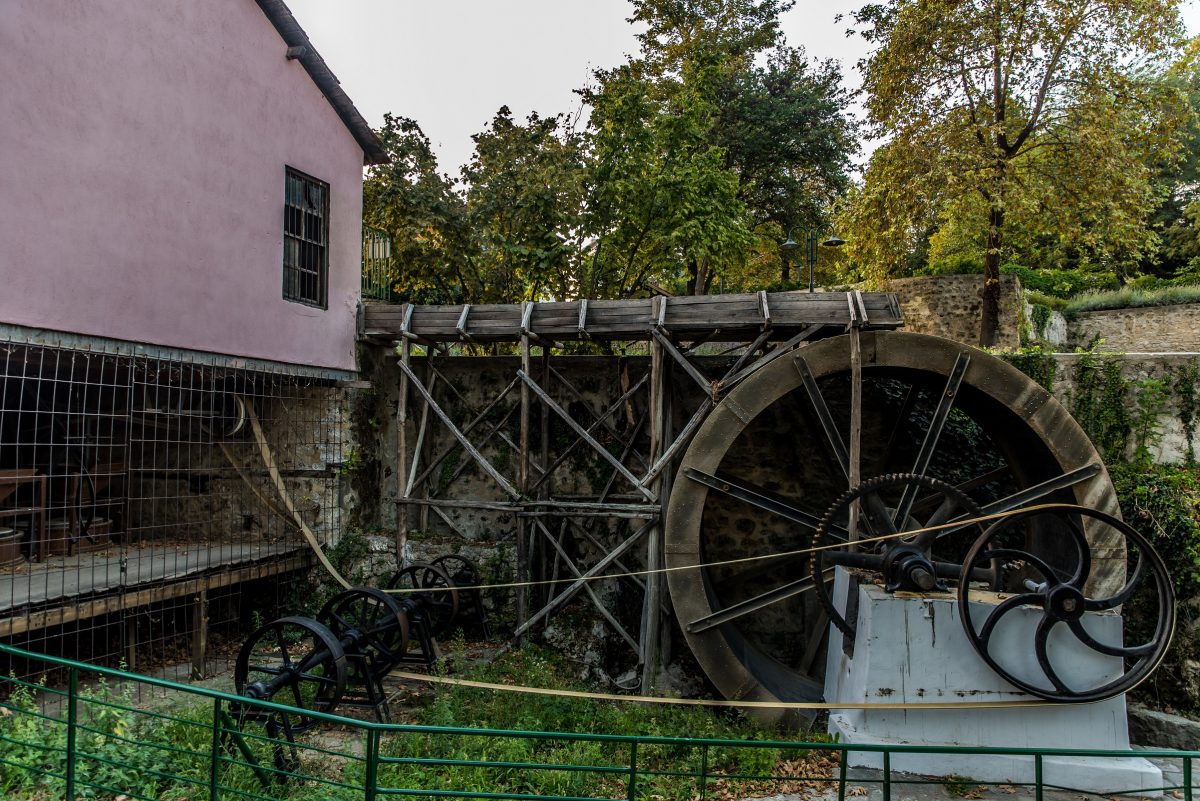
- Open-Air Water Museum: An industrial heritage site where you can explore old flour mills, a water-driven hemp factory (Cannabourgeio), and an Aquarium featuring endemic freshwater fish and reptiles.
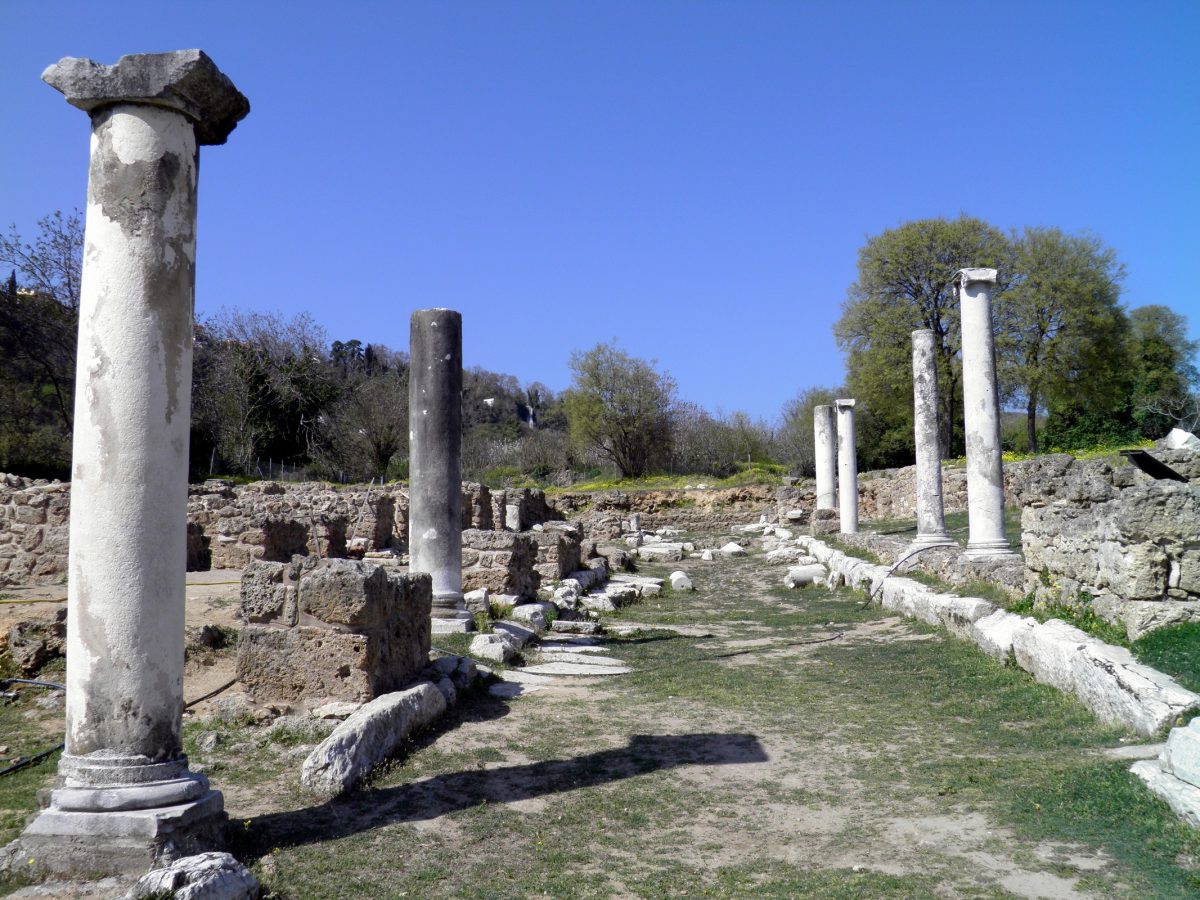
- Ancient Edessa (Loggos): Located at the foot of the cliff, this archaeological site contains the ruins of the ancient city, including well-preserved walls, a colonnaded street, and remains of early Christian basilicas.
- Psilos Vrachos (High Rock): The city’s best viewpoint. From here, you get a panoramic look over the fertile Pella valley and the ancient city of Loggos below.
- Kioupri Park: A peaceful area featuring a beautiful stone-arched bridge from the Ottoman period, marking the spot where the river enters the city.
Tip
If you have a car and an extra two hours, drive 30 minutes north to the Pozar Thermal Baths. You can soak in natural hot springs right next to a freezing mountain river—it’s one of the most famous spa experiences in Greece.
Imathia
Nestled on the eastern foothills of Mount Vermio, Naousa (Imathia) is a city where water, wine, and history flow together. Often called the “Heroic City” due to its role in the Greek War of Independence, it is a rare year-round destination that transitions from lush green parklands in summer to premier ski slopes in winter.
Natural Landmarks & Parks
- Agios Nikolaos Park: Located just 3km from the city center, this is a literal “earthly paradise.” It’s a 15-acre grove where the Arapitsa River springs from the earth. You’ll find towering plane trees, trout ponds, wooden bridges, and cafes. It is a National Award winner for its natural beauty and organization.
- Arapitsa River & Waterfall: The river runs through the heart of the city, creating small waterfalls and lush ravines. It isn’t just scenic; it’s historically significant as the site where the women of Naousa chose to jump into the falls with their children in 1822 to avoid Ottoman capture.
- Mount Vermio: For hikers and nature lovers, the mountain offers well-marked trails (like the Outer Ypapanti trail) filled with wild herbs and panoramic views of the Imathia plain.
Historical & Cultural Must-Sees
- School of Aristotle (Nymphaeum of Mieza): This is one of the world’s most significant historical sites—the actual place where Aristotle taught the young Alexander the Great. It is an outdoor site with rock-cut benches and caves where the philosopher and the future king spent their days.
- Macedonian Tombs of Lefkadia: Located nearby in ancient Mieza, these are some of the best-preserved tombs in Greece, featuring stunning Hellenistic wall paintings.
- The “Genitsaroi and Boules” Custom: If you visit during Carnival (February/March), you’ll witness a centuries-old ritual. Masked men (Genitsaroi) in traditional fustanellas dance through the streets to the sound of the zournas and daouli.
- Sacrifice Site Monument: A moving monument overlooking the Arapitsa waterfall dedicated to the heroic women of the 1822 sacrifice.
Wine & Gastronomy
- The Land of Xinomavro: Naousa is the heart of the Xinomavro grape, a noble red variety often compared to Nebbiolo. The city is officially designated as an “International City of Wine and Vine.”
- Winery Hopping: Visit renowned estates like Kir-Yianni, Boutari, or the Vaeni cooperative. Many offer cellar tours and tastings of PDO Naoussa wines.
- Local Flavors: Do not leave without trying Batzos (a salty, hard local cheese usually grilled), Traditional Pies (like prasopita or tsouknidopita), and Grivadi (freshwater fish from the nearby lakes).
Winter Activities
- 3-5 Pigadia Ski Resort: One of the most modern ski centers in Greece, famous for its artificial snow system which ensures a long season. It’s located about 17km from the city.
- Seli Ski Resort: The oldest ski resort in Greece, located at an altitude of 1,500m–1,900m, offering a more traditional mountain vibe and excellent views.
Pro Tip
If you visit in late February, look for the “City of Wine” festival events, where many local wineries open their doors for free tastings and the city’s bars feature specialized Xinomavro menus.
Since you’re skipping the capital, you’re in for a treat. Imathia’s “greatest hits” are actually scattered throughout its rolling hills and snow-capped peaks.
Here are the quick must-sees in Imathia, minus Veroia:
The Archaeological Heavyweights
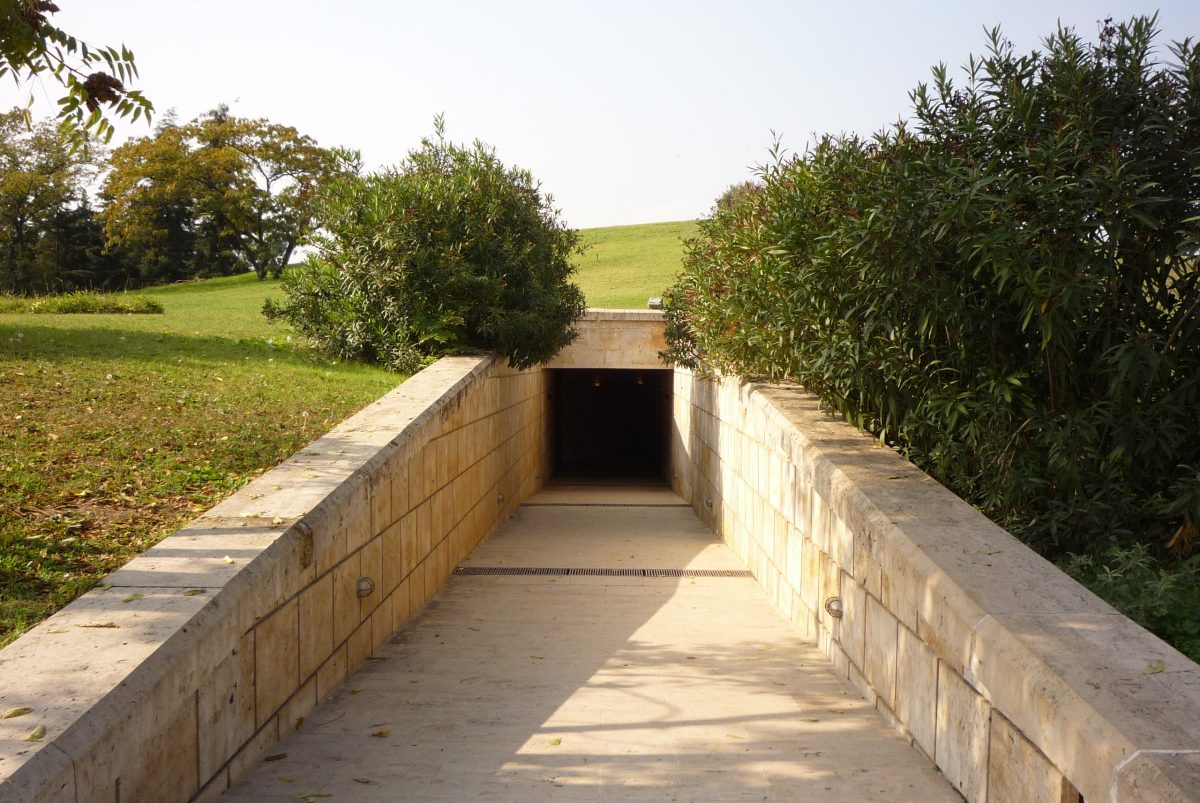
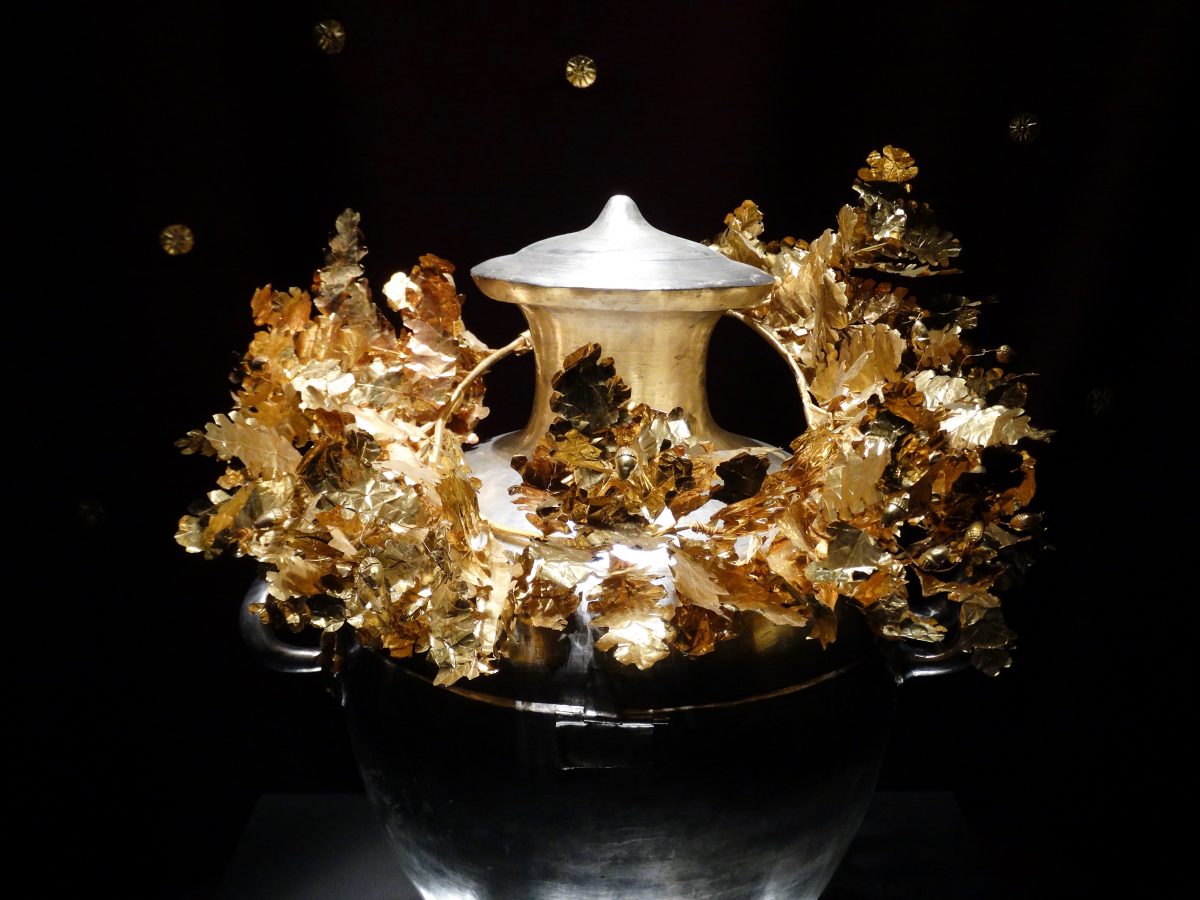
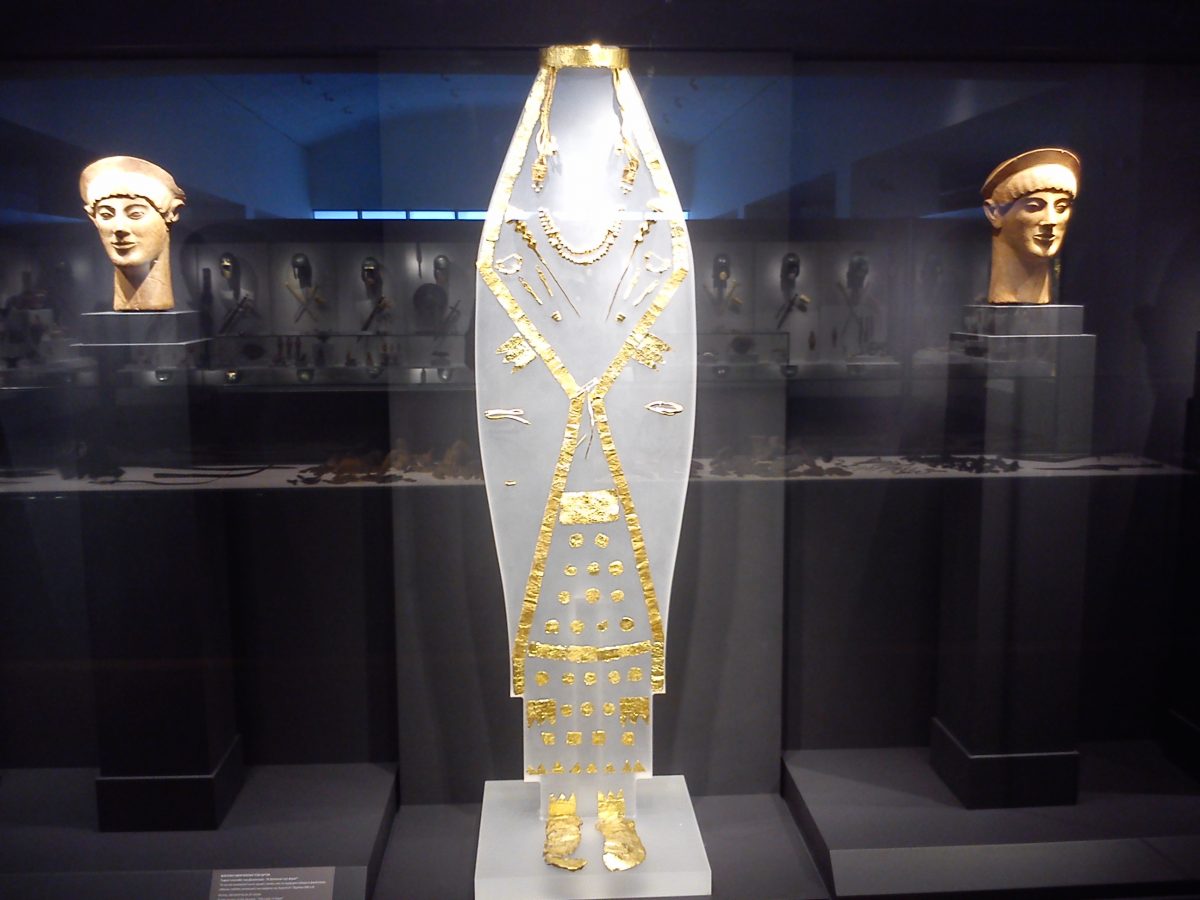
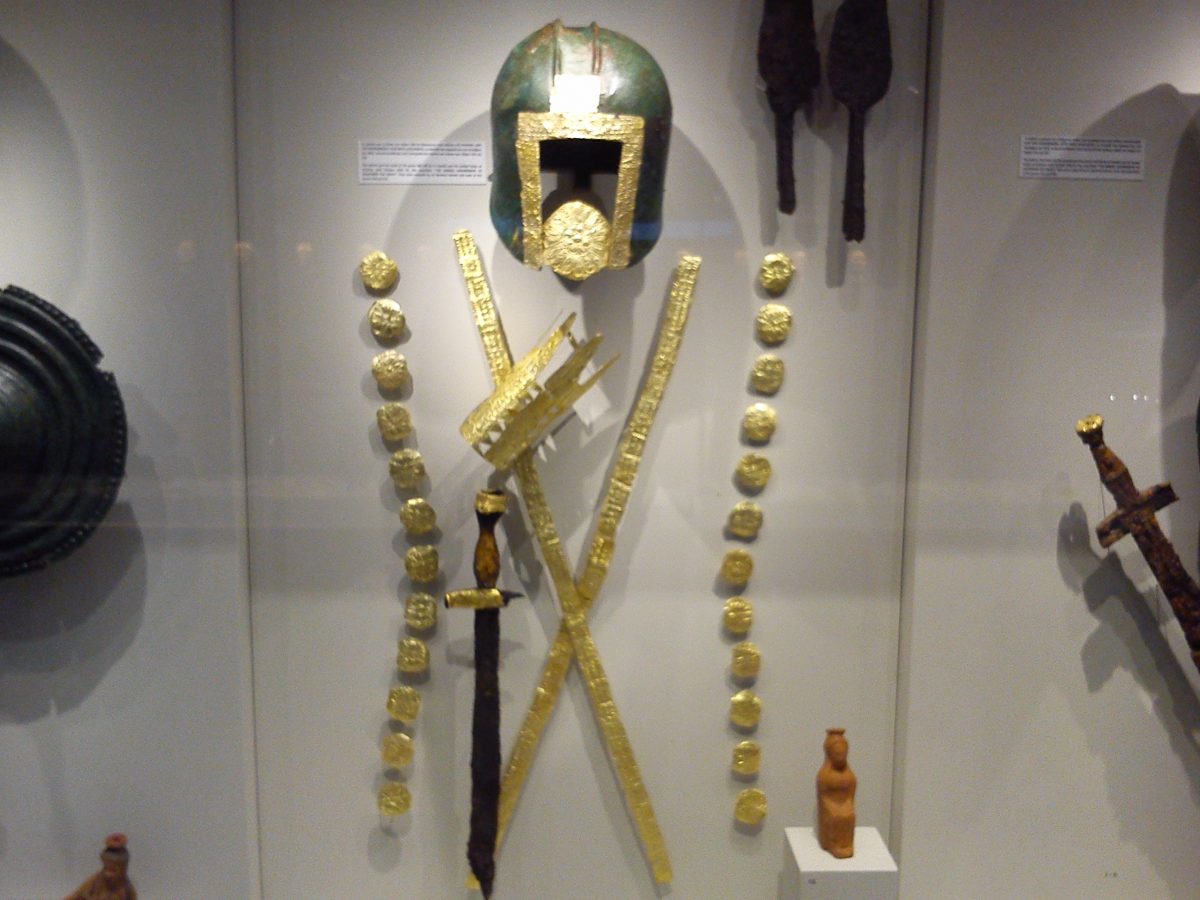
- Aigai (Vergina): This is the crown jewel. It’s a UNESCO World Heritage site featuring the Royal Tombs, including that of Philip II (father of Alexander the Great). The museum is underground, built directly into the burial mound, which is as atmospheric as it gets.
- The School of Aristotle (Mieza): Located near Naoussa, this is the actual leafy glade where Aristotle tutored a young Alexander the Great. It’s more of a peaceful “vibe” than a massive ruin, but the historical weight is immense.
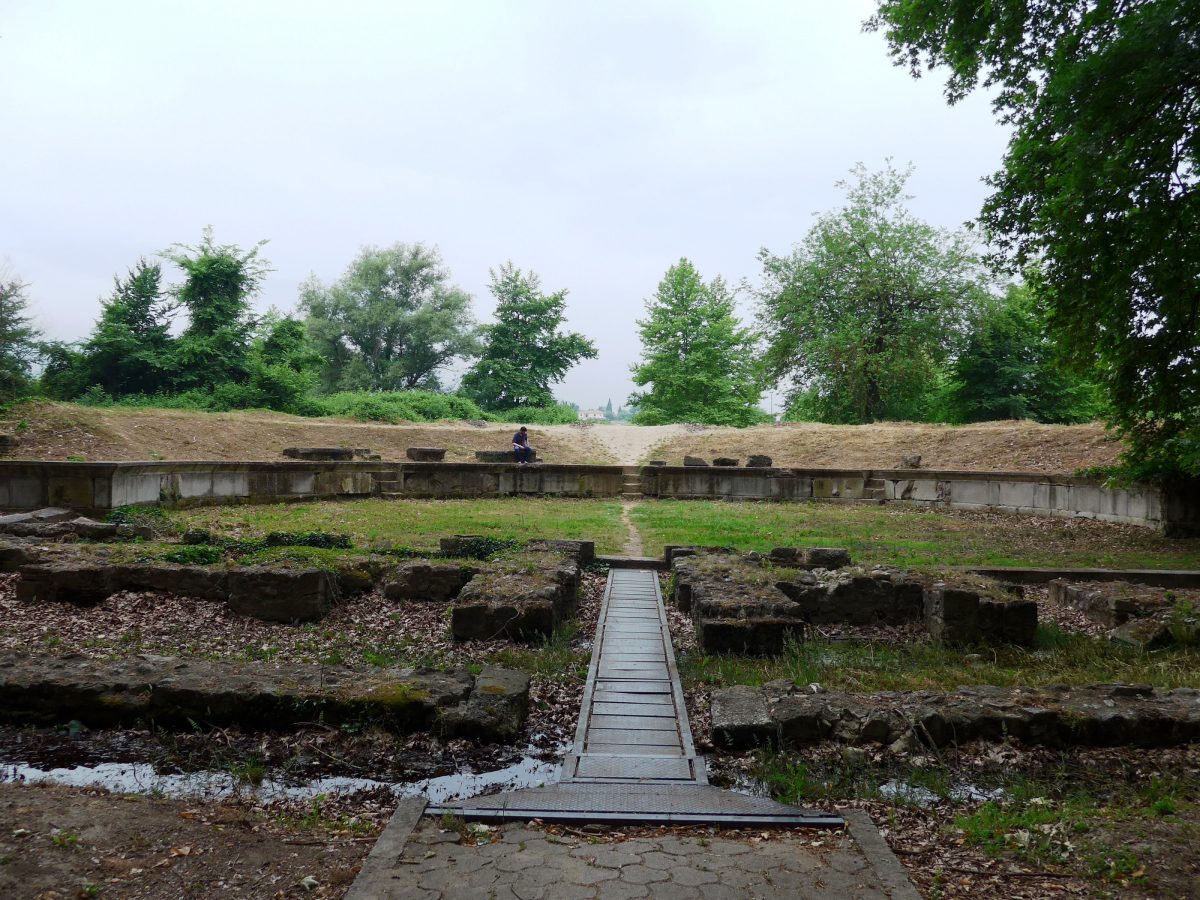
- Ancient Theater of Mieza: A well-preserved stone theater tucked away in the greenery near Lefkadia, often overlooked but worth the detour for the views alone.
Nature & Outdoors
- Agios Nikolaos Park (Naoussa): A lush, 15-acre sanctuary where the Arapitsa River springs from the earth. Think massive plane trees, trout ponds, and wooden bridges. It’s the ultimate spot for a slow morning.
- Seli Ski Resort: Sitting on Mount Vermio, this was the first organized ski center in Greece. Even if you don’t ski, the drive up offers sweeping views of the Macedonian plains.
- 3-5 Pigadia: Known for its “artificial snow” (the only one in Greece), this resort is a favorite for winter sports but doubles as a great hiking hub in the summer.
Spiritual & Cultural Landmarks
- Panagia Soumela Monastery: Located on the slopes of Vermio near Kastania, this is the spiritual heart of Pontian Greeks. It houses a world-famous icon of the Virgin Mary, allegedly painted by the Apostle Luke.
- Naoussa Wineries: You are in the land of Xinomavro (a robust red wine). Visit estates like Kir-Yianni or Foundi for a tasting. The “Wine Route of the Kings” is no exaggeration here.
Quick Tip: If you’re visiting in February/March, don’t miss the “Genitsari and Boules” carnival in Naoussa—it’s a centuries-old tradition involving elaborate masks and traditional dancing that feels more like a ritual than a party.
Naousa has been renowned for its exquisite wines. This vine-growing tradition traces back to the old ages, because the soil, the water and the climate have always been ideal for vine-growing.
Later in modern history (1800-1900 AD) Naousa’s wine becomes well-known all over the world, until today. Manuscripts written by famous travellers such as Pouqueville (1826) and Cousinery (1831) are characteristic evidence about the name and the quality of Naousa’s wine.
Veria is often called the “Little Jerusalem” of Greece for its staggering number of Byzantine churches (some say 48, some say 72), and it’s one of those places where the history is literally layered under your feet.
Here is your quick, no-nonsense list of must-sees:
The Historical Quarters
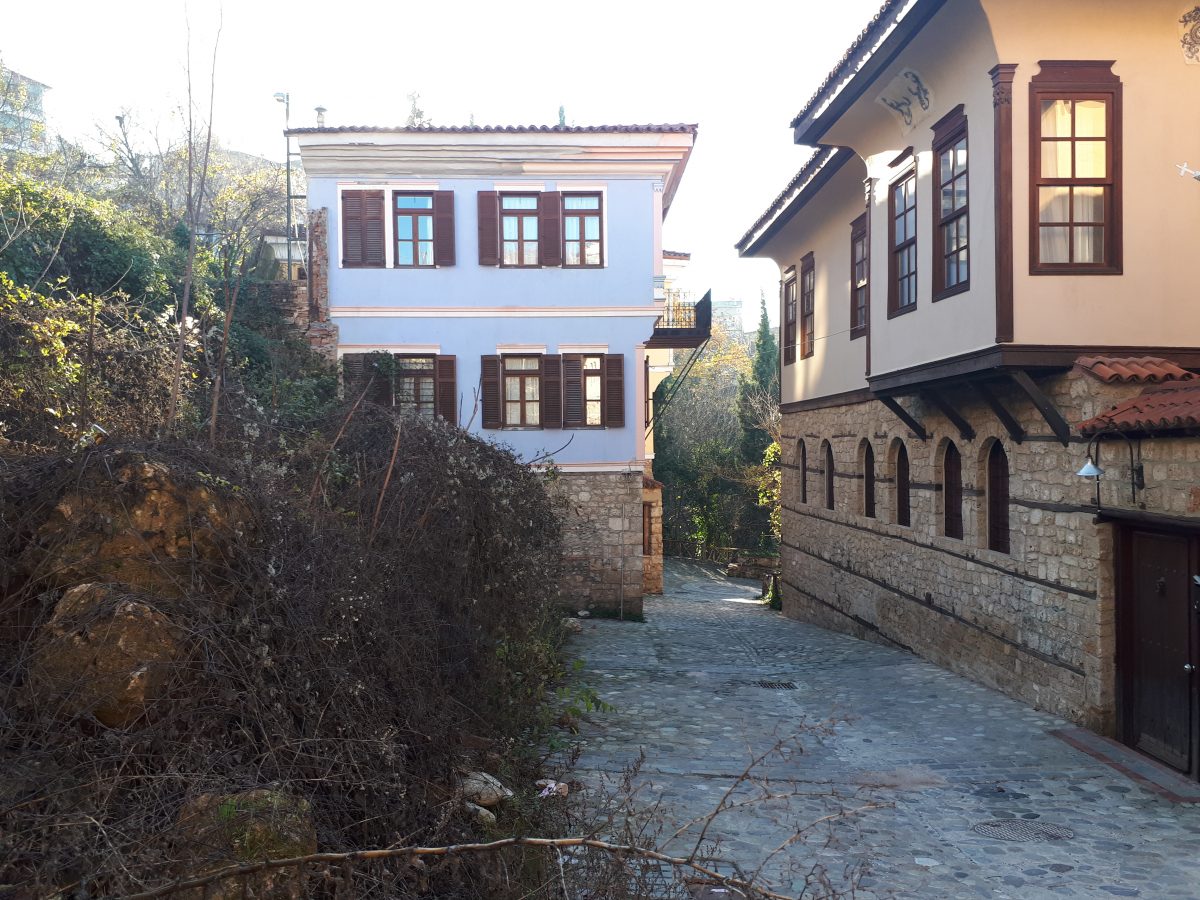
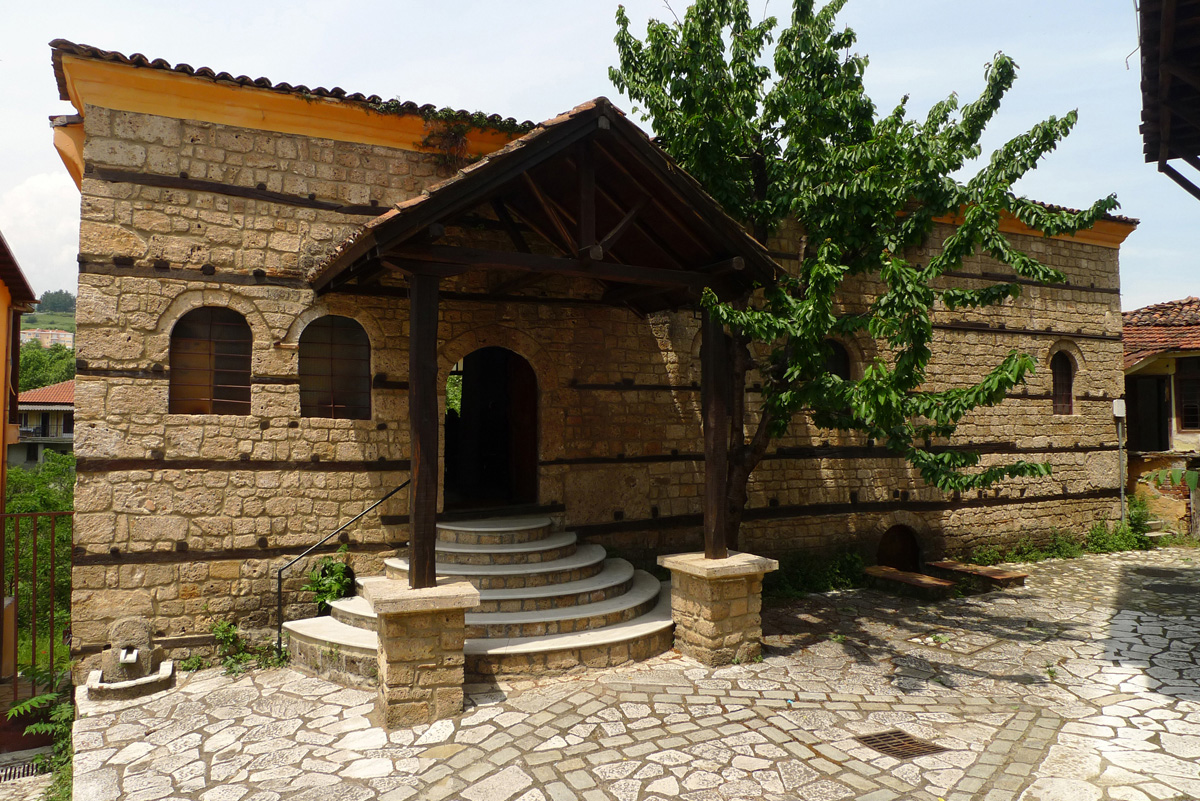
- Barbouta (Jewish Quarter): A hidden gem along the Tripotamos River. It’s a maze of cobblestone alleys and unique Macedonian architecture. You’ll find the Old Synagogue here—the oldest in Northern Greece and one of the oldest in Europe.
- Kyriotissa (Christian Quarter): Think narrow streets, tall wooden-framed houses, and tiny Byzantine churches tucked behind high walls. It’s arguably the most atmospheric part of the city for a slow stroll.
Landmarks & History
- The Bema (Tribune) of St. Paul: This is a global pilgrimage site where Apostle Paul preached in 50-51 AD. It features modern mosaics and is a quiet, reflective spot right in the city center.
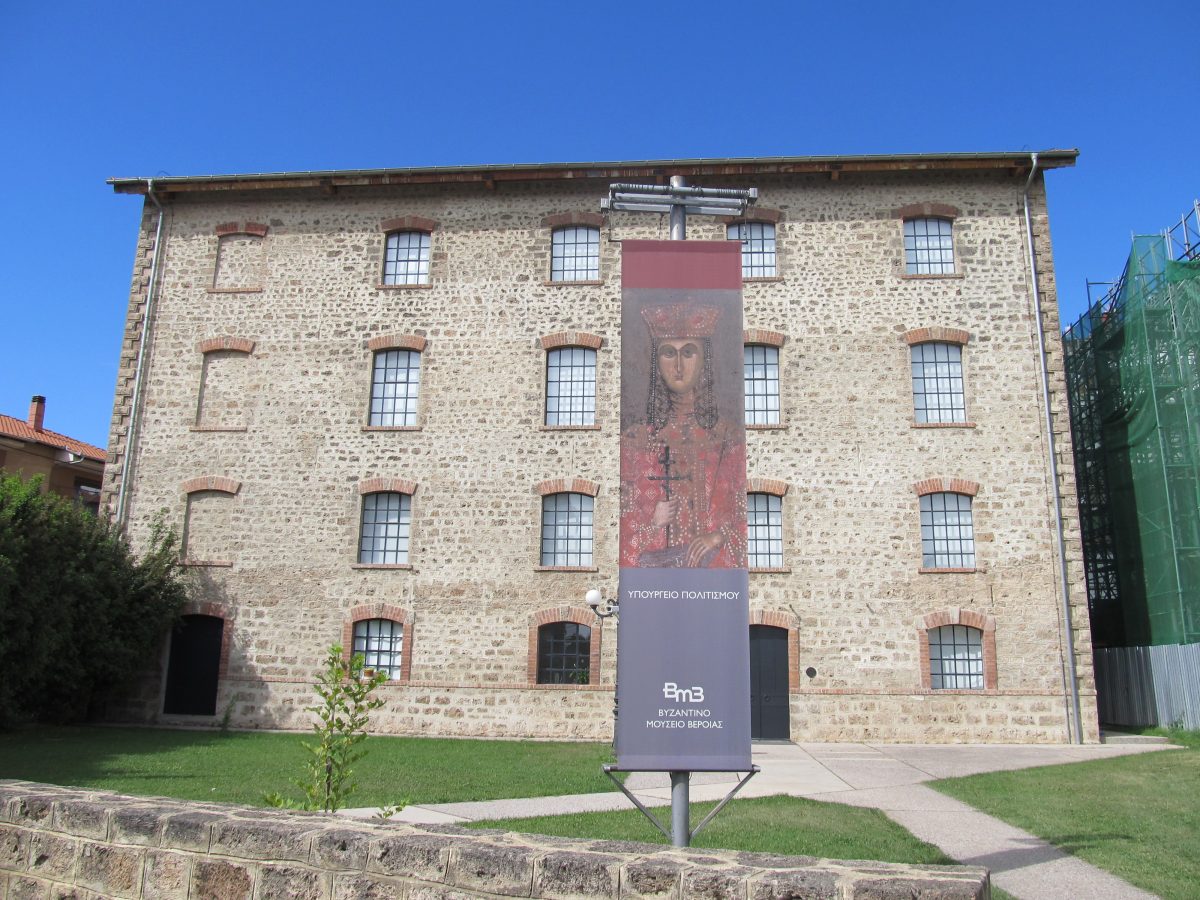
- Byzantine Museum: Housed in the “Mill of Mark,” a beautifully restored 1911 industrial building. It’s packed with world-class icons and mosaics that explain why Veria was so vital during the Byzantine era.
- The Old Metropolitan Church: Built in the 11th century, this massive basilica is a masterpiece of Byzantine architecture and fresco work. It’s been recently restored and is genuinely jaw-dropping.
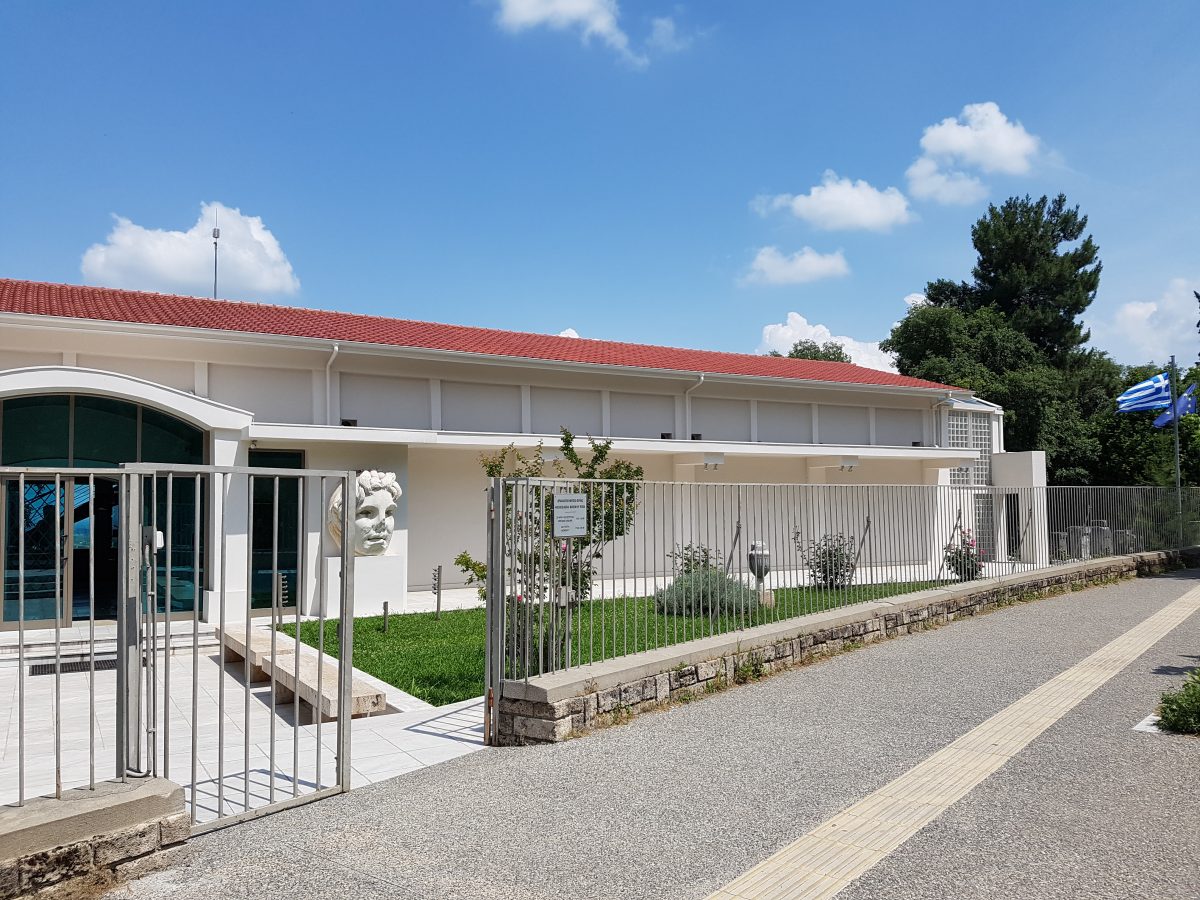
- Archaeological Museum: Small but mighty. It houses the “Gymnasiarch Law” (a 2nd-century BC inscription about education) and treasures from across the Imathia region.
Parks & Views
- Elia Park (The Balcony of Imathia): This is the city’s living room. It offers a panoramic view over the Imathia plain that will make you want to stay for sunset.
- Tripotamos River Walk: A leafy, green escape that winds through the city, perfect for escaping the summer heat.
Pro-Tip: You cannot leave Veria without eating Revani. It’s a syrupy semolina cake that the city is famous for throughout Greece. Look for the old traditional shops near the main square.
Just outside the city (15 mins): If you have a car, the Royal Tombs of Aigai (Vergina) is a non-negotiable. It’s where Philip II, father of Alexander the Great, is buried. It’s one of the most significant archaeological sites in the world.
Pieria
Pieria is much more than just its capital city; it’s where the “Home of the Gods” meets the Aegean. Since you’re skipping Katerini, you can focus on the dramatic transition from high-altitude alpine villages to Byzantine coastal fortresses.
The Essentials
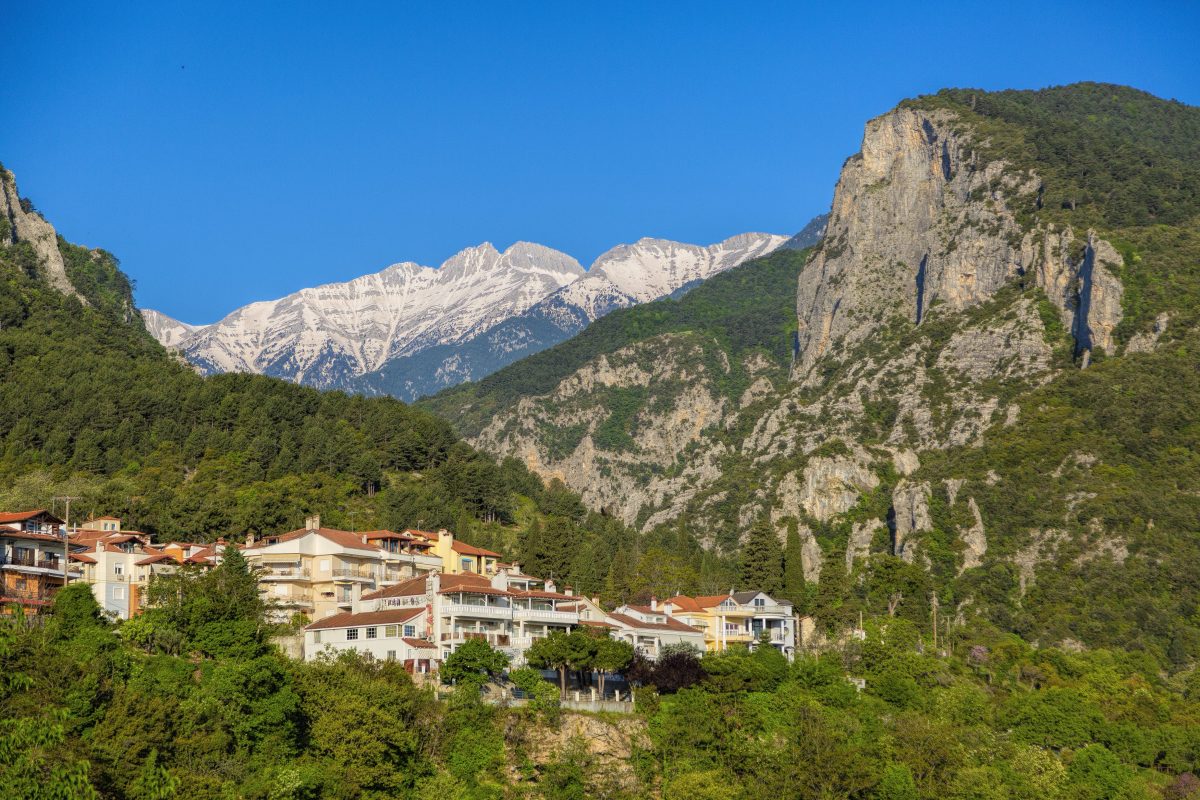
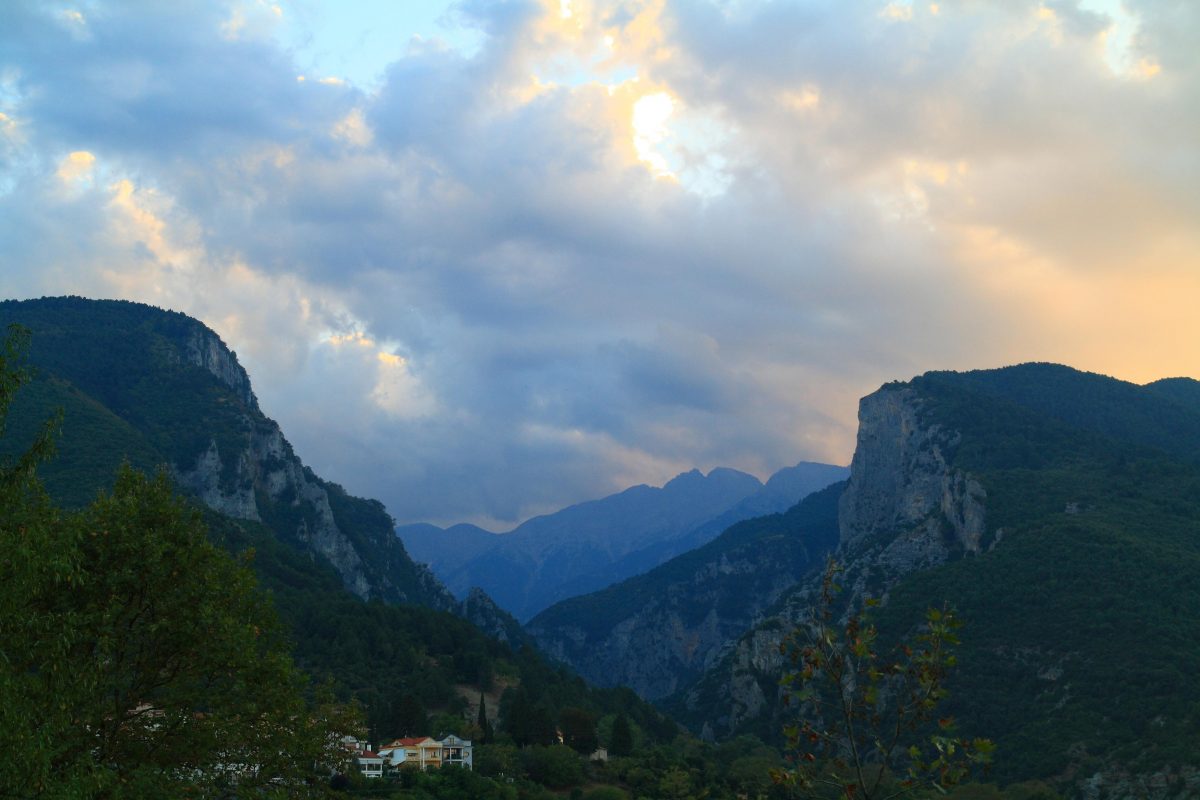
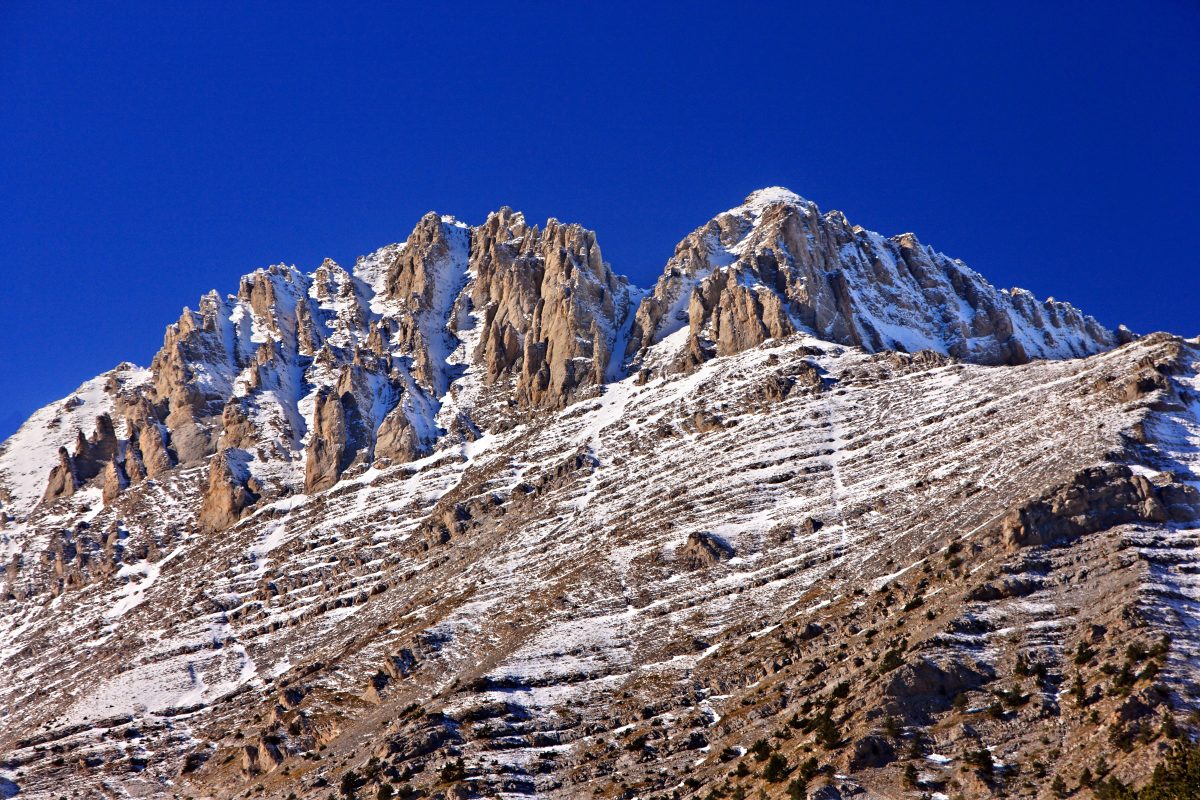
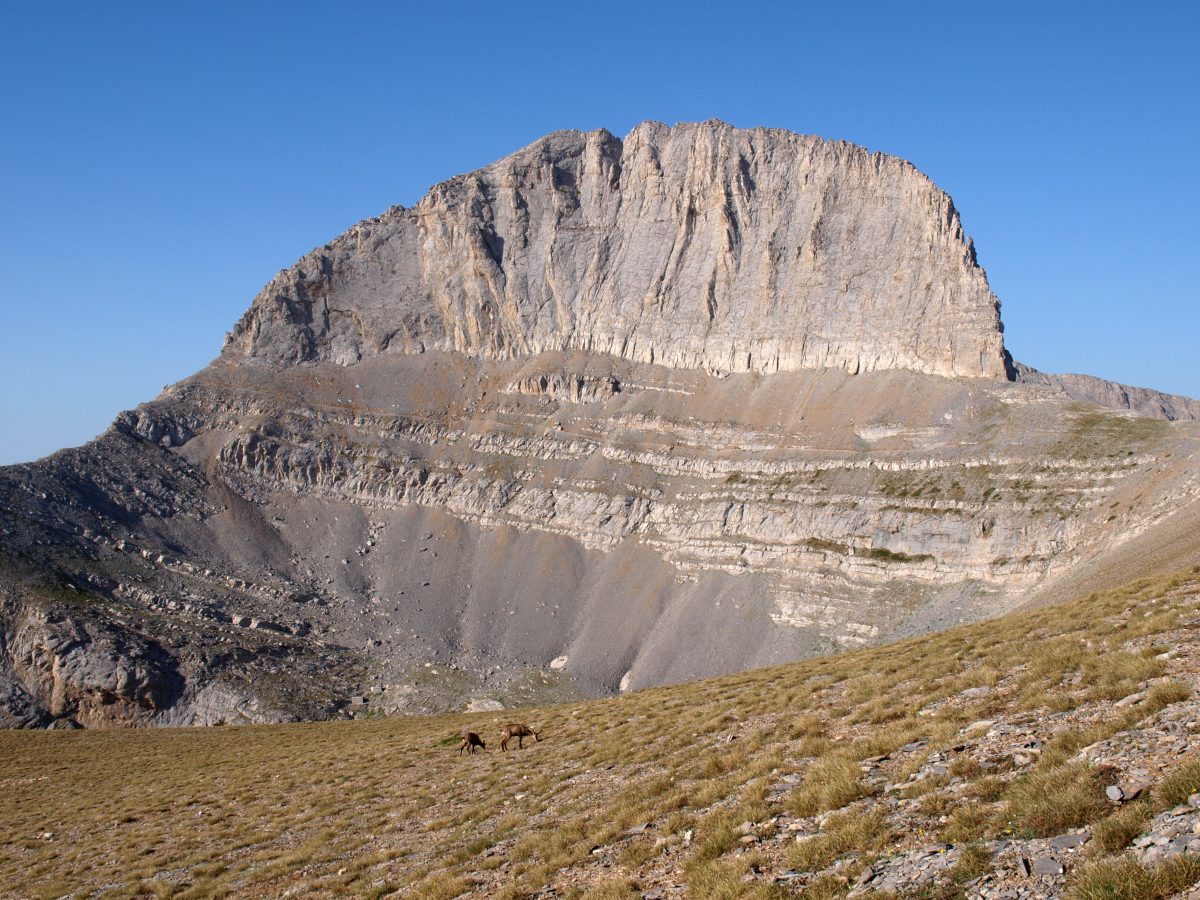
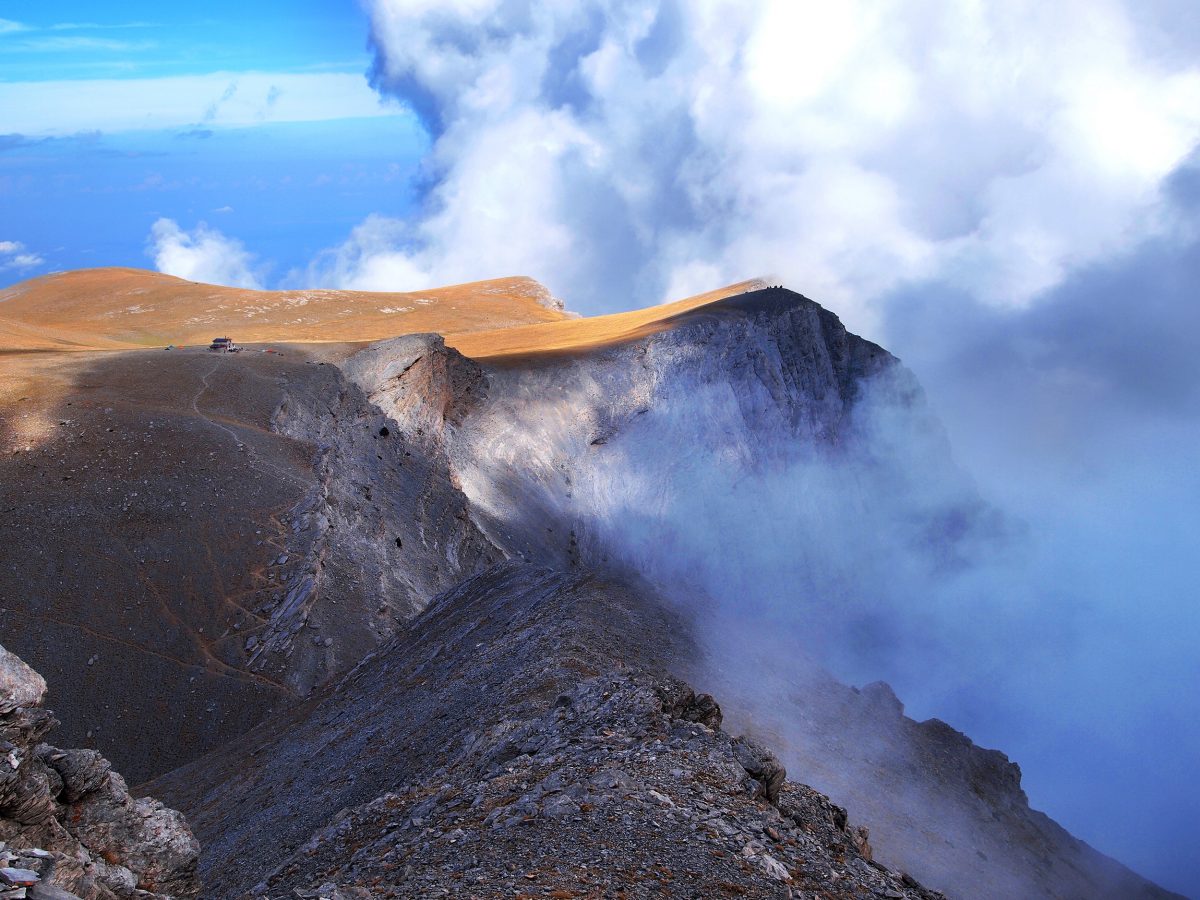
- Mount Olympus National Park: The crown jewel. Even if you aren’t a hardcore climber, you can drive to Prionia (1,100m) for a taste of the alpine air or visit the Information Center in Litochoro to learn about the mountain’s unique biodiversity and mythology.
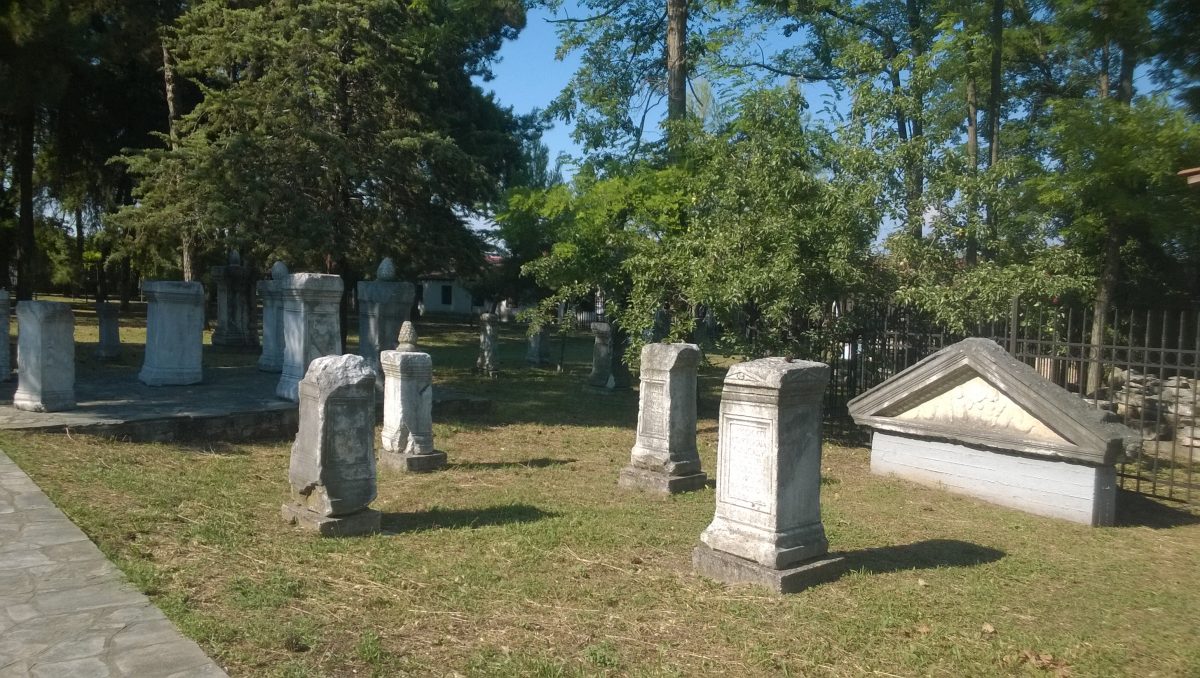
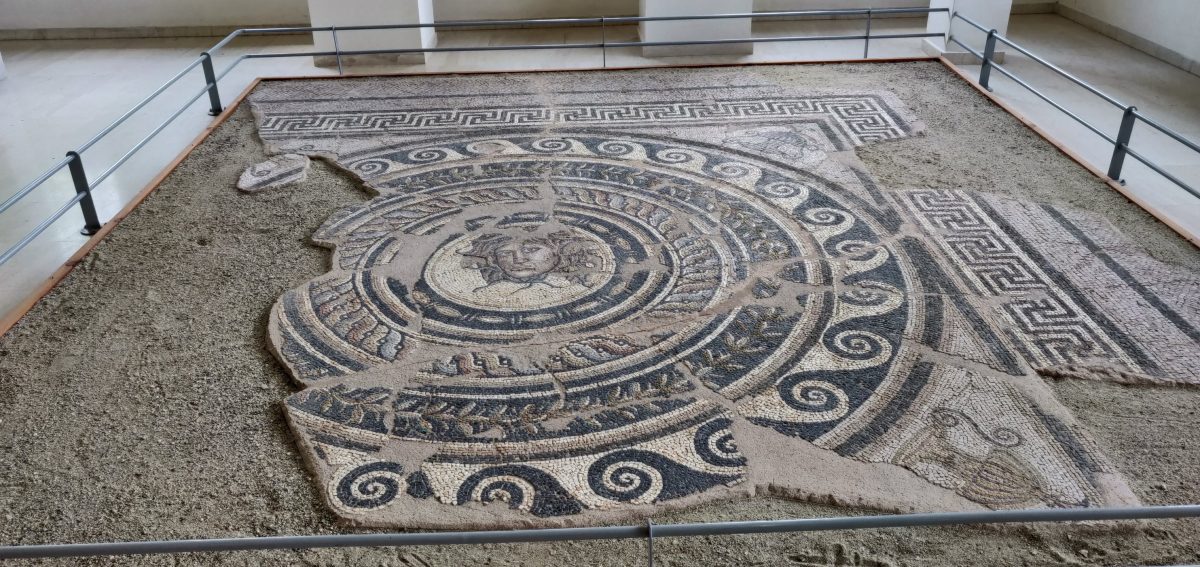
- Archaeological Park & Museum of Dion: A sprawling ancient “holy city” of the Macedonians. It’s famous for its sanctuaries dedicated to Zeus and Isis, as well as remarkably preserved floor mosaics. The site is uniquely lush, with water running through the ruins.
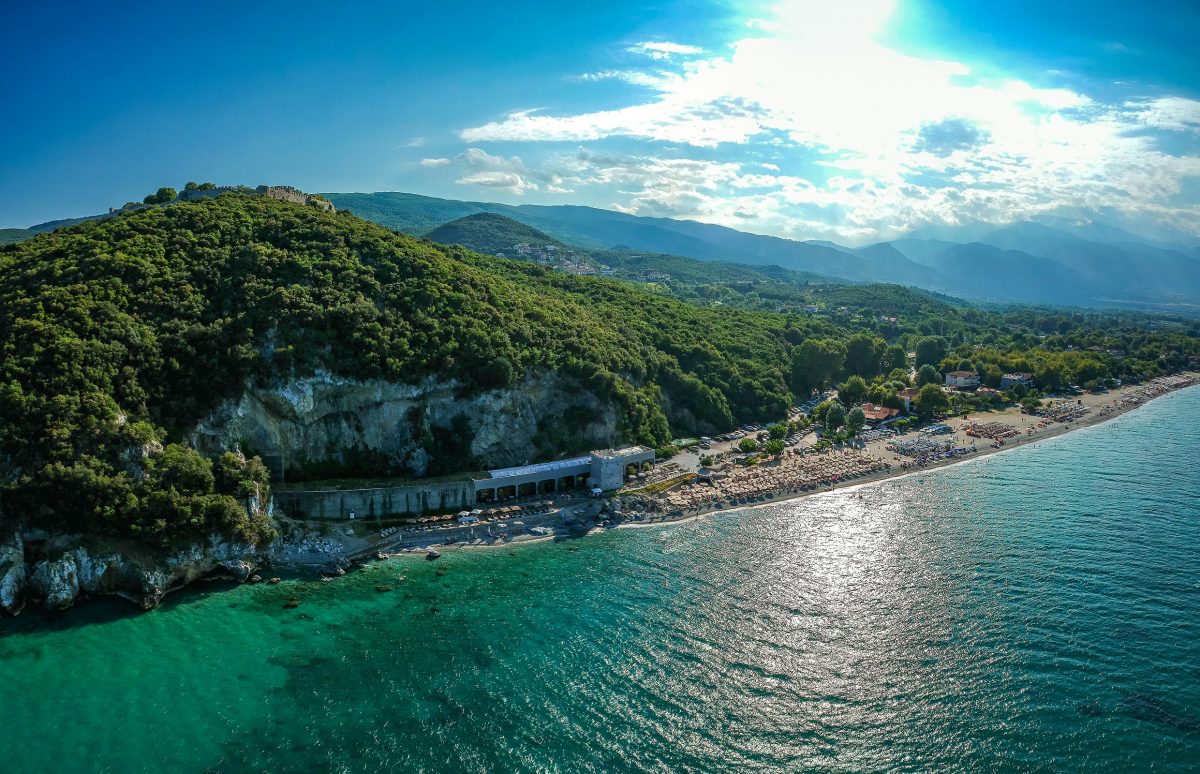
- Platamon Castle: This 13th-century Byzantine/Frankish fortress sits on a strategic hill overlooking the sea. It is one of the best-preserved castles in Greece and offers a panoramic view of the “Olympic Riviera” and the Thermaic Gulf.
- Palaios Panteleimonas: Often called the “Balcony of Olympus,” this is a restored 14th-century mountain village. It features stone-built houses, cobblestone alleys, and a central square under giant plane trees. It’s the go-to spot for traditional slow-cooked lamb and local strawberry tree spirit (koumaro).
Nature & Adventure
- Enipeas Gorge: Starting from Litochoro (the gateway town), this trail leads you to the “Bath of Zeus,” a series of crystal-clear natural pools and waterfalls. The hike is scenic and relatively accessible for the first few kilometers.
- Orlias Waterfalls: Located near the village of Dion, these falls offer some of the most beautiful natural swimming holes in the region. The “Red Rock” waterfall is a highlight for those willing to do a short, easy trek.
- Old Monastery of St. Dionysios: Hidden deep in the Olympus forest, this 16th-century monastery was partially destroyed in WWII but has been beautifully preserved as a historic monument. It’s a hauntingly peaceful spot compared to the more modern New Monastery nearby.
Mountain & Sea Escapes
- Litochoro (Old Town): A “maritime” mountain town. Explore the “Katounia” district with its traditional Macedonian architecture and narrow streets that lead directly to the start of the mountain trails.
- Elatochori: If you’re visiting in cooler months, this mountain village is home to a popular ski center. In summer, it’s a cool retreat with high-end stone chalets and dense fir forests.
- Nei Pori & Leptokarya: If you need a beach fix away from the Katerini crowds, these stretches of coastline offer massive sandy beaches with the dramatic backdrop of Mount Olympus rising directly behind you.
Katerini is that rare blend of a modern urban pulse and immediate access to both legendary mountains and the Aegean Sea. If you’re looking for the essentials to hit in and around the city, here is your quick-hit list:
The City Essentials
- Katerini Municipal Park: The city’s green crown. It’s surprisingly large and artistic, featuring lush gardens, fountains, and a small lake. It’s the perfect spot for a morning stroll or to catch an outdoor performance at the park’s theater.
- Platia Eleftherias (Freedom Square): This is the heart of the city’s social life. It’s lined with trendy cafés and bars where the locals master the art of the long Greek coffee break. Excellent for people-watching and soaking in the local vibe.
- Folklore Museum of the Pontian Association: Located near the center, this museum offers a deep dive into the heritage of the Pontic Greeks who settled in the area. It’s small but packed with authentic costumes, tools, and historical artifacts.
Just a Short Hop Away (The “Must-Leavers”)
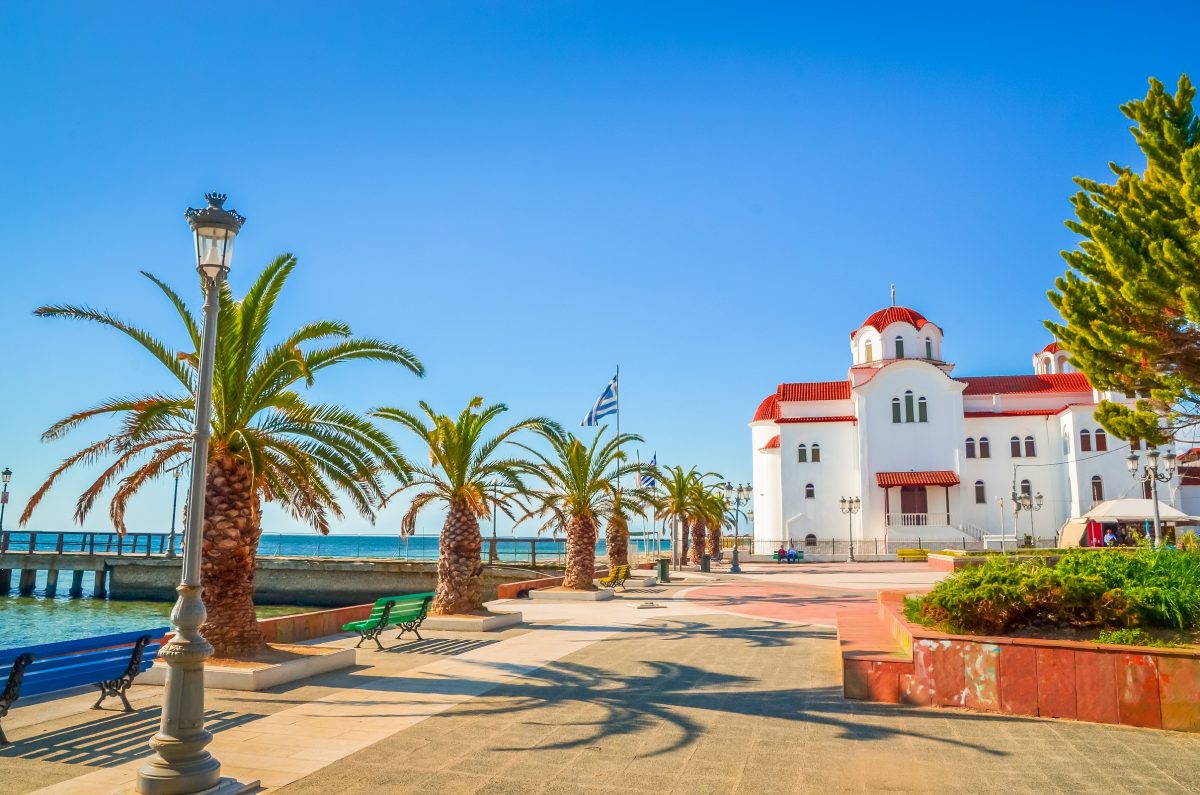
- Paralia Katerinis & Agia Fotini Church: Just a 10-minute drive from the city center, this is Katerini’s seaside alter-ego. The white-domed Church of Saint Photine sitting right on the sand is the most photographed landmark in the region.
- Archaeological Park of Dion: About 15 minutes south, this is the “City of Zeus.” It’s a massive, water-filled archaeological site where you can walk through ancient streets and theaters with Mount Olympus looming in the background.
- The Olympus Riviera: Specifically Olympiaki Akti and Korinos Beach. These are wide, golden-sand beaches that offer everything from high-energy beach bars to secluded spots for a quiet dip.
- Litochoro & Enipeas Gorge: The gateway to Mount Olympus. Even if you aren’t a serious hiker, a quick trip here lets you walk the first section of the Enipeas trail to see the “Bathtubs of Zeus” (natural crystal-clear pools).
The ancient city owes its name to the most important Macedonian sanctuary dedicated to Zeus (Dios, “of Zeus”), leader of the gods who dwelt on Mount Olympus; as recorded by Hesiod’s Catalogue of Women, Thyia, daughter of Deucalion, bore Zeus two sons, Magnes and Makednos, eponyms of Magnetes and Macedonians, who dwelt in Pieria at the foot of Mount Olympus Hence from very ancient times, a large altar had been set up for the worship of Olympian Zeus and his daughters, the Muses, in a unique environment characterised by rich vegetation, towering trees, countless springs and a navigable river. For this reason Dion was the “sacred place” of the Ancient Macedonians. It was the place where the kings made splendid sacrifices to celebrate the new year of the Macedonian calendar at the end of September. In the Spring, purification rites of the army and victory feasts were held.
Kilkis
Kilkis prefecture is one of Greece’s most underrated regions, offering a mix of “fairytale” nature and deep-rooted history once you step outside the capital.
Here are the quick must-sees for your trip:
Natural Wonders
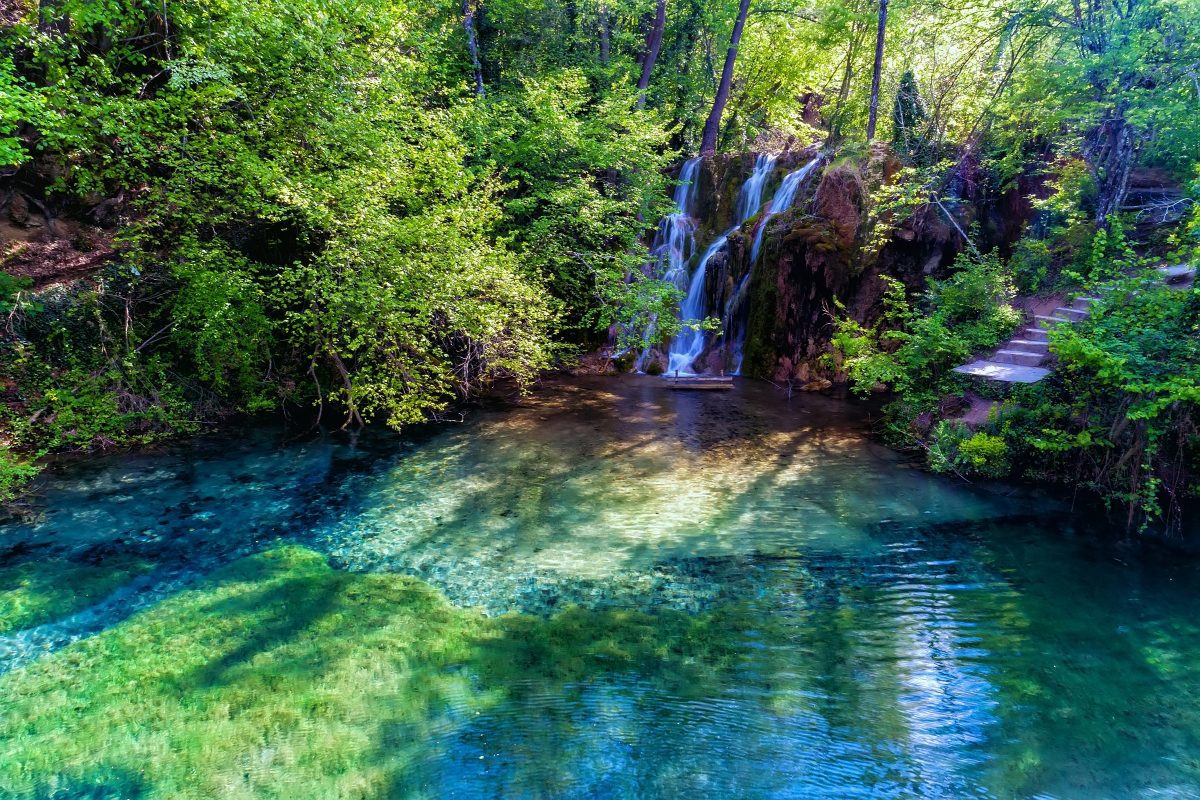
- Skra Waterfalls & Blue Lake: Often called the “Emerald Lake,” this is the region’s crown jewel. A short hike through a dense forest leads to stunning waterfalls and a small lake with a vibrant turquoise color caused by fossilized organisms at the bottom.
- Lake Doirani: Shared with North Macedonia, this serene lake is perfect for birdwatching and long walks. Visit the Doirani Lake Museum and the nearby Mouries Forest (the “Forest of a Thousand Trees”), which features ancient oaks over 500 years old.
- Lake Pikrolimni: Famous for its therapeutic clay and mud baths (pelotherapy). It is a Natura 2000 protected wetland where you can relax in the mineral-rich waters.
- Balkan Botanical Garden of Kroussia: A massive 30-hectare garden showcasing the unique flora of the Balkans. It’s a great spot for peaceful walks and educational nature trails.
Tradition & History
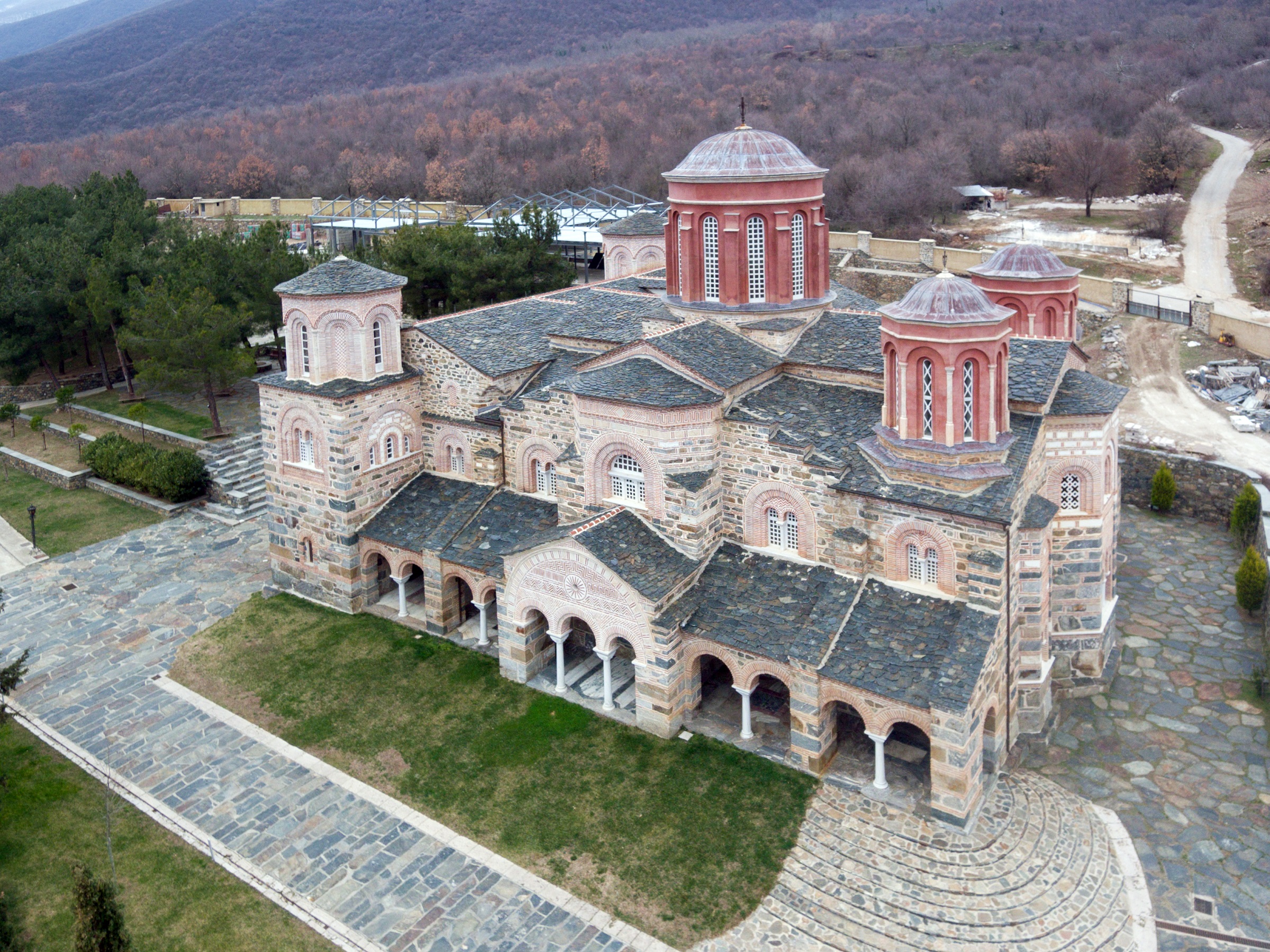
- Goumenissa: The “Wine Capital” of the region. Famous for its PDO Goumenissa red wines (Xinomavro and Negoska), this town is full of traditional Macedonian architecture and boutique wineries. Don’t miss the Monastery of Saint Raphael
- Archaeological Site of Palatiano: Located near the village of Palatiano, these are the remains of the ancient city of Ioron. You can walk through the ruins of Hellenistic-era houses, cemeteries, and shrines.
- Mount Paiko & Villages: Drive up to villages like Kastaneri and Griva. They are famous for their chestnut and cherry production, traditional stone houses, and access to excellent hiking trails.
- Skra World War I Museum: A small but impactful museum dedicated to the Battle of Skra-di-Legen, providing a deep dive into the region’s significant role during the Great War.
- Natural History Museum (Axioupoli): One of the best of its kind in Northern Greece, featuring impressive exhibits on the geology and wildlife of the Axios River valley.
City 0f Kilkis
Kilkis is often overlooked, but it packs a heavy punch for history buffs and nature lovers. If you’re sticking to the city and its immediate surroundings, here is your quick-hit list of must-sees.
The “All-in-One” Stop: St. George’s Hill (Lofos Iroon)
This hill is the city’s highest point and essentially a “three-for-one” destination. You can easily spend a whole morning here.
- Cave of St. George: One of the most important in Greece. It’s a two-story karst cave famous for its rare “cave corals” and impressive stalactites.
- Museum of Paleontology: Located right at the cave entrance. It houses 30,000-year-old fossils (think giant hyenas and primitive oxen) found during the cave’s excavation.
- War Museum of Kilkis: Perched on the hilltop, this museum commemorates the decisive Battle of Kilkis (1913). It’s packed with uniforms, weaponry, and maps that tell the story of the Balkan Wars.
- Monastery of St. George: A beautiful 19th-century post-Byzantine church. Even if you aren’t religious, the panoramic view of the city from the courtyard is the best in town.
Cultural & Architectural Highlights
- Archaeological Museum: Small but significant. It features the famous “Kouros of Europos” and unique finds from the Iron Age. Note: Check locally for current opening hours as it has undergone renovations recently.
- The Folklore Museum: A deep dive into the diverse traditions of the people who settled here (Pontic, Thracian, and Macedonian Greeks). It’s very “old-school” in the best way possible.
- The Twin Tobacco Warehouses (Agko-Popof): These neoclassical industrial buildings are relics of the era when Kilkis was a major tobacco hub. They are great for a quick architectural photo-op.
Worth the Short Drive (30–45 mins)
If you have a car, these two are the region’s “Superstars”:
- Skra Waterfalls & the Emerald Lake: Stunning turquoise waters and lush greenery. It feels more like a tropical lagoon than Northern Greece.
Lake Doirani: Right on the border with North Macedonia. Perfect for a quiet walk, birdwatching, or eating fresh lake fish at the local tavernas in the village of Doirani
Thessaloniki
City of Thessaloniki
Thessaloniki is often called the “Co-capital” of Greece, but in terms of soul, food, and late-night energy, many locals will tell you it’s second to none. It is a city where 2,300 years of history—Roman, Byzantine, and Ottoman—sit right next to a thriving student-led nightlife and a waterfront that practically begs for a sunset stroll.
Here is your essential guide to the highlights of Thessaloniki.
The Must-See Landmarks
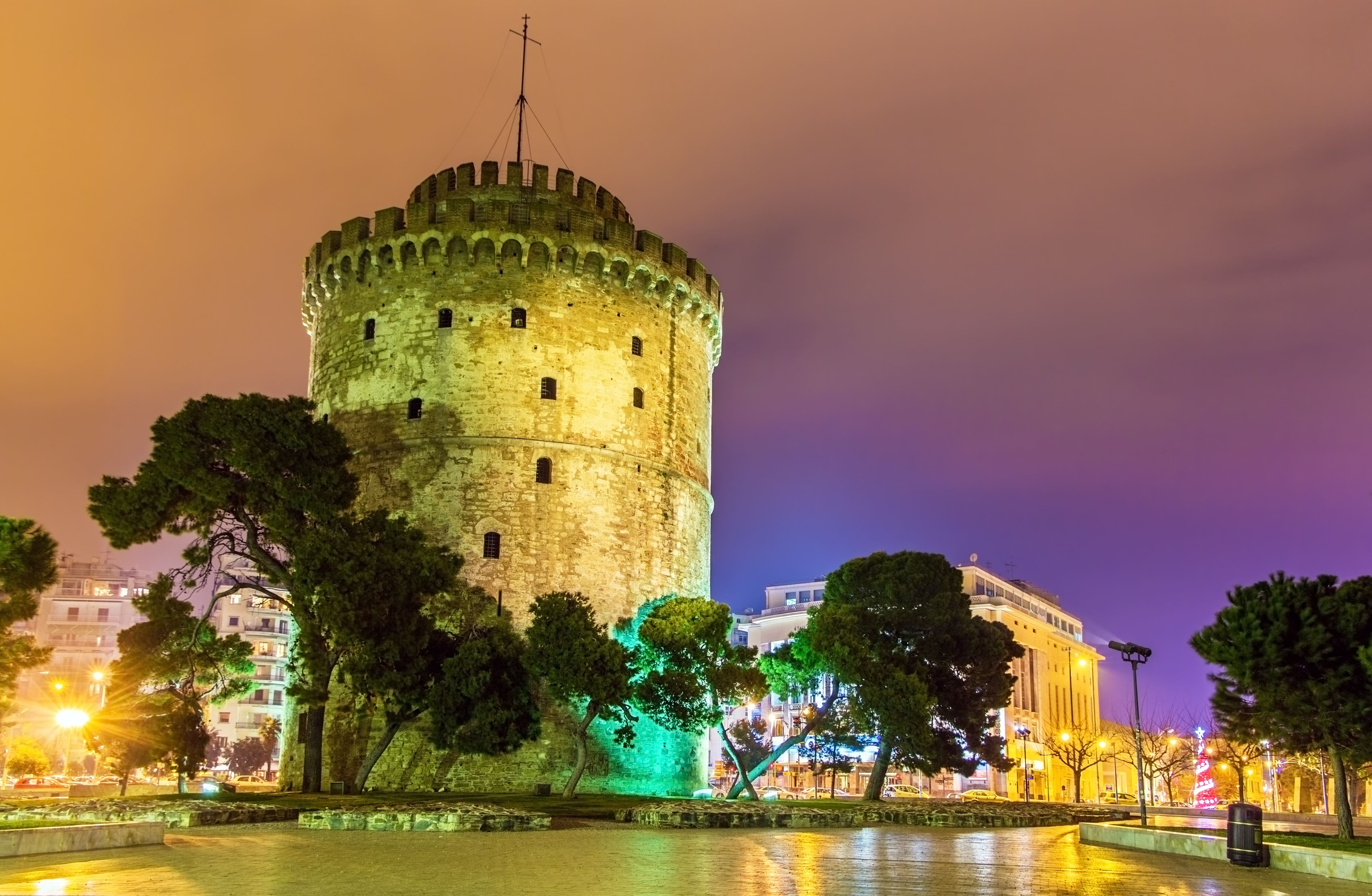
- The White Tower: The city’s undisputed icon. Once an Ottoman prison (formerly known as the “Tower of Blood”), it now houses an excellent interactive museum about the city’s history. Climb to the top for the best 360-degree view of the Thermaic Gulf.
- The Umbrellas (Zongolopoulos): Located just down the promenade from the White Tower, these towering, ethereal metal umbrellas are the most photographed modern landmark in the city. They are especially magical when lit up at night.
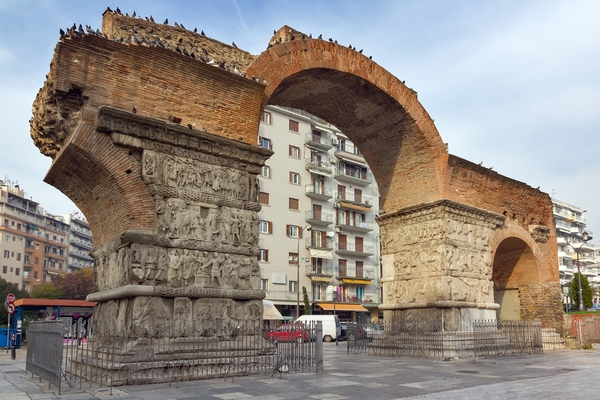
- The Rotunda & Arch of Galerius (Kamara): These Roman relics are the city’s favorite meeting points. The Rotunda is a massive circular structure that has served as a mausoleum, a church, and a mosque. Nearby, the Arch (Kamara) features intricate carvings of Roman victories.
- The Church of Agios Dimitrios: Dedicated to the city’s patron saint, this UNESCO World Heritage site sits atop the ancient Roman baths where the saint was martyred. Be sure to head down into the Crypt for a hauntingly beautiful experience.
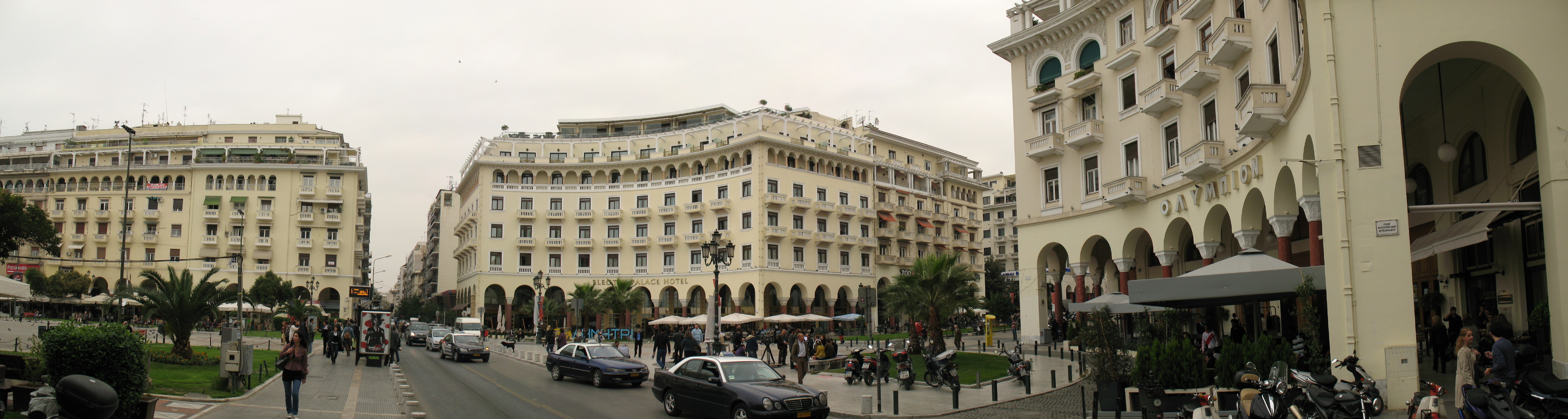
- Aristotelous Square: The grand heart of the city, designed after the Great Fire of 1917. It opens up to the sea, flanked by neoclassical buildings and packed with cafés where people-watching is a local sport.
Neighborhoods to Explore
- Ano Poli (Upper Town): The only part of the city that survived the 1917 fire. It’s a maze of steep, cobblestone streets, traditional Ottoman houses, and the old Byzantine Walls. Walk up to the Heptapyrgion fortress for sunset; it feels worlds away from the city center.
- Ladadika: Located near the port, this former wholesale oil district is now a pedestrian-only zone filled with colorful buildings. It’s the premier spot for traditional tavernas and lively music.
- Valaoritou: If you’re looking for the city’s “cool” factor, this is it. By day, it’s a quiet commercial area; by night, the old textile workshops turn into alternative bars and underground clubs.
- Nea Paralia (New Waterfront): A 5km-long award-winning park system along the sea. It features themed gardens (like the Garden of Sound or the Japanese Garden) and is perfect for renting a bike or just wandering.
The Gastronomy: Greece’s Foodie Capital
- The Markets (Modiano & Kapani): Modiano was recently renovated into a high-end food hall, while Kapani remains the gritty, traditional heart of the city. Together, they are a sensory overload of spices, olives, and fresh fish.
- The Bougatsa Ritual: You cannot leave without trying Bougatsa. It’s a phyllo pastry filled with sweet semolina cream (or savory cheese/minced meat). Bantis and Giannis are legendary spots.
- Meze Culture: Thessaloniki is famous for its small plates. Grab a seat at a “Tsipouradiko” (like those in the Louloudadika area) and let the waiter bring you small seafood plates to go with your spirit of choice.
- Koulouri: The famous sesame bread ring you see all over Greece actually originated here. Buy it fresh from a street vendor in the morning.
Pro Tips for 2026
- The Metro: After years of anticipation, the Thessaloniki Metro is now fully operational! It is the most efficient way to get from the Railway Station through the city center to the east side. The stations are “museum-stations,” showcasing ancient ruins found during construction.
- Walkability: While the Metro is great, the city center is very compact. You can walk from the Port to the White Tower in about 15 minutes.
The “Halkidiki” Rule: If you are visiting in summer, remember the local saying: “San tin Halkidiki den echei” (There is nowhere like Halkidiki). Most of the city heads to the nearby turquoise beaches of the Halkidiki peninsula on weekend
Thessaloniki remained an important city from antiquity to modern times with a multicultural population.
While the city of Thessaloniki gets the most attention, the surrounding Thessaloniki Prefecture (Regional Unit) is a massive area that stretches from the Axios River in the west to the Strymonic Gulf in the east. It offers a mix of wetland ecosystems, vast lakes, and coastal resorts.
Here is a guide to the highlights of the Thessaloniki prefecture, strictly excluding the city itself.
Coastal Escapes & Beaches
The prefecture has two distinct coastlines: the Thermaic Gulf (south of the city) and the Strymonic Gulf (to the east).
- Epanomi & The Shipwreck: About 25km south of the city, Epanomi features a long sandy cape (“Potamos”). Its most famous landmark is a rusted shipwreck sitting in shallow water near the shore—perfect for photos and snorkeling.
- The “Suburban Riviera” (Perea, Neoi Epivates, Agia Triada): These towns are essentially the city’s backyard. You can reach them via a small commuter ferry from the city’s port. They offer long promenades lined with fish tavernas and cafes that are packed year-round.
- Asprovalta & Nea Vrasna: Located on the eastern edge of the prefecture (about an hour’s drive), these are major summer resorts with wide, organized sandy beaches and a more “vacation town” feel than the suburbs near the city.
Nature & Outdoors
Thessaloniki is home to some of Greece’s most important wetlands and mountain hiking trails.
- Axios Delta National Park: To the west, this is one of Europe’s most important bird sanctuaries. You can spot flamingos, water buffaloes, and wild horses in the marshes where the Axios, Loudias, and Aliakmonas rivers meet the sea.
- Lake Volvi & Lake Koroneia: Lake Volvi is the second-largest lake in Greece. Highlights include the Nymphopetra (strange geological rock formations) and the Ancient Platanos of Agia Paraskevi, an enormous tree over 800 years old.
- Mount Chortiatis: For those looking to hike, Chortiatis offers lush forests and a refreshing climate. The village of Chortiatis is famous for its “kleftiko” (slow-roasted lamb) and provides panoramic views of the entire Thermaic Gulf.
History & Culture
- The Balkan Wars Museum (Gefyra): Located in a historic villa where the surrender of Thessaloniki was negotiated in 1912. It’s a beautifully preserved site for history buffs.
- Castle of Rentina: Situated in the “Macedonian Tempi” (a lush gorge between Lake Volvi and the sea), this Byzantine-era fortress once guarded the strategic pass to the east.
- Monastery of Saint Paisios (Souroti): One of the most visited religious sites in Greece. It is the burial place of the modern Saint Paisios of Mount Athos and attracts thousands of pilgrims.
Wellness & Local Traditions
- Lagadas Thermal Baths: A historic spa town since the Byzantine and Ottoman eras. You can soak in the ancient stone-built vaulted pools (the “Justinian” and “Mygdonia” pools) which stay at a constant $39^\circ\text{C}$.
- Sochos: A traditional mountain village famous for its unique Carnival (featuring “Koudounoforoi” or bell-bearers) and its high-quality dairy products, specifically its local kasseri cheese.
Summary Table: Quick Reference
Category | Must-Visit Spot | Best For… |
Beach | Epanomi (The Shipwreck) | Photography & Snorkeling |
Nature | Axios Delta | Birdwatching & Wildlife |
History | Balkan Wars Museum | Modern Greek History |
Relax | Lagadas Baths | Thermal Spa & Wellness |
Spiritual | Souroti Monastery | Pilgrimage & Quiet Reflection |
Thessaloniki isn’t just a city with good food; it’s officially a UNESCO City of Gastronomy, the first in Greece to join the Creative Cities Network (UCCN) in 2021.
This isn’t just about Michelin stars or fancy plating—it’s a recognition of the city’s 2,300-year history as a cultural crossroads where Roman, Byzantine, Ottoman, Jewish, and Balkan flavors collided to create something entirely unique.
Why Thessaloniki Won the Title
The designation recognizes how the city uses its culinary heritage to drive sustainable urban development and social cohesion.
- Multicultural Roots: The cuisine is a “melting pot.” You’ll taste the influence of the Sephardic Jews (who arrived in 1492), the spices brought by refugees from Asia Minor in the 1920s, and traditional Mediterranean staples.
- Zero-Waste Traditions: Many traditional recipes focus on “nose-to-tail” or “root-to-leaf” cooking, aligning with modern sustainability goals.
- The Market Culture: The city’s heart beats in its historic markets like Kapani and Modiano, which have been refurbished to blend traditional stalls with modern gastronomy concepts.
The “Must-Taste” Icons
If you’re visiting the UNESCO City of Gastronomy, these are the non-negotiables:
Dish | Description | Best Time to Eat |
Koulouri | A sesame-crusted bread ring, crunchy on the outside and soft inside. | Breakfast (on the go) |
Bougatsa | Phyllo pastry filled with sweet semolina cream, minced meat, or cheese. | Late night or early morning |
Trigona Elenidi | Triangle-shaped crispy phyllo soaked in syrup and filled with fresh cream. | Dessert / Anytime |
Meze & Tsipouro | Small plates (grilled octopus, spicy feta) paired with local grape pomace brandy. | Lunch or Dinner |
The Modern Scene
Thessaloniki has moved beyond just “tradition.” The city is currently experiencing a bistro-renaissance. Young chefs are taking high-quality local ingredients—like mussels from Olympiada, saffron from Kozani, and feta from nearby farms—and reimagining them with modern techniques.
Fun Fact: Thessaloniki is the birthplace of the Frappé (invented by accident at the 1957 International Trade Fair), proving its long-standing culture of innovation in food and drink.
How to Experience it
- Market Hopping: Walk through Kapani Market to smell the spices and see the fresh catch of the day.
- Ano Poli (Old Town): Eat at a small tavern in the upper city for a view of the Thermaic Gulf and a more “village” feel.
Ladadika District: Once the oil storage area of the port, it’s now a vibrant pedestrian zone packed with some of the city’s best restaurants
Chalkidiki
If you’re making a quick stop in Polygyros, the administrative capital of Halkidiki, here are the essential spots to hit. Unlike the coastal resorts, this is a mountain town focused on history, architecture, and lush greenery.
The City Essentials
- Archaeological Museum of Polygyros
Located in Iroou Square, this is the city’s crown jewel. It houses significant finds from across Halkidiki, including treasures from ancient Olynthos and Stagira (Aristotle’s birthplace). It was recently renovated and offers a very modern, interactive experience. - Exi Vrises (The Six Fountains)
A central meeting point and the town’s most famous landmark. These traditional stone fountains are surrounded by a lush park with plane trees, offering a cool, shady spot to rest. - The Folklore Museum
Housed in the restored Karagani Mansion, this museum showcases traditional costumes, agricultural tools, and everyday items from the 19th and 20th centuries. It’s a great way to see the “Old Polygyros” lifestyle. - Chapel of Profitis Ilias
For the best view, head up to this hilltop chapel. It offers a panoramic vista of the city, the surrounding olive groves, and the Toroneos Gulf in the distance. - The Old Town & Town Hall
Take a short walk through the narrow streets to see the traditional Macedonian architecture. The Town Hall itself is a beautiful neoclassical building located in a central, scenic plaza. - Church of Agios Nikolaos
The town’s main cathedral and patron saint’s church. It’s an impressive structure and sits at the heart of the local community life.
Quick Local Tip
If you have time for one meal, head to Marigoula. It’s a legendary local restaurant known for “neo-Greek” cuisine that uses regional ingredients in creative ways—it’s widely considered one of the best dining spots in northern Greece.
Chalkidiki is much more than just the capital of Polygyros. Here are the top spots across the three “fingers” (Kassandra, Sithonia, and Athos) and the mountainous interior.
Coastal & Islands
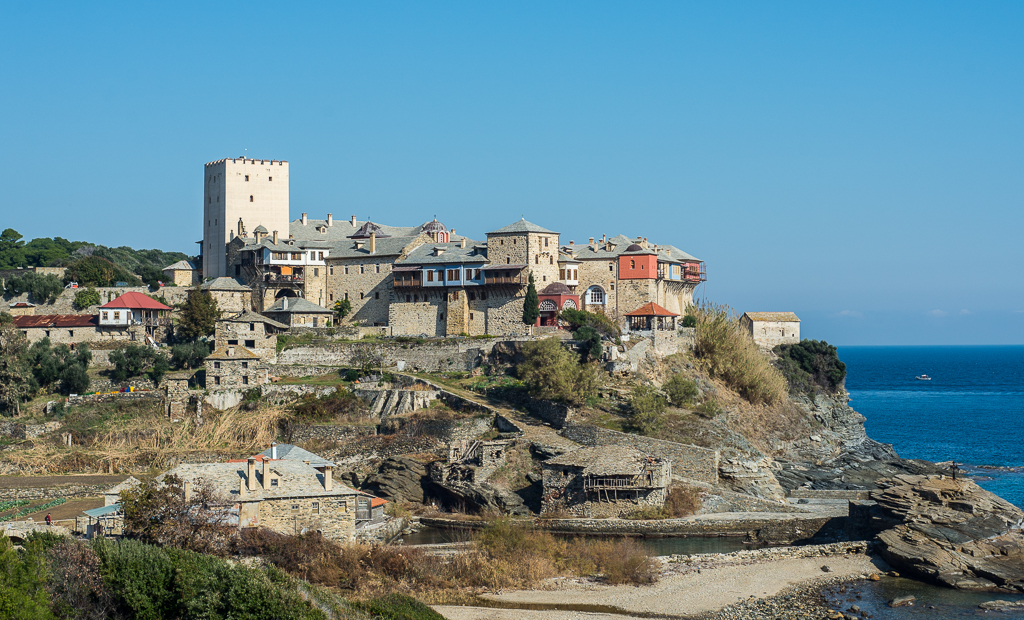
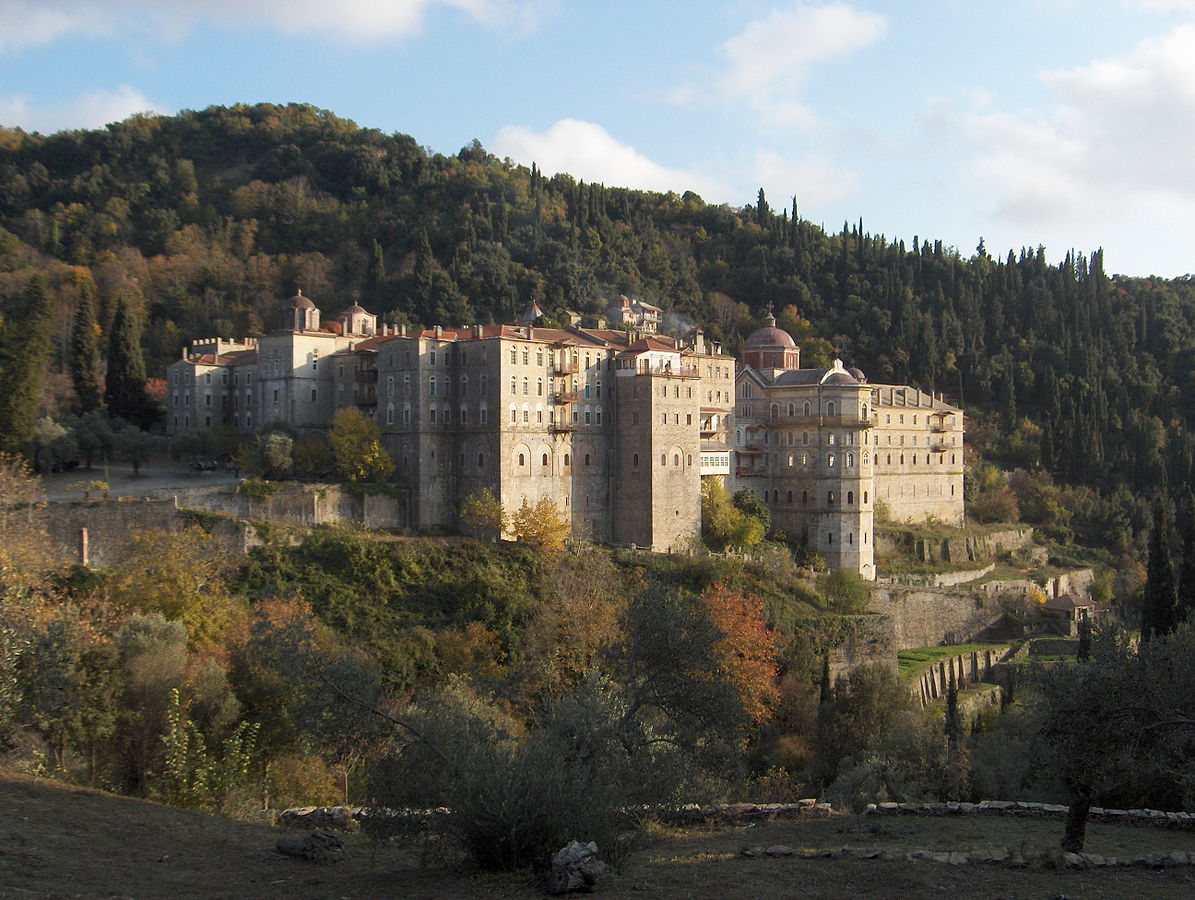
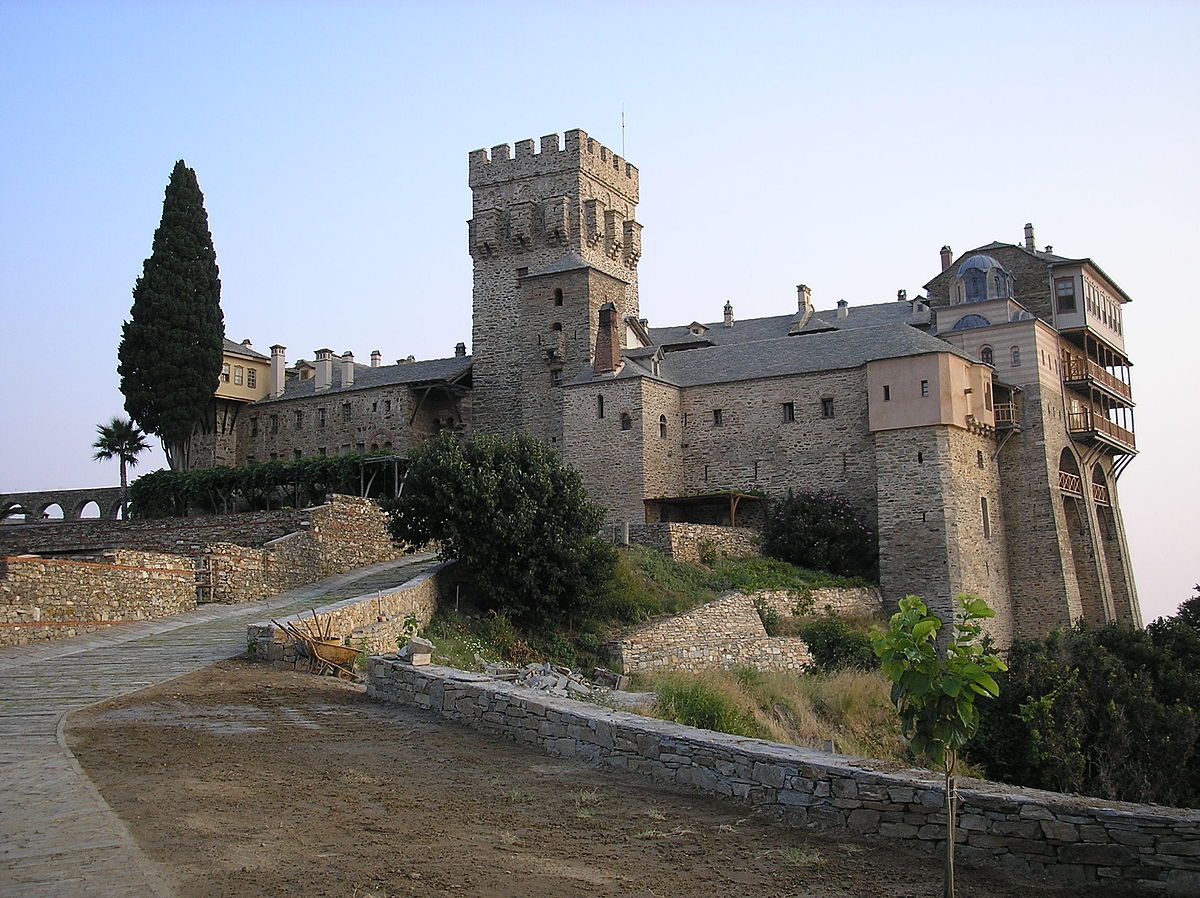
- Mount Athos (Agion Oros): A UNESCO World Heritage site and autonomous monastic state. While entry to the monasteries is restricted to men with a special permit, boat cruises from Ouranoupoli allow everyone to view the incredible Byzantine architecture from the water.
- Ammouliani Island: The only inhabited island in Chalkidiki. It’s perfect for a day trip to enjoy turquoise waters and the famous Alykes Beach.
- Kavourotrypes (Orange Beach): Often called the “Hawaii of Greece,” this spot in Sithonia features small, white-rock coves, crystal-clear water, and pine trees that reach right down to the sand.
- Vourvourou & Diaporos Island: You can rent a small boat (no license required) to explore the “Blue Lagoon” between the Sithonia coast and the uninhabited Diaporos island.
- Cape Possidi: A unique, shifting sandbar in Kassandra that changes shape with the tide. It’s a surreal spot for a sunset walk near the historic 19th-century lighthouse.
Villages & Heritage
- Afytos (Afitos): The most picturesque village in Kassandra. It is built of stone on a cliffside, offering a “balcony” view of the Toroneos Gulf, cobblestone streets, and traditional Macedonian architecture.
- Arnea: Located in the mountainous north, this traditional village is famous for its restored mansions, colorful woven textiles, and excellent local honey and wine.
- Ancient Stagira: The birthplace of Aristotle. You can walk through the ruins of the ancient city right on the coast or visit the nearby Aristotle’s Park, which features interactive scientific instruments based on his discoveries.
Caves & History
- Petralona Cave: A world-renowned anthropological site where a 700,000-year-old human skull was discovered. The cave is packed with impressive stalactites and stalagmites.
- Ancient Olynthos: One of the most important political centers of the Classical period, known for its remarkably well-preserved floor mosaics and ancient urban planning.
Mount Athos, the “Holy Mountain,” is a self-governed monastic republic in Northern Greece. It is a place of profound spirituality, frozen in Byzantine time. Because it is governed by strict religious laws, visiting requires significant planning.
Note on Access (The Avaton): By ancient decree, only men are permitted to enter Mount Athos. Women can view the monasteries from boat cruises that remain 500 meters offshore.
The Essential Entry Guide
Secure Your Permit (Diamonitirion)
You cannot simply show up. You need a Diamonitirion, a special entry permit.
- Quota: Only 100 Orthodox and 10 non-Orthodox visitors are allowed per day.
- How to book: Contact the Mount Athos Pilgrims’ Bureau in Thessaloniki (+30 2310 252578 or email: athosreservation@gmail.com). It is highly recommended to book 6 months in advance, especially for summer or holidays.
- Cost: Approximately €30 for non-Orthodox and €25 for Orthodox (discounted for students).
Getting There
- Step 1: Travel to Thessaloniki, then take a 2.5-hour bus (KTEL Chalkidikis) or taxi to the gateway town of Ouranoupoli.
- Step 2: On the morning of your entry, go to the Pilgrims’ Bureau office in Ouranoupoli to pick up your physical permit.
- Step 3: Board the ferry to the port of Dafni. Ferries typically depart around 09:45 AM.
Staying Overnight
- Accommodation is free, provided by the monasteries, but you must call each monastery individually to reserve a bed well in advance.
- Stays are typically limited to one night per monastery.
- Expect Spartan conditions: shared dorms, simple vegetarian meals (often only twice a day), and no showers in some older cells.
Top Highlights & Monasteries
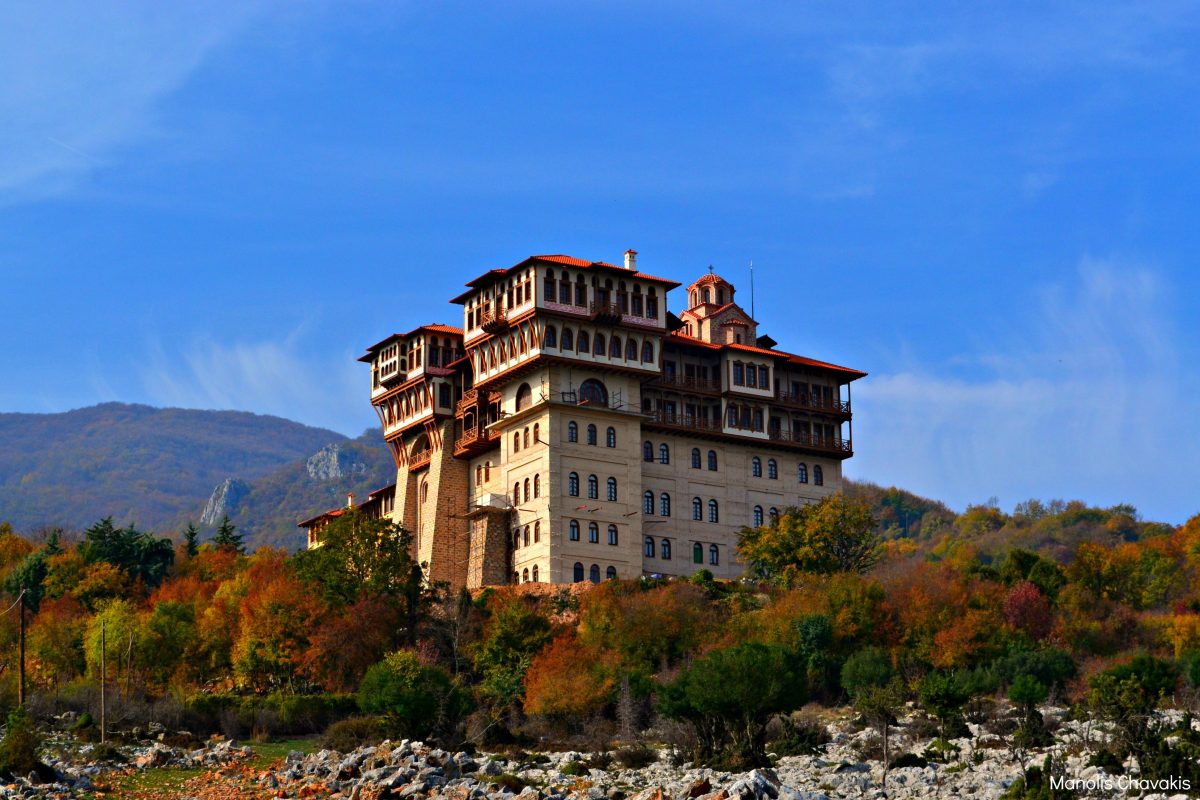
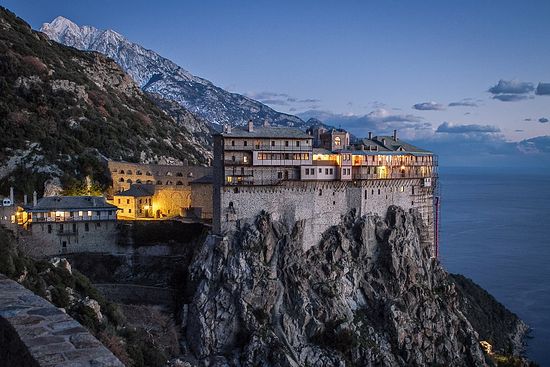
- Simonos Petras Monastery: Perched dramatically on a 250-meter cliff, this is the most photographed site on Athos. Its multi-story architecture is a marvel of medieval engineering.
- The Great Lavra: Founded in 963 AD, it is the oldest and highest-ranking monastery. It houses a massive library of ancient manuscripts and the tomb of St. Athanasios.
- St. Panteleimon (The Russian Monastery): Famous for its distinct green onion domes and massive bells. It offers a visual contrast to the more traditional Greek-style monasteries.
- Vatopedi Monastery: One of the largest and wealthiest, known for its incredible collection of Byzantine mosaics and the “Holy Belt” of the Virgin Mary.
- The Capital, Karyes: The administrative heart of Athos. Visit the Protaton Church to see the famous Axion Estin icon and 14th-century frescoes by Manuel Panselinos.
- Mount Athos Peak: For those fit for a challenge, a hike to the 2,033m summit provides a spiritual “climax” and breathtaking views of the Aegean.
Rules & Conduct
- Dress Code: Long trousers and long-sleeved shirts at all times. No shorts or tank tops.
- Photography: Never photograph a monk without his explicit permission. Photography inside churches is strictly forbidden. Video recording is generally prohibited everywhere.
- Behavior: Life revolves around the liturgy. Many services start as early as 2:00 or 3:00 AM. While not mandatory for non-Orthodox, attending a portion of the service is a mark of respect.
- Tech: Keep phones on silent. Smoking and swimming in the sea are forbidden.
Eastern Macedonia
Includes the following prefectures: Serres, Drama and Kavala
Serres
City of Serres
If you’re heading to Serres, this “Temple of Speed” (as motorheads call it) is actually a very green, historical, and snack-heavy city. Here is a quick list of the must-sees within the city limits and just on its edge.
The Historical “Big Three”
- Byzantine Acropolis (Koulas Hill): Perched high above the city, this is the spot for panoramic views. You can see the ruins of the Byzantine fortifications and the Tower of Orestes. It’s the go-to place for a sunset walk.
- Archaeological Museum (Bezesteni): Even if you aren’t a “museum person,” the building itself is a masterpiece. It’s a 15th-century Ottoman closed market (Bezesteni) with six domes. Inside, you’ll find artifacts from the Neolithic era to the Roman period.
- Zincirli Mosque: A beautifully restored Ottoman mosque. While it no longer functions as a religious site, it often hosts cultural exhibitions and stands as a striking piece of the city’s multi-layered history.
Nature & Leisure
- Agioi Anargyroi Valley: The locals’ favorite green escape. It’s a lush park with tall plane trees, running water, walking paths, and plenty of cafes. It’s perfect if you want to cool down during a hot Greek summer day.
- Sarakatsani Folklore Museum: A very well-regarded museum dedicated to the nomadic Sarakatsani tribe. It features traditional huts, costumes, and tools, offering a deep dive into a unique part of Northern Greek heritage.
- Serres Racing Circuit: Just on the outskirts, this is the only circuit in Greece (and the Balkans) that meets international standards. If there’s a race on, the atmosphere is electric; otherwise, you can often just peek in.
The “Don’t Leave Without Tasting” List
Serres is arguably the “Bougatsa Capital” of Greece. You cannot visit without trying these two:
- Serraiki Bougatsa: Unlike the versions in Athens or Thessaloniki, the local bougatsa has a very specific, crunchy handmade phyllo. Try the sweet cream version or the savory minced meat.
- Akanes: This is the city’s signature sweet. It looks like a small loukoumi (Turkish delight) but is made with fresh goat butter from the local Lailias mountain, giving it a rich, distinct flavor.
Pro Tip: If you have an extra half-day, drive 45 minutes to Lake Kerkini. It is one of the best bird-watching spots in Europe and home to a massive population of water buffalo.
Beyond the capital city, the Serres prefecture offers a stunning mix of dramatic WWII history, massive archaeological sites, and some of the most important wetlands in Europe.
Here are the quick must-sees for the region:
Nature & Landscapes
- Lake Kerkini: One of the premier bird-watching destinations in Europe. It is famous for its flamingos, rare bird species, and the largest population of water buffalo in Greece. You can take a boat tour or go horseback riding along the banks.
- Alistrati Cave: Considered one of the most beautiful and largest caves in Greece. It features rare helictites (eccentric stalactites that grow in irregular directions) and a massive 3km-long accessible corridor with vibrant mineral colors.
- Angitis River Canyon: Located right next to the Alistrati Cave, this gorge is perfect for light hiking or rafting. The stone bridge of Aggitis is a highlight for photographers.
- Lailias Forest: A dense forest of beech and Scots pine trees. It is a local favorite for hiking in the summer and features a small ski center in the winter.
History & Culture
- Fort Roupel: A legendary WWII fortification near the Bulgarian border. You can tour the underground bunkers and tunnels that were part of the Metaxas Line, where Greek forces resisted the German invasion in 1941.
- Amphipolis Archaeological Site: Home to the famous Lion of Amphipolis (a 4th-century BC funerary monument). You can also explore the remains of the ancient city, its gymnasiums, and its impressive early Christian basilicas.
- Monastery of Timios Prodromos: Located in a deep ravine about 10km from the city, this 13th-century Byzantine monastery is an architectural gem with incredible frescoes and a serene, historic atmosphere.
Wellness & Relaxation
- Agkistro Thermal Springs: Located in the village of Agkistro near the border, this site features a Byzantine-era stone bath dating back to 950 AD. The water is naturally hot, and the bathhouse is open 24 hours a day for a truly unique atmosphere.
- Sidirokastro Springs: Another great thermal spot located on a hill overlooking the town of Sidirokastro, offering panoramic views while you soak.
Drama
City of Drama
If you find yourself in Drama, you’re in for a treat. It’s one of those rare Greek cities where the water actually runs through the center, giving it a cool, lush vibe that most sun-baked Mediterranean towns lack.
Here is your quick “no-fluff” checklist for the city:
The Essentials
- Agia Varvara Park: The soul of the city. It’s a network of springs, small lakes, and waterfalls surrounded by massive plane trees. It’s the perfect spot for a coffee or a slow stroll while watching the ducks pretend they own the place.
- The Tobacco Warehouses: Look for the massive stone buildings (like the Spierer Mansion) reflecting in the Agia Varvara waters. They are relics of the city’s wealthy tobacco-trading past and are stunning examples of industrial architecture.
- Byzantine Walls & Agia Sophia: Located in the older part of town, these 10th-century fortifications and the nearby church of Agia Sophia give you a quick, tangible hit of the city’s deep history.
- Archaeological Museum: Small but punchy. It covers everything from prehistoric mammoth tusks found in nearby caves to Roman and Byzantine treasures.
- The Railway Museum: A bit of a hidden gem for history buffs. It features an old locomotive from the legendary Orient Express line, which used to pass through here.
- Oniroupoli (The Dream City): If you happen to visit in December/early January, this is the massive Christmas village that takes over the central park. It’s essentially the North Pole, but with better food.
Quick Side Quests (15-30 mins away)
- Aggitis River Cave: About 20-25 minutes from the city center. It is one of the only caves in the world where a river flows through it.
- Local Wineries: Drama is the “Wine Capital” of Northern Greece. If you have time, a quick tasting at estates like Costa Lazaridi or Vivlia Chora is basically mandatory.
If you’re heading out into the wider Drama prefecture, you’re moving into a land of “hidden” Greece—massive virgin forests, underground rivers, and some of the best wine in the country.
Here are the absolute must-sees outside of Drama city:
Natural Wonders
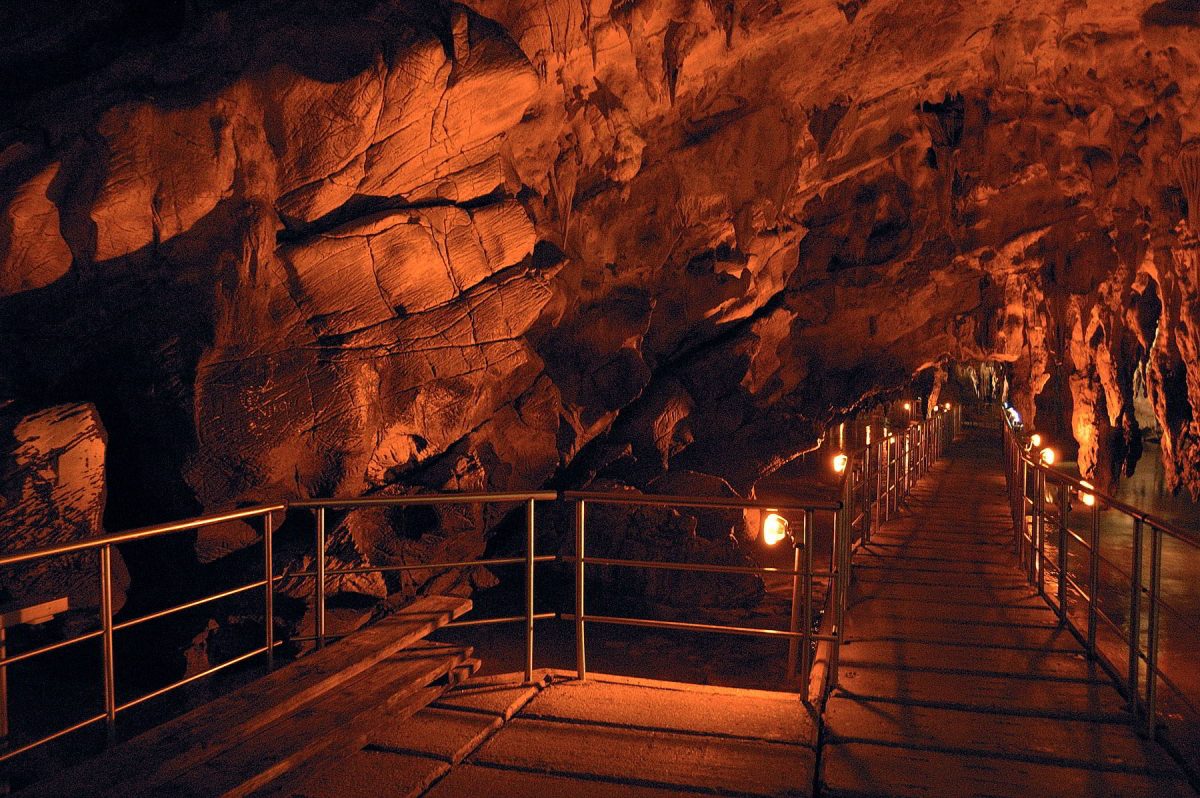
- Aggitis River Cave (Maara): One of the most impressive river caves in Europe. You walk on a bridge over the rushing water inside the cave, surrounded by massive stalactites.
- Elatia Forest (Kara Dere): A slice of Scandinavia in Greece. It is the only place in the country where the Red Spruce grows, making it feel like a fairy-tale Northern European forest.
- Fraktos Virgin Forest: A UNESCO-protected primary forest and one of the most untouched wild places in Europe. It’s remote, but the waterfalls (especially the Skaloti falls) and the absolute silence are hauntingly beautiful.
- Mount Falakro: Known as the “Mountain of Flowers” in spring and a popular ski resort in winter. The view from the “Snowhole” (Hionotrypa) at the summit is spectacular.
- Nestos River (Paranesti): Perfect for rafting or birdwatching. The riverside trails near Paranesti offer some of the most lush, green scenery in the Balkans.
History & Spirit
- Monastery of Panagia Eikosifoinissa: Perched on Mount Pangaio, this is one of the oldest monasteries in Europe. It has a heavy, spiritual atmosphere and incredible Byzantine architecture (though it’s technically on the border with Kavala, it’s a staple of Drama itineraries).
- The Sanctuary of Dionysus (Kali Vrysi): An archaeological site dedicated to the god of wine, which is fitting given the region’s current reputation.
- The Forts of the Metaxas Line: For history buffs, the Ochyro (Fort) Lisse near Nevrokopi offers a deep dive into WWII history with underground tunnels and a museum.
Local Gems
- The Wineries of Adriani: Drama is Greece’s “Napa Valley.” Visit estates like Costa Lazaridi, Nico Lazaridi, or Wine Art Estate for world-class tastings.
- Kefalari Springs: A beautiful spot for a quick break. Huge plane trees grow over crystal-clear springs, and there are local tavernas specializing in fresh trout.
- Granitis Village: A stone-built mountain village that serves as a perfect base for hikers and offers great traditional Macedonian food.
Kavala
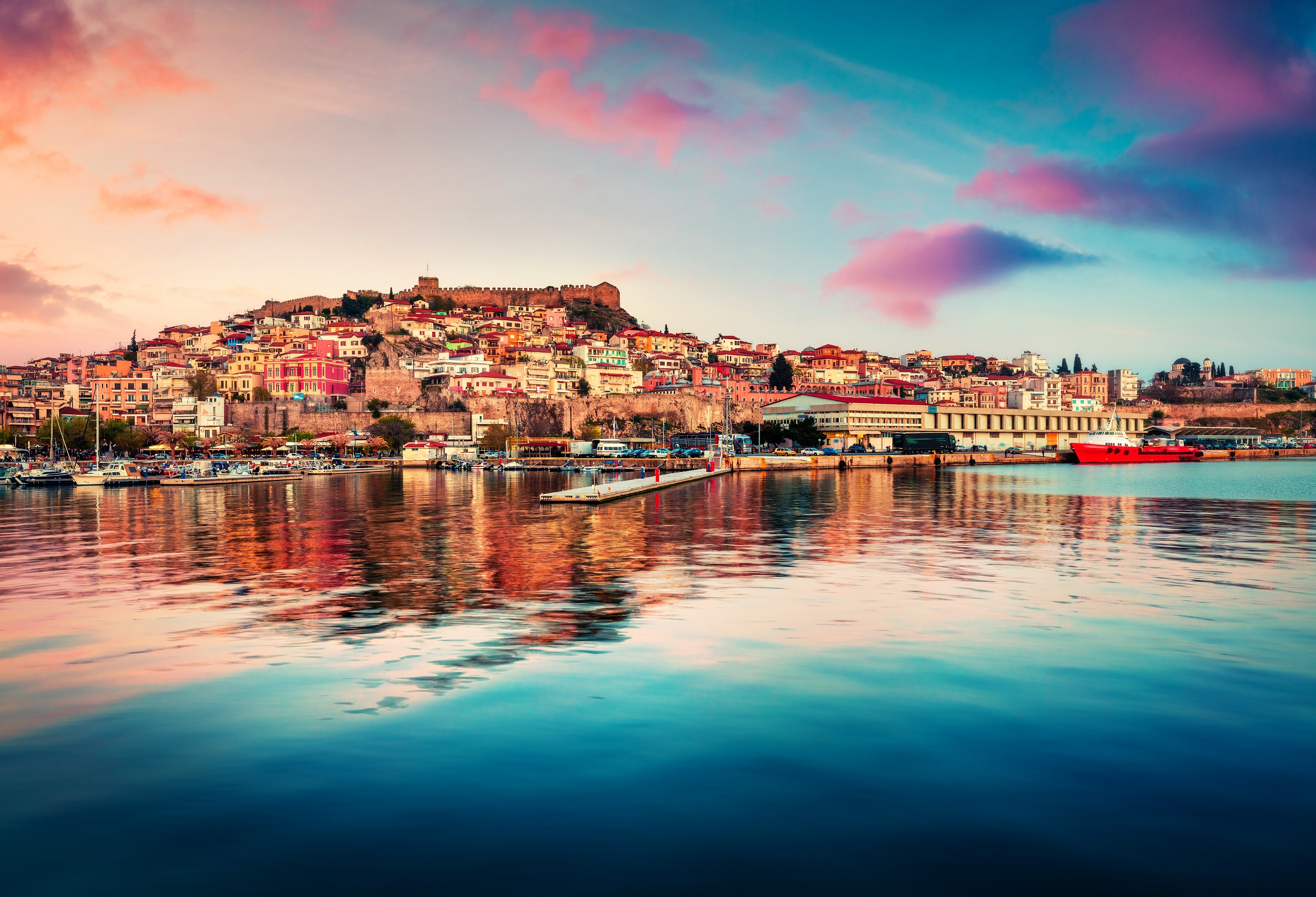
Welcome to Kavala, the “Blue City” of Northern Greece. Rising amphitheatrically from the Aegean coast, this city is a stunning blend of Byzantine history, Ottoman architecture, and a rich industrial legacy from its days as the “Tobacco Mecca” of the Balkans.
Historic Highlights & Landmarks
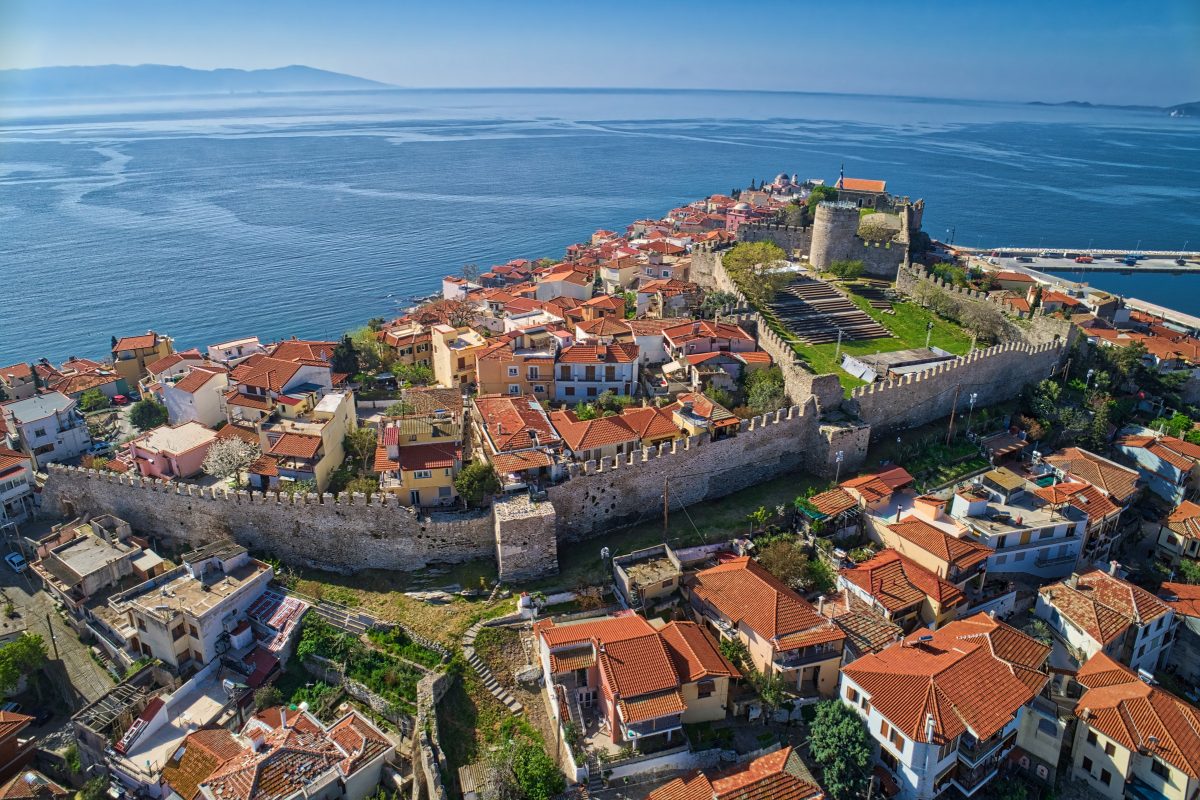
- The Fortress of Kavala (The Castle): Crowning the top of the Panagia peninsula, this 15th-century Ottoman citadel was built over Byzantine ruins. Climb the circular central tower for the most spectacular 360-degree views of the city, the port, and the island of Thassos.
- The Kamares (The Aqueduct): This massive 16th-century arched structure is Kavala’s most iconic landmark. Spanning 280 meters, it was once the city’s lifeline, bringing water from the springs of Mount Pangaio.
- The Imaret: A masterpiece of late Ottoman architecture, this massive complex with lead-domed roofs was founded in 1817 as an Islamic school and almshouse. Today, it operates as a luxury hotel, but its courtyards and marble arches remain a must-see.
- Mohamed Ali’s House & Square: Visit the ancestral home of the founder of modern Egypt. The house is a beautiful example of 18th-century Ottoman design, and the nearby square features a striking bronze statue of Ali Pasha on horseback.
- Halil Bey Mosque: Also known as the “Old Music” mosque, this site is unique because it was built directly over a Byzantine basilica, which you can still see through a glass floor inside.
Exploring the Districts
- Panagia (Old Town): A maze of narrow, cobblestone streets and pastel-colored Macedonian mansions with wooden balconies. It feels like an open-air museum and is the heart of the city’s historical soul.
- The Tobacco Warehouses: Scattered throughout the modern city, these grand, industrial-chic buildings (like the Municipal Tobacco Warehouse) are reminders of the 19th-century boom when Kavala was a global hub for the tobacco trade.
- The Port & Promenade: In the evening, the harbor area becomes a vibrant pedestrian zone. It is lined with palms, cafes, and seafood tavernas where you can enjoy fresh octopus and local tsipouro.
Cultural & Hidden Gems
- Tobacco Museum of Kavala: The only one of its kind in Europe, this museum offers a fascinating look at the “oriental tobacco” industry that once dominated the region’s economy and social life.
- Archaeological Museum of Kavala: Houses Neolithic finds and artifacts from Ancient Amphipolis and Philippi, including impressive marble sculptures and gold jewelry.
- The Rocks of Panagia: A “secret” local favorite. Just below the lighthouse at the tip of the peninsula, you’ll find steep steps leading down to rocky platforms perfect for a quick dip in turquoise waters.
Nearby Day Trips
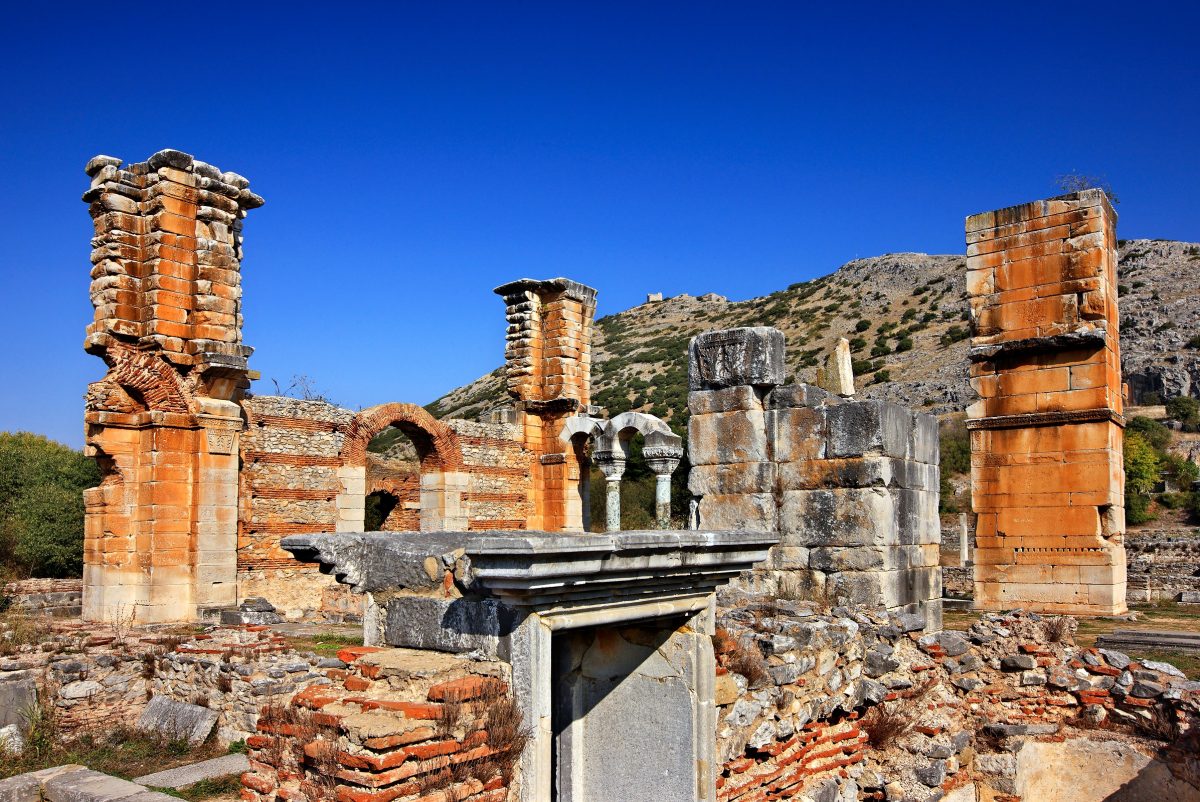
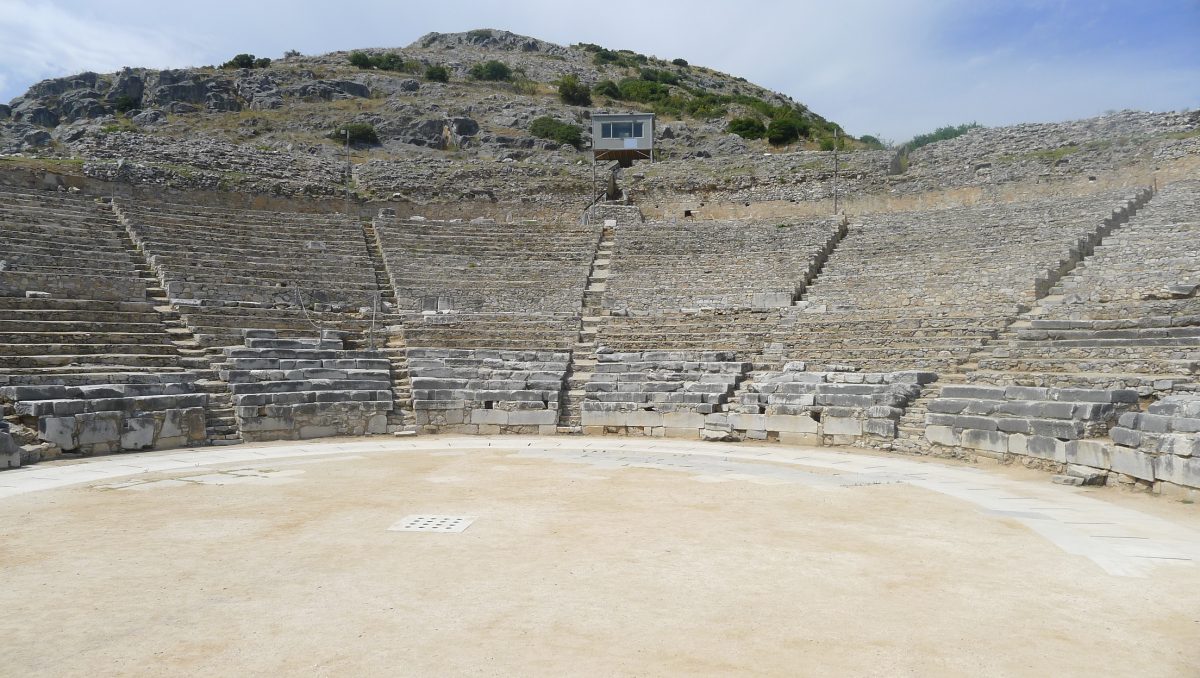
- Ancient Philippi (UNESCO World Heritage Site): Only 15km away, this is one of Greece’s most important archaeological sites. It features a grand theater, a Roman forum, and the prison where the Apostle Paul was held.
- Krinides Mud Baths: Located near Philippi, these natural clay baths are famous for their therapeutic properties. You can enjoy a holistic “mud immersion” for a very small fee.
- Thassos Island: Catch a ferry from the port for a short ride to this emerald island, known for its marble-white beaches and lush pine forests.
Local Flavors to Try
- Kourabiedes: Kavala is famous for these crescent-shaped almond shortbread cookies dusted in powdered sugar.
- Fresh Seafood: Specifically the grilled octopus and steamed mussels found in the Perigiali or Sfageia districts.
- Pangaio Wines: The slopes of nearby Mount Pangaio host world-class wineries like Biblia Chora; look for local varieties like Assyrtiko.
While the city of Kavala is a gem, the surrounding prefecture (Regional Unit of Kavala) holds some of Northern Greece’s most significant historical sites and diverse natural landscapes.
Here is your guide to the highlights of the Kavala prefecture, categorized by interest.
History & Archaeology
The region is a crossroads of civilizations, most famously home to a UNESCO World Heritage site.
- Archaeological Site of Philippi: A UNESCO site and one of Greece’s most important landmarks. Explore the ancient Greek theater, the Roman forum, and the octagonal church.
- Prison of Apostle Paul: Located within the Philippi site, this is the cell where St. Paul was traditionally imprisoned during his mission in Europe.
- Baptistery of St. Lydia: Just outside Philippi, this is the site where the first European Christian, a woman named Lydia, was baptized in the Zygaktis River.
- Archaeological Museum of Philippi: Houses impressive finds from the local excavations, ranging from the prehistoric to the late Roman era.
Nature & Adventure
From river deltas to “Gold-bearing” mountains, the geography here is surprisingly diverse.
- Nestos River & Delta: * The Meanders: Head to the Toxotes Observatory for a breathtaking view of the river snaking through the landscape.
- Activities: You can go canoeing or kayaking down the calm waters or take the scenic train route from Toxotes to Stavroupoli (which hugs the riverbanks and cuts through rock tunnels).
- Mount Pangaion: Known in antiquity for its gold mines and Dionysian cults.
- Hiking: The trail to the Aygo (Egg) Summit is popular for its views.
- Waterfalls: The village of Mesoropi features a famous nature trail leading to beautiful mountain waterfalls and pools.
- Palia Kavala Waterfall: A hidden spot near the village of Palia Kavala, perfect for a short hike and a dip in the natural springs.
Traditional Villages & Culture
Each village in the prefecture has a distinct identity, often shaped by the refugee populations that settled there in the 1920s.
- Nea Karvali: Famous for two things: the Ethnological Museum of the Cappadocian Greeks and its world-renowned Kourabiedes (almond shortbread cookies). Don’t leave without a box.
- Moustheni & Mesoropi: Traditional Pangaion villages with stone houses, arched bridges, and a much cooler alpine climate than the coast.
- Ikosifinissa Monastery: One of the oldest monasteries in the Balkans, perched on the slopes of Mt. Pangaion with stunning architecture and religious significance.
- Eleftheroupoli: The administrative heart of the western prefecture, known for its traditional tobacco-era architecture and local market.
Coastal Highlights & Beaches
The “Kavala Riviera” offers some of the best sandy beaches in Northern Greece.
Location | Highlights |
Ammolofoi | Perhaps the most famous beach in the region. Huge sand dunes and crystal-clear water with numerous beach bars. |
Nea Peramos | A coastal town known for its fresh fish tavernas and as the base for visiting Ammolofoi. |
Keramoti | A long, pine-fringed sandy peninsula. It is the primary ferry port for Thassos island and has a very relaxed, family-friendly vibe. |
Nea Iraklitsa | A picturesque marina village with a red-rock backdrop, popular for sailing and rock climbing at the nearby “Remvi” cliffs. |
The Wine Route
The area around Mount Pangaion is a protected geographical indication (PGI Pangeon) for wine.
- Winery Visits: The region is home to world-class estates like Ktima Biblia Chora (in Kokkinochori) and Wine Art Estate. Many offer tours and tastings of local varieties like Assyrtiko and Agiorgitiko mixed with international grapes.
If you are ready for Macedonia, reach out below