
The Cyclades Islands
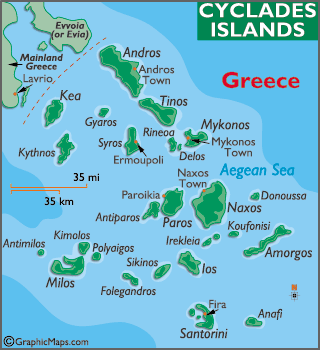
The Cyclades are one of the seven Greek island groups, located in the central & southern Aegean Sea and include a couple hundred isles. Out of those only about 10% are inhabited, with the major ones indicated in the map above.
Cyclades climate is generally moderate, with mild wet winters and cool dry summers. Daytime temperatures range from 50° to 62° F in the winter and from 75° to 90° F in the summer. Summer temperatures are substantially cooler than on the mainland, due the “Meltemia” winds. They are northeasterly winds that occur between the middle of July till the end of August.
Getting There
Several islands have airports that handle medium size jets. If you’re planning a trip to the Cyclades, knowing which islands have airports help you avoid those long ferry rides.
The islands with airports are split into two categories: those that can handle international flights and those that only handle domestic hops from Athens or Thessaloniki.
International Airports
You can often fly directly here from major European cities during the summer season.
- Mykonos (JMK): One of the busiest hubs in the Aegean.
- Santorini (JTR): Located near Kamari; handles a massive volume of international charters and daily domestic flights.
Domestic Airports
These airports generally have smaller runways and serve only domestic flights (usually via Aegean/Olympic Air or Sky Express). You’ll almost always need to connection through Athens or Thessaloniki.
- Naxos (JNX): A very short runway; usually served by turboprop planes.
- Paros (PAS): Has a relatively new airport that can handle slightly larger domestic aircraft than the old one.
- Milos (MLO): Great for skipping the long boat ride from Piraeus.
- Syros (JSY): Located in the capital of the Cyclades; primarily serves Athens.
Ferries
All the islands can be reached by ferries from Athens (Piraeus port). Some are closer to Rafina port, located east of Athens. There is an extensive network of inter-island routes in the summer, which makes island hopping possible.
Tip: If you’re looking at islands with no airport, locate the closest island with an airport and then take a short ferry to your final destination.
This page is dedicated to the larger Cyclades islands; for the Small (Lesser) Cyclades click below:
The Lesser Cyclades are: Koufonisia, Iraklia, Schinousa, Donousa
Santorini Island
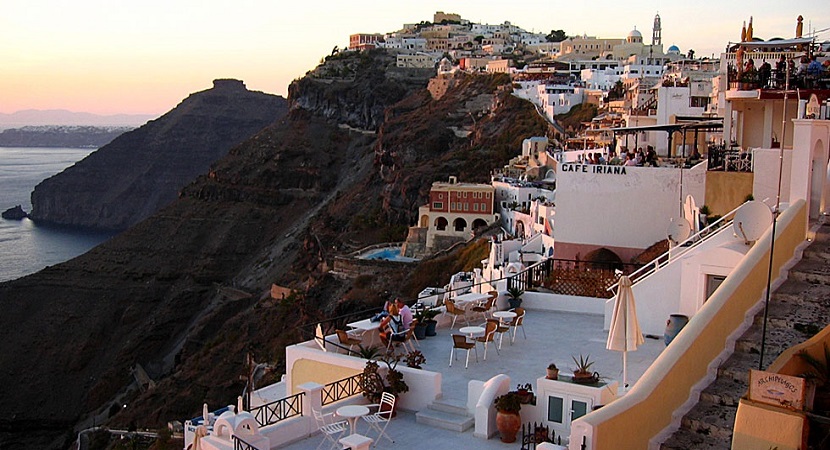
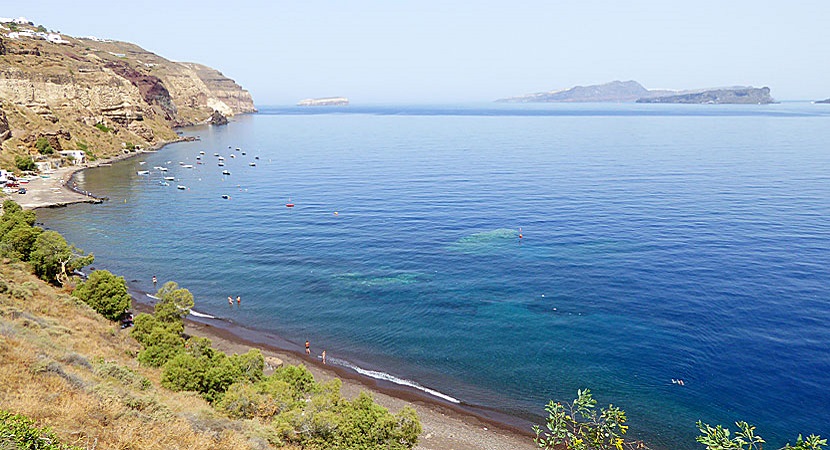
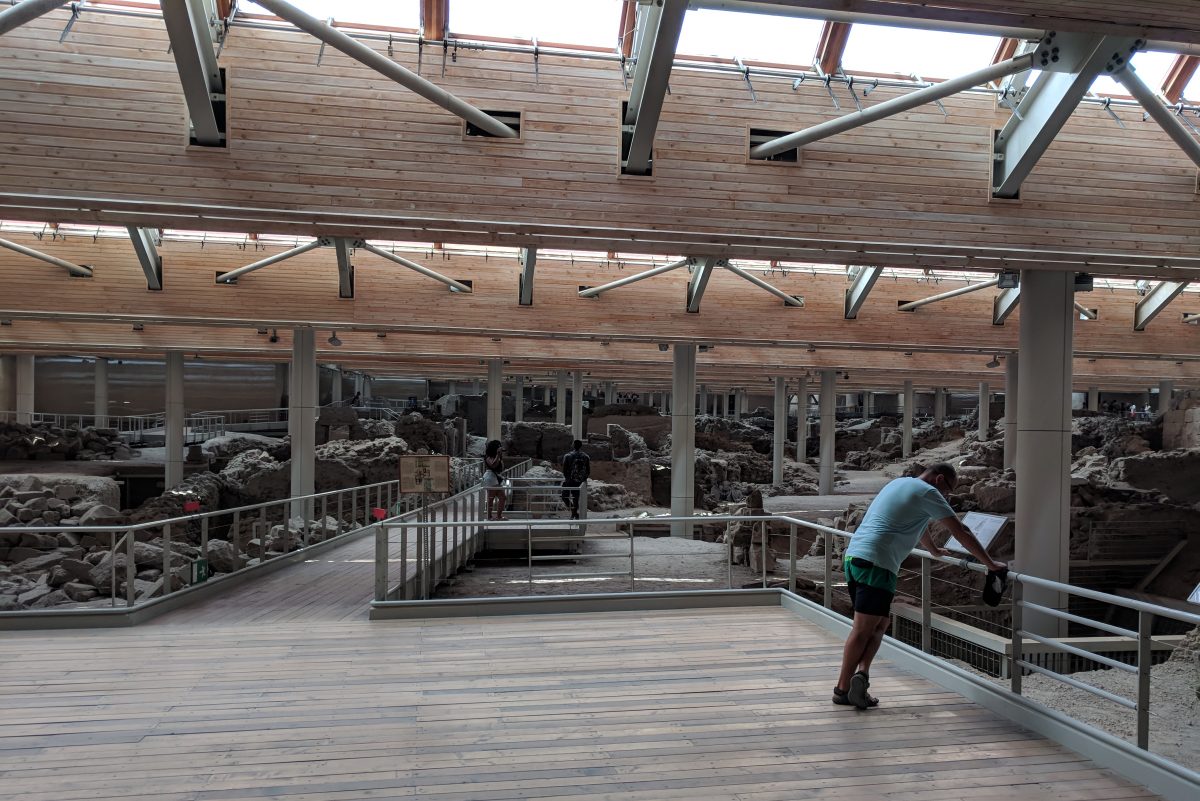
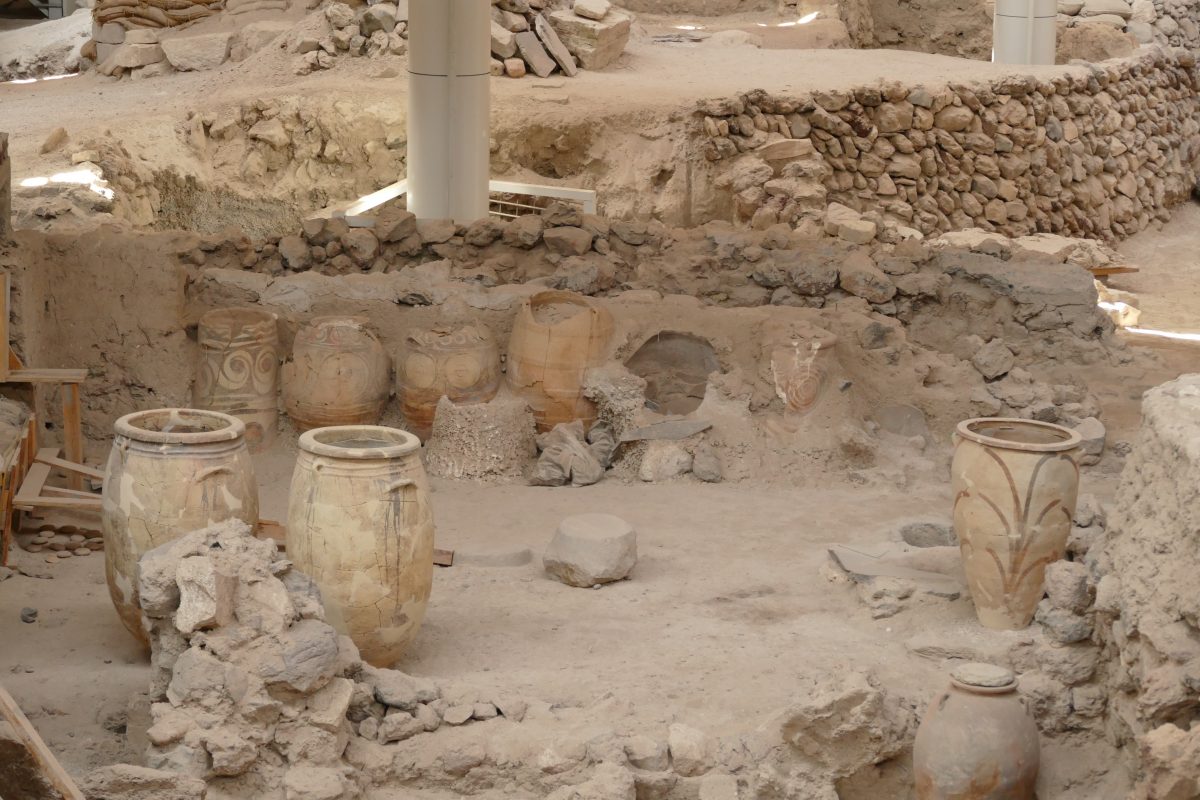
Akrotiri site was uncovered in the 70s, untouched since the volcanic eruption that tore the island apart around 1500 B.C.
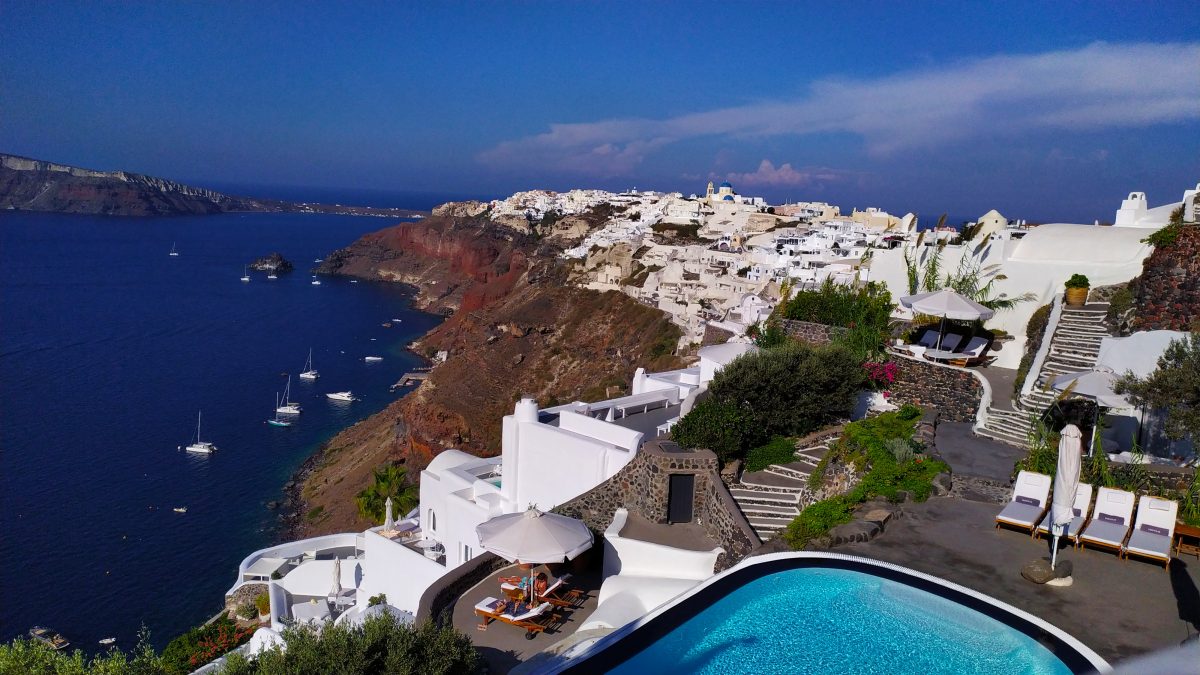
Santorini is the most famous and photographed island of the Cyclades group. It is essentially a geological formation created after a major explosion around 1600 BCE, over 3,600 years ago. Beyond the iconic gravity-defying cliffs and blue-domed churches, the island offers a deep dive into history at the Akrotiri ruins (often linked to the legend of Atlantis), striking red and black volcanic sand beaches, and a world-class culinary scene that recently celebrated its official induction into the Michelin Guide.
The popularity of the island has created issues with overcrowding. Local authorities are trying to implement “quality over quantity” policies, such as stricter cruise passenger caps. People have complained that can’t actually enjoy the legendary Oia sunsets without feeling like a sardine in a very expensive tin.
Iconic Villages
- Oia: The crown jewel. This is where you find those world-famous blue-domed churches and the Venetian Castle ruins for sunset. It’s crowded, but for a good reason—the architecture is practically art.
- Fira: The bustling capital. It’s perfect for shopping, nightlife, and catching the Cable Car down to the Old Port. The views of the caldera here are some of the most dramatic on the island.
- Imerovigli: Known as the “Balcony of the Aegean.” It sits at the highest point of the caldera edge and offers a quieter, more romantic vibe than Oia or Fira.
- Pyrgos: A hidden gem. This medieval hilltop village was once the capital. It’s a maze of narrow alleys leading up to a castle with 360-degree views of the entire island.
- Megalochori: One of the most traditional villages. Visit for the famous “Heart of Santorini” (a heart-shaped hole in the rock) and the beautiful bell towers.
Unique Beaches
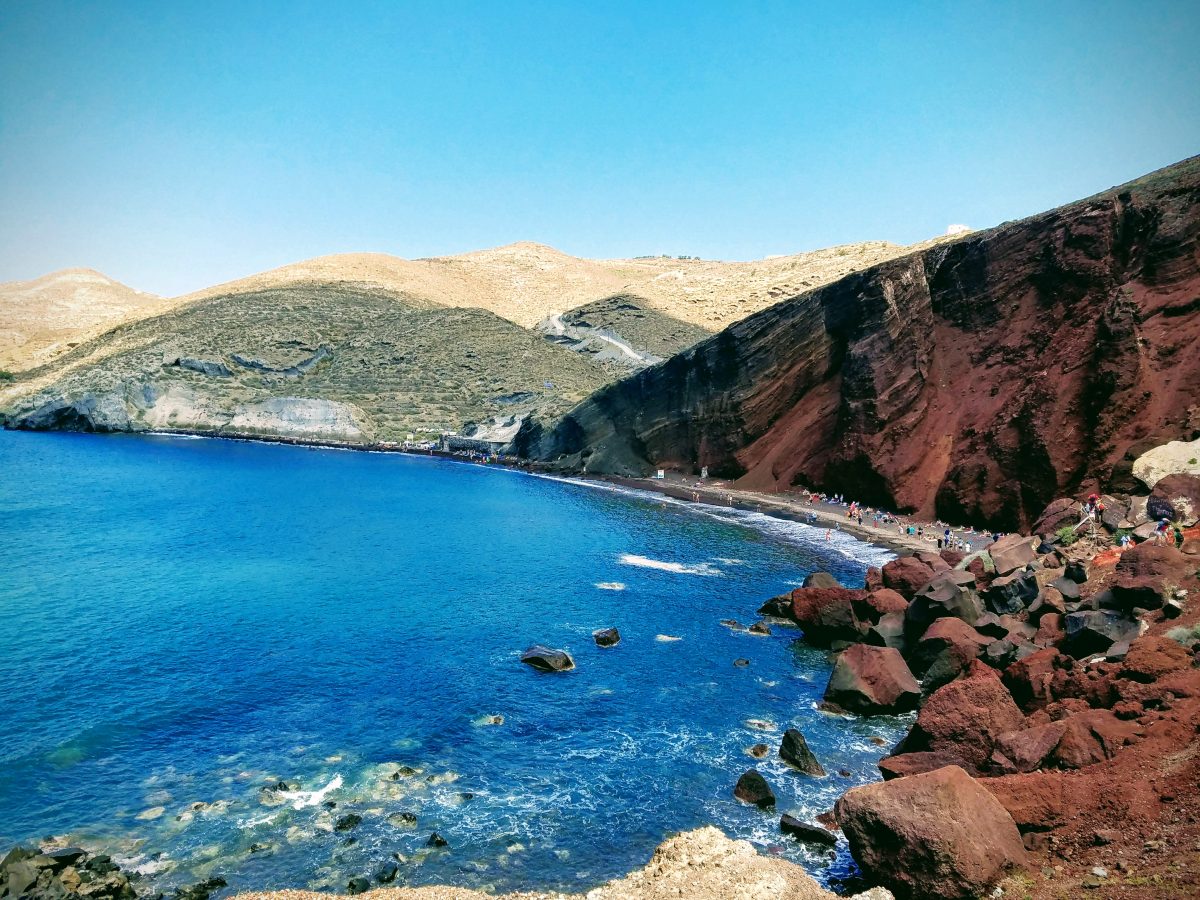
- Red Beach (Kokkini Paralia): Famous for its towering red volcanic cliffs and dark pebbles. It looks more like Mars than Greece.
- Perissa & Perivolos: These are the “Black Sand” beaches. They are well-organized with beach bars and sunbeds, perfect for a full day of lounging.
- Ammoudi Bay: Technically a tiny port below Oia, but it’s the best spot for cliff jumping and eating the freshest octopus you’ll ever find right by the water.
- Vlychada Beach: Known as “Moon Beach” because the white volcanic cliffs have been carved by the wind into surreal, lunar-like shapes.
Historic & Natural Landmarks
- Akrotiri Archaeological Site: Often called the “Minoan Pompeii.” It’s an incredibly well-preserved prehistoric city that was buried in volcanic ash around 1600 BC.
- Ancient Thera: Located on a high ridge between Kamari and Perissa. You’ll find ruins of Hellenistic, Roman, and Byzantine buildings with a killer view of the sea.
- Skaros Rock: A massive rock formation in Imerovigli that once housed a medieval fortress. The hike out to the tip is exhilarating and offers a unique perspective of the caldera.
- Nea Kameni (The Volcano): You can take a boat tour to walk on the actual volcanic island in the center of the caldera and then swim in the Palea Kameni Hot Springs.
- Akrotiri Lighthouse: Located at the southern tip of the island. It’s much less crowded than Oia and offers a stunning, raw view of the sunset over the cliffs.
Activities & Experiences
- The Fira to Oia Hike: A 10km (approx. 3-4 hour) trail along the caldera rim. It is arguably the most beautiful walk in the world.
- Wine Tasting: Santorini is famous for its Assyrtiko grapes. See Wineries section below.
- Sailing: Take a private or group cruise aqround the island and to the volcano dome.
- Thirassia Island: A tiny sister island that feels like Santorini 50 years ago—quiet, rustic, and very authentic.
Santorini’s food scene is often hidden behind white tablecloths and sunset views, but As in all places on the planet, if you want the authentic taste without the sit-down “fine dining” price tag, you have to go where the locals grab a bite or head straight to the source. Good food comes from good ingredients and minimal processing. The island’s volcanic soil (aka aspa) produces some of the most intense flavors in the Mediterranean.
Local Crops
- Cherry Tomatoes: These are tiny, thick-skinned tomatoes that grow without irrigation. They are incredibly sweet and are the base for many local recipes.
- Fava Santorini: Unlike the green broad beans found elsewhere, this is a yellow split-pea puree. It has a Protected Designation of Origin (PDO) status and is typically served warm with olive oil, onions, and capers.
- White Eggplant: A rare variety that is actually white. It is much sweeter than the purple version, has very few seeds, and doesn’t absorb as much oil when fried.
- Katsouni: local cucumber, smaller, thicker, and crunchier than regural cucumbers.
- Capers: Wild Harvested, Santorini capers are sun-dried, giving them a sharp, peppery bite.
Local Dishes
- Tomatokeftedes (Tomato Fritters): The island’s most famous appetizer. These are deep-fried patties made from local cherry tomatoes, herbs (usually mint and parsley), and onions.
- Melitzanosalata: Made specifically with the local white eggplant. It’s a smoky, creamy dip that tastes naturally sweeter than standard eggplant dips.
- Apospiti: A traditional Santorinian dish of sun-dried fish (often gouna) that is grilled and served with lemon.
- Brantada: A local version of salt cod, usually fried and served with a heavy garlic sauce (skordalia).
- Katsouni: A unique local cucumber. It’s smaller, thicker-skinned, and doesn’t have the bitterness often found in common cucumbers. It’s the star of a true “Santorini Salad.”
Local Cheeses & Cured Meats
- Chlorotyri: A rare, fresh goat cheese made in very small quantities by local families. It is creamy, slightly sour, and spreadable. You won’t find it easily in supermarkets; look for it in traditional tavernas.
- Apokhti: Santorini’s version of cured pork. The meat is salted, soaked in vinegar, and air-dried with cinnamon and black pepper. It’s often served as a “meze” (appetizer) with wine.
Traditional Sweets
- Kopania: These are small, energy-dense balls made from crushed barley rusks, raisins, and sesame seeds.
- Meletinia: Traditional Easter cheese pies made with fresh mizithra cheese, sugar, and mastic. They are intricate, hand-pinched pastries. Small tartlets made with mizithra cheese and mastic. The traditional Easter treat.
- Vinsanto: While it’s a drink, it is the soul of Santorini dessert culture. It’s a naturally sweet wine made from sun-dried grapes, tasting of raisins, honey, and spice.
Authentic Spots
To avoid the “tourist traps,” look for tavernas in the inland villages rather than just the caldera edge:
- Pyrgos & Megalochori: These villages host many family-run spots using their own garden produce.
- Exo Gonia: Home to some of the most famous local-favorite tavernas (like Metaksi Mas).
- Amoudi Bay: Great for fresh sun-dried octopus, though it is more “scenic-priced.”
Wineries
Santorini is famous for its unique volcanic wines such as Assyrtiko, a crisp and salty white wine. Many of its top wineries have expanded their offerings to include exceptional local food, ranging from light pairing platters to full-service gourmet restaurants.
Wineries with Full-Service Restaurants
Artemis Karamolegos is home to the highly-regarded Aroma Avlis restaurant, which is one of the best places on the island to experience “farm-to-table” Santorinian cuisine.
- The menu features traditional dishes like Santorini fava (yellow split pea purée), tomatokeftedes (tomato fritters), and local white eggplant.
- Ingredients are often sourced directly from the winery’s own vegetable gardens.
- Diners can choose to eat in a beautiful courtyard surrounded by lemon trees and herbs.
Domaine Sigalas in Oia is frequently praised for having one of the most sophisticated winery menus on the island, focusing on high-end Cycladic gastronomy.
- Signature pairings often include fresh seafood and creative takes on local cheeses.
- The setting is relaxed and elegant, with tables placed right next to the vines.
- Visitors recommend trying their Mavrotragano red wine paired with hearty local meat or mushroom dishes.
Anhydrous Cellar Door, located near Fira, offers a contemporary tasting experience with a strong focus on pairing their wines with modern Greek tapas.
- The food program emphasizes fresh, seasonal ingredients from across the Cyclades.
- Options often include gourmet cheese boards and creative small plates designed to highlight the acidity of their Assyrtiko wines.
- The outdoor seating area provides a chic, garden-like atmosphere perfect for a long lunch.
Wineries with Local Appetizer Platters
Santo Wines is the largest cooperative on the island and is the most popular spot for sunset tastings accompanied by traditional appetizers.
- They offer various “tasting platters” that typically include local Naxos cheeses, capers, and olives.
- It is a great choice for those who want a light meal (meze) while enjoying a panoramic view of the caldera.
- The deli shop on-site also sells many of the local products served during the tasting.
Venetsanos Winery offers a smaller, more intimate cafe setting built into the side of a cliff with stunning views.
- Their light bite menu includes traditional bruschettas with local tomato paste and Cycladic cold cuts.
- The architecture is unique, as the winery was originally built to use gravity for the winemaking process.
- It is highly recommended for a mid-afternoon stop to enjoy the breeze and light snacks.
Estate Argyros provides a more formal and educational tasting environment, where food is used specifically to enhance the wine profile.
- Tastings are often accompanied by artisanal cheeses and spiced nuts specifically chosen for each vintage.
- Their famous Vinsanto (dessert wine) is often served with high-quality local chocolates or dried fruits.
- The winery itself is sleek and modern, offering a very professional boutique experience.
Paros Island
Paroikia
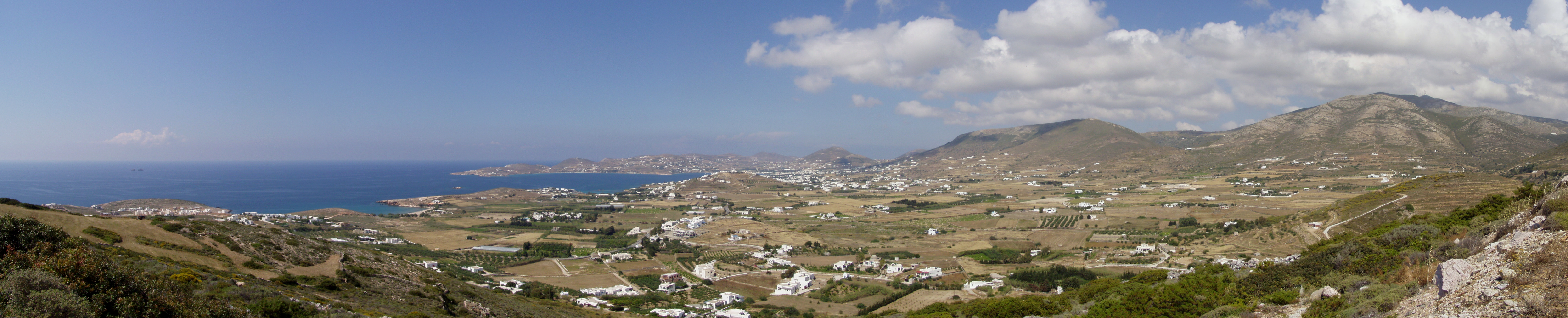
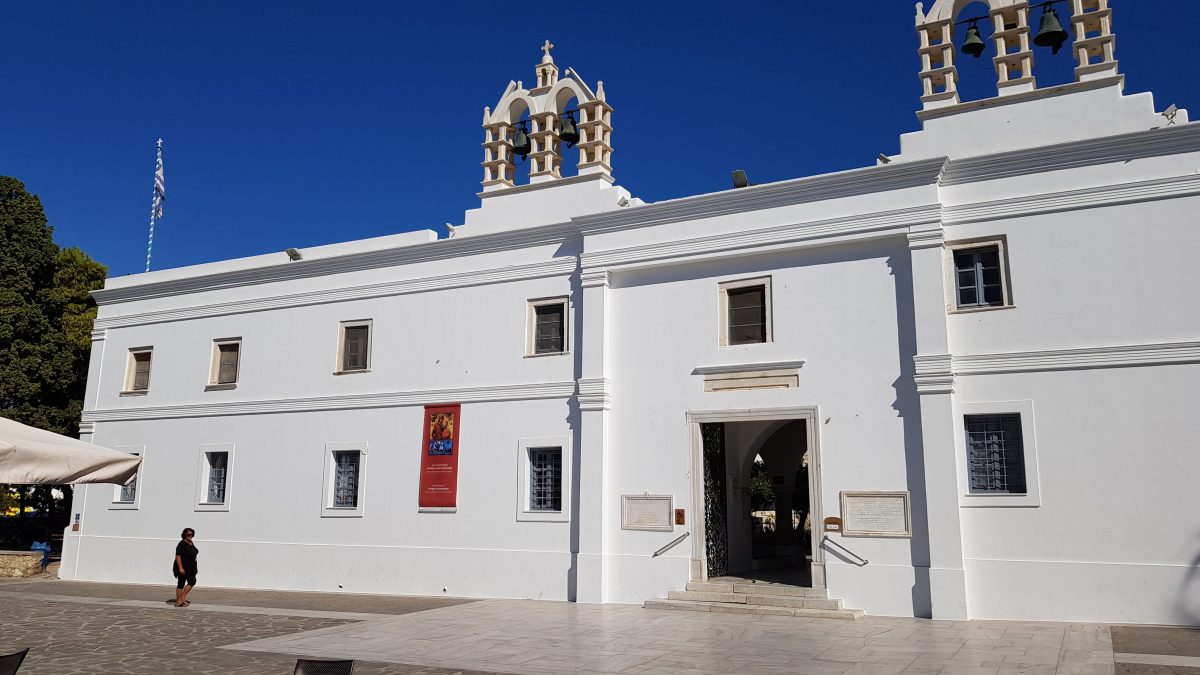
Paroikia is the vibrant heartbeat of Paros. As the island’s capital and main port, it’s a beautiful mix of ancient history, whitewashed Cycladic “sugar-cube” architecture, and a lively waterfront scene.
Landmarks & Sights
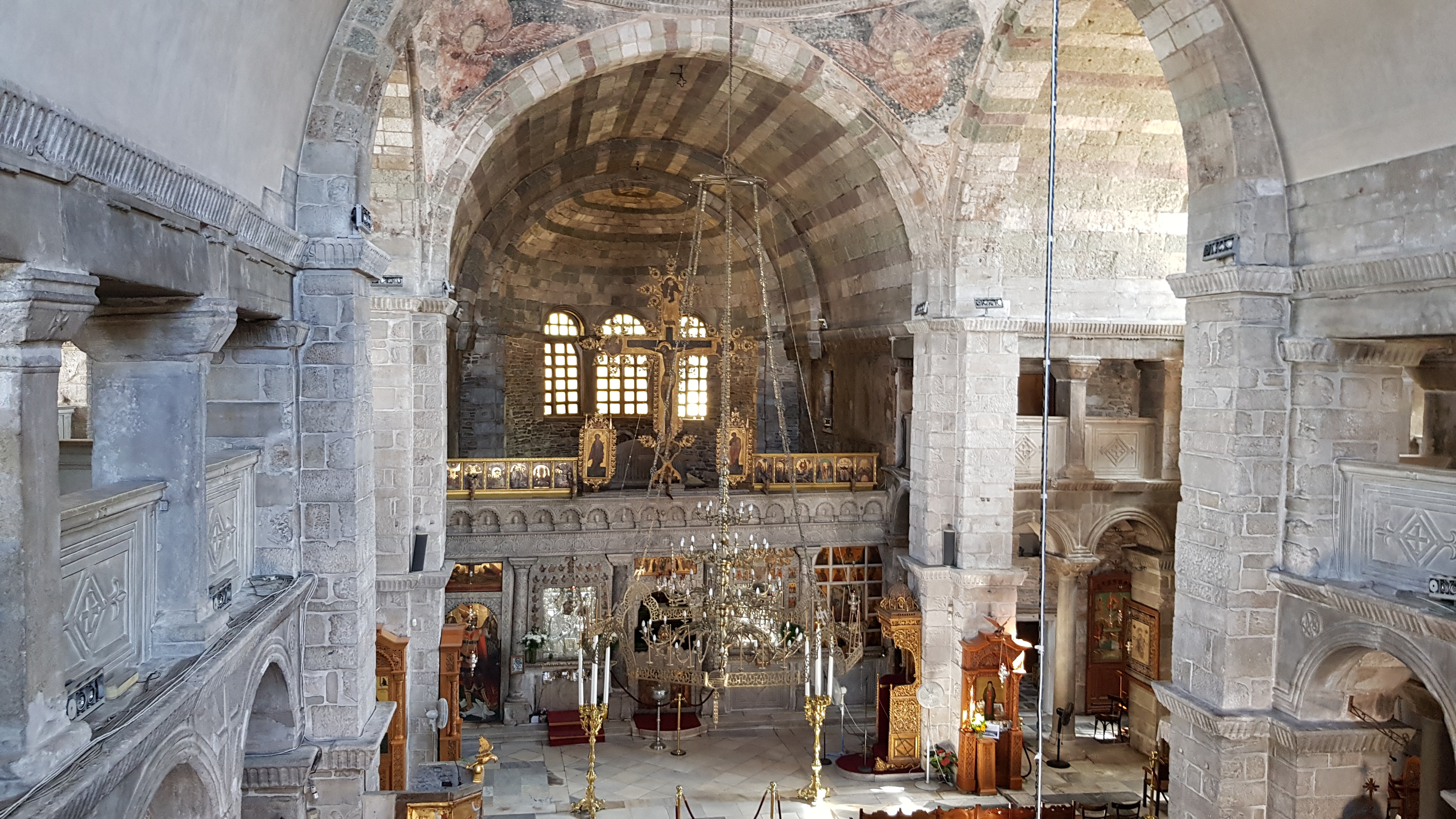
- Panagia Ekatontapyliani: Also known as the “Church of 100 Doors,” this is one of the most important Byzantine monuments in Greece, dating back to the 4th century.
- The Frankish Castle (Kastro): Built in the 1200s using marble remains from ancient temples. The walls literally have ancient columns embedded in them—it’s a photographer’s dream.
- The Ancient Cemetery: Located near the port, this excavated site dates back to the 8th century BC and offers a quick, fascinating glimpse into the island’s long history.
- Archaeological Museum of Paros: Small but mighty, it houses the “Parian Chronicle” and impressive statues found on the island.
Beaches Nearby
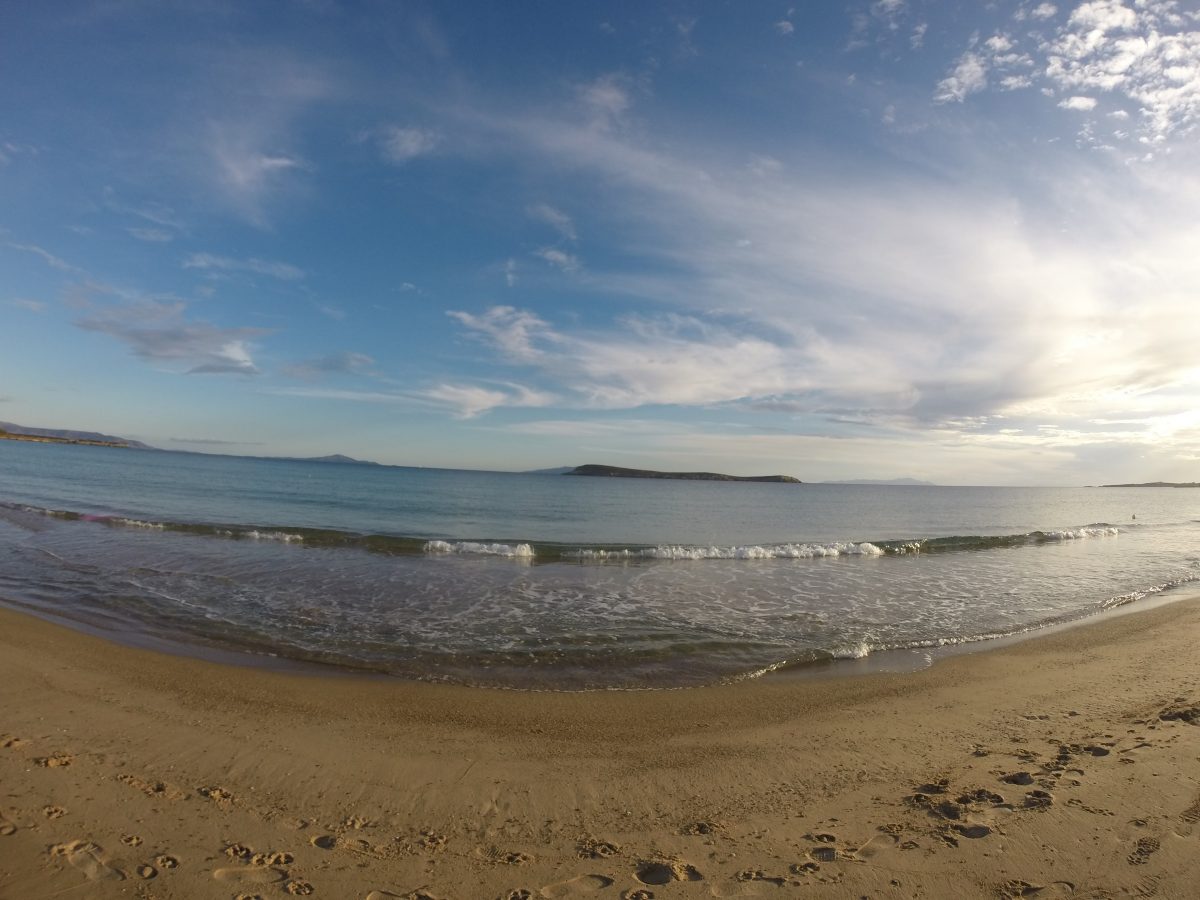
- Livadia Beach: The main town beach. It’s walkable from the port, organized with sunbeds, and great for a quick dip without leaving town.
- Krios & Martselo: Located across the bay. You can take a small “kaiki” (water taxi) from the port. These have golden sand, crystal clear water, and a more relaxed vibe.
- Parasporos: A short bus or scooter ride south. It’s wider, slightly windier, and popular with a younger crowd due to the beach clubs.
Wandering & Shopping
- The Old Town Market Street: A narrow, winding pedestrian lane (Lochagou Kourtinou) filled with boutiques, handmade jewelry, and local crafts. It’s much quieter in the morning and buzzing after sunset.
- The Waterfront Promenade: Perfect for a “volta” (evening stroll). This is where you’ll find the majority of the cafes and bars to watch the famous Paros sunset.
Dining & Nightlife
- Sunset Cocktails: Head to the bars near the Agios Konstantinos church on the hill for the best views of the sun dipping into the Aegean.
- Traditional Tavernas: Look for spots tucked into the back alleys of the Old Town for more authentic, less touristy seafood and “Parian” chickpeas (revithada).
- The Windmill: You’ll see it as soon as you get off the ferry. While it’s a landmark, the area around it is also a great starting point for finding nightlife.
Practical Tips
- The Hub: Next to the main sea port, you’ ll find the central bus station (KTEL), making it the easiest place to stay if you plan on exploring the whole island by bus. Many private taxi services are also available, usually pre-booked.
- Arrival: When the ferry arrives, the port area becomes chaotic for about 15 minutes. If you aren’t in a rush, grab a coffee and wait for the crowd to disperse before trying to find a taxi.
Rest of Paros
Paros is the perfect middle ground in the Cyclades—less frantic than Mykonos, but more cosmopolitan than Naxos. Whether you’re here for the marble history or the turquoise water, here are the absolute must-sees.
Iconic Villages
- Naoussa (The Fishing Port): This is the island’s postcard-perfect star. By day, it’s a quiet harbor with colorful fishing boats; by night, it transforms into a high-end dining and nightlife hub. Don’t miss the Venetian Fortress ruins sitting right in the water.
- Lefkes: Located in the mountains, this was the island’s first capital. It is far more traditional, with white-washed alleys and pink bougainvillea. It’s the starting point for the Byzantine Road, a 1,000-year-old paved stone path perfect for a scenic hike.
- Marpissa: Built amphitheatrically on a hill, Marpissa is one of the island’s oldest and most picturesque settlements, dating back to the 16th century.
- Prodromos: Smaller and even more tranquil than Marpissa, Prodromos feels like stepping back in time. The village square features a few traditional tavernas that serve authentic Parian mezzes.
Top-Tier Beaches
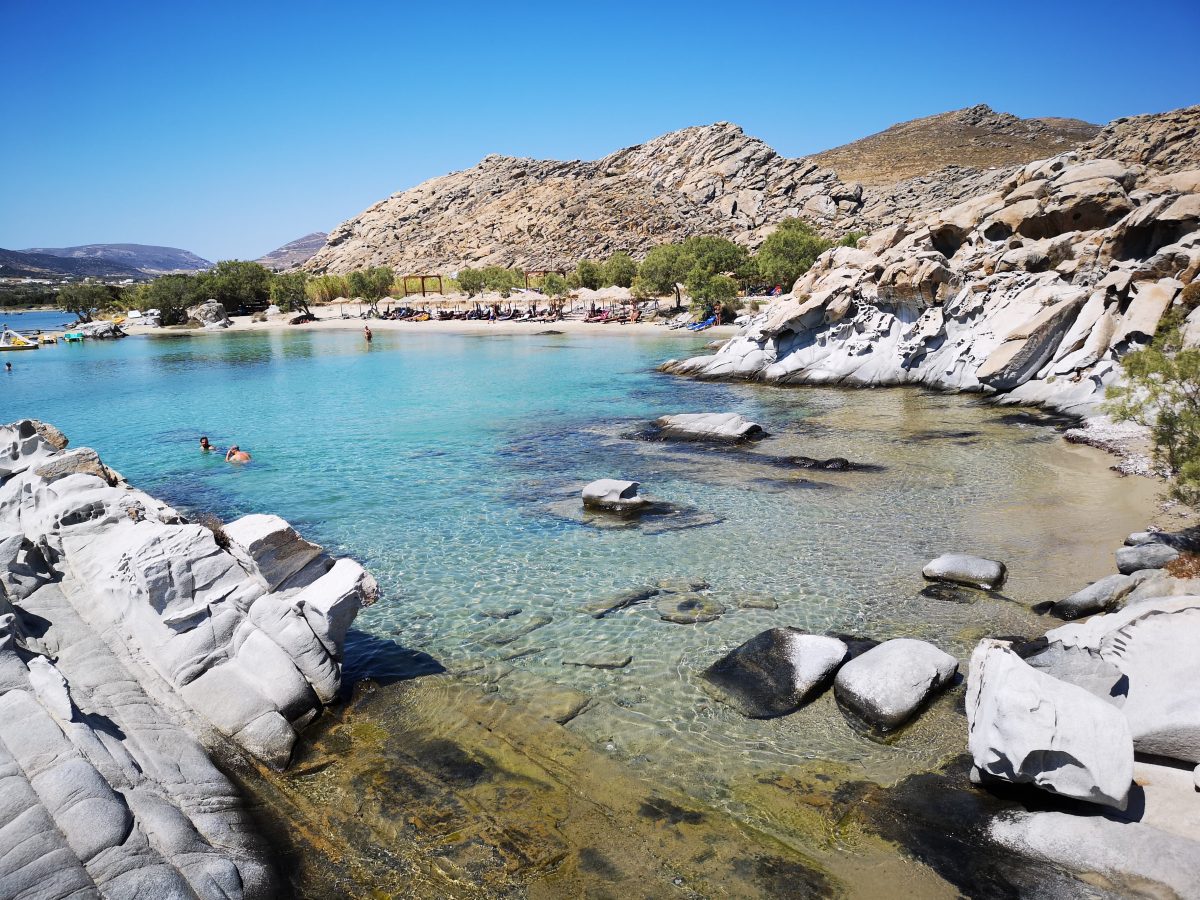
- Kolympethres Beach: Famous for its bizarre, smooth granite rock formations that look like a lunar landscape. The water is shallow and crystal clear, making it feel like a series of natural swimming pools.
- Golden Beach (Chryssi Akti): A long, sandy stretch known for its “sparkling” sand. It’s a world-renowned spot for windsurfing and kitesurfing, but even if you aren’t an athlete, the water is spectacular.
- Santa Maria: The place to go if you want a “beach club” vibe. It has golden sand, excellent mojitos, and a great view of neighboring Naxos.
- Monastiri Beach: Located within Paros Park, this beach is very protected from the wind, making it ideal for families or those who want a calm, lake-like swimming experience.
- Logaras Beach: Offers fine golden sand and crystal-clear, shallow waters. It is family-friendly with tamarisk trees providing natural shade. You’ll find several traditional tavernas and small hotels just a few steps from the sand.
- Golden Beach: Nearly 0.8 mile of fine, shimmering sand. The island’s premier destination for water sports and active beach-goers. It is wide, expansive, and energetic.
- Glyfa Beach: A quiet, low-key escape favored by locals and those looking to avoid the “organized” beach scene. It’s smaller, narrower beach with a mix of golden sand and small pebbles.
- Tripiti Beach: An off-the-beaten-path sanctuary. It is rugged, small, and feels like a private discovery. A combination of sand and pebbles set against striking rock formations.
- Alyki Beach: Located directly in front of the village’s tavernas and cafes. Soft sand mixed with pebbles, shallow turquoise water, and tamarisk trees for natural shade.
History & Culture
- Panagia Ekatontapyliani (Church of 100 Doors): One of the most important Byzantine monuments in Greece. Legend says it has 99 visible doors, and the 100th will only be found when Constantinople is Greek again.
- Archaeological Museum: , near the high school, which contains finds from more than 6,000 years ago. One of the most intriguing is a biography on marble of the poet Archilocus written in 250 B.C. Nearby is a frieze showing the wedding of Archilocus, with the poet and his new wife reclining together in bed.
- Paros Park (Environmental & Cultural Park): An 800-acre peninsula with well-marked hiking trails leading to a lighthouse, a hidden open-air cinema, and the beautiful blue-domed Agios Ioannis Detis church.
- Ancient Marble Quarries (Marathi): This is where the world’s finest “Parian Marble” was mined to create the Venus de Milo and Napoleon’s tomb. You can still see the deep underground tunnels today.
- Antiparos Day Trip: Only a 7-minute ferry ride from Pounta, this tiny sister island is home to a massive vertical cave (the Cave of Antiparos) and a much slower, celebrity-favored pace of life.
Paros Nature
If you’re looking to trade the beach clubs for a little fresh Aegean air, Paros has some surprisingly wild and rugged corners. Beyond the whitewashed villages, the island offers everything from bizarre geological formations to hidden valleys filled with thousands of butterflies.
Paros Environmental & Cultural Park (Aghios Ioannis Detis)
Located on the northern peninsula near Naoussa, this 800-acre protected reserve is the island’s premier spot for hikers.
- The Trails: Over 4.3 miles of well-marked coastal paths winding through rocky terrain.
- Cape Korakas Lighthouse: A dramatic viewpoint at the edge of a cliff, perfect for catching the sunset or watching the “Meltemi” winds whip up the sea.
- Hidden Coves: Look for Tourkou Ammos and Katholiko, secluded little bays that feel worlds away from the organized beaches.
Kolymbithres Beach Rock Formations
This isn’t your typical sandy beach. Kolymbithres is famous for its gigantic granite boulders that have been sculpted into smooth, otherworldly shapes by centuries of wind and saltwater. It looks more like a lunar landscape than a Greek island, and the small “natural swimming pools” formed between the rocks are great for a dip.
The Butterfly Valley (Petaloudes)
A lush, green anomaly in the otherwise dry Cyclades.
- The Phenomenon: From June to September, the valley becomes a sanctuary for thousands of Jersey Tiger Moths (Euplagia quadripunctaria).
- The Vibe: It’s a shaded oasis of cypress, plane, and ivy-covered trees with running spring water—a perfect escape when the midday heat gets intense.
The Byzantine Road (Lefkes to Prodromos)
This is the island’s oldest and most famous trail, dating back over 1,000 years.
- The Path: Paved with Parian marble and stone, the trail takes about an hour to walk.
- Nature Highlights: You’ll pass through ancient olive groves, terraces of aromatic wild herbs (like sage and thyme), and offer stunning views of the neighboring island of Naxos.
Mount Profitis Ilias
At 2,530 ft, this is the highest point on Paros. The hike to the summit is a bit of a workout, but the reward is a 360-degree panorama of the entire Cyclades archipelago. On a clear day, you can spot Mykonos, Naxos, Ios, and even the peaks of Santorini.
Marathi Ancient Marble Quarries
While technically a historical site, the quarries are a fascinating geological highlight. This is where the world-famous, translucent Parian Marble was mined for masterpieces like the Venus de Milo. You can explore the cave-like entrances and see the white crystalline veins of the rock that made the island wealthy in antiquity.
Lageri Beach & Natural Dunes
If you want to see the coast in its rawest form, head to Lageri. Unlike the “umbrella-and-sunbed” beaches, Lageri features soft sand dunes and salt cedars (Almyrikia). It’s part of a protected ecosystem that feels much more “wild” than the neighboring Santa Maria.
Aliki & Molos Wetlands
For birdwatchers or those who appreciate coastal ecology, these areas are vital.
- Molos: A preserved NATURA 2000 wetland where you can often spot migratory birds and sea lilies in the sand.
- Aliki Salt Marshes: A quiet spot on the southern coast where you might see herons or flamingos during migration seasons.
Paros Treats
Paros is a gem of the Cyclades, and while it has its share of upscale dining, the soul of the island is found in its sun-dried seafood, hearty legumes, and “poor man’s” snacks that have fueled locals for centuries. Here is a list of authentic stuff without the fancy table service.
Street Food
These are the items you’ll find in local fournos (bakery) or small hole-in-the-wall shops.
- Pitarakia: These are small, fried or baked pies stuffed with local “padi” (a sharp, spicy Myzithra cheese) and often flavored with fresh mint. Perfect for a morning stroll.
- Parian Rusks (Paximadia): Look for the barley ones seasoned with anise. Locals grab a bag of these to eat dry or to soak briefly in water and top with tomato and oil.
- Souvlaki (The Real Way): Found all over Greece. Find a grill that smells like charcoal. Order a pita gyros or pita souvlaki “me ola” (with everything). In Paros, this often includes local yogurt rather than just tzatziki.
Fisherman’s Snack
You don’t need a table for these; you just need to be near the water in Naoussa or Piso Livadi.
- Gouna (Sun-Dried Mackerel): You’ll see these fish hanging on lines like laundry. They are salted and dried in the Aegean sun, then grilled quickly. It’s oily, salty, and incredibly flavorful. You can often get it wrapped in paper to eat by the sea.
- Salatouri: A local skate (ray) salad made with parsley, onion, and lemon. While often served on a plate, many delis sell it by weight to be enjoyed with a fork on a park bench.
Bakery Treasures
Paros has a serious baking tradition. Skip the croissants and look for:
- Moustokouloura: Cookies made with grape must. They are dark, spicy (cinnamon/clove), and not too sweet.
- Pasteli: A local honey and sesame bar. It’s the original Greek power bar. In Paros, they often add a hint of orange peel.
- Rafiolia: Sweet fried dough balls stuffed with Myzithra cheese, honey, and cinnamon.
The “Revithada”
If you are on the island on a Sunday, keep an eye out for locals carrying clay pots. Revithada (chickpea stew) is the island’s most iconic dish. It’s slow-cooked overnight in wood-fired ovens. While usually a sit-down meal, many bakeries sell portions to go in small containers. It’s simple, creamy, and the definition of Parian comfort.

Antiparos Island
Antiparos Town
There are destinations that you discover by chance and become the biggest surprise of a trip. A short ferry boat ride from Paros is the quaint island of Antiparos (meaning opposite of Paros). This tiny Cycladic island with a thousand inhabitants is an authentic Greek experience that has not lost its soul to tourist excess, yet.
As you disembark, the port of Antiparos welcomes to the Chora (main town) with its authentic Cycladic charm: white cube-shaped houses sloping down to the sea, fishing boats lazily bobbing in the blue and an airy atmosphere that invites you to slow down. Chora, as the locals call it, stretches out to the northwest of the island like a scene straight out of a summer dream.
Cobblestone alleys lead to small squares, where cafes are transformed into lively meeting places and taverns continue to cook as they used to, with recipes that stand the test of time. Here you will discover, among other things, shops with handmade creations and people who have real, warm stories to tell. Antiparos still preserves an authenticity that is increasingly rare on today’s tourist map.
Nature
Antiparos is a small but geologically rich island in the Cyclades. Known for its “wild” beauty and crystal-clear waters, here are the primary nature highlights you should explore:
The Great Cave of Antiparos
Below the surface lies one of the most impressive underground treasures of Greece: the Cave of Antiparos. Known for centuries, it continues to fascinate visitors from all over the world. Its stalactites and stalagmites, formed at a depth of millions of years, create an underground “cathedral” of natural beauty.
The descent to a depth of approximately 85 meters, with over 400 steps, is an experience that remains in the memory. The formations reveal the slow and patient work of nature, while the atmosphere inside exudes awe and wonder.
This is the island’s most famous natural wonder. Located on Agios Ioannis Hill, it is one of the deepest and oldest caves in Europe.
- Stalagmites and Stalactites: It features massive, intricate formations, including a 45-million-year-old column at the entrance.
- Descent: A staircase of roughly 400 steps leads you 85 meters deep into the earth.
- Climate: The interior maintains a steady temperature of around 15°C year-round, providing a cool escape from the Aegean sun.
Despotiko Island
Just a few hundred meters off the southwest coast of Antiparos lies this uninhabited islet. While famous for its ancient sanctuary of Apollo, its natural state is remarkably preserved.
- Pristine Coastline: Features untouched sandy beaches like Livadi, which feels worlds away from the main island’s buzz.
- Wildlife: It is a habitat for local bird species and a colony of seagulls.
- Geology: The island offers raw, volcanic rock landscapes and wide-open 360-degree views of the surrounding Cycladic islands.
The Sea Caves & “Epitafios”
The southern coast of Antiparos and the area around Despotiko are riddled with sea caves and dramatic rock formations accessible only by boat.
- Mastichari Caves: These are stunning sea caverns where the light reflects off the emerald-green water against white limestone walls.
- Cliff Diving & Snorkeling: The waters here are exceptionally deep and clear, making them a hotspot for marine life and underwater exploration.
Sifneiko (Sunset Beach)
Named after the island of Sifnos, which is visible on the horizon, this beach is a natural amphitheater for the sunset.
- The View: It offers a raw, north-facing view of the open Aegean.
- Coastal Walk: A picturesque path from the main square leads you here, showcasing the island’s rugged coastal flora.
Panteronissia (The Blue Lagoon)
Located in the narrow strait between Paros and Antiparos, these tiny islets surround a shallow patch of sea known as the “Blue Lagoon.”
- The Water: The sand on the seabed is so white that the water takes on a fluorescent turquoise hue.
- Snorkeling: It is one of the best spots in the Cyclades to observe Posidonia seagrass meadows and small Mediterranean fish.
Mount Profitis Ilias
For those who prefer heights over depths, the island’s highest peak (approx. 308 meters) provides a panoramic look at the island’s morphology.
- Flora: The trail is lined with hardy Cycladic shrubs, wild herbs (like thyme and oregano), and the occasional wild rabbit.
- Panoramic Views: From the top, you can see the entire archipelago, from Naxos to Ios.
Livadia Beach & The Wild West
While the east coast is sheltered, the west coast (Livadia) is exposed to the meltemi winds.
- Natural Architecture: The wind and waves have sculpted the rocks here into jagged, artistic shapes.
- Seclusion: Because it is harder to reach and less “organized,” it remains one of the most authentic natural stretches on the island.
Naxos Island
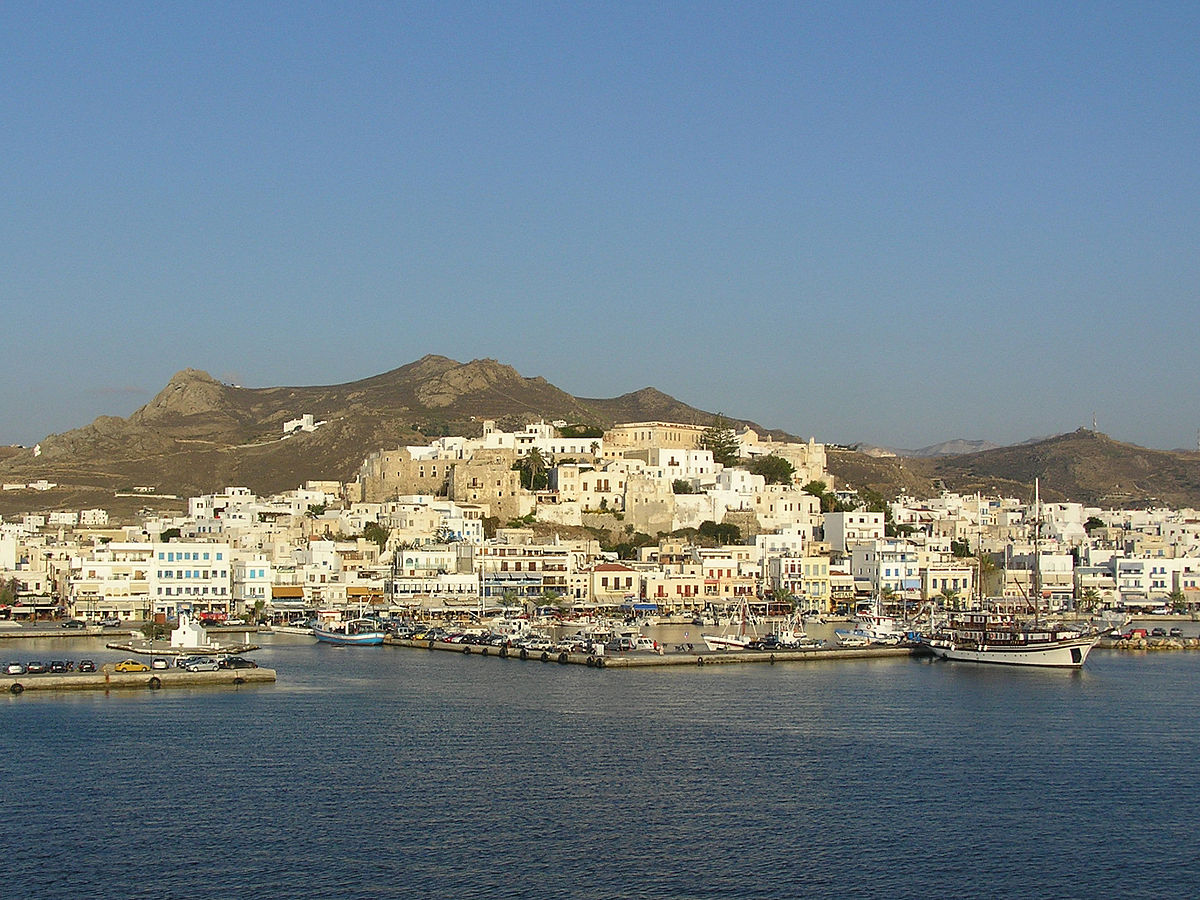
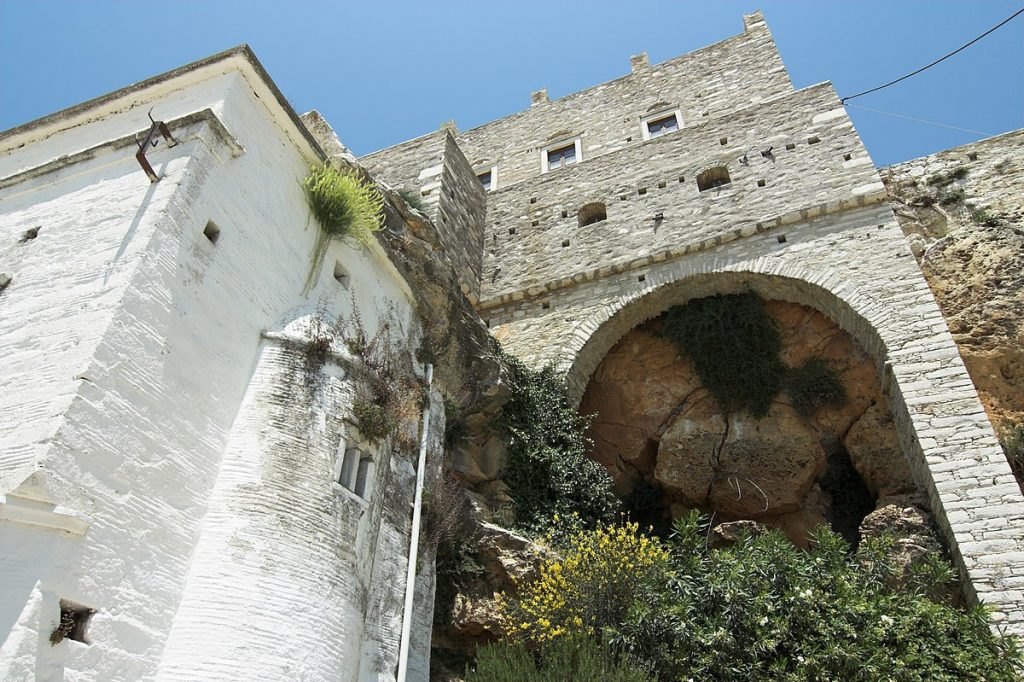
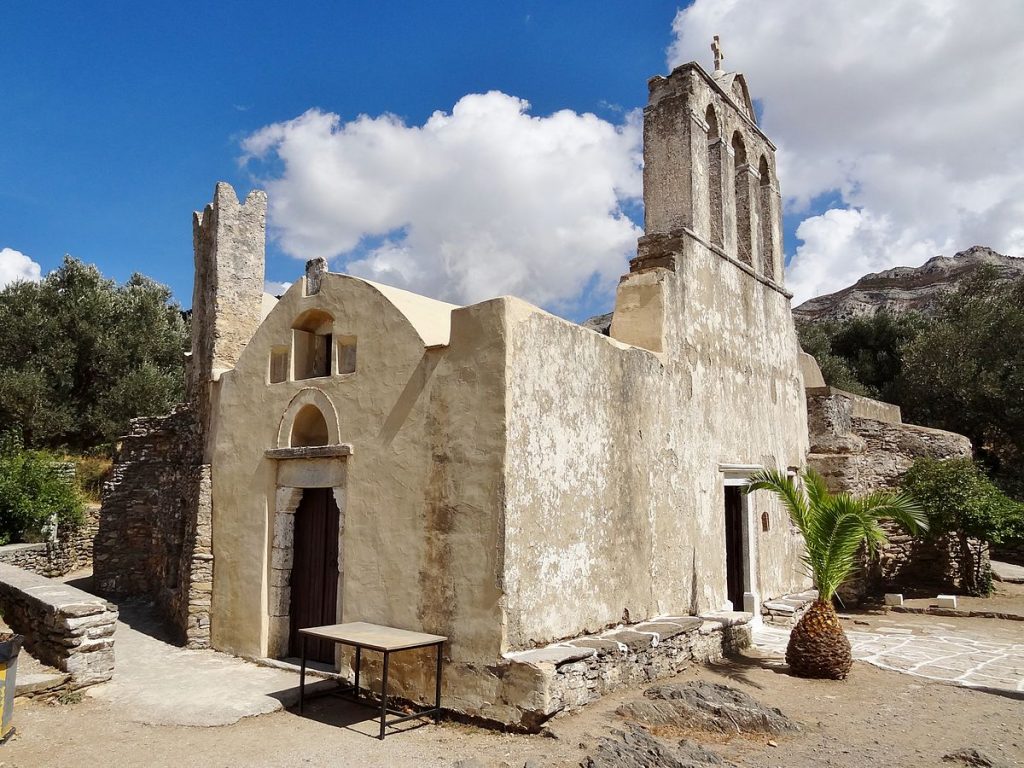
Naxos Nature
Naxos is the “green giant” of the Cyclades, and honestly, it’s a breath of fresh air compared to the more barren islands nearby. It’s got a bit of everything: high peaks, hidden waterfalls, and even a prehistoric-feeling cedar forest.
Here are the nature highlights you shouldn’t miss:
Peaks and Caves
- Mount Zas (Mount Zeus): Standing at 1,004 meters, this is the highest point in the Cyclades. It’s a rewarding hike that offers 360-degree views of the surrounding islands. Legend says Zeus was raised here, which explains why the mountain feels a bit more “powerful” than your average hill.
- The Cave of Zas: Located on the slopes of the mountain, this cave is filled with impressive stalactites and stalagmites. It’s a cool, dark refuge that has been used by humans since the Neolithic era.
- Rina Cave: A stunning sea cave on the south coast, accessible only by boat or kayak. The water inside is a glowing neon blue, and there’s a small spring of fresh water dripping from the ceiling. It’s basically nature’s version of a luxury spa.
Forests and Water
- Cedar Forest of Alyko: One of the most unique spots on the island. It’s a protected Natura 2000 area featuring ancient juniper trees (often called cedars) growing right out of the sand dunes. It feels more like a desert oasis than a Greek island.
- Routsouna’s Waterfall: Hidden near the village of Keramoti, this 20-meter waterfall is a rare sight in the Cyclades. It’s best visited in the spring or early summer (like right now in February/March if you want to see it at full flow) when the surrounding valley is lush and green.
- The Wetlands and Lagoon: Near the airport and Chora, these wetlands are a critical stop for migratory birds. If you’re into birdwatching, keep an eye out for herons, flamingos (depending on the season), and the resident Griffon vultures that circle the higher peaks.
Coastal Curiosities
- Mikri Vigla Rock Formations: The granite rock formations behind Sahara Beach look like they were sculpted by a giant. They provide excellent natural shelter from the Meltemi winds and are great for scrambling and exploring.
- Agiassos Bay: A vast, shallow, and largely undeveloped bay on the southwest coast. The surrounding hills are covered in wild Mediterranean scrub, making it feel like one of the last “wild” frontiers of the island.
- The Fertile Plains of Tragea: Not a single “spot,” but a whole region filled with centuries-old olive groves, oak trees, and fruit orchards. It’s the agricultural heart of the island and perfect for wandering through “forgotten” nature trails.
Quick Pro-Tip: If you’re hiking Mount Zas in 2026, the trail from Agia Marina is the most popular, but the route starting from the Aria Spring (passing the cave) is much more scenic—just a bit steeper on the knees!
Naxos is often called the “Green Heart” of the Cyclades. As the largest and most fertile island in the archipelago, it stands in stark contrast to its more arid neighbors like Santorini or Mykonos. In 2026, it remains a top global destination for travelers seeking an unhurried, authentic Greek experience that balances ancient history with world-class beaches.
The Landscape: Mountains to Marrow
Unlike the stark white volcanic rock of the southern Cyclades, Naxos is defined by its rugged interior and lush valleys.
Mount Zas: The highest peak in the Cyclades ($1,004\text{m}$). Legend says Zeus was raised in a cave on its slopes.
Fertile Valleys: The island is self-sufficient, famous for its Naxian potatoes, citrus fruits, and Graviera cheese.
Marble Heritage: Naxos has been a source of high-quality marble since antiquity; you can still see massive, unfinished Kouros statues lying in ancient quarries.
Top Coastal & Inland Highlights
| Category | Must-Visit Spots | Why Go? |
| Icons | Portara | The massive marble gate of the unfinished Temple of Apollo; the premier spot for sunset. |
| Beaches | Plaka & Agios Prokopios | Miles of golden sand and turquoise water. Plaka is more laid back; Prokopios is more organized. |
| Villages | Apiranthos & Halki | Apiranthos is the “Marble Village” with stone-paved streets; Halki is known for its neoclassical architecture and Kitron distillery. |
| Adrenaline | Mikri Vigla | A world-renowned hub for windsurfing and kitesurfing due to the consistent Meltemi winds. |
The “Soul” of Naxos: Mountain Villages
To truly understand the island, you must head inland. While the coast is for relaxation, the mountains are for culture.
Halki: The former capital, home to the Vallindras Kitron Distillery, where they still produce the island’s signature citrus liqueur.
Apiranthos: Located high on the slopes, its residents speak a distinct dialect and the village is almost entirely built from local marble.
Filoti: A bustling village at the foot of Mt. Zas, perfect for sitting under a giant plane tree in the main square with a coffee.
Quick Travel Snapshot for 2026
Getting There: Frequent ferries from Athens (Piraeus or Rafina) take 3.5 to 5 hours. There are also 40-minute domestic flights from Athens.
Best Way to Explore: Rent a car. While buses connect the main beaches, the mountain villages and ancient sites like the Temple of Demeter are best reached on your own schedule.
The Vibe: Authentic and “unpretentious.” It is significantly more affordable than Mykonos, making it a favorite for families and slow-travel enthusiasts.
Tip: If you visit in late summer, look for local “Panigiria” (village festivals). These traditional feasts involve hours of live violin music, dancing, and free-flowing local wine.
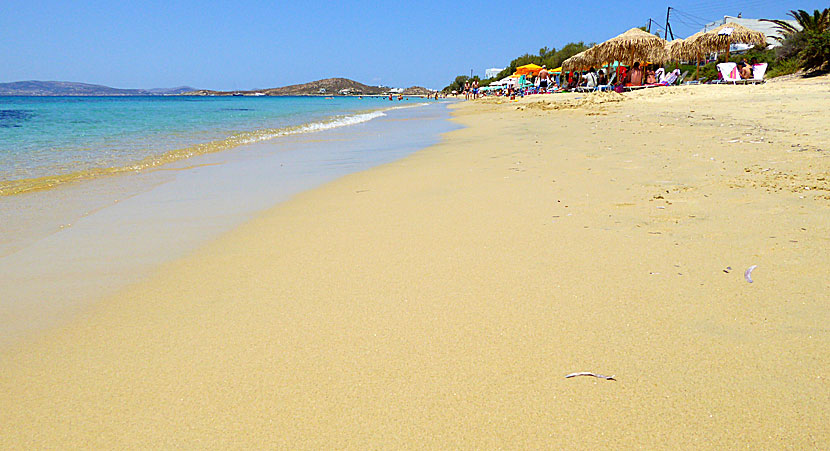
Naxos Gastronomy
Naxos isn’t your average “fish and chips” Greek island. Because it’s the largest and most fertile of the Cyclades, it has a massive agricultural backbone. While other islands rely on imports, Naxos is a self-sufficient powerhouse of potatoes, massive herds of goats, and a dairy culture that would make a Frenchman jealous.
The “Holy Trinity” of Naxian Products
- Naxian Potatoes (PDO): These aren’t just “fries.” Thanks to the island’s sandy, potassium-rich soil, these potatoes are naturally sweet and creamy. You’ll find them hand-cut and fried in local olive oil everywhere—do not skip them.
- Graviera Naxou (PDO): Unlike the Cretan version (which uses sheep/goat milk), Naxian Graviera is made primarily from cow’s milk. It’s buttery, nutty, and slightly sweet. Look for “aged” versions for a sharper kick.
- Kitron Liqueur: A clear or green spirit distilled from the leaves of the citron tree (not the fruit). It’s aromatic and punchy. Visit the Vallindras Distillery in Halki to see how they’ve been making it since 1896.
Must-Try Main Dishes
- Rosto: The island’s signature “Sunday roast.” It’s pork leg slow-cooked with heaps of garlic and red wine, usually served over thick pasta. It’s tender, messy, and incredible.
- Kalogeros: Translating to “The Monk,” this dish is a decadence bomb: veal braised in tomato sauce, tucked into a halved eggplant, topped with Naxian Graviera cheese, and baked until bubbling.
- Patoudo: A festive specialty (traditionally for Easter but found in mountain tavernas). It’s lamb or goat stuffed with rice, raisins, nuts, and a mountain of local herbs like fennel and chard.
- Sefoukloti: A local pie made with sefoukla (Swiss chard), herbs, and sometimes raisins for a sweet-and-savory contrast. Think of it as the more interesting cousin of spanakopita.
The Cheese Board (Beyond Graviera)
- Arseniko: Literally meaning “masculine” cheese. It’s a hard, spicy, salty goat and sheep milk cheese that’s been aged in caves. It pairs perfectly with a glass of robust local red wine.
- Xinomyzithra: A soft, creamy, slightly sour cheese. It’s often used as the “star” of a Naxian salad instead of standard Feta.
- Ladotyri: A version of Arseniko that has been matured in olive oil, giving it a deeper, pungent flavor and a smoother texture.
Unique Meats & Cured Goods
- Zamboni: Naxos’s answer to Prosciutto. It’s a salt-cured, air-dried leg of pork. It’s rare and usually found in the mountain village of Apeiranthos.
- Gounes: Sun-dried mackerel that is سپس grilled. The drying process intensifies the “sea” flavor, making it the ultimate meze for Ouzo or Tsipouro.
Sweets & Desserts
- Melachrino: A moist walnut cake soaked in syrup. What makes it Naxian is the addition of Kitron liqueur in the batter, giving it a citrusy floral finish. It’s almost always served with a scoop of kaimaki (mastic-flavored) ice cream.
- Spoon Sweets: Look for “Papilona,” a preserve made from a rare citrus fruit that is a cross between a bergamot and a bitter orange.
Tip: If you want the most authentic versions of these dishes, head inland to the mountain villages of Filoti or Apeiranthos. The coastal tavernas are great, but the soul of Naxian food is in the mountains where the livestock actually lives.
Naxos, the largest and most fertile island in the Cyclades, offers a diverse landscape of ancient ruins, long sandy beaches, and traditional mountain villages. It stands out for its rich history—ranging from the Archaic period to Venetian rule—and its vibrant agricultural scene, famous for Naxian potatoes, cheeses, and the local Kitron liqueur.
Historical Landmarks
Temple of Apollo (Portara)
The Temple of Apollo (Portara) is the island’s most iconic landmark, a massive marble doorway standing on the islet of Palatia.
- The doorway is the only remains of an unfinished 6th-century BCE temple.
- It is widely considered the best spot on the island for watching the sunset.
- Connected to the mainland by a narrow causeway, making it easily accessible from the harbor.
Venetian Castle of Naxos
The Venetian Castle of Naxos, or Kastro, sits at the highest point of Chora (Naxos Town) and remains a living neighborhood with narrow, winding alleys.
- Built in the 13th century, it features medieval towers and stone-paved streets.
Archaeological Museum of Naxos
- Houses the Archaeological Museum of Naxos, which showcases Cycladic figurines and artifacts.
- The area is filled with historic mansions, small shops, and the Catholic Cathedral.
Ancient Temple of Demeter
The Ancient Temple of Demeter, located near the village of Sangri, is a significant site dedicated to the goddess of agriculture.
- Constructed entirely of white Naxian marble around 530 BCE.
- Known for its remarkably well-preserved architecture, including some original columns.
- Surrounded by fertile valleys that highlight the temple’s connection to agriculture.
Coastal Highlights
Agios Prokopios Beach
Agios Prokopios Beach is consistently rated as one of the best beaches in Greece, known for its thick golden sand and crystal-clear turquoise waters.
- The beach is well-organized with sunbeds, umbrellas, and numerous seaside tavernas.
- Sheltered from the strong northern Meltemi winds, making it ideal for swimming.
- A long stretch that remains relatively spacious even during peak summer months.
Plaka Beach
Plaka Beach offers a more relaxed and expansive experience, stretching for miles along the southwest coast.
- Famous for its soft white sand and picturesque sand dunes.
- Features a mix of organized sections with beach clubs and quieter, undeveloped areas.
- Known for its laid-back atmosphere and excellent beachfront dining options.
Mikri Vigla Beach
Mikri Vigla Beach is a world-renowned destination for windsurfing and kitesurfing due to the consistent wind conditions on its northern side.
- The northern bay is dedicated to high-energy water sports with several rental shops.
- The southern side (Sahara) is much calmer, providing a serene environment for families and swimmers.
- Offers unique rock formations and clear green waters that are popular for snorkeling.
Mountain Villages and Nature
Apeiranthos
Apeiranthos is often called the “Marble Village” because its streets, squares, and houses are paved with local marble.
- The village maintains a distinct traditional character with stone-built mansions and defensive towers.
- Located on the slopes of Mount Fanari, offering panoramic views of the island’s interior.
- Features four small museums focused on archaeology, geology, folklore, and natural history.
Kitron Naxou Distillery
The Kitron Naxou, Distillery M. G. Vallindras in the neoclassical village of Halki offers a look at the production of the island’s signature liqueur.
- A historic distillery where visitors can sample different varieties of Kitron.
- Located in a village known for its colorful neoclassical architecture and artisan workshops.
- A great starting point for hiking trails that lead through olive groves and Byzantine churches.
Mount Zas
Mount Zas is the highest peak in the Cyclades (1,004m) and is steeped in Greek mythology as the birthplace of Zeus.
- The hike to the summit provides some of the most spectacular views over the Aegean islands.
- The mountain features the Cave of Zas, which can be explored along the hiking trails.
Filoti
- The trails typically start from the village of Filoti, the largest mountain village on Naxos.
Mykonos Island
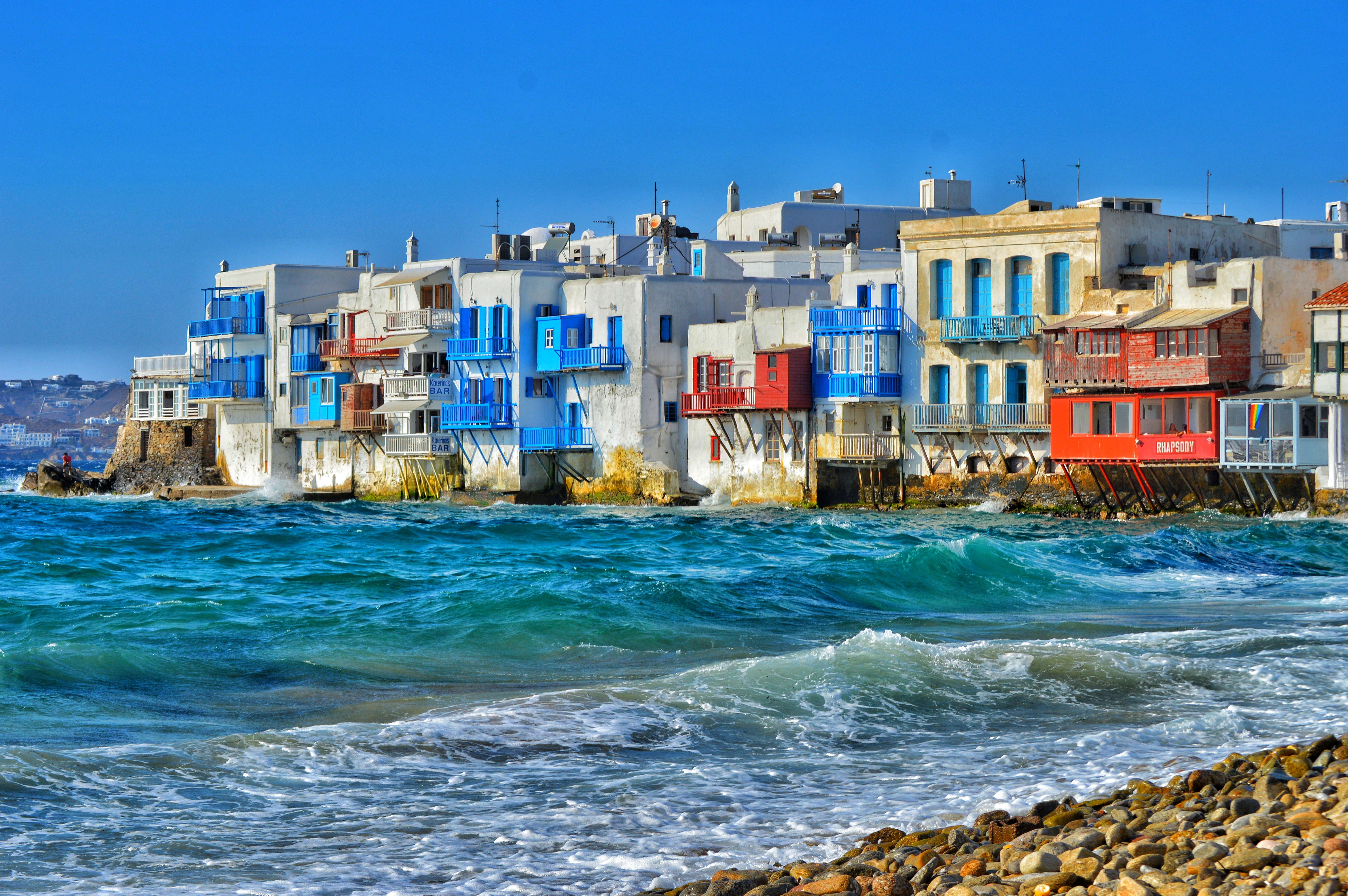
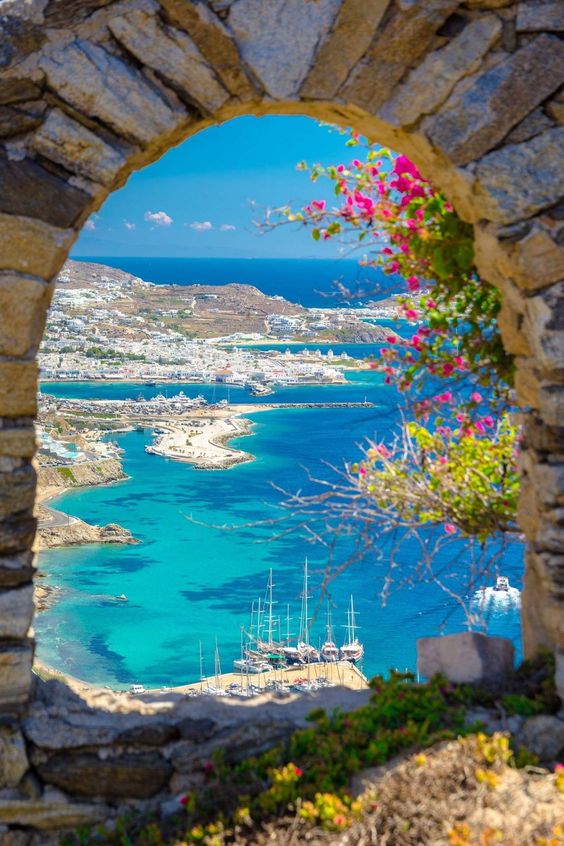
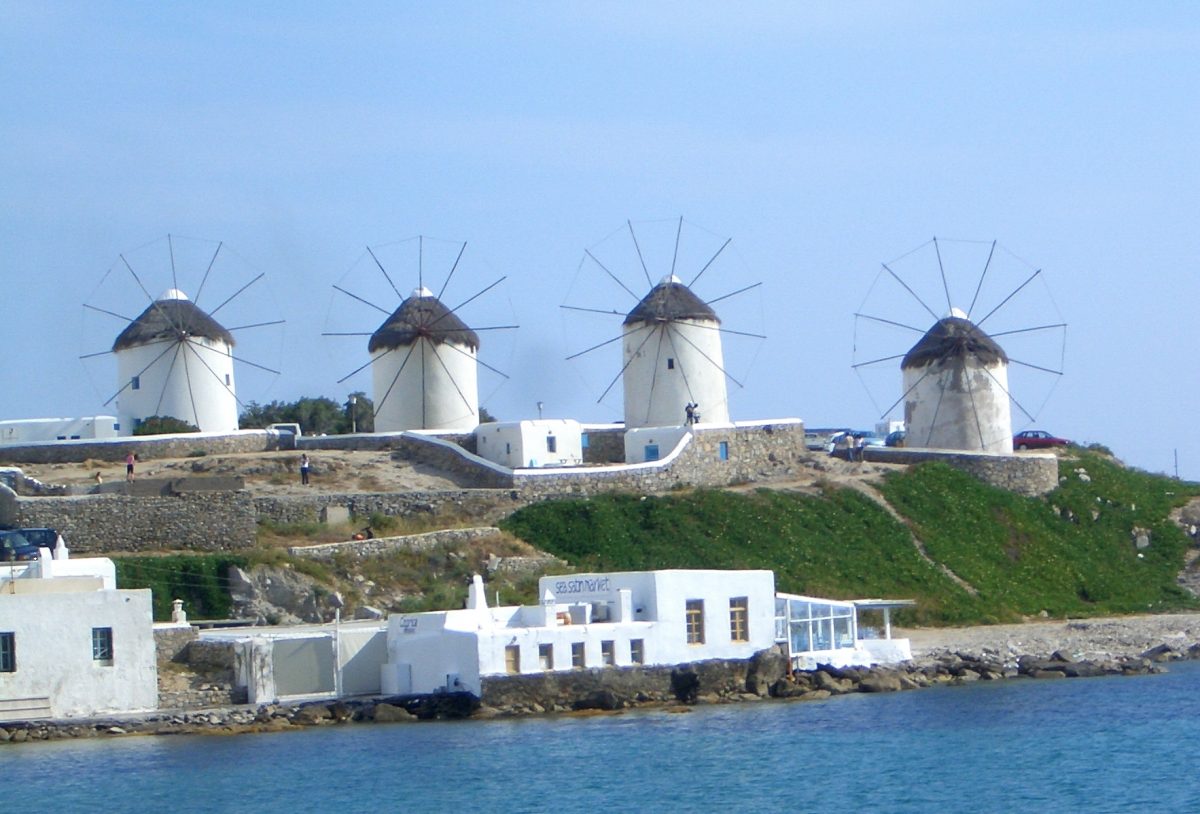
Here you can meet, flirt, shop, eat, drink and stare at the celebrities and fashionistas parading through. Staying in town also offers protection from the strong Etesian wind (“meltemi” in Greek) that can buffet the island mercilessly throughout July and August. In Little Venice (pictured above), with its views of the island’s iconic windmills, you can enjoy one of the world’s most famous sunsets while sipping on cocktails.
Mykonos
Mykonos is one of Greece’s most iconic destinations, located in the heart of the Cyclades in the Aegean Sea. Known famously as the “Island of the Winds,” it is celebrated for its stunning beaches, vibrant nightlife, and quintessential Cycladic architecture. Historically, the island takes its name from the mythological hero Mykonos, son of the King of Delos, and is said to be the burial site of giants slain by Hercules. While it has roots in ancient history, the island transformed in the mid-20th century into a cosmopolitan hub that attracts artists, celebrities, and travelers from around the globe.
Defining Characteristics & Atmosphere
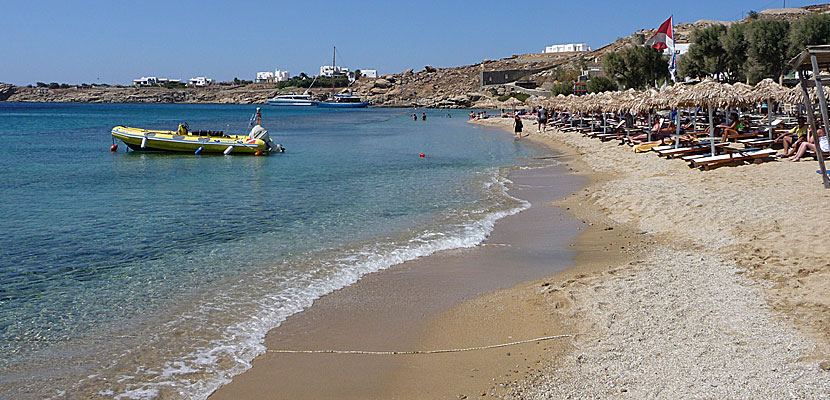
The island offers a unique blend of high-end luxury and traditional charm. Its narrow, whitewashed alleys are draped in vibrant bougainvillea, leading to high-end boutiques and world-class restaurants. Visitors often describe the atmosphere as “anything-goes,” where glamorous beach clubs like Paradise and Super Paradise host legendary parties that last until dawn, while secluded coves offer a peaceful retreat. The architectural style—flat roofs, colorful shutters, and cube-shaped houses—is strictly preserved, maintaining the island’s timeless aesthetic.
Key Highlights of Mykonos
Mykonos
Mykonos, also known as Chora, is the vibrant capital and main town of the island, serving as a labyrinth of cobblestone streets designed to confuse pirates in the past.
- Home to high-end designer boutiques like Louis Vuitton and Gucci alongside local artisan shops.
Windmills of Mykonos
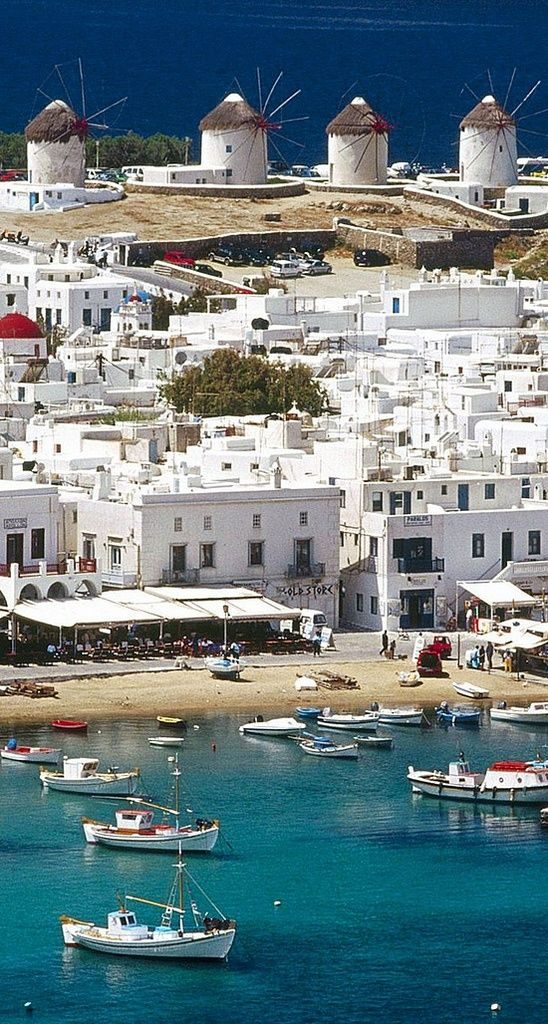
- Features the Windmills of Mykonos, 16th-century structures originally used for milling flour that offer sweeping sunset views.
Holy Church of Panagia Paraportiani
- Includes the iconic Holy Church of Panagia Paraportiani, a whitewashed church complex known for its unique asymmetrical architecture.
Little Venice
Little Venice is one of the most romantic spots on the island, where 18th-century sea captains’ houses hang over the water’s edge with colorful balconies.
- Famous for its sunset views and waterfront bars where waves occasionally splash onto the outdoor tables.
- A popular gathering spot for artists and photographers looking to capture the “Venetian” style architecture.
Ano Mera
Ano Mera offers a stark contrast to the lively town center, providing a glimpse into traditional Greek life as the island’s most quiet and rural village.
- Centered around a charming town square filled with authentic tavernas serving local specialties.
- Home to the Panagia Tourliani monastery, a 16th-century site featuring an impressive marble bell tower.
Nearby Exploration
Delos
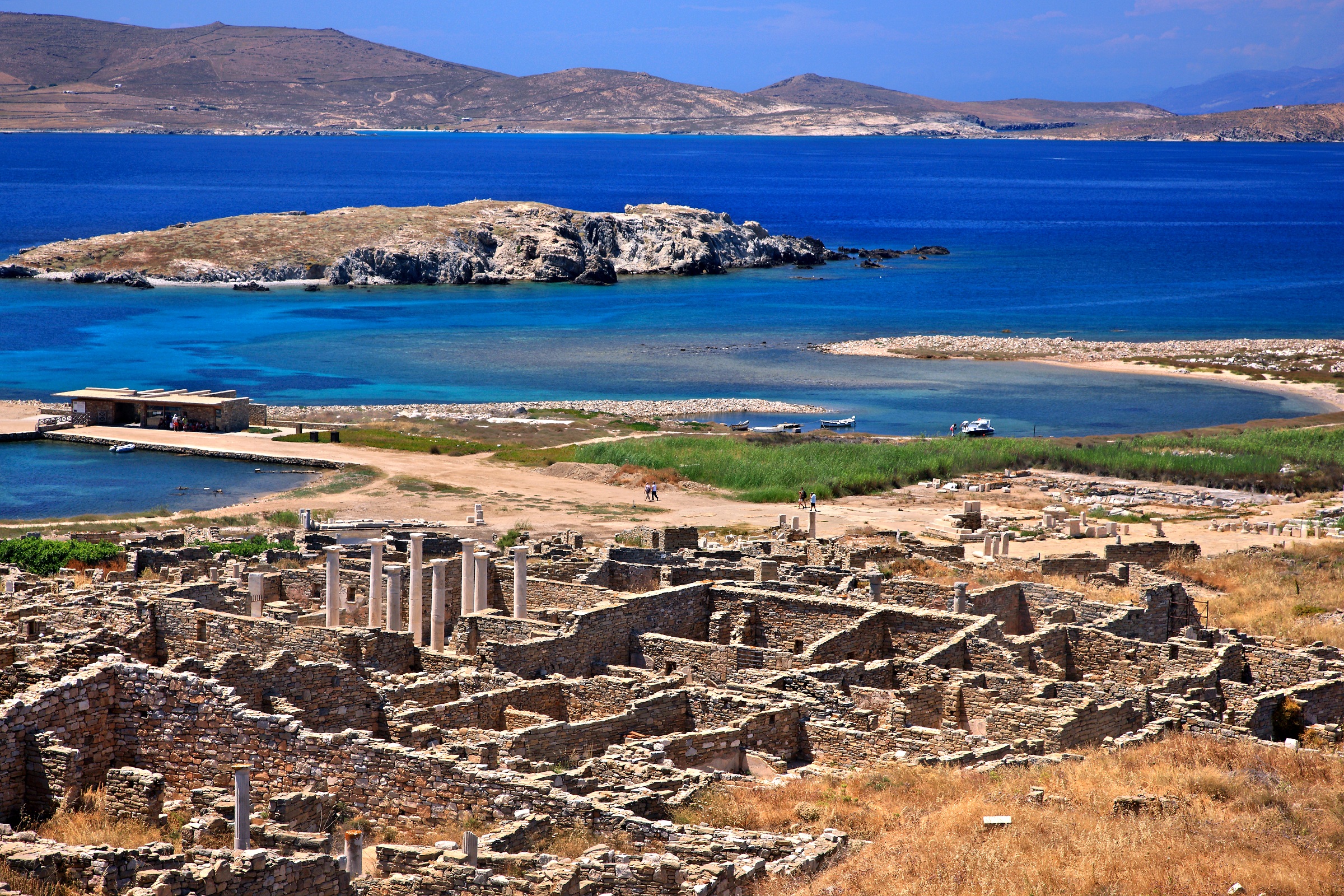
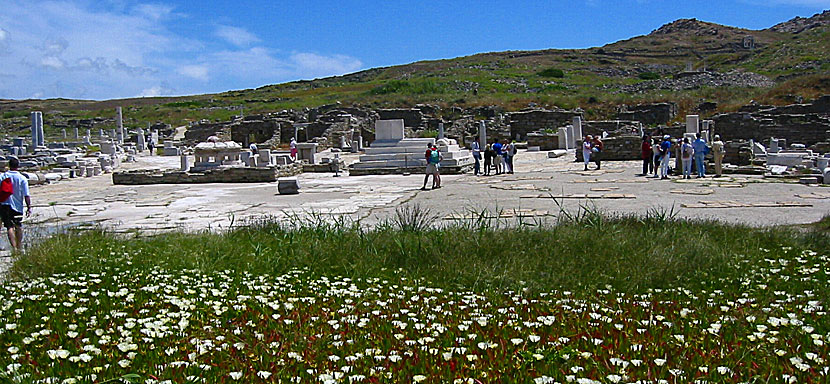
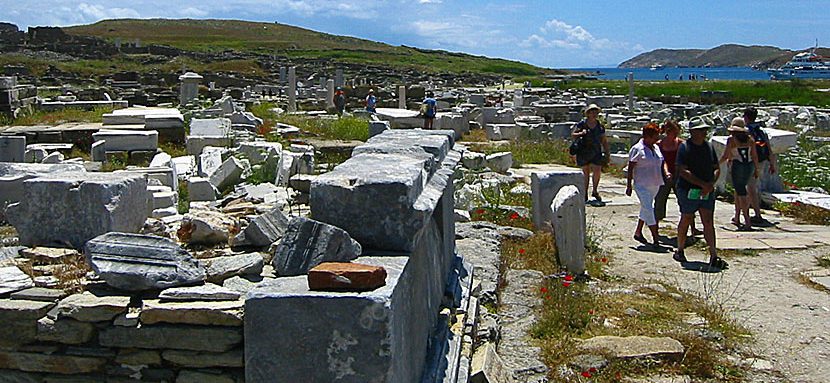
Delos, located just a short boat ride away, is a UNESCO World Heritage site and one of the most important archaeological locations in Greece.
- Believed to be the birthplace of the gods Apollo and Artemis in Greek mythology.
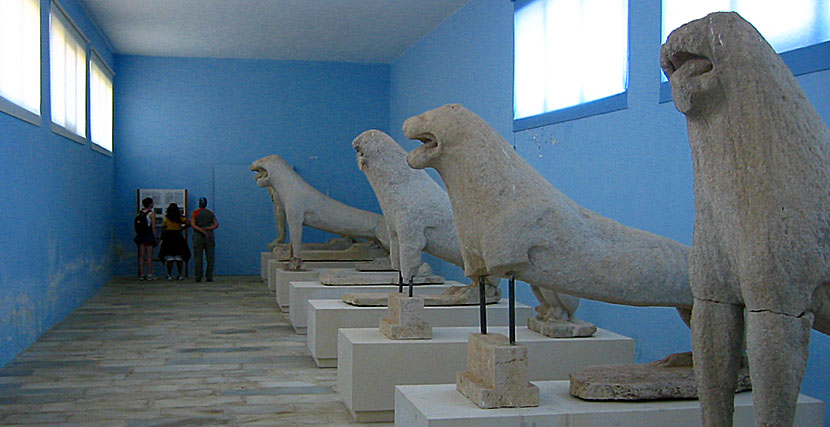
- Features extensive ruins including the Terrace of the Lions and the House of Dionysus.
Would you like to know more about the best beaches for a relaxing day, or are you looking for recommendations on the top nightlife spots in Mykonos Town?



Mykonos Gastronomy
Mykonos is often associated with high-end beach clubs and glitzy parties, but its culinary soul is rooted in a rugged, “poor man’s” tradition that turns simple ingredients into punchy, unforgettable flavors. Here is a curated list of the essential food highlights you need to experience on the island.
The Charcuterie Star: Louza
Often called the “Prosciutto of Mykonos,” Louza is the king of the island’s appetizers.
- What it is: Thinly sliced, salt-cured pork tenderloin flavored with cloves, pepper, and cinnamon.
- The Vibe: It is air-dried in the Aegean breeze, giving it a deep red color and a chewy, intense flavor.
- How to eat it: Traditionally served as a meze with a glass of local red wine or ouzo.
The Cheese Trio
Mykonos produces unique cheeses that you won’t find anywhere else in the world with the same intensity.
- Kopanisti: A PDO (Protected Designation of Origin) cheese. It is creamy, fermented, and remarkably spicy and peppery. It’s like the Greek version of a very aggressive Roquefort.
- Tyrovolia: A soft, white, unsalted cheese. It’s the “blank canvas” of the island, used primarily as the base for almost all traditional Mykonian pies.
- Xinotyro: As the name suggests, this is a sour cheese. It’s basically Tyrovolia that has been left to dry and ferment further, resulting in a hard, tangy cheese perfect for grating over pasta.
Savory Specialties
- Kremidopita (Onion Pie): Don’t let the name fool you—this is a gourmet experience. It features layers of phyllo stuffed with creamy Tyrovolia cheese, plenty of onions, and wild fennel.
- Mostra: The Mykonian answer to bruschetta. It’s a large barley rusk topped with a thick layer of spicy Kopanisti, diced sweet tomatoes, capers, and a heavy drizzle of extra virgin olive oil.
- Mykonian Sausages: These are distinct because they are made with very lean pork and seasoned heavily with throubi (a local savory herb that tastes like a mix of oregano and thyme).
Sweet Treats
- Amygdalota: These are almond-based “macaroons.” They are naturally gluten-free, scented with rosewater or orange blossom, and have a chewy center with a crunchy sugar coating. They are the traditional treat handed out at Mykonian weddings.
- Melopita (Honey Pie): A dessert made from Tyrovolia cheese, local thyme honey, and cinnamon. It’s essentially a crustless, honey-drenched cheesecake.
- Rafiolia: Small fried dough pockets filled with honey, cinnamon, and sometimes a hint of orange zest.
Drinks
- Soumada: A traditional, non-alcoholic almond syrup drink served cold. It’s refreshing, milky-white, and carries a nostalgic, floral aroma.
- Local Wine: Look for wines featuring the Assyrtiko or Monemvasia grapes grown in the Cycladic soil, which gives them a distinct mineral, salty finish.
Delos Island
Mythology and history
Invisible. According to Greek mythology, the rocky islet that wandered in the waters of the Aegean Sea was invisible. The myth goes as follows: Zeus, father of the gods (and unfaithful, as was his wont) mated with Leto, daughter of the Titan Coeus and Phoebe. Zeus’s wife, the goddess Hera, jealous of Leto, who was now pregnant, pursued her everywhere. She wandered around looking for a place to give birth. Then Zeus asked Poseidon, god of the sea, to give shelter to Leto. And he immobilized the invisible islet right in the center of the Aegean Sea. And from invisible it became Delos (visible). And it was tied to the seabed with diamond chains. Thus, Leto gave birth to her twin children there. Artemis, goddess of the hunt, and then Apollo, god of light and most beautiful of the immortals.
According to mythology, Leto had given birth to Artemis first, who even helped her mother in the birth of Apollo. The birth lasted 9 days and the pregnant woman’s agony ended as soon as Eileithyia, the goddess of childbirth, arrived on Delos. As Homer has preserved the scene, the birth was particularly impressive. A brilliant light spread over the island and the goddesses who supported Leto were dazzled. Immediately, a multitude of swans flew over the lake of Delos and the barren place blossomed. The island became sacred, bathed forever in the light of Apollo and Leto promised to make Delos the richest place in the world.
According to Thucydides, the first settlers were the Carians. As excavations show, people lived on Delos from the 3rd century BC. millennium (traces of circular huts were found on the summit of Mount Kynthos). In the Mycenaean Era, and especially in the period 1580-1200 BC, there was a settlement on Delos in the plain, near the port. Later, as in the rest of the Cyclades, the Ionians settled. During the Geometric Era, the island developed considerably. From 700 BC, we have references in Homer to the all-holy Ionian Sanctuary of Apollo. Over the years, it gained prestige and respect, and the Ionian cities dedicated rich offerings to it. The Delian Games were celebrated every four years with games, theater, symposia, music and more. In the ancient world, they were the most famous games, after the Olympics and the Pythian Games. Thucydides reports that the tyrant of Samos, Polycrates, gave Delos the neighboring islet of Rheneia in 530 BC – and even connected it with a long chain to emphasize where the island belonged.
According to mythology, Leto had given birth to Artemis first, who even helped her mother in the birth of Apollo. The birth lasted 9 days and the pregnant woman’s agony ended as soon as Eileithyia, the goddess of childbirth, arrived on Delos. As Homer has preserved the scene, the birth was particularly impressive. A brilliant light spread over the island and the goddesses who supported Leto were dazzled. Immediately, a multitude of swans flew over the lake of Delos and the barren place blossomed. The island became sacred, bathed forever in the light of Apollo and Leto promised to make Delos the richest place in the world.
According to Thucydides, the first settlers were the Carians. As excavations show, people lived on Delos from the 3rd century BC. millennium (traces of circular huts were found on the summit of Mount Kynthos). In the Mycenaean Era, and especially in the period 1580-1200 BC, there was a settlement on Delos in the plain, near the port. Later, as in the rest of the Cyclades, the Ionians settled. During the Geometric Era, the island developed considerably. From 700 BC, we have references in Homer to the all-holy Ionian Sanctuary of Apollo. Over the years, it gained prestige and respect, and the Ionian cities dedicated rich offerings to it. The Delian Games were celebrated every four years with games, theater, symposia, music and more. In the ancient world, they were the most famous games, after the Olympics and the Pythian Games. Thucydides reports that the tyrant of Samos, Polycrates, gave Delos the neighboring islet of Rheneia in 530 BC – and even connected it with a long chain to emphasize where the island belonged.

Milos Island
Milos Nature
Milos is often called the “Island of Colors” due to its volcanic origin, which has carved out some of the most surreal landscapes in the Mediterranean. Here are the top nature highlights of the island:
The Lunar Landscapes
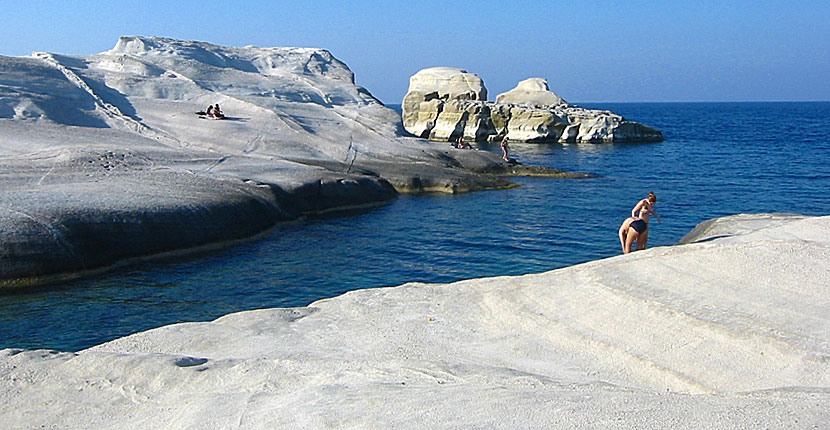
- Sarakiniko Beach: This is the island’s most iconic site. It features smooth, bone-white volcanic rock formations that have been sculpted by wind and salt into a landscape that looks like the surface of the moon. There are no trees or sand here—just white stone against deep blue water.
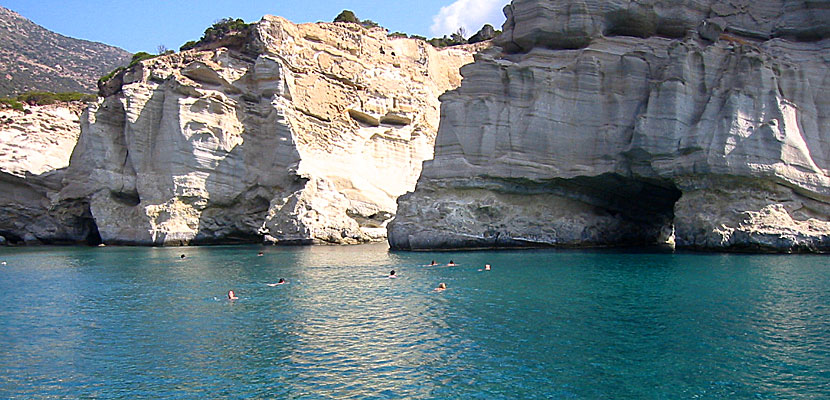
- Papafragas Caves: A series of deep, narrow sea channels cut into the white rock. You can swim through a natural tunnel from the sea into a tiny, hidden beach at the bottom of a ravine.
Coastal Masterpieces & Sea Caves
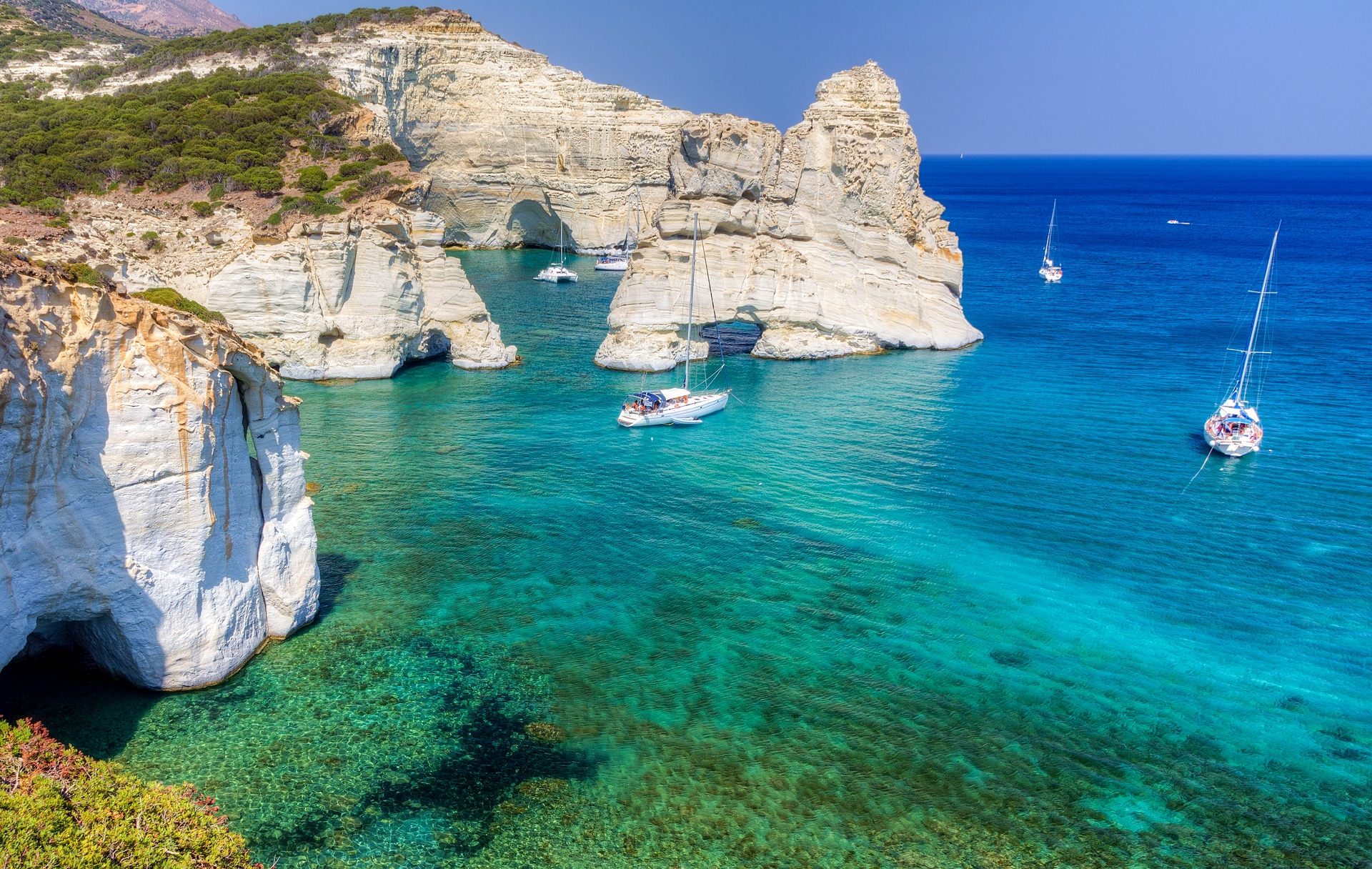
- Kleftiko: Accessible only by boat, this former pirate hideout is a complex of towering white limestone pillars, natural arches, and emerald sea caves. It is one of the best spots in Greece for snorkeling and swimming through rock tunnels.
- Sykia Cave: Also known as the “Emerald Cave,” this is a massive sea cave with a collapsed roof. Sunlight pours in from above, illuminating the water in a brilliant green hue against a small pebble beach inside the cavern.
- Glaronisia Islets: These small islands near the north coast are a geological marvel, featuring rare hexagonal basalt columns formed by cooling lava (similar to the Giant’s Causeway in Ireland).
Vivid Volcanic Colors
- Paliochori Beach: This beach is a literal “open-air laboratory” of volcanic activity. The cliffs are striped with vibrant yellows, reds, and pinks from sulfur and iron. In some spots, the sand is so hot from geothermal energy that restaurants use it to slow-cook food in “sand ovens.”
- Fyriplaka Beach: A long, dramatic stretch of coast backed by massive, multi-colored volcanic cliffs. A huge rock standing in the shallow water (the “plate”) is a favorite landmark for photographers.
- Thiorichia (The Old Sulfur Mines): While technically an industrial ruin, the nature here is the real star. The abandoned mines sit on a beach where the sand is bright yellow from sulfur and the pebbles are deep orange, set against a backdrop of rugged, crumbling hills.
Unique Biodiversity & Ecology
- Achivadolimni Lake: Located right behind the beach of the same name, this is the largest wetland in the Cyclades. It’s a crucial stopover for migratory birds and home to the rare Milos Viper and various protected lizards.
- Rivari Lagoon: A calm, shallow lagoon near the entrance of Milos Bay that serves as a natural hatchery for fish and a peaceful spot for birdwatching.
And then you arrive at the harbors at Mandrakia or Embourios, and you feel like you’re going back to the 60s. The island where Aphrodite of Milos – the goddess of love and beauty – was discovered, and where nature expressed itself in such impressive and explosive ways, has been described as “a romantic destination in the Aegean, ideal for couples”. We’re simply saying that it’s a destination that everyone dreams of when they’re locked up in their homes during the winter.
Through earthquakes, underwater explosions and tidal waves, Milos emerged from the sea 3.5-2.7 million years ago. Today it has two inactive volcanoes at Trachila and Fyriplaka.
Sarakiniko
The dazzling white of the rocks is married to the green and deep blue of the sea, in this open-air sculpture museum that resembles an alien landscape. Here, you don’t just come to swim, but to explore a geological phenomenon that is one of the most unusual internationally. Walk on the white slopes to see caves that resemble catacombs, sculpted pits filled with water, volcanic rocks with unique shapes. Swimming outside the narrow bay you will admire up close the imposing rock that rises from the sea and an impressive shipwreck. (see Beaches)
Info: according to geologists, the uniqueness of Sarakinikos is due to the fact that millions of years ago, white tuffs, created by the underwater deposition of volcanic ash, trapped organisms (shells, mollusks) among them. Thus, their fossils were preserved in material of purely volcanic origin. Sea waves and wind, along with seismic activity, played a role in shaping the landscape.
Kleftiko
A synonym for Milos, it stars in advertisements for the island, as well as in international campaigns by the Greek National Tourist Organization. You will definitely go there – although you will rarely find it without excursion boats, private boats and a lot of people. Kleftiko is a geological park with heavenly waters, smooth white rocks and large stone arches. Caves are formed, with small sandy coves that have shallow waters with exotic green-turquoise colors. You will enter them by swimming, or with a small inflatable boat.
Info: Kleftiko got its name from the pirates (sea thieves) who found refuge there. Access is only possible by tourist boats (see Activities), or private boat. You can also come by foot.
ACTIVITIES
The number one activity in Milos is a cruise around the island. There are many companies that will take you to the most beautiful beaches and to Kleftiko, with boats and sailboats, providing various programs for half or full days, with food, time for swimming, etc. There are programs that also include a visit to neighboring Kimolos – where you can also go from Pollonia.
The departure for the sea excursions is from Adamas. For Kleftiko you can also take a tourist boat from Kipos beach. Of course, you can also rent your own boat to go with your group – with or without a captain.
You can take organized tours of the island by land by vehicle.
Sea Kayak: excursions and multi-day visits with camping on the beaches are organized.
Milos is ideal for diving and snorkeling, so contact the companies that specialize in the sport to rent you equipment. You will find them in Adamas and Fyriplaka, where water sports are also organized. The seabed of the island has underwater caves, shipwrecks from World War II, many species of fish (including rare ones) and hot springs. Snorkelers will find their paradise on the island. Arkadias, Lakida in Filoti, the sea area off Pollonia and Antimilos are recommended.
There are 7 amazingly beautiful marked trails on Milos/Photo: Shutterstock
To highlight the geological identity of the island, Miloterranean has been created with 7 amazingly beautiful marked trails. You can do them by car, bike, or on foot. See details on the website of the Municipality of Milos.
There are two amazing climbing areas, in Glaronisia and Tourla, in Vani. Both are considered among the best in Greece.
Milos Villages
Milos is famous for its unique “syrmata”—colorful boathouses carved into the volcanic rock—and its hilltop “Chora” (main town). Here are the highlights of the island’s most charming villages:
Plaka (The Capital)
Perched high on a hill overlooking the Gulf of Milos, Plaka is a classic Cycladic village with narrow, maze-like alleys designed to confuse pirates.
- The Kastro: Hike up to the Venetian Castle for the island’s most famous sunset views.
- Panagia Korfiatissa: A beautiful church with a marble-paved courtyard offering a stunning panorama of the sea.
- Museums: Home to the Archaeological Museum (which houses a replica of the Venus de Milo) and the Folklore Museum.
- Utopia Cafe: A legendary spot for sunset cocktails.
Klima (The Iconic Fishing Village)
The most photographed spot on the island, Klima consists of a single row of two-story dwellings right on the water’s edge.
- Syrmata: Admire the vibrant, multicolored doors of the boathouses where fishermen once lived upstairs and kept boats below.
- Astakas Restaurant: A great place to eat fresh seafood with your feet almost in the water.
- Proximity to History: Just a short walk uphill leads you to the site where the Venus de Milo was discovered.
Pollonia
Located on the northeastern tip, this is a chic, laid-back seaside village that serves as the island’s secondary port.
- Seafood Dining: Known for having some of the best high-end fish tavernas and wine bars on the island.
- Ferry to Kimolos: The small ferry departs from here for easy day trips to the neighboring island of Kimolos.
- Family-Friendly: Features a protected, tree-lined sandy beach that is perfect for children.
Mandrakia
A tiny, traditional fishing settlement that feels like a time capsule.
- Medusa Restaurant: Arguably the most famous eatery on the island; try their sun-dried octopus hanging outside.
- Scenic Inlet: The village is centered around a small, rocky cove filled with brightly painted boats.
- Moon-like Surroundings: Located near the famous Sarakiniko beach, it shares some of that striking white volcanic geology.
Trypiti
Built amphitheatrically on the ruins of the ancient city of Melos, this village is rich in history.
- The Catacombs: Explore one of the most important early Christian burial sites in the world.
- Ancient Roman Theater: A well-preserved marble theater overlooking the sea that is still used for performances today.
- Windmills: The village skyline is dotted with traditional stone windmills, some of which have been converted into unique luxury stays.
Adamas (The Port)
The lively heartbeat of Milos where most visitors first arrive by ferry.
- Mining Museum: A fascinating look at the island’s volcanic origins and mineral wealth (obsidian, perlite, and sulfur).
- Boat Tours: This is the main hub for booking full-day sailing trips to Kleftiko and the Sykia Cave.
- Nightlife: Offers the most variety in terms of bars, cafes, and souvenir shops that stay open late.
Firopotamos
A hybrid of a beach and a village, located in a turquoise bay.
- Agios Nikolaos Church: A blue-domed church that sits on the edge of the cliff, perfect for photos.
- Crystal Waters: One of the best spots for a quick swim directly in front of the colorful boathouses.
Milos Gastronomy
Milos is a volcanic island, and that unique geology translates into a rich, flavor-dense cuisine. Because the soil is fertile but water is often scarce, the ingredients—especially the tomatoes and cheeses—are incredibly concentrated in taste.
Savory Specialties
- Ladenia: Often called the “Greek pizza,” this is arguably Milos’ most famous export. It’s a flatbread made with plenty of olive oil, topped with fresh tomatoes, onions, and sometimes capers. No cheese is used, letting the oil and vegetables shine.
- Pitarakia: These are small, half-moon-shaped cheese pies. The filling is typically a local sharp, dry cheese (like manoura) mixed with onions and herbs. They are fried until golden and crispy.
- Gouna: A sun-dried and then grilled mackerel. This technique, common in the Cyclades but perfected here, gives the fish a firm texture and an intense, smoky-salty flavor.
- Katsikaki (Goat) in the Hull: Slow-roasted goat meat, often cooked in a traditional wood oven with potatoes and “belte” (local tomato paste).
- Lobster Spaghetti: While found across Greece, Milos is particularly famous for its fresh lobster, usually served with a rich tomato-based pasta sauce.
The Tomato Heritage
- Belte (Tomato Paste): This isn’t your standard supermarket paste. Milos produces a highly concentrated, sun-dried tomato pulp. It is used in almost every stew and is often served simply spread on bread as a snack.
- Tomato Keftedes: Fried tomato balls made with local tomatoes, herbs, and flour. Because Milos tomatoes are so flavorful, these are often more intense than those found on neighboring islands.
Local Cheeses
- Xinomyzithra: A soft, creamy, and slightly sour cheese. It is frequently used in salads as a replacement for feta or as a filling for pies.
- Manoura: A hard, salty cheese that is often aged in wine sediment (murgis), giving it a dark outer layer and a very distinct, pungent aroma.
- Skotyri: A spicy, creamy cheese mixed with local herbs like savory (throubi).
Sweet Treats
- Koufeto: The traditional wedding sweet of Milos. It’s a “spoon sweet” made from white pumpkin (gourd), local honey, and blanched almonds. It is bright golden and incredibly sweet.
- Karpouzopita: An unusual but delicious watermelon pie. It’s a flat, dense cake made with watermelon flesh, honey, sesame seeds, and flour. It’s sweet, chewy, and smells like summer.
- Melopita: A honey pie made with mizithra cheese, cinnamon, and thyme honey. It has a texture similar to a crustless cheesecake.
Local Products & Drinks
- Thyme Honey: Thanks to the wild herbs growing on the volcanic hills, the honey here is exceptionally aromatic.
- Kritamo (Sea Fennel): Often picked fresh from the rocks by the sea and pickled, it is served as a salty, herbal garnish for salads.
- Volcanic Wine: Milos has a growing wine scene. The volcanic soil lends a mineral quality to white varieties like Assyrtiko and Savatiano.
Syros Island
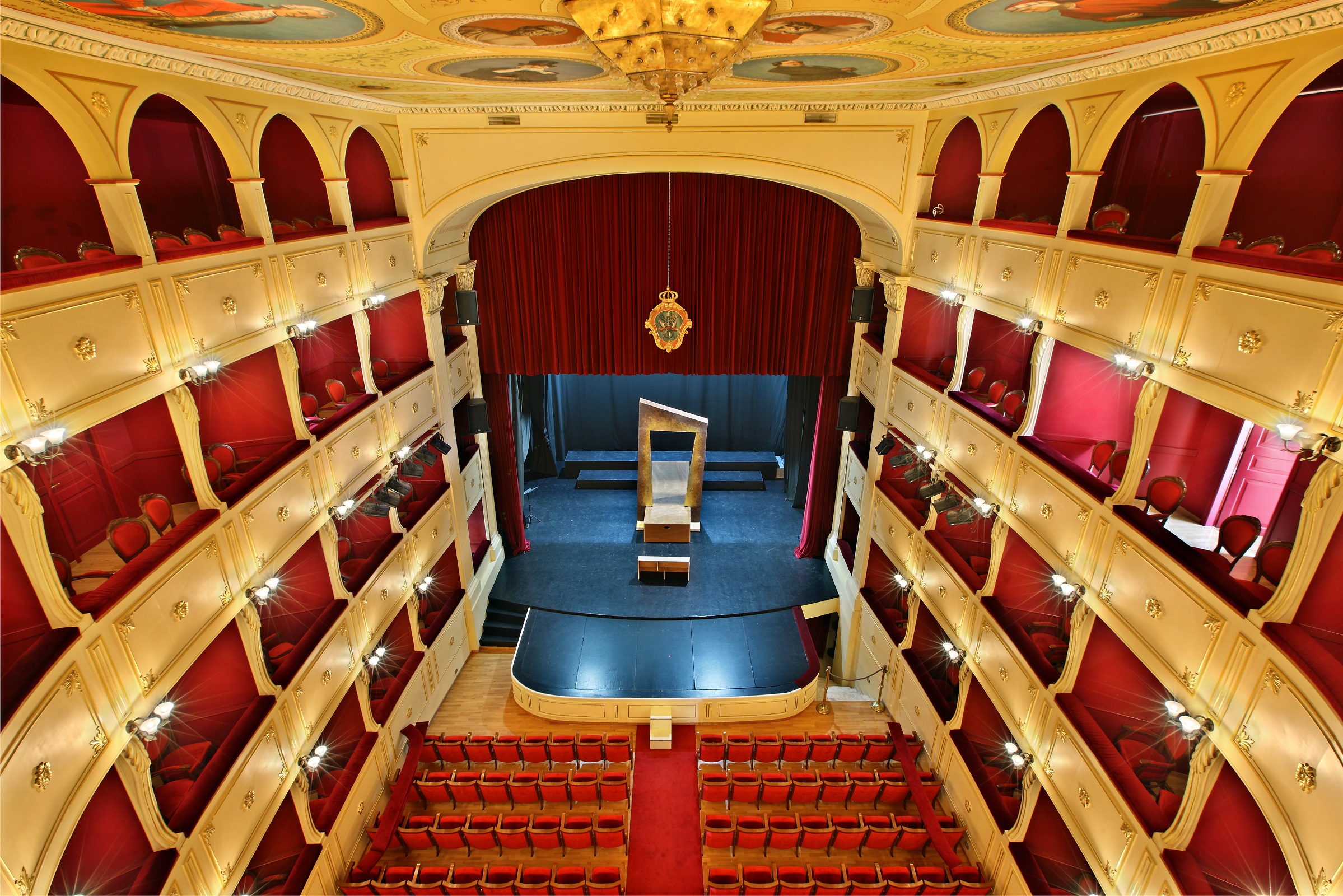
Syros is the “Noble Queen” of the Cyclades. Unlike its whitewashed neighbors like Mykonos or Santorini, Syros offers a sophisticated blend of Neoclassical elegance, industrial history, and a rare, harmonious coexistence of Orthodox and Catholic cultures. It serves as the administrative capital of the Cyclades, meaning it remains vibrant and “lived-in” year-round, not just during the summer tourist season.
The Two Faces of the Capital
The island is defined by two distinct hills overlooking the port of Ermoupoli:
- Ermoupoli (The Lower Town): A 19th-century masterpiece of marble-paved streets and grand architecture. It was once the most important port in Greece, even surpassing Piraeus.
- Town Hall: A massive Neoclassical building designed by Ernst Ziller, located in the marble-paved Miaouli Square.
- Apollo Theatre: A miniature version of Milan’s La Scala, hosting world-class opera and theater performances.
- Vaporia District: The “Little Venice” of Syros, where shipowners built grand mansions right above the sea.
- Ano Syros (The Upper Town): A medieval, labyrinthine settlement founded by the Venetians in the 13th century. It is primarily Catholic and offers panoramic views of the Aegean from the Cathedral of Saint George.
Coastal & Resort Villages
- Kini: A picturesque fishing village on the west coast known for its beautiful sunsets, seafood tavernas, and the “Mermaid Virgin” statue by the harbor.
- Galissas: One of the most popular tourist resorts on the island, featuring a large sandy beach, the chapel of Agia Pakou, and a sheltered stone pier.
- Finikas: A small harbor town with a marina, popular with sailors. It has several seaside restaurants and a relaxed atmosphere.
- Poseidonia (Della Grazia): Named after the ancient temple of Poseidon. This was the preferred summer retreat for 19th-century aristocrats, evidenced by the grand villas with lush gardens.
- Vari: A large settlement in the southeast with a sheltered bay that is perfect for families due to its shallow waters.
- Azolimnos: The closest seaside village to Ermoupoli, known for its waterfront tavernas and clear swimming spots.
- Megas Gialos: A long coastal settlement with small sandy coves and plenty of rental apartments overlooking the Aegean.
Inland & Traditional Villages
- Chroussa: Considered one of the greenest villages on the island, filled with old mansions, pine trees, and Orthodox and Catholic churches.
- Episkopio: A leafy village built on a hill with panoramic views and several impressive manor houses from the island’s golden age.
- Parakopi: A quiet, inland village characterized by its traditional architecture and surrounding orchards.
- Pagos: An agricultural hub in the center of the island, known for its greenhouses and rural charm.
- Danakos: A small, traditional settlement that was the birthplace of the famous Rebetiko musician Markos Vamvakaris.
- Talanda: A peaceful spot located just a few kilometers from the capital, perfect for a quiet stroll.
- Manna & Ano Manna: Settlements near the airport that blend agricultural life with residential outskirts of Ermoupoli.
The Rugged North (Apano Meria)
The northern part of Syros is wilder, mountainous, and less developed. The villages here are tiny and very traditional.
- San Michali (Agios Michalis): Famous for the spicy “San Michali” cheese produced here. It offers incredible views and a rugged, stone-built aesthetic.
- Chalandriani: A site of massive archaeological importance, home to one of the most significant Early Cycladic cemeteries and prehistoric settlements.
- Plati Vouni: A tiny, remote settlement with few inhabitants, offering absolute silence and raw Cycladic beauty.
- Papouri: One of the northernmost villages, serving as a starting point for hiking trails to secluded beaches like Lia and Grammata.
Tastes of Syros
Syros has a unique culinary identity influenced by both its maritime trade and its refuge history (many residents fled here from Chios and Izmir in the 1820s).
- Loukoumi & Halvadopita: The island’s signature sweets (Turkish Delight and soft nougat wafers).
- San Michali Cheese: A PDO-protected, spicy, hard yellow cheese that is considered one of Greece’s finest.
- Fennel Pie (Marathopita): A local herbaceous specialty often found in village taverns.
Tips for 2026
- The “Dual Easter”: Syros is one of the few places in the world where Catholics and Orthodox Christians celebrate Easter on the same day (the Orthodox date), creating a massive, unified island-wide festival.
- Getting There: You can reach Syros via a 25-minute flight from Athens or a 2-4 hour ferry ride from Piraeus. It is also the central hub for island-hopping to Tinos, Mykonos, and Paros.
- Year-Round Life: Because it is an administrative center, the shops and restaurants in Ermoupoli don’t close in the winter, making it a perfect “digital nomad” or off-season destination.
Fun Fact: Syros was home to the first electric car ever produced in Greece—the Enfield 8000—manufactured at the island’s Neorion shipyards in the 1970s. You can see one today at the Industrial Museum.

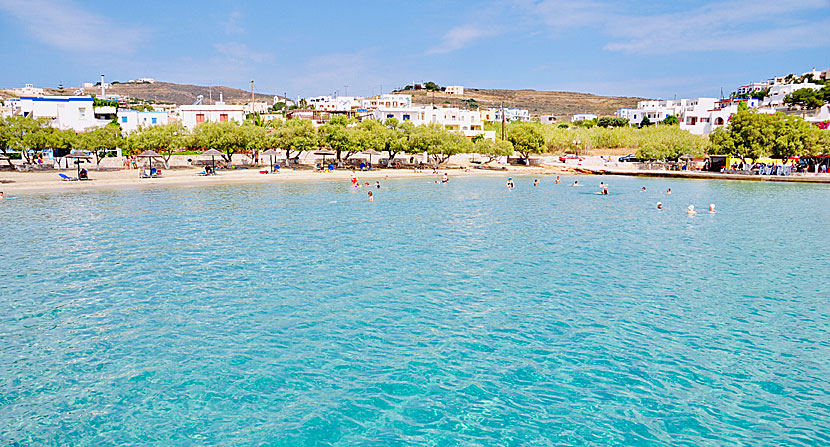
Amorgos Island
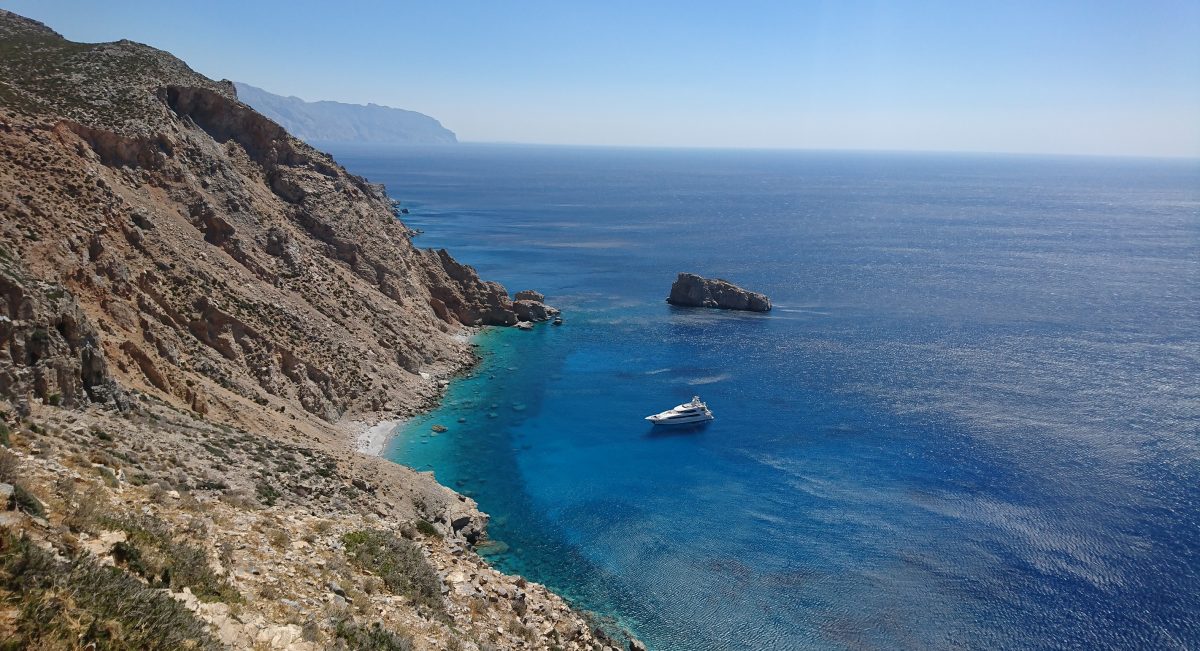
Amorgos is the easternmost island of the Cyclades, famously known as the location for Luc Besson’s 1988 film The Big Blue. It remains one of Greece’s most authentic and “wild” islands, characterized by dramatic cliffs, deep sapphire waters, and a lifestyle that feels remarkably untouched by mass tourism.
The “Must-See” Landmark
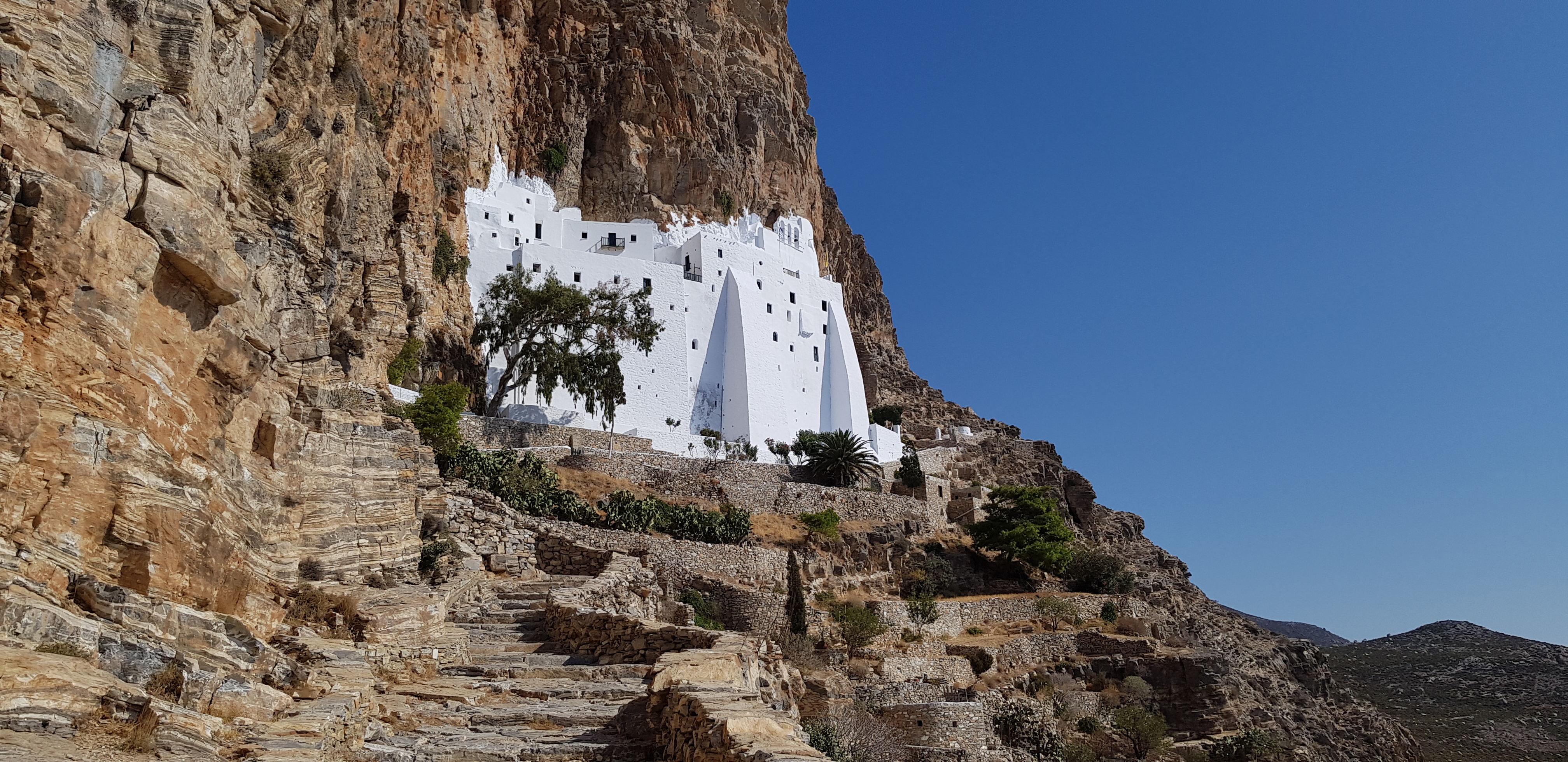
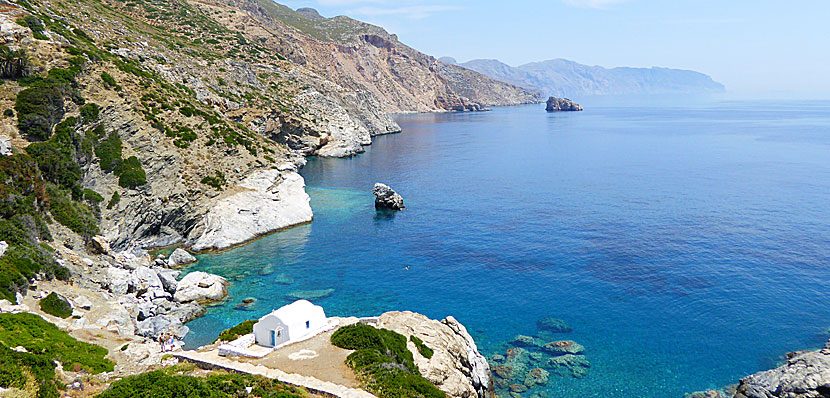
The Monastery of Panagia Hozoviotissa is the island’s crown jewel. Built in 1088 AD, this gleaming white structure is literally wedged into the face of a sheer cliff 300 meters above the sea.
- The Experience: Visitors must climb roughly 300 stone steps to reach it.
- Pro Tip: Monks often greet visitors with a glass of psimeni raki (honeyed herb liquor) and a piece of loukoumi (Turkish delight). Note that a strict dress code (long skirts for women, trousers for men) is enforced.
Key Villages
- Chora (The Capital): Widely considered one of the most beautiful villages in the Cyclades. It is a labyrinth of whitewashed alleys, blue-shuttered windows, and hidden squares centered around a 13th-century Venetian castle.
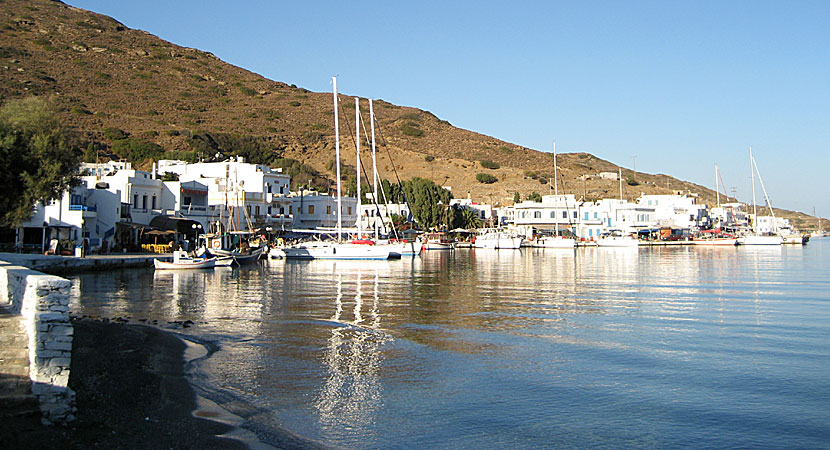
- Katapola: The main port, set in a deep natural bay. It has a more traditional, bustling waterfront with tavernas and shops.
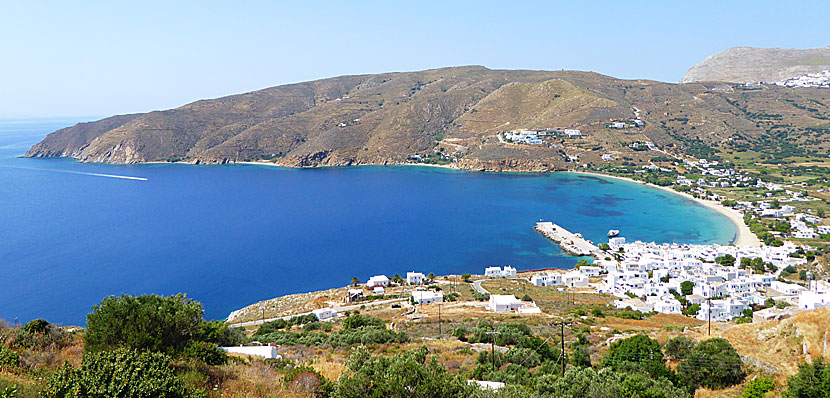
- Aegiali: The second port, located in the north. It offers a more “bohemian” vibe with a long sandy beach and is the gateway to the mountain villages of Tholaria and Lagada.
Notable Beaches
Amorgos is not a “sandy resort” island; its beauty lies in rocky coves and crystal-clear deep water.
- Agia Anna: A tiny, pebbly beach below the monastery. Its incredibly clear, deep blue water is where The Big Blue was filmed.
- Mouros: Known for its turquoise water and two underwater caves that are perfect for snorkeling.
- Levrossos: A sandy beach near Aegiali, accessible by a short hike or small boat.
- The Olympia Shipwreck: Located at Liveros Bay, this rusting freighter (which ran aground in 1980) offers a hauntingly beautiful backdrop for swimming and photography.
Activities & Culture
- Hiking: Amorgos is a hiker’s paradise with eight signposted “Blue Paths” that connect the ancient city-states (Minoa, Arkesini, and Aegiali).
- Psimeni Raki: The island’s signature drink, made with local honey and herbs. You’ll find it in every taverna.
- Festivals: If you are visiting in 2026, look out for the Feast of Agia Paraskevi (July 25-26), one of the largest traditional festivals in the Aegean, featuring free communal meals of patatato (goat and potato stew).
Getting There & Around
There is no airport on Amorgos. Access is strictly by ferry.
- From Athens (Piraeus): High-speed ferries take about 5.5–6 hours; conventional ferries can take 8–9 hours.
- Island Hopping: It is well-connected to Naxos, Santorini, and the “Small Cyclades” (Koufonisia, Schinoussa).
- Transport: Renting a scooter or small car is highly recommended, as the island is long (33km) and the local bus service, while reliable, is infrequent.

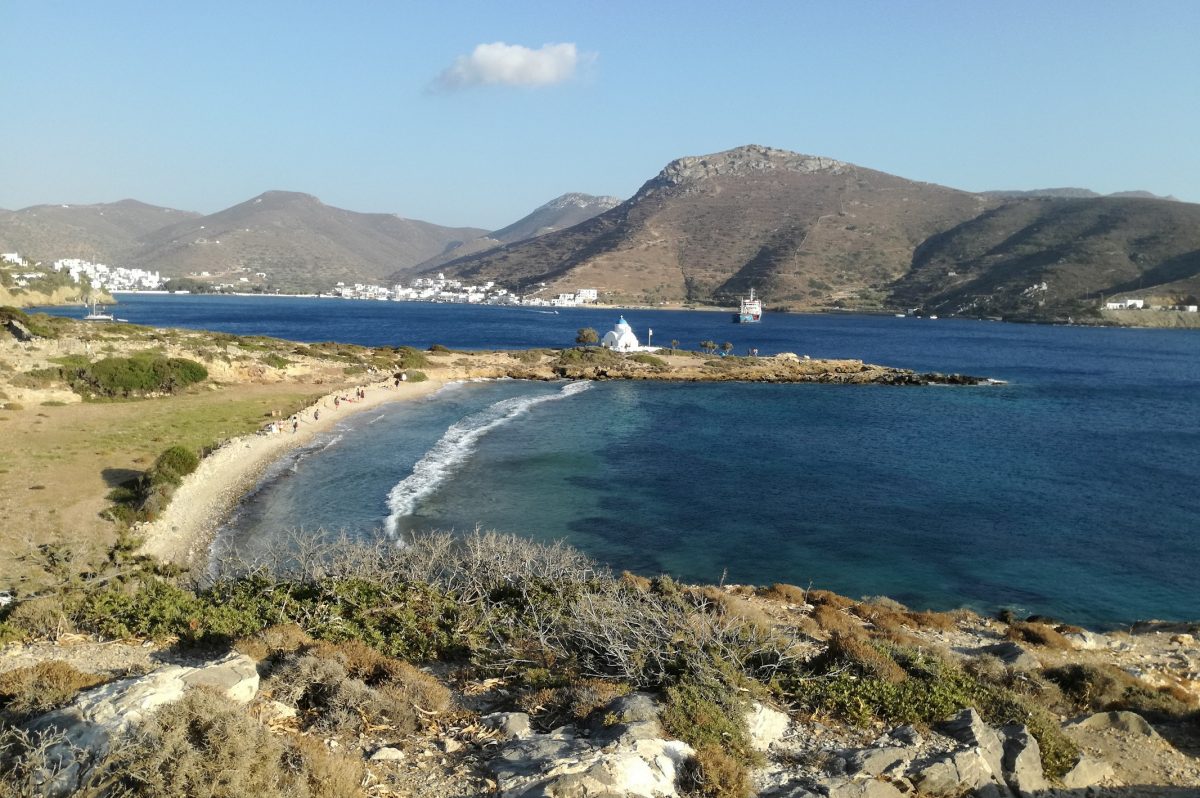
Kimolos Island
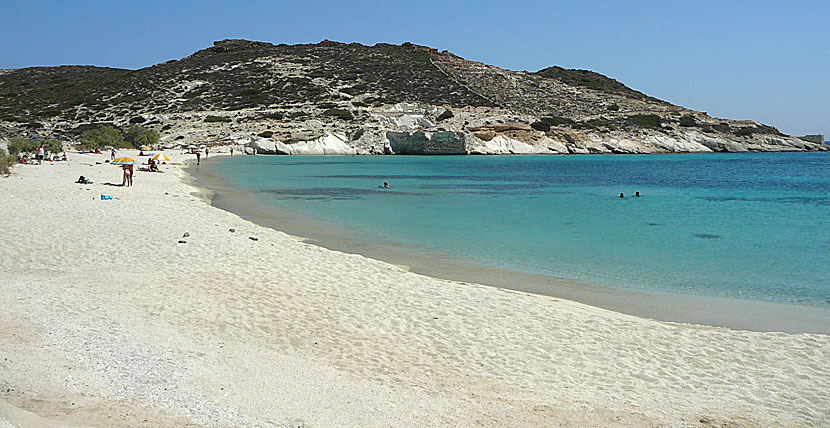
Kimolos is a serene, volcanic gem in the Cyclades, known for its “chalky” white rocks (from which it gets its name), authentic atmosphere, and slow pace of life. Often overshadowed by its neighbor Milos, it offers a more untouched, traditional Greek island experience.
Island Overview
- Location: Southwestern Cyclades, just 1 km northeast of Milos.
- Size: Approximately 36 square kilometers.
- Population: Around 800–900 permanent residents.
- Landscape: Volcanic terrain characterized by white-grey rocks, sea caves, and hilly ridges.
- Vibe: Quiet, authentic, and ideal for travelers seeking “slow travel.”
Main Settlements
- Chorio: The island’s capital and only real village, built on a hill to provide views and protection from pirates.
- Psathi: The picturesque port area where ferries arrive, featuring cafes, taverns, and a small beach.
- Goupa & Kara: Small fishing hamlets famous for “Syrmata”—colorful boat garages carved directly into the soft volcanic rock.
Key Attractions & Sights
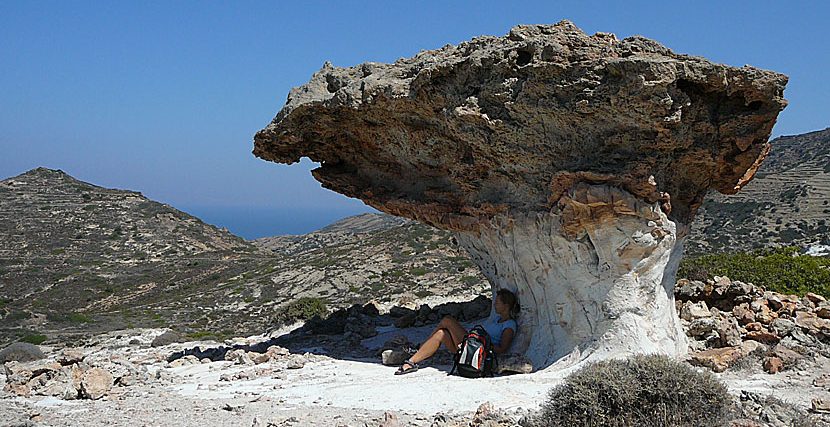
- Skiadi: A massive, mushroom-shaped rock formation created by wind erosion; the island’s most famous natural monument.
- The Kastro: A medieval castle district in Chorio dating back to the 14th century, consisting of “Mesa Kastro” (inner) and “Exo Kastro” (outer) settlements.
- Archaeological Museum: Located in Chorio, housing artifacts from the ancient city of Ellinika.
- Folk and Maritime Museum: Set within the Kastro, showcasing the island’s local traditions and seafaring history.
- Paleokastro: The highest peak of the island, featuring the ruins of an ancient citadel.
Top Beaches
- Prassa (Agios Georgios): Widely considered the best beach on the island, famous for its Caribbean-like white sand and turquoise water.
- Bonatsa: A large, shallow, sandy beach perfect for families and sheltered from northern winds.
- Mavrospilia: A long, sandy stretch on the west coast, known for its dramatic rock formations and sunset views.
- Aliki: A pebbly beach with tamarisk trees for natural shade and calm waters.
- Ellinika: A beach where, with a snorkel, you can see the ruins of an ancient sunken city just below the surface.
- Rema: Located near Goupa, featuring a natural “swimming pool” surrounded by rocks and the “Elephant” rock formation.
Local Gastronomy
- Ladenia: The island’s signature dish, a traditional “Greek pizza” made with dough, olive oil, tomatoes, and onions.
- Tirenia: A savory cheese pie made with local Kimolian “Manouri” or “Xino” cheese.
- Koulouri: Local bread, often flavored with anise or herbs.
- Fresh Seafood: Best enjoyed in the taverns of Psathi or the small harbors.
Nearby Highlights
- Polyaigos Island: The largest uninhabited island in the Aegean, accessible by boat from Kimolos. It is a protected Natura 2000 site known for its exotic “Blue Waters” (Galazia Nera) and rare Mediterranean Monk Seals.
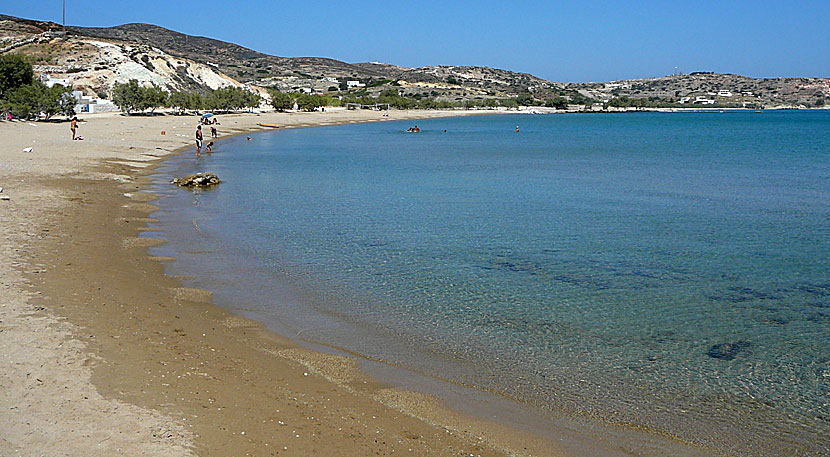
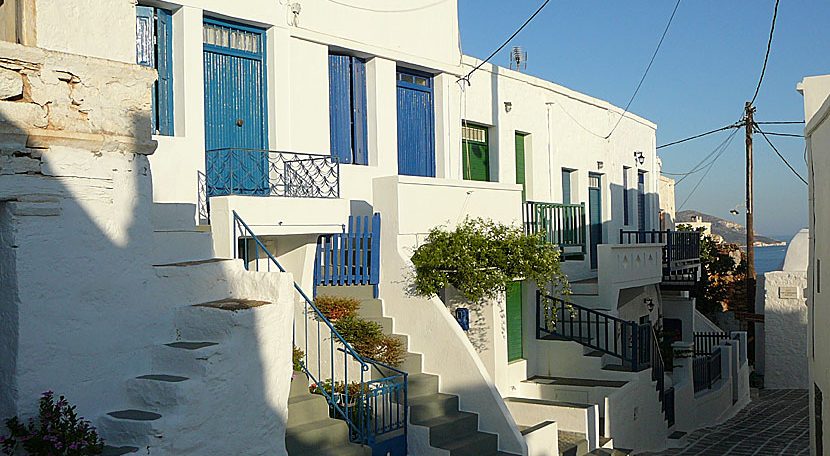
Kimolos is the kind of place that feels like a well-kept secret between friends. While its neighbor, Milos, has become a global superstar, Kimolos remains a quiet, volcanic sanctuary where “luxury” is defined by silence and authenticity rather than five-star resorts.
Here is a summary of what makes this tiny Cycladic island special.
The Vibe: “Slow Living” Personified
Kimolos isn’t for those looking for pulsating nightlife or high-end shopping. It is for people who want to wander through whitewashed alleys without dodging crowds.
- The Name: It comes from kimolia (chalk). The island was famous in antiquity for its white chalky earth, used for everything from medicine to washing clothes.
- Authenticity: There is only one main village, Chorio (not “Chora,” as locals will tell you). Life revolves around the village squares and the tiny port of Psathi.
Must-See Highlights
- Skiadi (The Giant Mushroom): A massive, mushroom-shaped rock formation in the middle of a barren plateau. It’s a natural geological monument created by the wind. It requires a bit of a hike, but the views are surreal.
- The Medieval Kastro: Located within Chorio, this is a 14th-century fortified settlement. It’s not a “castle” in the Disney sense, but a series of interconnected houses that formed a defensive wall against pirates.
- The Sunken City (Ellinika): If you snorkel at Ellinika beach, you can literally swim over the ruins of the ancient city of Kimolos, which sank during an earthquake.
- Goupa & Rema (Syrmata): These are tiny fishing hamlets where you’ll find syrmata—colorful boat garages carved directly into the soft volcanic rock. Look for the “Elephant Rock” nearby, a formation that looks exactly like an elephant dipping its trunk in the sea.
The Beaches
The water here is famously clear, often described as having a “swimming pool” quality.
- Prassa (Agios Georgios): The “celebrity” beach of the island. It has brilliant white sand and bright turquoise water.
- Mavrospilia: The best spot for sunset. It’s rugged, quiet, and offers a view of the “Aspragremna” rock formations.
- Bonatsa & Aliki: Long, sandy, and shallow—perfect if you just want to lounge all day.
Local Flavor
You cannot leave Kimolos without trying Ladenia. It’s the Greek version of a focaccia or pizza—a delicious flatbread topped with fresh tomato, onion, and plenty of local olive oil. Also look for Tyrenia (a local cheese pie) and Xino (a fresh, sour cream cheese).
Transportation
- Getting There: There is no airport. You can take a ferry from Athens (Piraeus), which takes about 4–7 hours depending on the boat. Alternatively, fly to Milos and take the “Panagia Faneromeni” ferry (the local “slipper” boat) for a 20-minute hop across the channel.
- Getting Around: The island is tiny (36 sq km). A car or scooter is helpful to reach the more remote beaches, but Chorio is entirely walkable.
- When to go: July and August are the “busy” months, but even then, it’s remarkably calm compared to Santorini or Mykonos. May, June, and September are idyllic.
Serifos Island
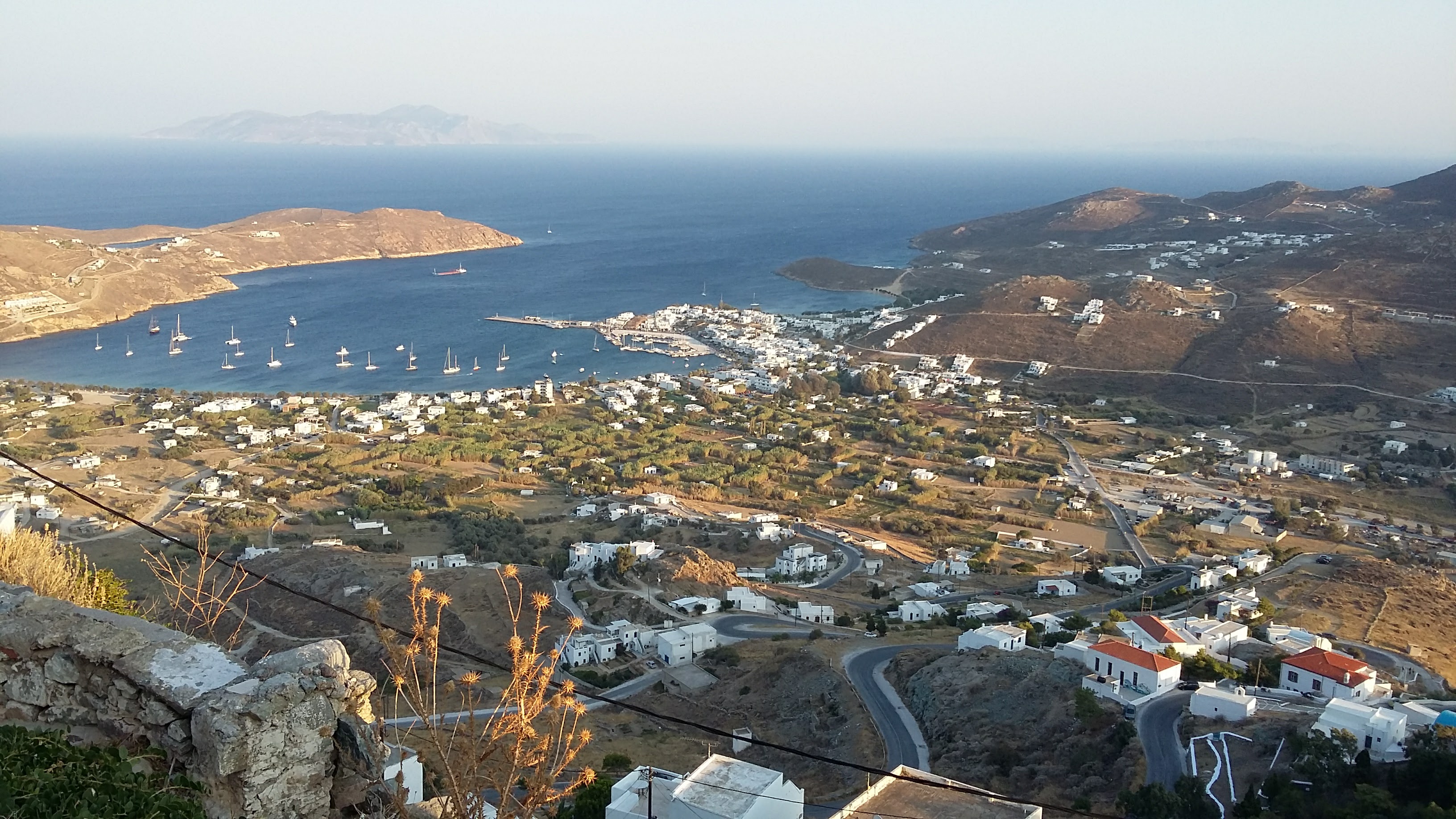
Serifos is often called the “Iron Island” of the Cyclades. It’s the kind of place for travelers who want to skip the neon lights of Mykonos for something a bit more rugged, authentic, and “undiscovered.” It’s sparse, windswept, and holds a dramatic mining history that gives it a tougher edge than its neighbors.
The Vibe: Raw & Authentic
Serifos doesn’t try too hard to please. You won’t find many organized beach bars with loud music; instead, you’ll find 72+ beaches (mostly non-organized) where you bring your own water and shade. The island feels like a giant rock dropped into the Aegean, filled with jagged mountains, deep blue coves, and a very quiet, local soul.
Villages to Explore
- Chora: Widely considered one of the most beautiful capitals in the Cyclades. It’s split into Ano (Upper) and Kato (Lower) It’s a vertical maze of whitewashed houses clinging to a steep hill.
- Highlight: Pano Piatsa, the main square, is perfect for a morning coffee or an evening ouzo by the neoclassical Town Hall.
- Livadi: This is the port and the “hub” of the island. It’s where most of the life happens—tavernas, bakeries, and small shops line the waterfront.
- Megalo Livadi: A historic mining village on the southwest side. It feels like an open-air museum with abandoned rails, wagons, and a massive rusted loading ramp jutting into the sea.
Best Beaches
Because Serifos is a “beach-hopper’s” island, you’ll want a car or scooter to reach the best spots:
- Psili Ammos: Often voted the best beach in Europe, it has fine golden sand and shallow, turquoise water.
- Agios Sostis: Stunning and iconic, featuring a small white chapel on a rocky outcrop separating two small sandy coves.
- Ganema: A large, crescent-shaped beach with half sand and half pebbles, shaded by tamarisk trees.
- Vagia: Known for its crystal-clear water and a more “wild” feel (though it does have a small eco-resort nearby).
History & Mythology
- The Mining Strike of 1916: Serifos has a fierce history. It was the site of the first 8-hour workday strike in Greece, which turned violent and is commemorated by a monument in Megalo Livadi.
- Perseus & Medusa: In mythology, Serifos is where Danaë and her son Perseus washed ashore in a chest. Perseus later returned here with Medusa’s head to turn the local king to stone.
- Monastery of Taxiarches: A 16th-century fortified monastery that looks like a castle, built to defend against pirates. It’s one of the island’s most important religious sites.
Practical Essentials
- Getting There: There is no airport. You take a ferry from Piraeus (Athens). The high-speed ferry takes about 5 to 3 hours, while the slower “conventional” boat takes about 5 hours.
- Best Time to Visit: June or September. In August, the Meltemi winds can be quite strong, making some northern beaches hard to enjoy.
- Top View: Hike to the Kastro (the highest point of Chora) at sunset. You’ll get a 360-degree view of the surrounding islands (Sifnos, Kythnos, and Milos).
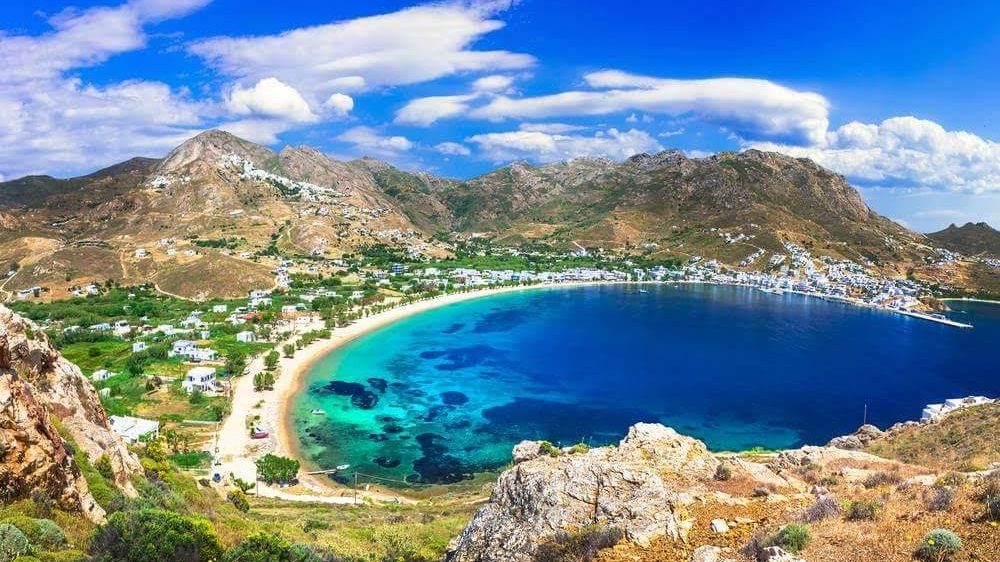
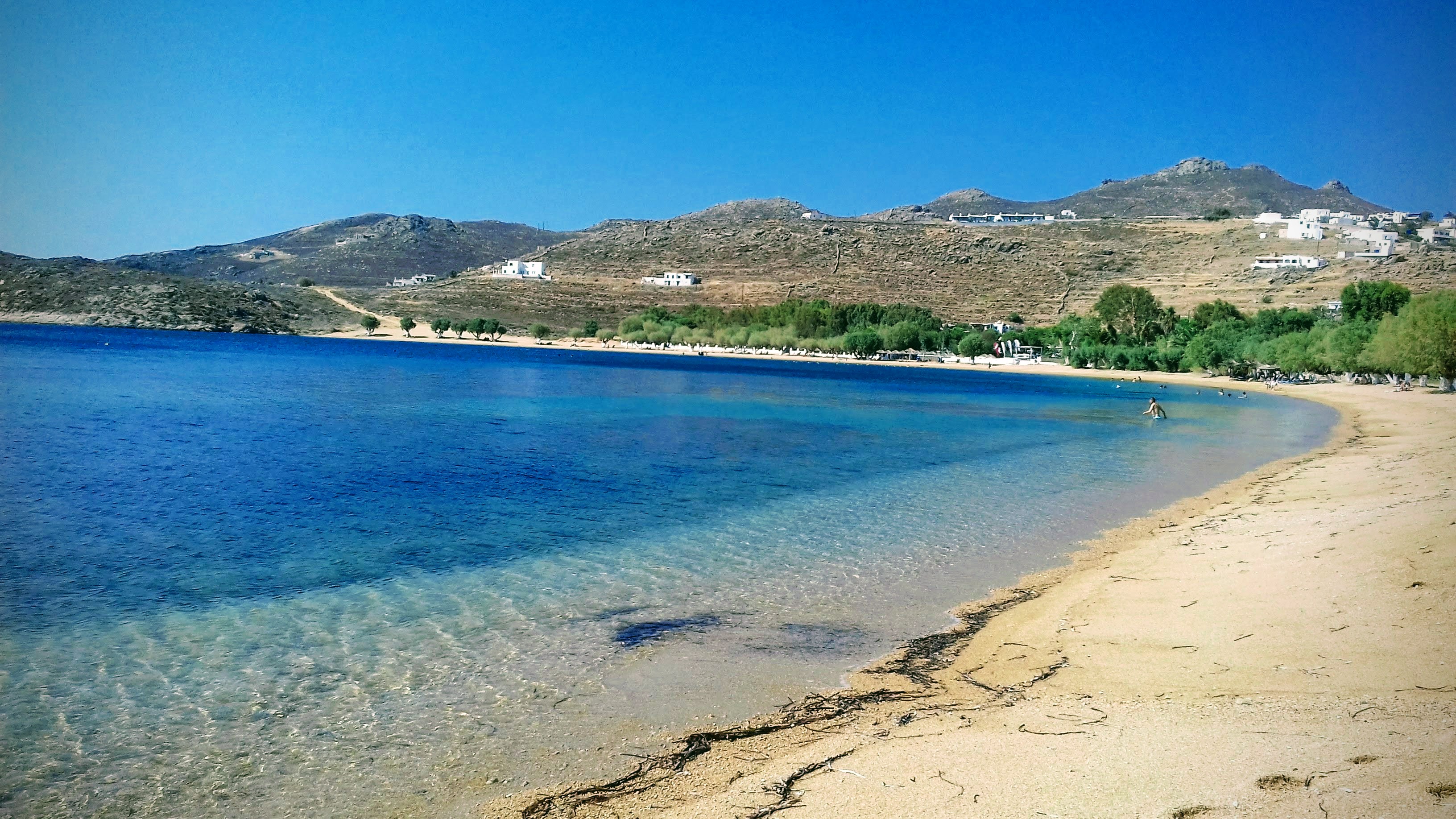
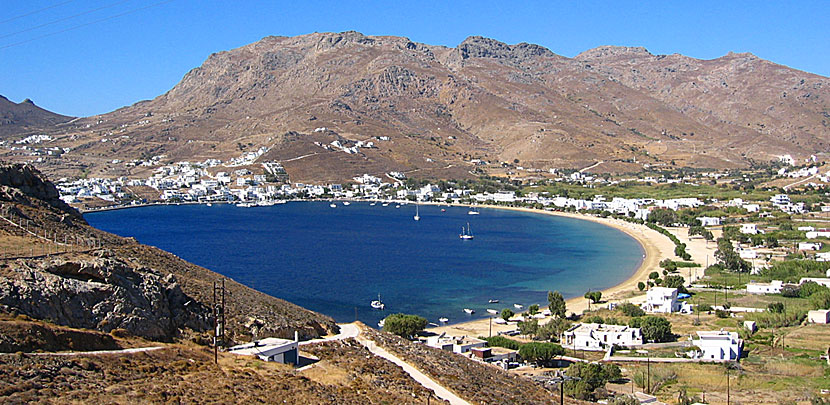
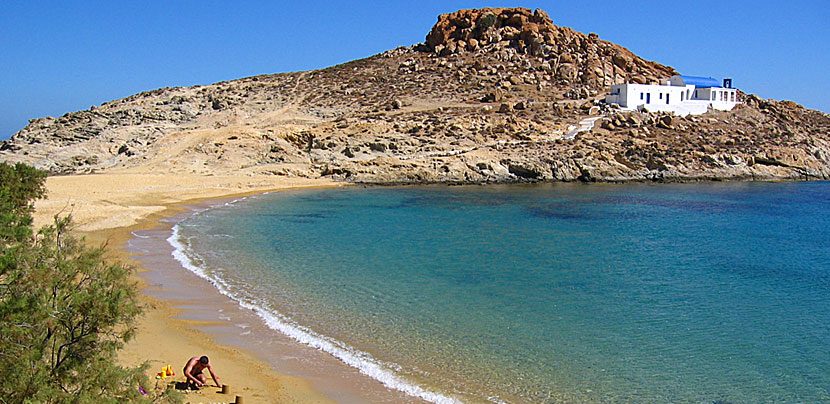
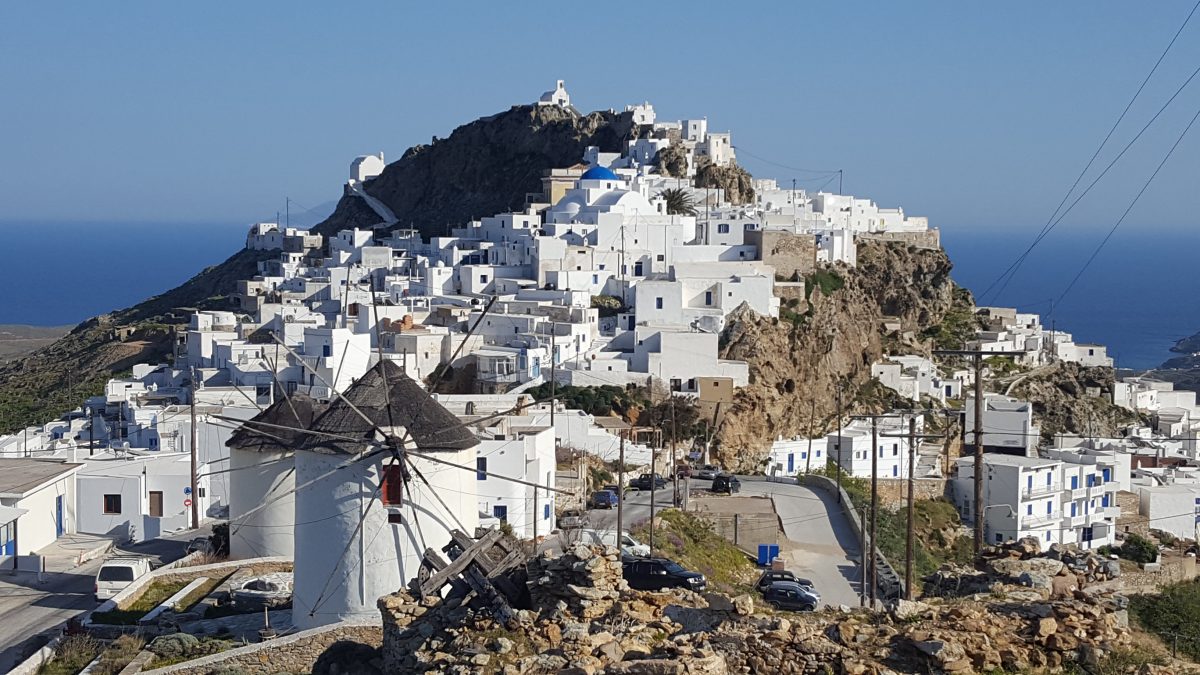
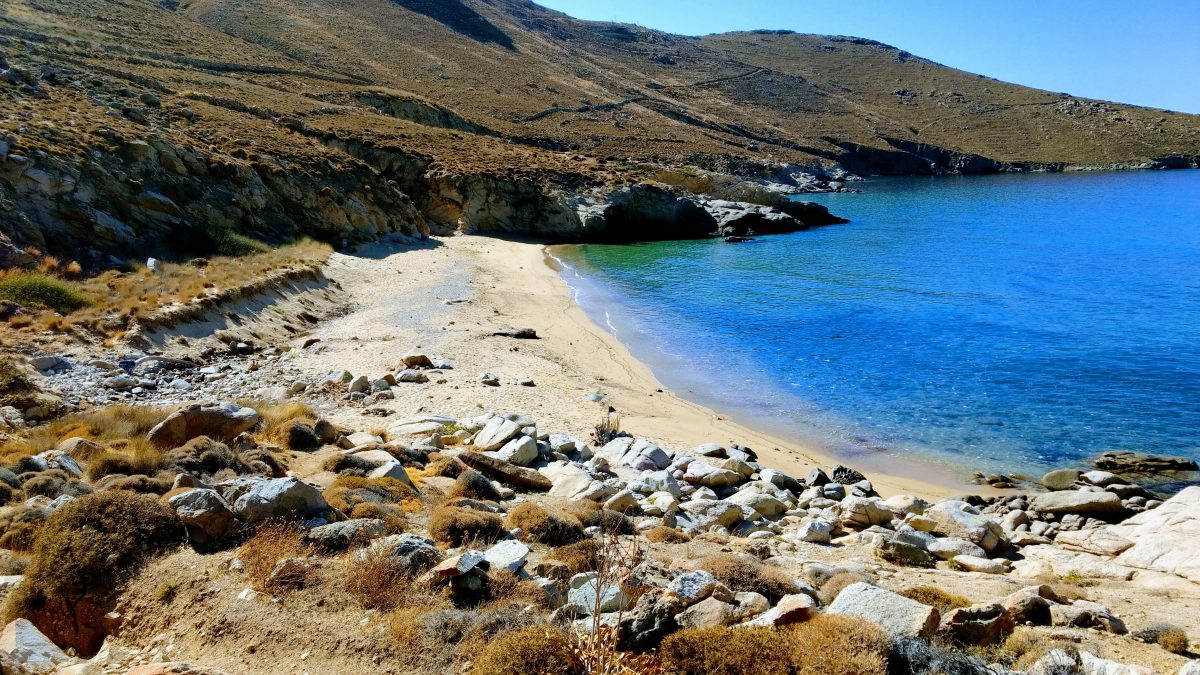
Sifnos Island
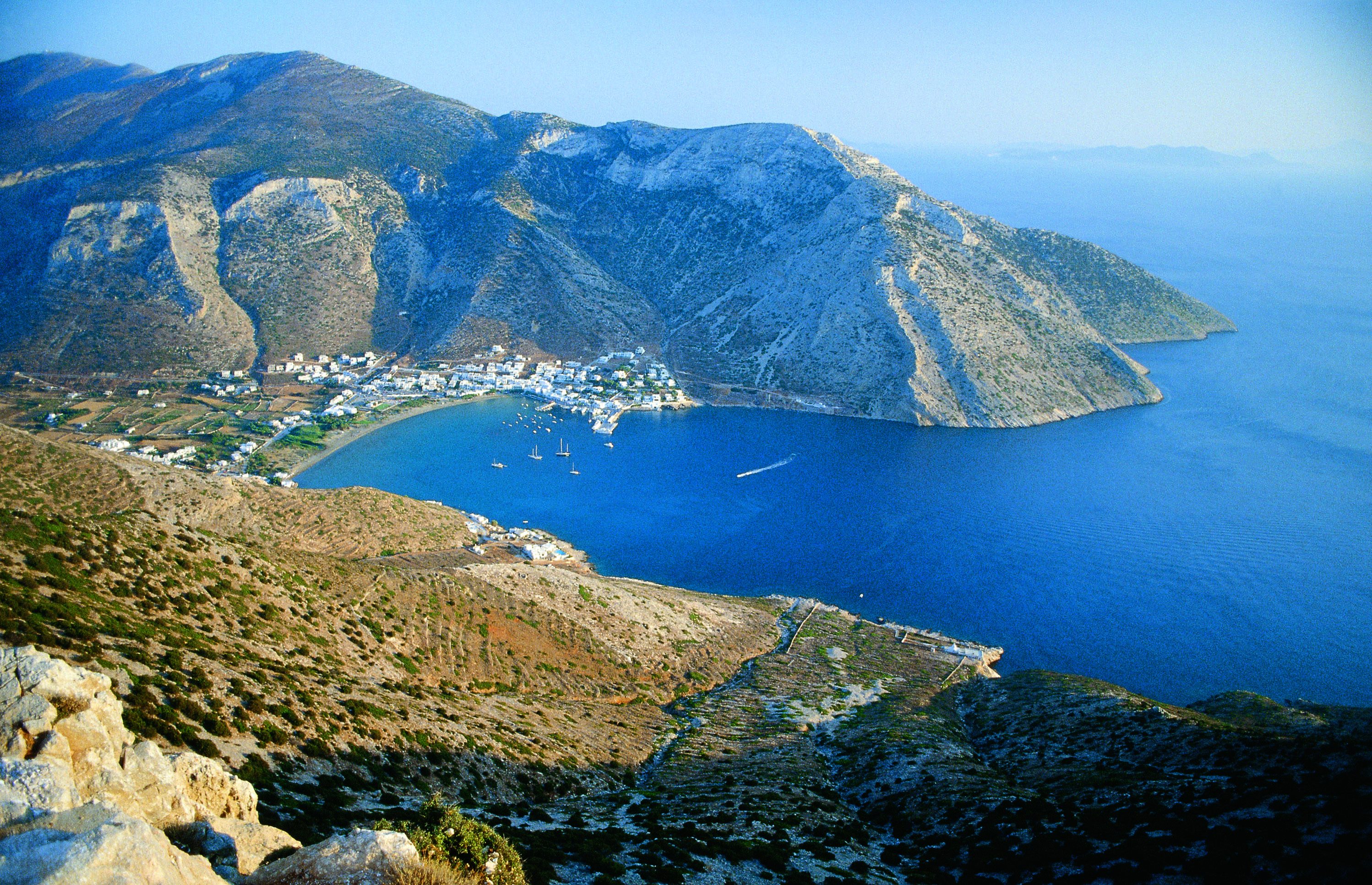
Sifnos is often whispered about by seasoned travelers as the culinary heart of the Cyclades. While it lacks the glitzy nightlife of Mykonos or the dramatic caldera of Santorini, it offers a sophisticated, understated elegance characterized by whitewashed villages, 365 blue-domed churches, and a world-class food scene.
Culture & Heritage
- The Pottery Capital: Thanks to its rich deposits of clay, Sifnos has been a pottery hub for millennia. You’ll still find traditional workshops in Vathi and Kamares where artisans craft the iconic flaros (ceramic chimney pots).
- A Wealthy Past: In ancient times, Sifnos was legendary for its gold and silver mines. It was so prosperous that it built one of the most opulent treasuries at the Oracle of Delphi.
- 365 Churches: The island is famously said to have one church for every day of the year. The Monastery of Panagia Chrysopigi, perched on a split rock over the sea, is its most iconic landmark.
Gastronomy: The Main Event
Sifnos is the birthplace of Nikolaos Tselementes, the chef who wrote the definitive Greek cookbook. The island’s cuisine is defined by slow-cooking in ceramic pots:
- Revithada: A chickpea stew slow-baked overnight in a clay skepastaria.
- Mastelo: Lamb or goat cooked with red wine and dill in a wood-fire oven.
- Manoura: A unique spicy cheese aged in wine dregs.
Beaches & Nature
- Platis Gialos: One of the longest and most popular sandy beaches in the Cyclades, lined with high-end tavernas.
- Vathi: A horseshoe-shaped bay with shallow, turquoise waters—perfect for families.
- Hiker’s Paradise: Sifnos boasts over 100km of professionally marked trails (Sifnos Trails), connecting ancient citadels with remote chapels and hidden coves.
Good to Know Tips
Access: There is no airport on Sifnos. Most visitors arrive via high-speed ferry from Athens (Piraeus), which takes about 2.5–3 hours. The closest airport is on the neighboring island of Milos.
Best Time to Visit: June and September offer the perfect balance of warm swimming weather and manageable crowds.
Key Villages to Explore
Sifnos is often considered the most “tasteful” island in the Cyclades, known for its balanced blend of high-end gastronomy, traditional pottery, and some of the most well-preserved medieval architecture in Greece.
Here are the highlights for the island’s most iconic villages:
Apollonia (The Capital)
Built amphitheatrically across three hills, Apollonia is the pulsing heart of the island. Built on three hills; famous for its “Steno” (narrow alley) filled with boutiques and bars.
- The Steno: Wander the famous “Steno,” a narrow white-washed alley filled with boutique shops, chic bars, and tiny churches. It is the center of the island’s nightllife.
- Folklore Museum: Located in the central Square of Heroes (Plateia Iroon), this museum offers a deep dive into Sifnian daily life and traditional crafts.
- Panagia Ouranofora: A beautiful church with a stunning bell tower and ancient ruins integrated into its foundation.
Kastro (The Medieval Citadel)
The old capital of Sifnos is a living museum. This fortress-like village has been inhabited for over 3,000 years. A cliffside village with ancient walls, narrow tunnels, and the stunning Church of the Seven Martyrs.
- The Architecture: The outer walls of the houses form a defensive perimeter, creating a labyrinth of wooden balconies and ancient marble lintels.
- Church of the Seven Martyrs: Perhaps the most photographed spot on the island, this tiny white church sits on a rocky outcrop surrounded by the turquoise Aegean.
- Archaeological Museum: Housed in a medieval building, it contains fascinating local finds from the Geometric to the Roman periods.
- Seralia Bay: A small, pebble-filled bay at the foot of Kastro, perfect for a swim followed by fresh fish at the local tavernas.
Artemonas (The Aristocratic Village)
Just a short walk from Apollonia, Artemonas is known for its quiet elegance and grand neoclassical mansions. Known for its neoclassical mansions, lush gardens, and the best traditional bakeries on the island.
- Neoclassical Mansions: Unlike the typical cube-shaped houses, Artemonas features 19th-century villas with tiled roofs and lush, flower-filled courtyards.
- The Windmills: Take a stroll to the village’s edge to see the traditional windmills and enjoy panoramic views of the island and the sea.
- Tselementes Festival: If you visit in early September, the village hosts the Cycladic Gastronomy Festival, celebrating the legacy of Nikolaos Tselementes (the “father” of modern Greek cooking).
- Pastry Shops: Visit local bakeries for traditional Sifnian sweets like amygdalota (almond cookies) and pasteli (sesame bars).
Kamares (The Port Village)
As the main gateway to the island, Kamares manages to stay charming and relaxed despite the ferry traffic. A relaxed spot with a long sandy beach and excellent sunset views.
- Pottery Workshops: Sifnos is famous for its clay. Kamares is one of the best places to visit active workshops and see “pithoi” (large jars) being made.
- Sunset Views: Because it faces west, the harbor offers some of the best sunset views on the island.
- Agios Symeon: Hike or drive up to this monastery high above the port for a breathtaking bird’s-eye view of the bay.
Vathy (The Fishing Village)
A horseshoe-shaped bay that remains one of the most serene spots on Sifnos.
- Church of Taxiarchis: A picturesque church sitting right on the water’s edge.
- Traditional Pottery: Vathy has a long history of ceramic production; you can still find workshops right on the sand.
- Agios Andreas Acropolis: A short drive (and a bit of a climb) from Vathy leads you to this Mycenaean archaeological site, which offers incredible views over the southern coast.
Faros (The Coastal Gateway)
A small fishing village that serves as the perfect base for coastal walks.
- Triple Beaches: Faros offers three adjacent sandy beaches (Fasolou, Glyfos, and the main Faros beach), all within walking distance.
- Coastal Path to Chrysopigi: Take the scenic 20-minute stone path from Glyfos beach to the Monastery of Panagia Chrysopigi, the island’s protector saint.


Sifnos is often celebrated as the most “delicious” and aesthetically balanced island in the Cyclades. Its villages aren’t just collections of houses; they are meticulously maintained architectural gems connected by a network of ancient hiking trails.
Here is a guide to the most essential villages to explore:
The Central Hubs
Most of Sifnos’ daily life happens in a cluster of inland villages that have practically merged over time.
- Apollonia (The Capital): Built across three hills, this is the island’s heartbeat. It’s famous for “To Steno” (The Narrow Step), a primary alleyway packed with boutiques, bars, and tavernas that comes alive after sunset.
- Artemonas: Just a 15-minute walk from Apollonia, this is arguably the most beautiful village. It is known for its neoclassical mansions, lush gardens, and quiet, aristocratic atmosphere. It’s the best place to sample traditional Sifnian pastries.
- Exambela: A peaceful residential village and the birthplace of Nikolaos Tselementes, the chef who wrote the “bible” of modern Greek cuisine. It is dotted with old windmills and traditional “panigiria” (religious festivals).
The Medieval Jewel
- Kastro: The former capital and a living museum. This medieval settlement is built like a fortress on a cliff overlooking the Aegean. Its narrow, circular streets were designed to confuse pirates.
- Don’t Miss: The iconic Church of the Seven Martyrs, perched on a rock jutting out into the sea—one of the most photographed spots in Greece.
Coastal & Port Villages
- Kamares: The main port. Unlike many port towns, Kamares is genuinely charming with a long, shallow sandy beach, sunset-view cafes, and several famous pottery workshops.
- Faros: A quaint fishing village that feels like a step back in time. It has three small, sheltered beaches and serves as the starting point for the scenic coastal walk to the Chrysopigi Monastery.
- Vathi: Located in a deep, protected bay, Vathi is a serene escape. It was once only accessible by boat and remains famously laid-back with tavernas where the tables are literally in the sand.
- Platis Gialos: The island’s most popular “resort” village. It features the longest beach in the Cyclades and is lined with upscale restaurants and beach bars.
The Remote North
- Cherronissos: At the northernmost tip of the island lies this tiny, rugged fishing hamlet. It’s the ultimate spot for total seclusion and serves some of the freshest fish on the island right on the pier.
Tip: Sifnos is the capital of Greek ceramics. If you visit Kamares or Vathi, look for traditional “flaros” (decorative chimney pots) handmade by local potters.
Kea (Tzia) Island

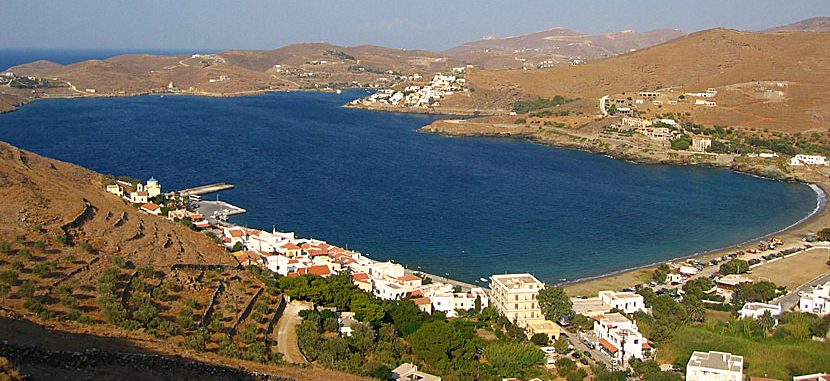
Kea (also known as Tzia) is often described as the “hidden gateway” to the Cyclades. Because it is the closest Cycladic island to Athens, it is a favorite for locals seeking a weekend escape, yet it remains remarkably authentic and far less “touristy” than its famous neighbors like Mykonos or Santorini.
The Vibe & Architecture
Unlike the typical whitewashed “sugar-cube” houses seen elsewhere in the Cyclades, Kea’s architecture is defined by earthy tones, stone-built villas, and red-tiled roofs. The landscape is surprisingly green for the Cyclades, featuring the largest oak forest in the archipelago.
Key Towns & Villages
- Ioulida (Chora): The capital, perched on a hill like an amphitheater. It is a car-free zone with steep cobblestone alleys and neoclassical buildings.
- Korissia: The main port where you’ll arrive. It’s a bustling hub with traditional bakeries, cafes, and shops.
- Vourkari: A picturesque fishing village and popular yachting marina. This is the island’s social heart, known for its seafood tavernas (like the famous Aristos) and vibrant nightlife.
- Koundouros: A more upscale coastal area with high-end stone villas and organized beach clubs.
Top Sights & Activities
- The Lion of Kea: A massive, enigmatic smile-carved stone lion dating back to the 6th century BC, accessible via a short hike from Ioulida.
- Ancient Karthea: One of the most important archaeological sites in the Aegean. It’s remote and usually reached by boat or a scenic 1-hour hike.
- Hiking Trails: Kea is a hiker’s paradise with over 80km of ancient stone-paved paths connecting the island’s four ancient city-states.
- Scuba Diving: The waters around Kea are famous for world-class shipwrecks, including the HMHS Britannic (the Titanic’s sister ship) and the S/S Burdigala.
Best Beaches
Beach | Type | Best For |
Koundouros | Organized | Families, water sports, and beach bars. |
Spathi | Semi-Remote | Crystal-clear waters and a long sandy stretch. |
Xyla | Remote | Pristine, quiet, and reachable via a dirt road. |
Gialiskari | Cozy | A small, popular bay near the port with great sunset views. |
Pisses | Traditional | A wide sandy beach near the ancient city of Poieessa. |
Practical Details
- Getting There: The ferry leaves from the Port of Lavrio (not Piraeus). The journey takes only 1 hour.
- Transport: Renting a car or ATV is highly recommended as the island is mountainous and many of the best beaches are at the end of dirt roads.
- Local Flavors: Don’t leave without trying Paspala (local pork dish), Kean honey, and Lobster Spaghetti in Vourkari.
Pro Tip: If you visit in mid-August, be prepared for the Meltemi winds, which can be quite strong on the north side of the island.
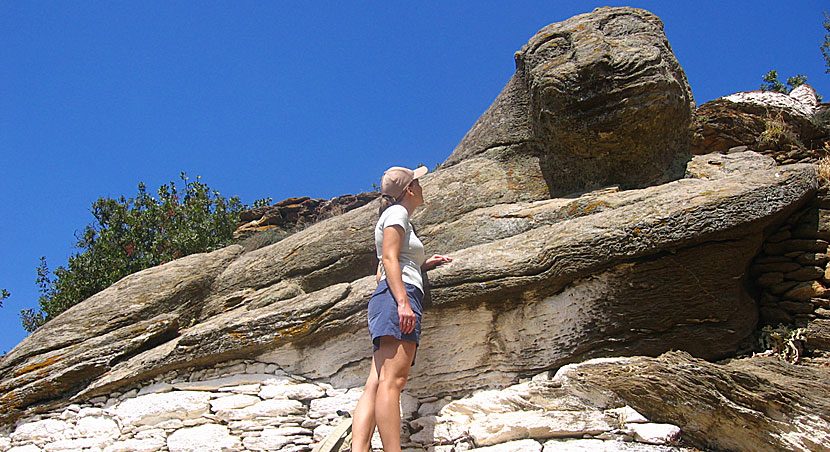
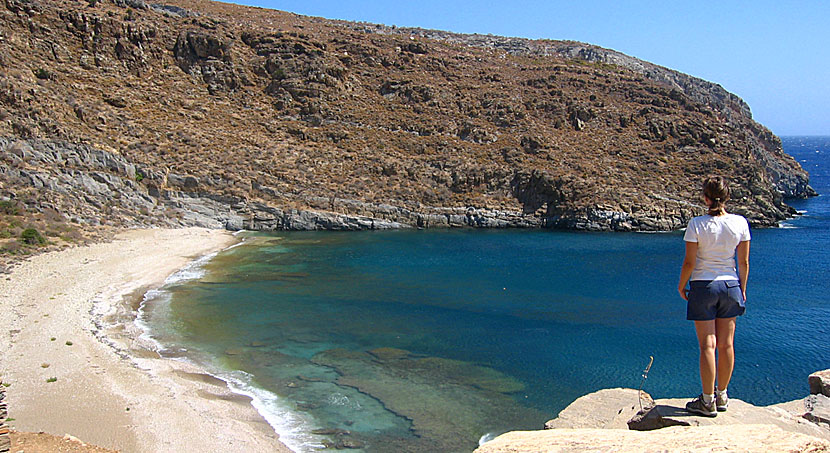
Kea (also known as Tzia) is a favorite for Athenians due to its proximity to the mainland. Its coastline is a mix of cosmopolitan, fully organized hubs and rugged, remote coves that often require a 4×4 or a hike to reach.
Organized & Family-Friendly
These beaches are easily accessible by paved roads and offer sunbeds, tavernas, and amenities.
- Koundouros: The most “cosmopolitan” beach on the island. It’s a series of sandy coves with turquoise water, high-end beach bars, and water sports. It holds a Blue Flag and is well-protected from the northern winds.
- Otzias: A large, nearly circular bay with shallow waters and plenty of tamarisk trees for natural shade. It’s perfect for families and is very sheltered.
- Pisses: Located at the end of a fertile valley, this sandy beach is known for its beautiful sunsets and the island’s only campsite. It can get wavy when the west winds blow.
- Gialiskari: A small but very popular beach between the port (Korissia) and Vourkari. It’s sandy, has a lively beach bar, and is a go-to for a quick dip.
- Korissia: The beach right next to the port. It’s sandy, convenient, and surprisingly clean for a harbor-side beach.
Remote & Wild Coves
If you prefer peace over beach bars, these spots are for you. Most involve driving on dirt roads.
- Xyla: Widely considered the island’s best. It features golden sand, small pebbles, and deep, crystal-clear blue water. It is semi-organized (some umbrellas), but there are no shops, so bring supplies.
- Spathi: A stunning, large sandy bay on the northeast side. The water is incredibly clear. There is a beach bar/restaurant there now, but it still feels remote due to the long dirt road access.
- Sykamia: A quiet paradise with massive tamarisk trees and emerald waters. It’s reached via a rough dirt road or a long hike, making it very peaceful even in high season.
- Karthaia (Mikres Poles): Accessible only by boat or a ~1-hour hike down ancient stone paths. You swim right next to the ruins of the ancient city of Karthaia. There are zero facilities here.
- Orkos: A long, sandy, and completely unorganized beach on the eastern side. It’s great for those looking for total isolation.
Pro Tip: Follow the Wind
Like most Cycladic islands, Kea is hit by the Meltemi (north wind) in the summer.
- If it’s windy: Head South/Southwest to Koundouros or Kambi.
- If it’s calm: This is your chance to visit the North/East beauties like Spathi, Sykamia, or Xyla.
Kythnos Island
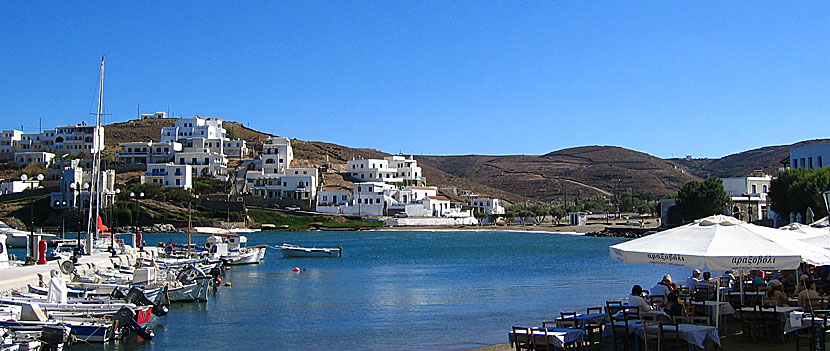

Tucked away between Kea and Serifos, Kythnos (often called Thermia by locals) is the Cyclades’ best-kept secret for those who find Mykonos too loud and Santorini too steep. It is an island of “understated grace”—think rolling arid hills, stone walls zigzagging to the sea, and a surprisingly high density of beaches (nearly 100!) for its size.
In 2026, it remains one of the few islands where you can still experience a truly authentic Greek pace of life without the “museum-fied” feel of more famous neighbors.
The “Must-Sees”
- Kolona Beach: The island’s crown jewel. It is a stunning double-sided beach where a thin strip of golden sand connects the main island to the islet of Agios Loukas.Pro Tip: The road there is notoriously bumpy. Most people prefer the water taxi from the port of Merichas to save their car’s suspension.
- Loutra (The Thermal Springs): Kythnos is famous for its natural hot springs. In Loutra, you can literally sit in a stone-walled “hot tub” at the edge of the sea where mineral-rich 52°C water mixes with the cool Aegean.
- Chora (Messaria): The capital is a classic Cycladic dream—whitewashed houses, blue shutters, and narrow alleys decorated with hand-painted flowers on the pavement.
The Villages
- Dryopida: Unlike the typical flat-roofed Cycladic style, this village features unique tiled roofs, a nod to its long history of pottery. It’s also home to the Katafiki Cave, one of the largest in Greece, once used as a hideout from pirates.
- Panagia Kanala: A picturesque coastal village built around a pine forest (a rarity in the dry Cyclades) and a miraculous church that serves as the island’s religious heart.
Activities & Vibes
- Hiking: Kythnos is a hiker’s paradise. Trails lead to the ancient capital of Vryokastro or the ruins of the medieval Castle of Oria, perched on a cliff with views that make the uphill trek worth every drop of sweat.
- Diving: With over 30 dive sites including reefs and shipwrecks (like the Niki cargo ship), the underwater world here is as vibrant as the villages.
- Simplicity: This isn’t the place for high-end “beach clubs” with $50 cocktails. It’s the place for a wooden table on the sand, a plate of Sfouggata (local fried cheese balls), and a glass of local wine.
Getting There & Around
- Ferry: The quickest route is from the port of Lavrio (approx. 1 hour 40 minutes), though ferries also run from Piraeus.
- Transport: While there is a bus connecting the main villages, renting a 4×4 is highly recommended if you want to reach the more secluded, “secret” beaches that make up 90% of the island’s coastline.
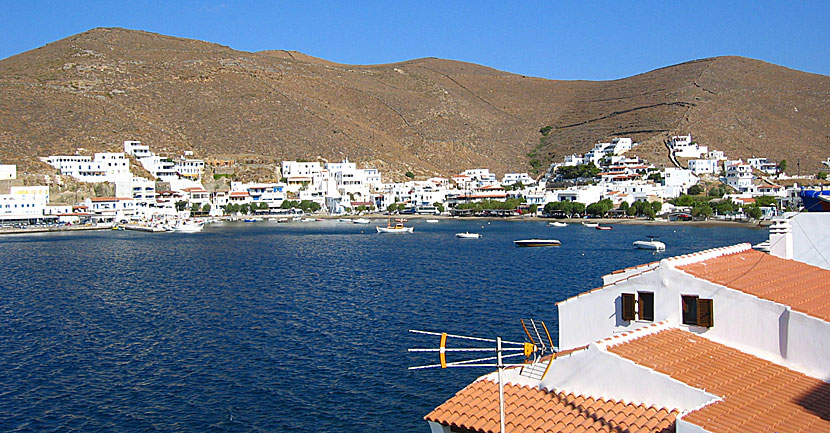
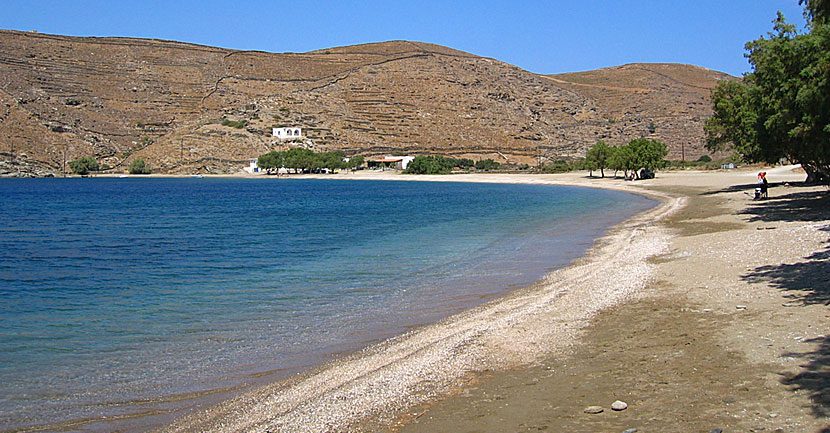
If you are ready for the Cyclades, reach out below …