
Beautiful and undiscovered

The Sporades (meaning “the scattered ones”) are an archipelago of 24 islands off the eastern coast of mainland Greece. Unlike the dry, volcanic landscapes of the Cyclades (like Santorini or Mykonos), the Sporades are famous for being lush and emerald-green, with dense pine forests that often grow right down to the edge of the turquoise sea.
Scroll down to view all the islands or click on the one you want
Alonissos Island
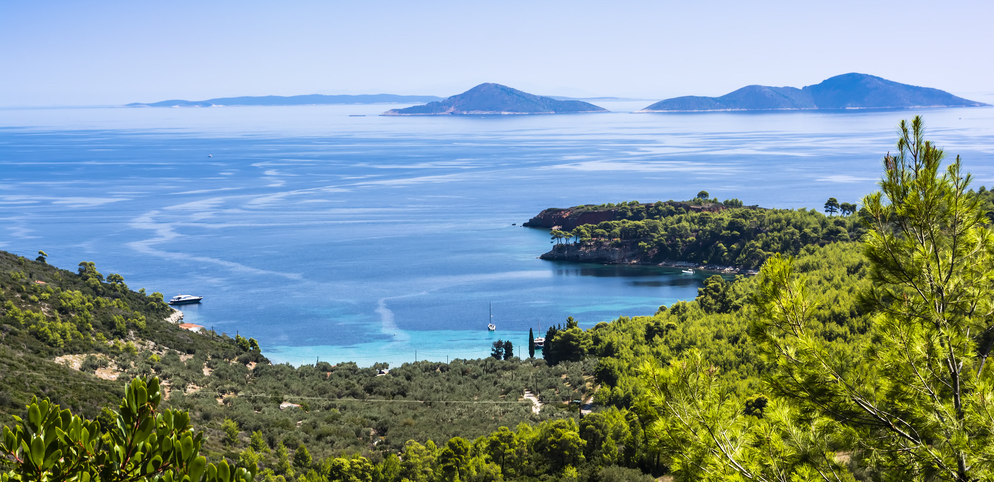
Alonissos is the hidden gem in the Sporades Archipelago, offering a serene and authentic alternative to its more famous neighbors, Skiathos and Skopelos. Known for its lush pine forests, crystal-clear turquoise waters, and authentic, low-key atmosphere, ideal for nature lovers and those seeking a slower pace of life. It’s home of the National Marine Park of Alonnisos, the first marine park established in Greece and currently the largest marine protected area in Europe (870 sq mi).
Alonissos: Naturalist’s Retreat
The most remote of the main four, Alonissos is a haven for eco-tourism. It sits at the heart of the National Marine Park of Northern Sporades, the largest protected marine area in Europe.
Essence & Vibe: Smell of pines and sea, Alonissos Chora (main village), local tuna cuisine, hiking the Kastanomera gorge, sailing to uninhabited islands. Perfect for just enjoying relaxing sunbathing and swimming in a beautiful cove. Island exhibits a low-key sophistication that separates it from popular destinations, with adistinct lack of “party” atmosphere.
Highlight: The Mediterranean Monk Seal (Monachus monachus), one of the rarest animals in the world, which finds sanctuary here.
Nature and Marine Life
Alonissos has become famous for hosting the largest marine protected area in Europe.
National Marine Park: This sanctuary provides a refuge for the rare Mediterranean monk seal, as well as dolphins and various seabirds. Visitors often take boat tours from Patitiri to explore its protected waters and uninhabited islets like Peristera and Kyra Panagia.
- The Monk Seal: The park was established to protect the endangered Mediterranean Monk Seal (Monachus monachus). While the seals are shy and rarely seen, the park is a thriving ecosystem for dolphins, rare seabirds, and turtles.
Lush Landscapes: Much of the island is covered in dense pine forests, olive groves, and orchards, offering a network of well-marked hiking and “therapeutic” trails that wind through the countryside.
Underwater Museum: In 2020, Alonissos opened Greece’s first underwater museum at the Peristera Shipwreck, where divers can explore a 5th-century BC cargo ship laden with thousands of amphorae.
- Island Hopping: You can take boat trips to nearby uninhabited islets like Kyra Panagia (home to a 10th-century monastery) or Peristera.
Hiking: The island is a hiker’s paradise, with a network of marked trails through dense pine forests and herb-scented hills (thyme, sage, and oregano grow wild everywhere).
Villages
The island’s villages offer a glimpse into traditional Greek life, with a blend of historical resilience and modern revitalization.
Old Alonissos Town (Chora): Once the island’s capital, this hilltop village was largely abandoned after an earthquake in 1965 but has since been beautifully restored. It features narrow winding alleys, stone houses with red-tiled roofs, and Venetian fortification ruins that offer sweeping sunset views.Perched high on a hill, this was the island’s capital until a 1965 earthquake. It has since been beautifully restored. Its narrow cobblestone streets, whitewashed houses with blue shutters, and traditional tavernas offer 360-degree views and some of the best sunsets in the Aegean.
Patitiri: The current capital and main port, Patitiri is a picturesque harbor lined with cafes and tavernas. It houses the Alonnisos Museum, which details the island’s maritime history and folklore, including a unique collection of pirate artifacts.
Steni Vala: A quiet fishing village popular with sailors, known for its relaxed waterside dining and as a base for exploring the northern part of the island. Votsi & Steni Vala: Picturesque fishing villages. Votsi is known for its narrow, cliff-enclosed harbor, while Steni Vala is a favorite mooring spot for sailors and famous for its fresh lobster pasta.
Distinctive Beaches
While many Sporades islands are known for sand, Alonnisos is famous for its exceptionally clear water and colorful pebble beaches.
Kokkinokastro Beach: One of the most striking spots on the island, famous for its deep red cliffs that contrast sharply with the turquoise sea and golden sand-and-pebble shore.
Agios Dimitrios: Often cited as one of the most beautiful beaches, it features a unique triangular tongue of white pebbles stretching into the deep blue water.
Leftos Gialos: A popular southern beach surrounded by lush greenery, known for its bright white pebbles and vibrant beach bars.
- Chrisi Milia: One of the few sandy beaches on the island, ideal for families.
Transportation Tips
The quickest way to reach the island is to fly into Skiathos and then take a ferry. From the mainland there is ferry service from, Volos, Mantoudi (Evia), Ag. Konstantinos, and Thessaloniki.
In summertime, municipal buses run on a regular basis from the central port (Patitiri) to the Old Village and the village of Steni Vala. In addition, taxi services are provided all year long.
An original yet practical way to move around the island is by boat or caique. Boats and caiques set off daily from the port of Patitiri to many lovely beaches and seaside villages around the island.


Skopelos Island

Skopelos: The “Mamma Mia” Island
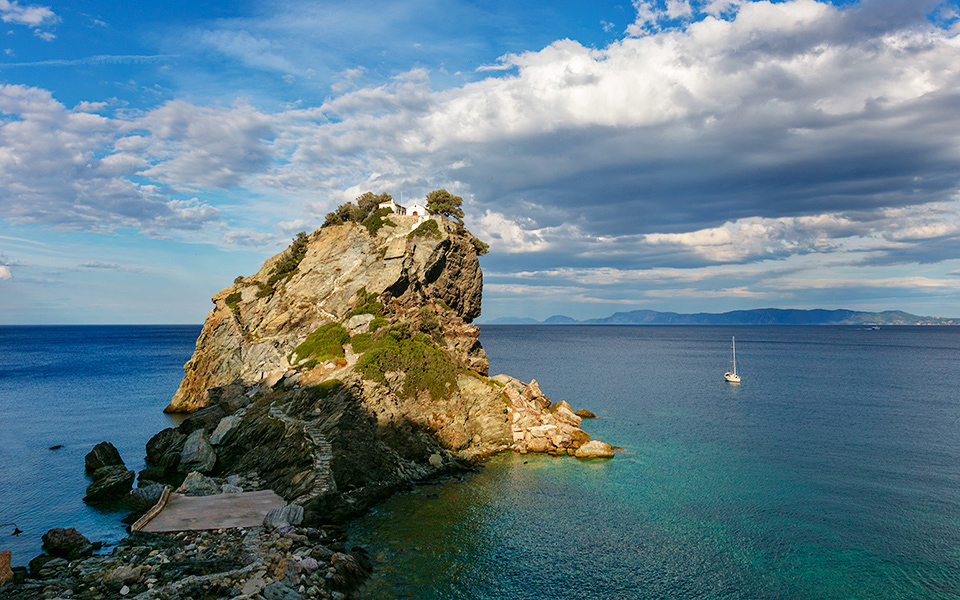
Known as the “Greenest Island in Greece,” Skopelos is a paradise of plum and olive groves. It gained global fame as the primary filming location for the 2008 movie Mamma Mia!, famous “wedding church” (Agios Ioannis Kastri) is located near Glossa, though it’s a standalone site rather than a full village.
- Essence & Vibe: dense pine forests, right down to the shoreline, meeting clear turquoise waters, scent of sun-baked wild herbs, terracotta-roofed houses spilling down the hillsides of the Chora, hidden pebbled cove accessible only by boat or a winding goat path, serenaded by cicadas.
- Vibe: soulful, artisan, relaxed, not touristy, perfect for couples, nature lovers, and fans of the movie Mamma Mia!. Although it brought noteriety to the island, it has managed to maintain a peaceful, authentic atmosphere without over-commercialization.
Highlight: The Church of Agios Ioannis Kastri, perched atop a massive rock rising out of the sea (the site of the movie’s wedding).
- Transportation Tips: Skopelos does not have its own airport. Most travelers fly into Skiathos and take a 30–60 minute ferry ride to reach the island.
Geography & Nature
Landscape: Over 80% of the island is covered by forest (primarily Aleppo pines). It features two main mountains: Delphi (681m) and Palouki (546m).
- Geography: The island is mountainous and rugged, featuring dramatic cliffs on the northwest coast and sheltered, pebbly bays on the south and east.
Shape: The island is often described as having the shape of a saxophone.
Beaches: Known for crystal-clear cobalt and emerald waters. Popular spots include Panormos, Stafylos, Kastani, and Milia, many of which are surrounded by lush greenery.
- Hiking: Numerous trails connect the capital to remote monasteries and ancient “pirate graves” at Sedoukia.
Villages & Architecture
Skopelos is often called the “Green and Blue Island,” and its villages perfectly reflect that blend of lush pine forests and turquoise waters. Here is a list of the best villages to explore on the island:
Skopelos Town (Chora)
The island’s capital is a stunning, amphitheater-shaped port town, and arguably one of the most beautiful port towns in the Aegean. It is a “Traditional Settlement” protected by law, characterized by white-washed houses, terracotta tile roofs, and narrow, bougainvillea-draped alleys.
- Vibe: Traditional, bustling, and romantic.
- Highlights: A labyrinth of narrow white-washed alleys, jasmine-scented courtyards, and over 120 churches. Don’t miss the Venetian Castle (Kastro) at the top for panoramic views or the Folklore Museum.
- Best for: Evening strolls, boutique shopping, and diverse dining options.
Glossa
Known as the “Balcony of the Aegean,” Glossa is perched high on a hillside on the northwest side of the island.
- Vibe: Authentic, quiet, and dizzyingly scenic.
- Highlights: Steep streets (most are too narrow for cars), traditional stone houses with wooden balconies, and incredible sunset views over Skiathos and Evia.
- Best for: Photography lovers and those looking for a “stepping back in time” experience.
Neo Klima (Elios)
This is a newer coastal village built in the late 1950s after the residents of Palio Klima moved following an earthquake.
- Vibe: Family-friendly and relaxed.
- Highlights: It is surrounded by a dense pine forest that reaches the water’s edge. It has a functional marina and is very close to some of the island’s best beaches like Hovolo.
- Best for: Families and travelers who want easy access to the sea and hiking trails.
Agnontas
A small, picturesque fishing village and secondary port located in a sheltered bay.
- Vibe: Cozy and gastronomic.
- Highlights: It is famous for its fish taverns that sit right on the water. The bay is so well-protected that it remains calm even when the winds are high elsewhere.
- Best for: A long, lazy seafood lunch or watching the sunset from the pier.
Panormos
While largely a resort area, Panormos functions as a vibrant seaside village built around one of the island’s most popular bays.
- Vibe: Social and sun-soaked.
- Highlights: The village features ancient walls of an Acropolis (Palaiokastro) on the hill above. The beach here is famous for its deep blue waters and the fact that the sun stays on it until very late in the evening.
- Best for: Beach lovers who want everything (taverns, cafes, mini-markets) within walking distance.
Loutraki
This is the sea-level port serving Glossa. It is built on the site of the ancient city of Selinus.
- Vibe: Historic and functional.
- Highlights: You can see the remains of ancient Roman baths and ruins of the 5th-century BC citadel. It’s a great spot to grab a coffee while watching the ferries come in.
- Best for: History buffs and travelers arriving by ferry from Skiathos or Volos.
Palio Klima
An old, largely abandoned village between Glossa and Neo Klima that is slowly being restored.
- Vibe: Serene and rustic.
- Highlights: It offers some of the most stunning, unobstructed views of the sea. Many of the old stone houses are being bought and renovated by people looking for total peace.
- Best for: A quiet walk away from the crowds.
Beaches & Sights
Skopelos is famous for its lush pine forests that often reach right down to the water’s edge, giving the beaches a striking turquoise-and-green aesthetic.
Famous & “Mamma Mia” Beaches
- Kastani Beach: The island’s most famous spot, thanks to the Mamma Mia! movie. It features fine sand and small pebbles, a trendy beach bar with a DJ, and plenty of sun loungers. It’s the place to go if you want a lively, commercial atmosphere.
- Agios Ioannis Beach: Located right below the famous cliffside chapel (the wedding location from the movie). It is a small, unorganized pebbly cove with crystal-clear water. Most people combine a swim here with the climb up the 100+ steps to the church.
Popular & Fully Organized
- Panormos Beach: A favorite for many due to its deep, calm waters and the fact that it’s sheltered from the wind. It’s a pebble beach lined with traditional tavernas where you can eat with your feet almost in the water. It also offers one of the best sunset views on the island.
- Milia Beach: Often cited as the most beautiful beach on Skopelos. It is long, split by a row of rocks, and offers a mix of sand and pebbles. It has great facilities, water sports, and a spectacular view of the small islet of Dassia.
- Stafilos Beach: The closest popular beach to Skopelos Town (Chora). It’s a picturesque bay surrounded by high cliffs and pine trees. It is well-organized but can get quite crowded in peak season.
Secluded & Natural Gems
- Velanio Beach: Located just a short walk over the ridge from Stafilos. It is the island’s official nudist-friendly beach. It’s much quieter than Stafilos, with pristine water and a more “wild” feel.
- Hovolo Beach: Known for its striking white cliffs and exotic aquamarine water. To reach the best part of the beach, you have to walk through the water around some rocks from Elios, but the seclusion is worth the effort.
- Limnonari Beach: A beautiful, horseshoe-shaped bay with very calm, emerald green water. It’s unique because of a slippery calcium plate on the seabed (bring water shoes!), but the water is exceptionally still and clear.
- Amarandos Cove: Not a typical beach but a series of small rocky inlets with lone pine trees perched on the edge. It’s a legendary spot for snorkeling and “cliff” jumping into deep blue water.
Easy Access & Family Friendly
- Agnontas Beach: A small, pebbly harbor beach. It is famous for its fish tavernas right on the quay. Because it’s a protected port, the water is almost always flat, making it great for young children.
- Elios (Neo Klima) Beach: A long stretch of sand and pebbles right in front of the village. It has plenty of space, easy parking, and is very convenient if you want to stay close to amenities.
Culture & Architecture
“Island of Churches”: There are reportedly 365 churches and monasteries on the island—one for every day of the year. Notable sites include:
- Agios Ioannis Kastri: The iconic cliffside chapel famous for the wedding scene in the movie Mamma Mia!.
- Panagitsa tou Pyrgou: A whitewashed church overlooking the harbor in Chora.
- Monastery of Evangelistria: Built in 1712 with stunning coastal views.
- Mount Palouki, overlooking Chora, is home to several historic Byzantine monasteries like Evangelistria and Sotiros.
History & Folklore
Ancient Roots: Originally known as Peparithos, it was legendary for its wine and olive oil. According to myth, it was first settled by Staphylus, the son of the god Dionysus.
Traditional Crafts: The island has a rich history of shipbuilding, woodcarving, and ceramics. The Folklore Museum in Chora displays traditional costumes and bridal rooms.
Local Flavors
The island is famous for its Skopelitiki Tyropita—a spiral-shaped cheese pie made with local goat cheese and fried to a crisp. You’ll also find a heavy focus on plums (used in savory stews), honey, and fresh seafood in the waterfront tavernas.
Cuisine: The most famous local delicacy is the Skopelitiki cheese pie, a spiral-shaped pastry fried (rather than baked) and filled with local goat cheese. Plums and “avgato” (a local spoon sweet) are also regional favorites.


Skiathos Island


Skiathos is the most cosmopolitan and lush island in the Northern Sporades archipelago. Known for its vibrant nightlife, dense pine forests, and over 60 stunning beaches, it serves as a perfect blend of high-energy entertainment and natural serenity.
Skiathos: The Cosmopolitan
Skiathos is the most famous and accessible island of the Sporades group, known for its vibrant nightlife and numeroussandy beaches.
Essence: Unique for having one main town/village. Other settlements are primarily small coastal resorts or hamlets, active during tourist season. Rest of the island is covered in pine forest, with resorts around the 60 plus beaches.
- Vibe: Modern, busy, and fun. It also has the group’s only international airport.
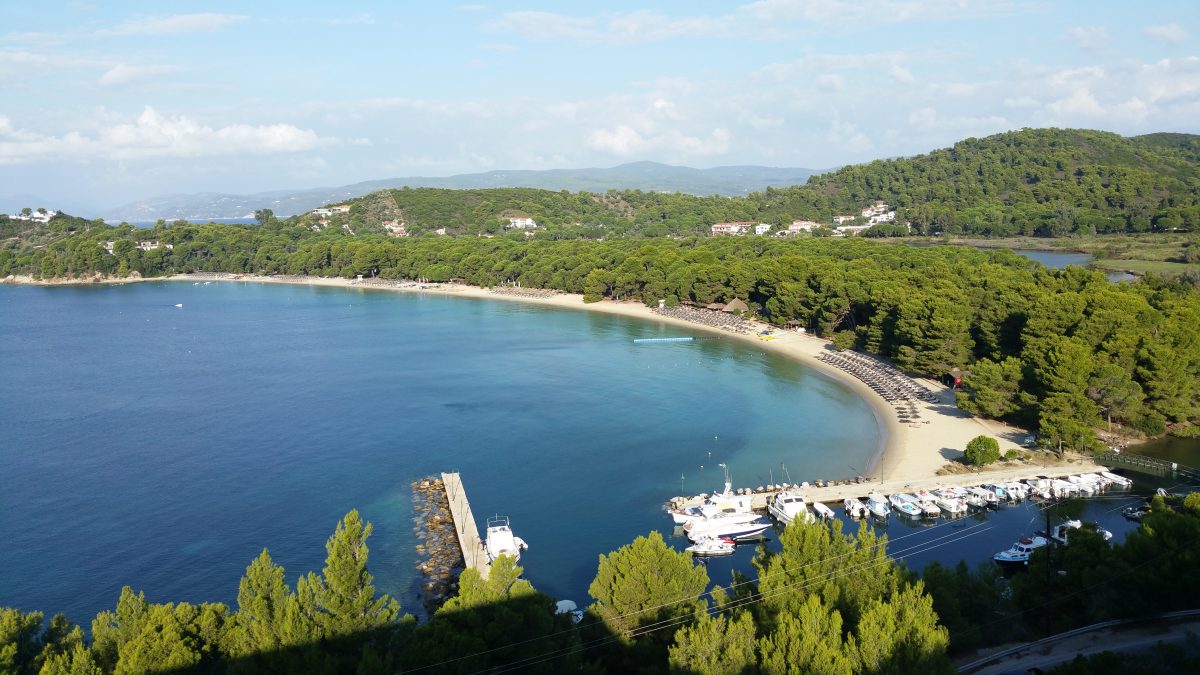
Highlight: Koukounaries Beach is frequently cited as one of the best in the Mediterranean, featuring a rare stone-pine forest bordering the sand.
The Landscape: Unlike many dry Cycladic islands, Skiathos is incredibly green. It is carpeted in Aleppo pines and olive groves that often stretch right down to the shoreline.
The Vibe: It is often described as “youthful and exuberant.” While it attracts a chic yachting crowd to its marina, it is equally famous for its “party island” reputation, with lively bars and open-air clubs.
Skiathos is where the lush greenery of the Sporades meets a cosmopolitan pulse, creating an island that feels both vibrant and timeless. Famous for its 60-plus beaches—ranging from the golden, pine-fringed sweep of Koukounaries to the rugged, moon-like white pebbles of Lalaria—it offers a rare balance of high-energy nightlife and secluded natural escapes. The winding cobblestone alleys of Skiathos Town buzz with the scent of jasmine and the chatter of waterfront tavernas, while the hilltop monasteries and ruins of the medieval Kastro provide a quiet, windswept echo of the island’s deep history. It is a place of deep blue horizons and emerald forests, capturing a quintessential Greek summer that is as spirited as it is serene.
Vibe:
Skiathos is a rare “all-rounder” that actually works:
The Party Crowd: It’s often called the “Mykonos of the North.” The nightlife is legit, with open-air clubs like Borzoi and Kahlua keeping things moving until dawn.
The Nature Lovers: With over 25 well-marked hiking trails, it’s one of the best islands for people who want to sweat a little before they swim.
The “Mamma Mia” Fans: While Skopelos had more filming locations, Skiathos has that same “dancing in the sunshine” energy.
Evenings: The “vibe” pivots sharply toward cosmopolitan chic. The Old Port becomes the heart of the island. You’ll see people sitting on giant cushions placed directly on the stone stairs of the bars, sipping Masticha cocktails.
Transportation Info
- Accessibility: The island features one of Europe’s most exciting airports, known for its short runway and low-flying plane landings that attract “plane spotters” from around the world.
Getting around: The island has an excellent bus system that runs from Skiathos Town to Koukounaries, stopping at most major beaches along the south coast.
- Getting Around: The island has an excellent bus system that runs like a shuttle along the south coast, stopping at almost every major beach.
- Best Time to Visit: June or September are ideal. July and August can be extremely crowded, given the island’s small size and high popularity.
Geography & Nature
Skiathos, the westernmost jewel of the Northern Sporades archipelago, is widely celebrated as one of Greece’s greenest islands. Despite its modest size—roughly 12 km long and 6 km wide—its diverse landscape packs in everything from rugged mountain peaks to rare wetland ecosystems.
The Layout: North vs. South
The island’s geography is a tale of two halves. The northern coast is rugged, wild, and largely inaccessible by road. It is defined by steep cliffs, dramatic sea caves (like the famous Fonissa), and the island’s highest point, Mount Karafiltzanaka (also known as Stavros), which rises to 433 meters.
In contrast, the southern and southeastern regions offer a much gentler topography. This is where you’ll find the rolling hills, the main town, and the majority of the island’s legendary beaches. The coastline here is deeply indented with sheltered bays and sandy peninsulas.
Hiking: For those who prefer land to sea, there are over 25 well-marked hiking trails (nearly 200 km in total) that wind through the interior forests.
Flora: An Emerald Haven
Skiathos is distinct from the arid, rocky imagery often associated with the Cyclades. It is dominated by dense Aleppo pine forests that frequently grow right down to the shoreline.
- The Stone Pine Forest: At Koukounaries, you’ll find a rare Stone Pine (Pinus pinea) forest, one of the few remaining in Greece. These trees give the area its name—Koukounari means “pine cone” in Greek.
- Mediterranean Scrub: The interior is a fragrant mix of wild herbs like thyme and rosemary, alongside silver-green olive groves, mastic trees, and Phoenician juniper.
The Strofylia Lagoon
Tucked behind the dunes of Koukounaries is the Strofylia Lagoon, a protected NATURA 2000 biotope. This wetland acts as a crucial transition zone between the forest and the sea, offering a rare brackish water ecosystem that serves as a vital stopover for migratory birds.
Wildlife and Marine Life
The island’s rich vegetation supports a surprising variety of life for its size:
- Avian Residents: The lagoon and forests host over 60 bird species, including herons, cormorants, and even the occasional flamingo during migration seasons.
- Marine Biodiversity: The surrounding waters are part of a wider protected area for the endangered Mediterranean Monk Seal (Monachus monachus). Dolphins are also frequently spotted off the northern coast.
- Terrestrial Fauna: While there are no large predators, the island is home to hedgehogs, tortoises, and the elusive pine marten.
Villages
Skiathos is unique because it really only has one “town” in the traditional sense (Skiathos Town), while the rest of the island consists of coastal settlements and historic ruins that function like small villages.
Skiathos Town (Chora)
This is the heart of the island and likely where you’ll spend most of your evenings. It’s built amphitheatrically around a sheltered bay and is divided into the bustling “New Town” and the more atmospheric “Old Town.” The island’s only major settlement is a picturesque hub of whitewashed houses with red-tiled roofs.
- Plakes Area: The most picturesque part of the old town, featuring narrow cobblestone alleys, whitewashed houses with bougainvillea, and stunning sea views.
- Bourtzi: A tiny, pine-covered peninsula that separates the old and new harbors, home to the ruins of a 13th-century Venetian fortress and a lovely open-air theater and now serves as a cultural center.
- Papadiamantis Street: The main pedestrian artery filled with boutiques and cafes, leading to the historic house of the famous Greek writer Alexandros Papadiamantis.
Papadiamanti Street: The main pedestrian artery, lined with boutiques, tavernas, and “Zacharoplasteia” (traditional sweet shops).
The Old Harbor: The most atmospheric spot for an evening stroll, where traditional wooden fishing boats sit alongside modern yachts.
Kastro (The Medieval Village)
Technically an abandoned village, Kastro was the island’s capital during the Middle Ages. It is perched on a massive rock on the northern tip of the island to protect residents from pirates.
- History: You can walk through the ruins of about 20 churches (some with original frescoes) and the remains of the old stone houses.
- The View: It offers arguably the most dramatic views on the island, looking out over the Aegean toward the Pelion peninsula.
- Access: Most people visit via boat tour, but you can also hike there for a more rugged experience.
Koukounaries
Located at the end of the main bus route, this is less of a “village” and more of a world-class ecological settlement. It is famous for its massive stone pine forest that reaches the edge of the sand.
- Strofilia Lagoon: Behind the beach sits a protected wetland where you can often spot migratory birds and swans.
- Vibe: It feels like a lush, green oasis and serves as a great base for hikers exploring the western trails.
Troulos
A relaxed, family-friendly settlement situated in a valley of olive trees and pine forests. It has a more “countryside” feel than the main town.
- Atmosphere: It’s much quieter and more rustic, perfect for those who want a traditional Greek taverna experience without the crowds of Chora.
- Location: It serves as a central hub for many of the island’s best hiking trails that lead toward the north coast.
Kalyvia
For a taste of “authentic” Skiathos away from the water, head inland to Kalyvia. This area is more agricultural and provides a glimpse into how the locals lived before tourism took over.
- Evangelistria Monastery: Located nearby, this is one of the most important religious sites in Greece (it’s where the first modern Greek flag was woven).
- Nature: The area is surrounded by lush ravines and springs, making it a favorite for those who enjoy a cooler, shaded environment.
Agia Paraskevi (Platanias)
This settlement sits in a wide, green valley and is known for its balance of high-end resorts and traditional small-scale farming.
- Local Life: While the beach is organized and busy, if you walk just a few minutes inland, you’ll find small gardens and locals tending to fruit trees.
- The Church: Visit the small chapel of Agia Paraskevi, which hosts a major traditional festival (Panigiri) every July 26th.
Achladies
A small seaside settlement very close to Skiathos Town. It maintains a “village” feel because it’s tucked into a sheltered cove.
- Tip: One of the best parts of staying or visiting here is the water taxi service that runs regularly to the main town, allowing you to skip the bus and enjoy the coastline from the water.
Iconic Beaches
Often called the “Emerald of the Aegean,” Skiathos is the smallest but most cosmopolitan island of the Northern Sporades archipelago. It is world-renowned for its lush pine forests that grow right down to the shoreline, more than 60 golden beaches, and its starring role in the original Mamma Mia! movie.
Coastal Gems
The geography of the coastline is the island’s main draw. With over 60 beaches, the textures vary wildly:Skiathos is primarily defined by its coastline. Unlike many Greek islands with rocky shores, Skiathos is famous for its soft, powdery sand.
Koukounaries: Frequently ranked as one of the best beaches in the Mediterranean. It is a long cresent of gold sand backed by a protected pine forest and a saltwater lagoon. golden sand that “glistens” due to the high mica content in the minerals. Often cited as one of the best in the Mediterranean; crescent-shaped with golden sand and a protected pine forest.Scenic
Lalaria: Accessible only by boat, this beach is iconic for its massive natural stone arch and white pebbles that make the water a brilliant neon turquoise.Only accessible by boat; famous for its white pebbles and the “hollow rock” (Tripia Petra) arching into the sea.
Banana Beach: Split into “Big Banana” (lively, music, water sports) and “Little Banana” (quieter and traditionally nudist). A hotspot for young travelers, divided into “Big Banana” (vibrant bars) and “Little Banana” (quieter, often naturist-friendly).
Mandraki & Elias: Located on the north coast, these offer a wilder, more secluded feel, reachable by a walk through the fragrant Mandraki pine forest.Located on the north side, it offers a wilder, more untouched feel away from the main tourist hubs.
History & Culture
Evangelistria Monastery: Perched in the hills, this 18th-century monastery is where the first modern Greek flag was woven and blessed in 1807.
Kastro: The medieval capital located on a steep northern cliff. Built to hide the population from pirates, it now sits in ruins but offers some of the most dramatic views on the island.
Alexandros Papadiamantis: The island is the birthplace of this famous Greek novelist; his former home in the town is now a charming museum.
- Literature: The island is the birthplace of Alexandros Papadiamantis, one of Greece’s most famous writers. You can visit his former home, which is now a museum in the heart of the town.
The “Runway” Experience
A unique feature of Skiathos is its airport. Because the runway is exceptionally short and built between two lagoons, planes fly incredibly low over the heads of onlookers at Xanemos Beach. It has become a world-famous spot for “plane spotting.”
Cultural & Historical Sights
Skiathos Town (Chora): Built like an amphitheater around a windless bay, the town features white houses with red-tiled roofs. Papadiamanti Street is the main artery, lined with boutiques and tavernas.
The Bourtzi: A small, pine-clad peninsula that separates the old and new harbors. It houses the remains of a 13th-century Venetian fortress and now serves as a cultural center.
Evangelistria Monastery: Nestled in the hills, this 18th-century monastery is where the first modern Greek flag (a white cross on a blue background) was woven and raised in 1807.
Kastro: The medieval capital located on the northern tip. It was built on a steep cliff to protect inhabitants from pirates. Today, you can explore the ruins of churches and battlements with breathtaking views of the Aegean.


Skyros Island
Skyros is the southernmost and largest island of the Sporades archipelago. It is often described as a “hidden gem” because it has remained largely untouched by mass tourism, preserving a deeply authentic Greek character.
Geographically, the island is a “tale of two halves”: the north is lush, fertile, and covered in pine forests, while the south is rugged, rocky, and barren, more closely resembling the Cyclades.
Hidden Gem
Skyros is the largest and southernmost island, and it feels quite different from the others. The north is lush and green, while the south is rocky and barren, similar to the Cyclades. Although it has an airport, there are no intenational flights, so it remains one of Greece’s most authentic and “unspoiled” destinations.
Essence: Contrast between a lush, pine-scented north and a rugged, wind-whipped south. With a main town (Chora) built on a rock like a castle guarding its inhabitants from invaders, while the rare, miniature Skyrian ponies roam the plateaus.
- Vibe: Wild and traditional with a vibrant crafts and folkore culture. It’s famous for its unique wood-carvings, ceramics, and the eccentric “Goat Dance” carnival in the spring. Appeals to travelers looking for authentic Greek culture and “off-the-beaten-path” experiences.
Highlight: The Skyrian Pony, an ancient and rare breed native to the island that still roams free in the south.
Landscape and Geography
Skyros is geographically split into two distinct halves by a narrow isthmus:
The North (Merói): Dominated by dense pine forests, rolling green hills, and fertile farmland. This is where you’ll find many of the island’s most accessible sandy beaches and agricultural activity.
The South (Vounó): A rugged, barren, and rocky landscape reminiscent of the Cyclades. It is dominated by Mount Kochilas (elevation 2,600 ft) and is the natural habitat of the rare Skyrian Horse and the world’s largest colony of Eleonora’s falcons.
Key Highlights & Culture
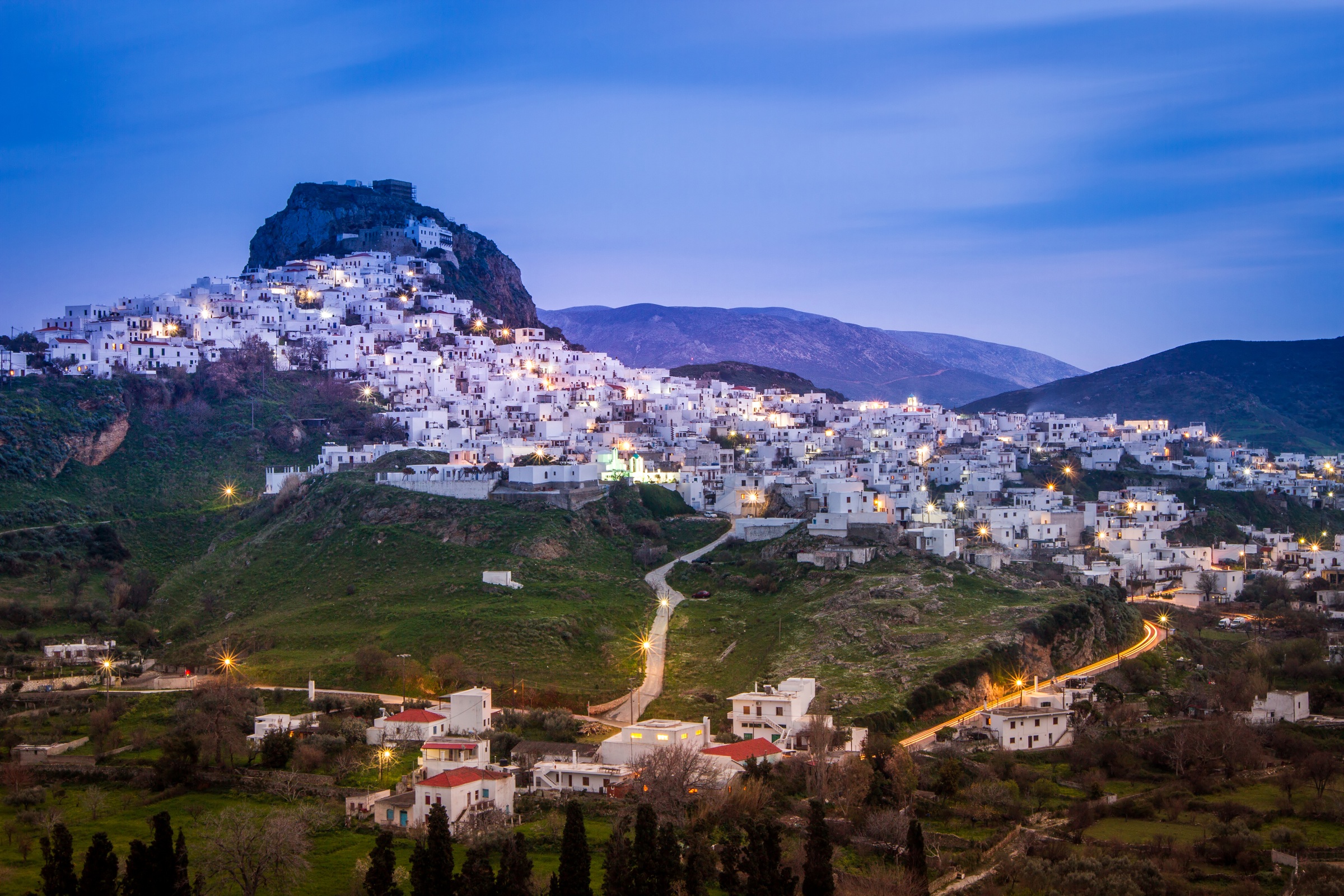
Skyros Town (Chora): A stunning labyrinth of white houses clinging to a steep cliff. Unlike other Sporades towns, Chora looks very Cycladic. It is topped by a Byzantine Castle (Kastro) and the Monastery of Saint George.
- Monuments: The Byzantine Castle (Kastro) and the Monastery of Saint George (10th century) sit atop a hill overlooking the main town, offering a glimpse into the island’s medieval past.
- Faltaits Museum: One of the best folk art museums in Greece, showcasing the island’s rich domestic history and culture. Faltaits Folklore Museum & The Archaeological Museum of Skyros.
- The Monastery of St. George: Perched at the very top of the Chora, offering panoramic views of the Aegean Sea.
- Agios Nikolaos Church: A tiny, picturesque chapel carved directly into a monolithic rock at Pouria.
- The Byzantine Castle (Kastro) and the prehistoric settlement of Palamari.
The Skyrian Pony: One of the rarest horse breeds in the world. These diminutive, ancient horses have lived on the island since antiquity and can still be seen in the wild on the southern plateau or at local conservation farms.
Woodcarving & Ceramics: The island is famous for its unique folk art. Traditional Skyrian houses are essentially “living museums,” decorated with intricate hand-carved furniture and colorful plates.
Carnival of Skyros: One of the most famous in Greece, featuring the “Geros” (old man) and “Korela” (young girl) characters who parade through the streets wearing goat skins and heavy bells.
Mythology & History
Skyros is steeped in legend. It is the place where:
Achilles was hidden by his mother, disguised as a girl, to avoid the Trojan War.The Achilles Legend: According to myth, the hero Achilles was hidden here by his mother, Thetis, dressed as a woman to avoid the Trojan War, until he was discovered by Odysseus.
Theseus, the hero of Athens, met his end after being pushed from the island’s cliffs. Death of Theseus: It is also the legendary site where Theseus, the founder of Athens, was killed after being thrown from a cliff.
Rupert Brooke, the famous English poet, is buried. His tomb is located in a quiet olive grove in the remote south at Tris Boukes Bay.
- Historical Layers: The island has been ruled by Athenians, Macedonians, Romans, Byzantines, Venetians, and Ottomans, all of whom left architectural and cultural traces.
Unique Culture and Traditions
Skyros has maintained a very distinct identity due to its historical isolation:
Skyrian Horses: One of the rarest horse breeds in the world, these small, sturdy horses (often called “ponies”) roam freely on the southern plateau of Aris and are protected by law.
Artisanal Crafts: The island is famous for its woodcarving (ornate stools and chests), intricate embroidery, and ceramics. Traditional houses are often like “mini-museums,” densely decorated with copperware and local art.
Carnival (Apokries): Skyros hosts one of Greece’s most unique carnivals, featuring the “Geros” (old man) characters who wear goat-skin capes and heavy sheep bells, dancing through the streets.
Rupert Brooke: The English poet is buried here in an olive grove in Tris Boukes Bay; a statue dedicated to him stands in “Poet’s Square” in Chora.
Culture and Traditions
Skyros is famous for its fierce preservation of local customs, which set it apart from its neighbors:
Skyrian Horses: One of the rarest horse breeds in the world, these small-bodied horses have inhabited the island since ancient times and are depicted on the Parthenon frieze.
Artistic Heritage: The island is renowned for its woodcarving, intricate embroidery, and hand-painted ceramics. You can still see traditional Skyrian houses decorated with these heirlooms.
The Carnival (Apokries): Skyros hosts one of Greece’s most famous traditional carnivals, featuring the “Geros” and “Korela”—masked figures dressed in goat skins and heavy bells who dance through the streets.
Rupert Brooke: The famous English poet is buried in a secluded olive grove on the southern part of the island (Tris Boukes Bay), and a statue in his honor stands in “Poetry Square” in the main town.
Highlights & Culture
Chora (Skyros Town): A labyrinth of white-washed, sugar-cube houses that “tumble” down a steep hillside. It is known for its narrow cobblestone streets and traditional “Skyrian houses,” which often function as mini-museums of local folk art.
The Skyrian Horse: One of the rarest horse breeds in the world, these small, ancient horses roam semi-wild in the southern mountains and are protected by local conservation farms.
Carnival (Apokries): Skyros is famous for its wild, Dionysian pre-Lenten carnival. The “Goat Dance” features men dressed as goats (the Geros) wearing dozens of heavy sheep bells that ring loudly as they move through the streets.
Local Crafts: The island is renowned for its unique wood-carving (specifically low-set furniture) and hand-painted ceramics.
Villages
Most villages concentrated in the lush, pine-covered northern half of Skyros.
Main Villages
- Chora (Skyros Town): The island’s capital, built amphitheatrically on a steep cliff topped by a Byzantine castle. It features classic whitewashed houses and narrow, winding alleys.
- Linaria: The picturesque main port of the island, located on the west coast. It is known for its welcoming atmosphere when ferries arrive and its waterfront tavernas.
Northern & Eastern Coastal Villages
- Magazia: A popular seaside village directly below Chora, known for its long sandy beach and lively summer atmosphere.
- Molos: Adjacent to Magazia, this is a major tourist area with many hotels, apartments, and the iconic Church of Agios Nikolaos carved into a rock.
- Gyrismata: Located just north of Molos, offering a quieter coastal feel and a large sandy beach.
- Pouria: Famous for its ancient quarry and the small stone chapel of Agios Nikolaos that sits right on the water’s edge.
- Aspous: A charming coastal village on the road between the port and Chora, home to a local pottery workshop.
- Achilli: A small bay and settlement near Aspous; mythology says this is where Achilles set sail for Troy.
Western & Southern Villages
- Atsitsa: A peaceful, pine-clad seaside village on the west coast, popular for alternative tourism and wellness retreats.
- Pefkos: A scenic, green cove with a pebble beach, surrounded by thick pine forests.
- Acherounes: A quiet coastal village near the port of Linaria, with shallow waters that are very popular for families.
- Kalamitsa: A large bay south of Linaria, offering a more rugged and quiet landscape compared to the northern resorts.
- Trachi: A small settlement located in the northern plains near the island’s airport.
Remote Villages
- Agios Fokas: A remote, tiny settlement on the west coast with a traditional taverna and a secluded beach.
- Kyra Panagia: A quiet northern settlement surrounded by greenery.
Agios Petros: A northern coastal area known for its wild beauty and cedar trees.
Beaches
The Most Popular & Organized
- Magazia & Molos: These two are essentially one massive stretch of golden sand right below Chora (the main town). They are the most organized on the island, lined with beach bars, tavernas, and sunbeds. They offer a fantastic view of the town’s castle perched on the cliff above.
- Gyrismata: Located just north of Molos, this is a very long and wide sandy beach. It’s famous for its old windmill and is a great spot if you want space to spread out, though it can get wavy when the north winds blow.
- Acherounes: Very close to the port of Linaria, this beach is tucked into a protected bay. The water is shallow, calm, and crystal clear, making it arguably the best choice for families with young children.
Scenic & Secluded Coves
- Agios Petros: Many locals consider this the most beautiful beach on the island. It’s a mix of sand and pebbles surrounded by a dense cedar and pine forest. It is unorganized, so you’ll need to bring your own supplies, but the turquoise water is worth the drive.
- Pefkos: True to its name (Pefkos means pine), the trees here reach almost to the shoreline. It’s a scenic, emerald-colored bay with a small pier and a couple of excellent fish tavernas nearby.
- Atsitsa: This is more of a collection of small, rocky coves than a traditional sandy beach. It’s incredibly picturesque, with stone pillars (remnants of old mineral mines) standing in the water. It’s a top spot for snorkeling.
- Agios Fokas: A remote, pebbled beach on the west coast. It’s peaceful and quiet, usually with a great traditional taverna operating nearby that serves fresh fish caught by the owner.
Adventure & Off-the-Beaten-Path
- Agalipa: This is for the adventurers. There are two Agalipa beaches; one is famous for the shipwreck resting on its shore. Access usually requires a 20-minute hike through a pine forest or a boat trip, but you’ll often have the place to yourself.
- Kalamitsa: One of the largest beaches in the south, Kalamitsa is pebbled and known for its clean, deep waters. Because of the local wind conditions, it’s the go-to spot for windsurfers.
- Sarakino (Glyfada): Technically on the small islet of Sarakino just off the southern tip of Skyros. You can reach it via a short boat trip from Linaria. The water here is “pool-like”—intensely blue and transparent.
- Tip: If the Meltemi (strong north winds) are blowing, head to the beaches on the west and south coasts (like Acherounes or Pefkos) for calmer waters.
Nature & Activities
Beaches: Molos and Magazia are the most popular sandy stretches near town. For more seclusion, Atsitsa offers turquoise waters surrounded by pines, while Agios Fokas is a peaceful, picturesque bay.
Outdoor Adventure: The island features a complex network of hiking trails crossing its diverse landscapes. The southern part is a Natura 2000 site, ideal for birdwatching and exploring rocky cliffs.
Gastronomy: Skyros is famous for its lobster spaghetti (astakomakaronada), as well as local goat meat and flavorful cheeses.Lobster pasta (a local specialty), Skyrian graviera cheese, and fava.
Transportation Tips
Skyros is less “accessible” than islands like Skiathos, which contributes to its quiet charm.
By Sea: Ferries run daily from Kymi on the island of Evia (about a 1 hour 40 minute crossing).
By Air: There are domestic flights from Athens and Thessaloniki to the island’s small airport.
- Tip: Skyros is accessible by a 1.5-hour ferry from Kymi (Evia) or by direct flights from Athens and Thessaloniki.


If you are ready for the Sporades, reach out below…