Wonderful, mythical Peloponnese
Corinthia
Corinthia (Corinth) is often called the “Gateway to the Peloponnese.” It’s a region where engineering marvels meet ancient mythology, and where the rugged mountains of the interior give way to world-class thermal spas and vineyards.
Whether you’re a history buff, a wine lover, or an adventure seeker, here are the absolute highlights of the Corinth prefecture.
Great Archaeological Sites
Corinthia holds some of the most strategic sites of the ancient world.
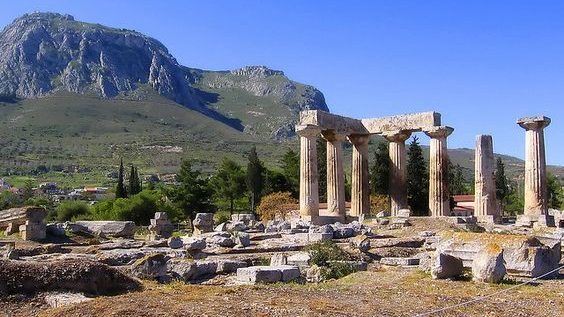
Ancient Corinth: Once one of the wealthiest and most powerful city-states in Greece.
Temple of Apollo: Built around 540 BC, its monolithic Doric columns are the site’s iconic centerpiece.
The Bema: The public platform where the Apostle Paul was said to have been judged.
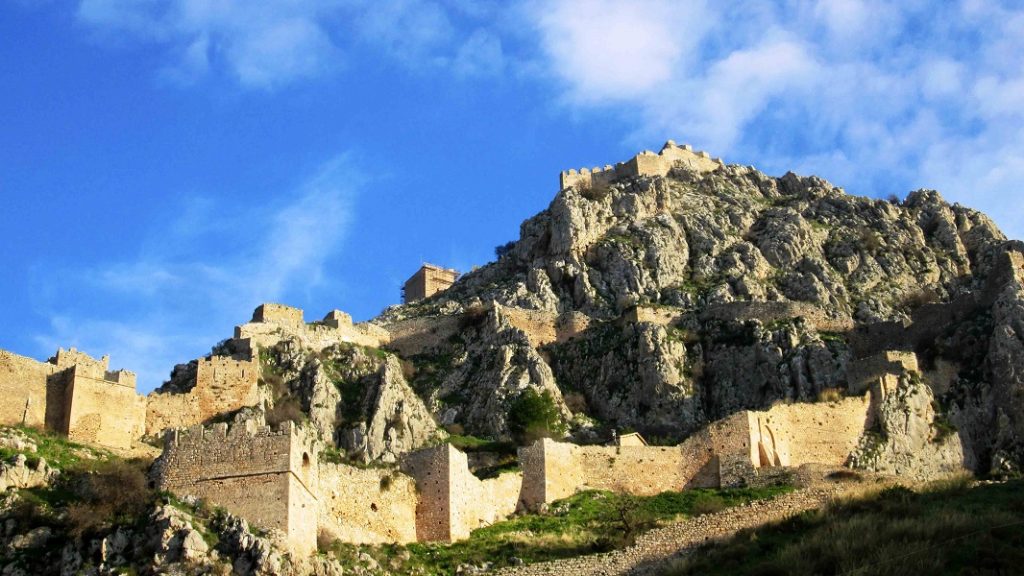
Acrocorinth: The “All-Seeing Eye of the Peloponnese.” This massive fortress sits atop a monolithic rock 575 meters high.
Highlights: Three lines of defensive walls, the ruins of the Temple of Aphrodite, and 360-degree views of the Saronic and Corinthian Gulfs.
Ancient Nemea: Famous for the Nemean Games and the First Labor of Hercules (slaying the Nemean Lion).
Highlights: The Temple of Zeus and the ancient Stadium, which still features the athletes’ entrance tunnel with ancient graffiti.
Engineering Marvels & Modern Icons
The Corinth Canal: A dizzying feat of 19th-century engineering that slices through the Isthmus of Corinth, separating the Peloponnese from the Greek mainland.
Tip: Walk across the pedestrian bridge for a terrifyingly beautiful view 80 meters down to the water. If you’re feeling brave, Zulu Bungee operates jumps right from the bridge.
The Diolkos: Near the canal, you can find remnants of the ancient paved trackway used to drag ships across the land before the canal existed.
Modern Corinth: While many skip the city for the ruins, the waterfront is lovely for a stroll. Don’t miss the giant Pegasus Statue, the mythological symbol of the city.
Wine, Water, and Nature
Corinthia offers a more relaxed pace for those looking to escape the ruins.
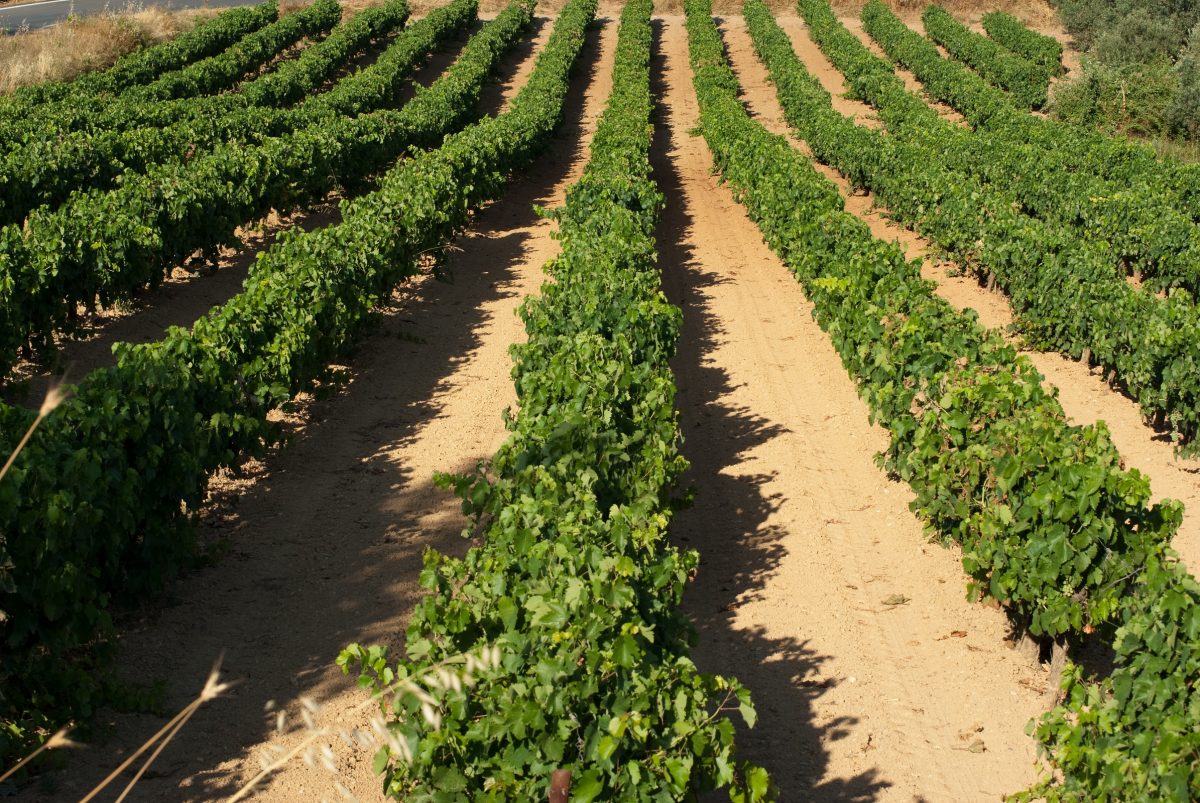
Nemea Wine Region: One of Greece’s premier wine-producing areas, famous for the deep red Agiorgitiko grape (often called “the blood of Hercules”). Most local wineries offer tours and tastings.
Loutraki: A classic Greek resort town known for its natural thermal springs.
Loutraki Thermal Spa: A modern facility where you can soak in the same mineral-rich waters that the Romans and Byzantines used for healing.
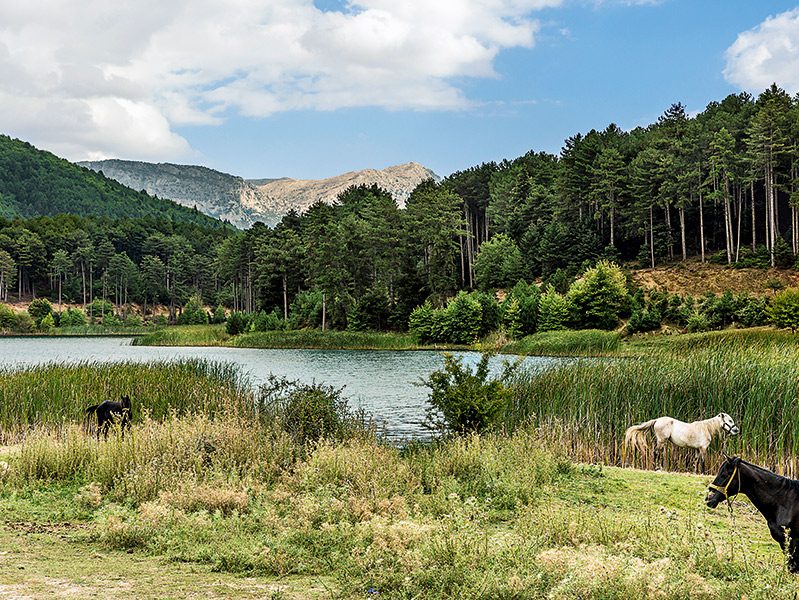
Lake Stymphalia: A high-altitude lake shrouded in myth (Hercules’ 6th Labor). It is now a protected wetland with an excellent Environment Museum that explains the local ecosystem and history.
Argolis
Argolis (or Argolida) is the “heartland” of Greek mythology and history. Located in the eastern Peloponnese, it’s a place where Bronze Age ruins sit just minutes away from chic Venetian-style harbors and crystal-clear beaches.
Here are the highlights of the Argolis prefecture:
Main Archaeological Sites
Argolis is home to some of the most significant UNESCO World Heritage sites in the world.
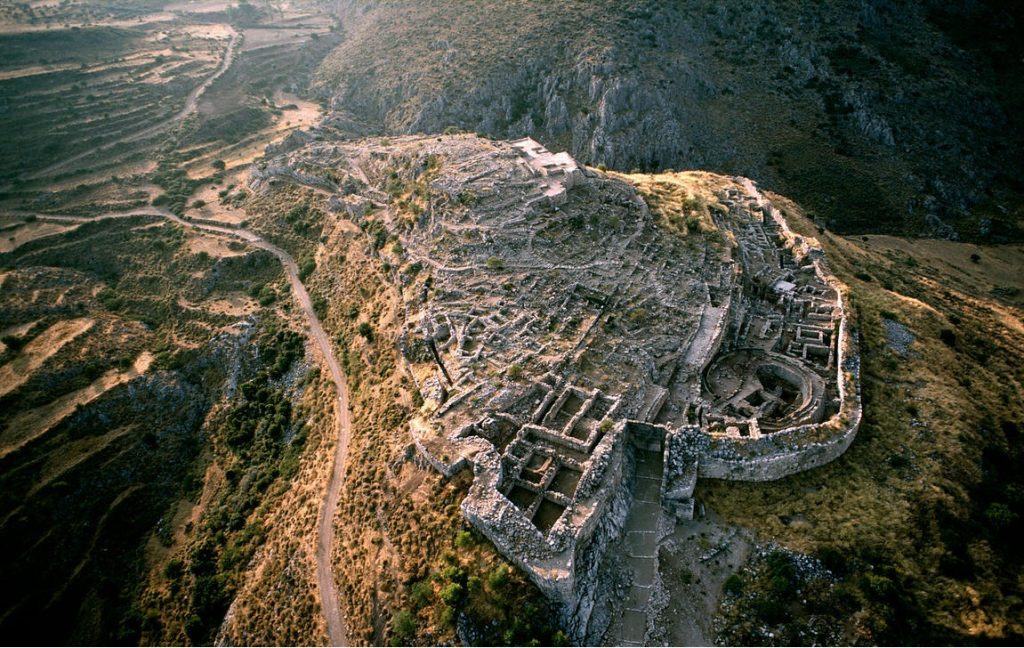
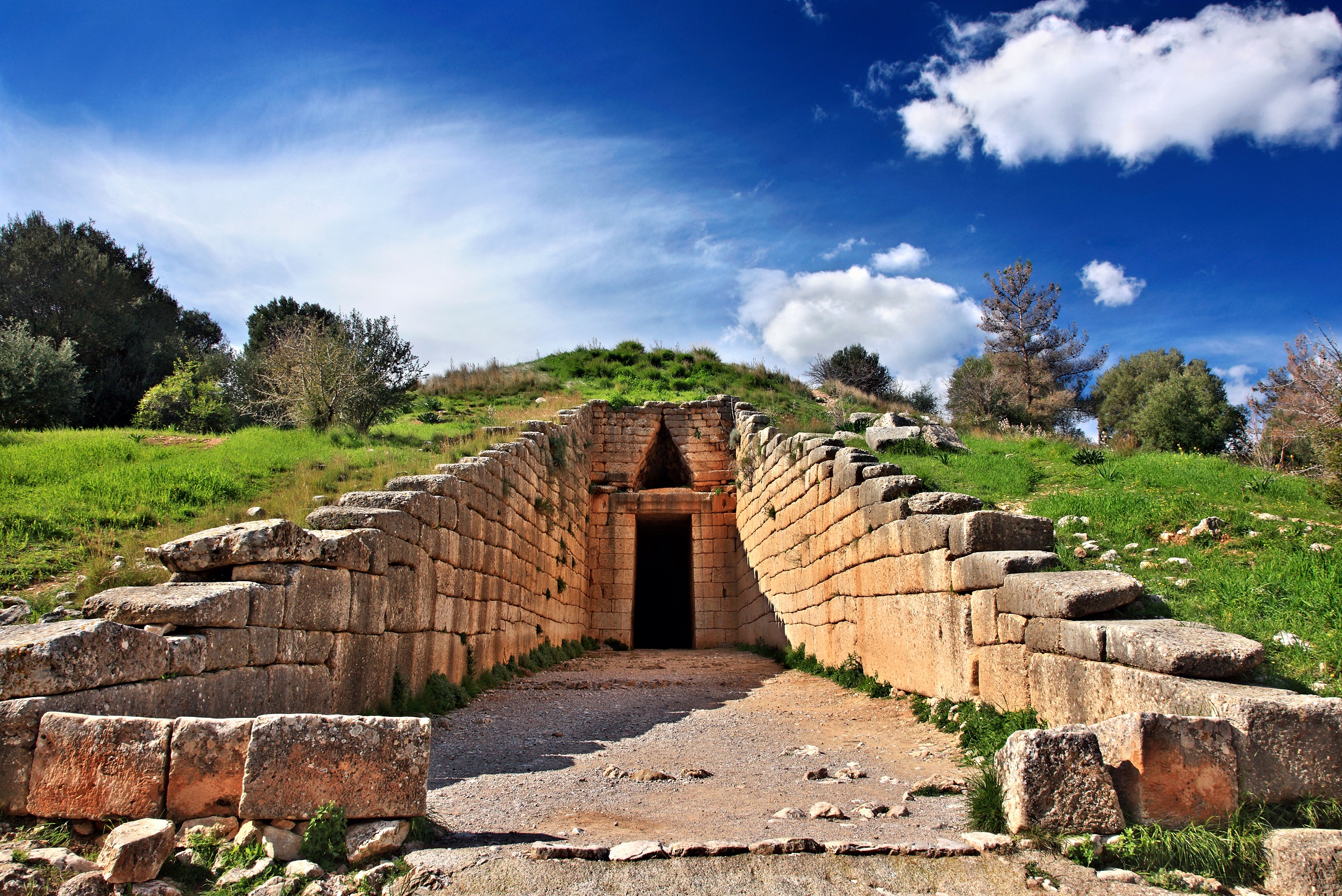
Mycenae: The legendary kingdom of Agamemnon. Highlights include the Lion Gate (the oldest monumental sculpture in Europe), the massive Cyclopean Walls, and the Treasury of Atreus, a beehive-shaped tomb with incredible acoustics.
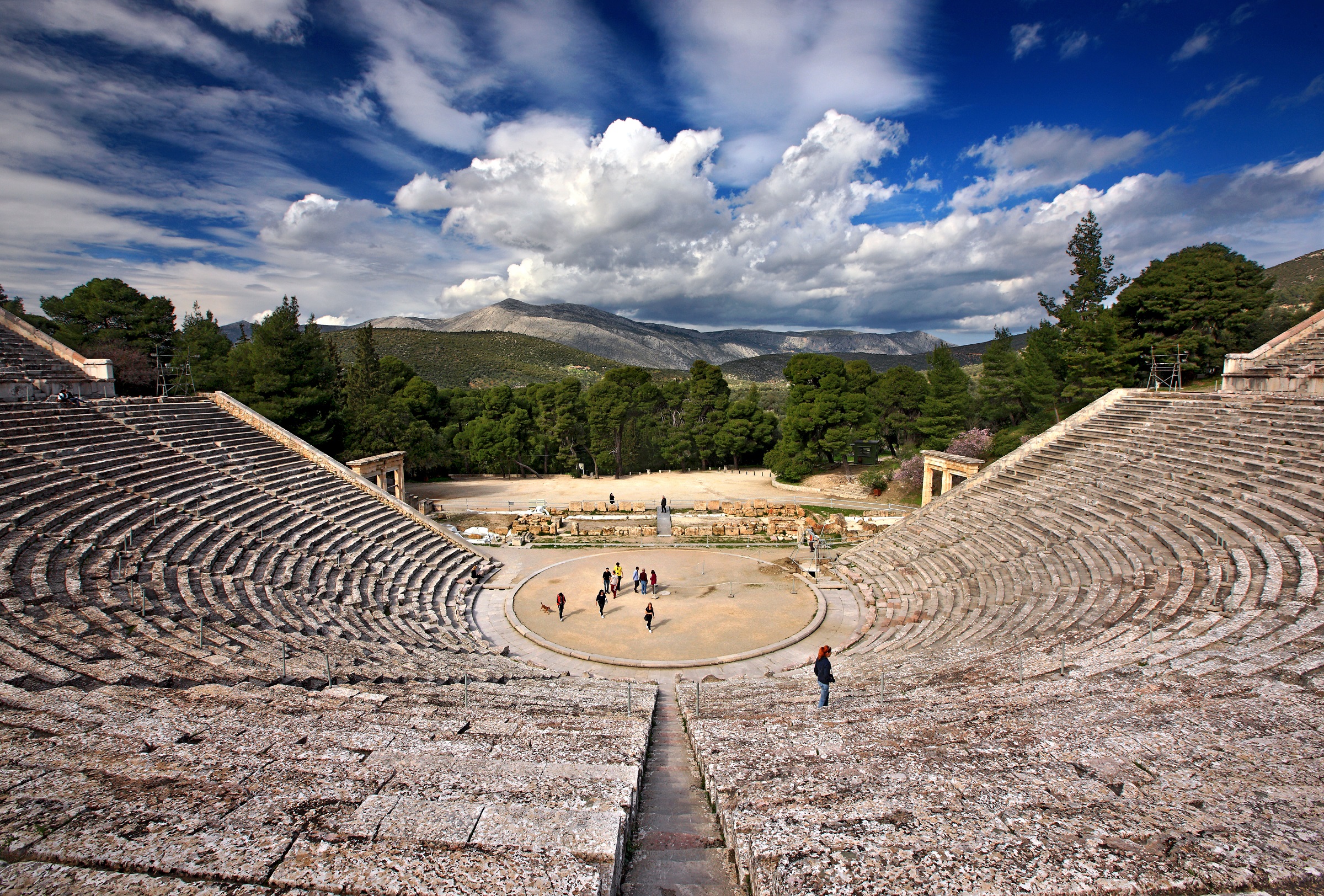
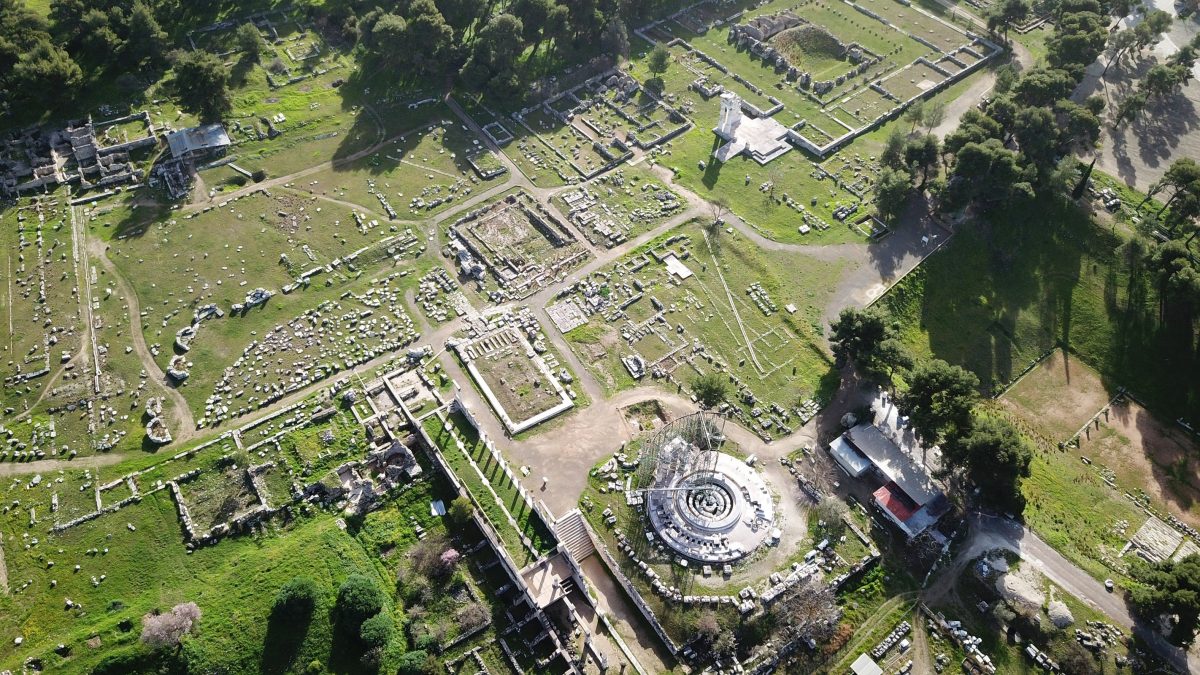
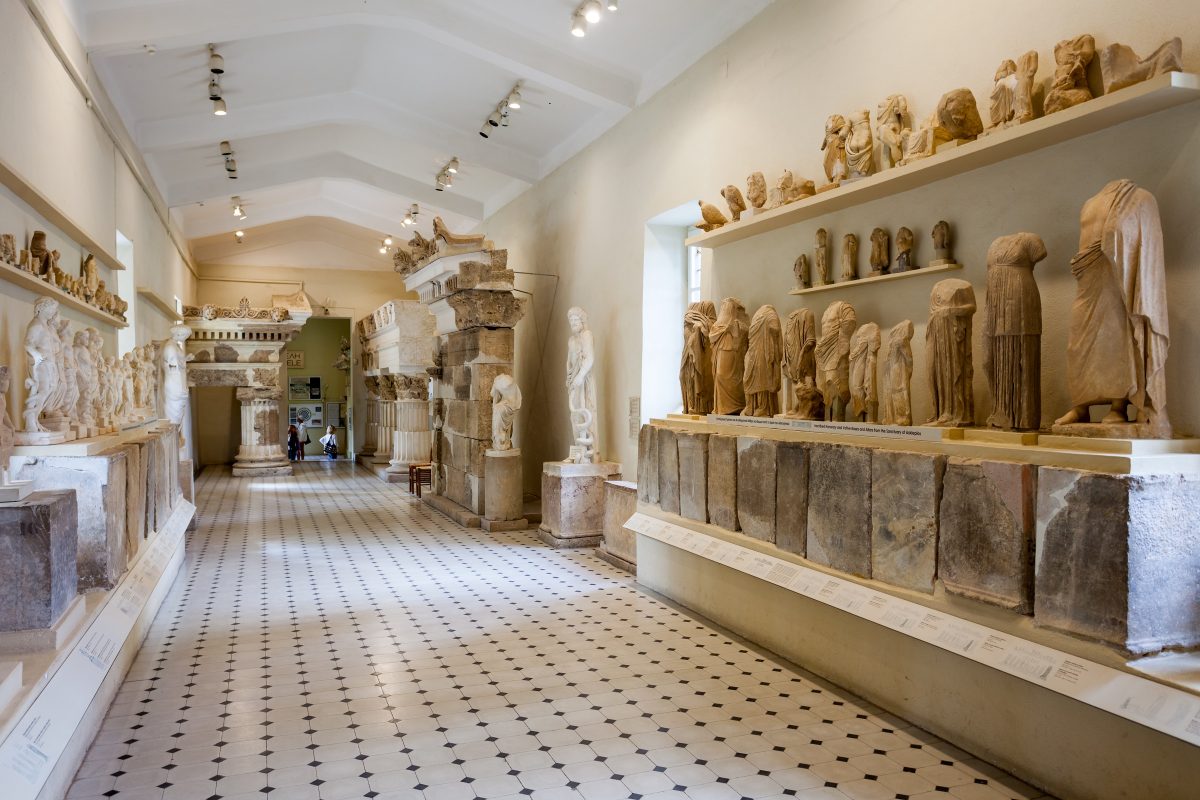
Epidaurus: Famous for the Ancient Theater of Epidaurus, renowned for its perfect acoustics—you can hear a coin drop on stage from the highest seat. It’s part of the Sanctuary of Asclepius, which was essentially the first holistic healing center of the ancient world.
Tiryns: Often overshadowed by Mycenae, Tiryns features even more impressive “Cyclopean” masonry—walls so thick that ancient Greeks believed only giants could have moved the stones.
Nafplio: The “Jewel” of the Peloponnese
Widely considered one of the most romantic towns in Greece, Nafplio was the first capital of the modern Greek state.
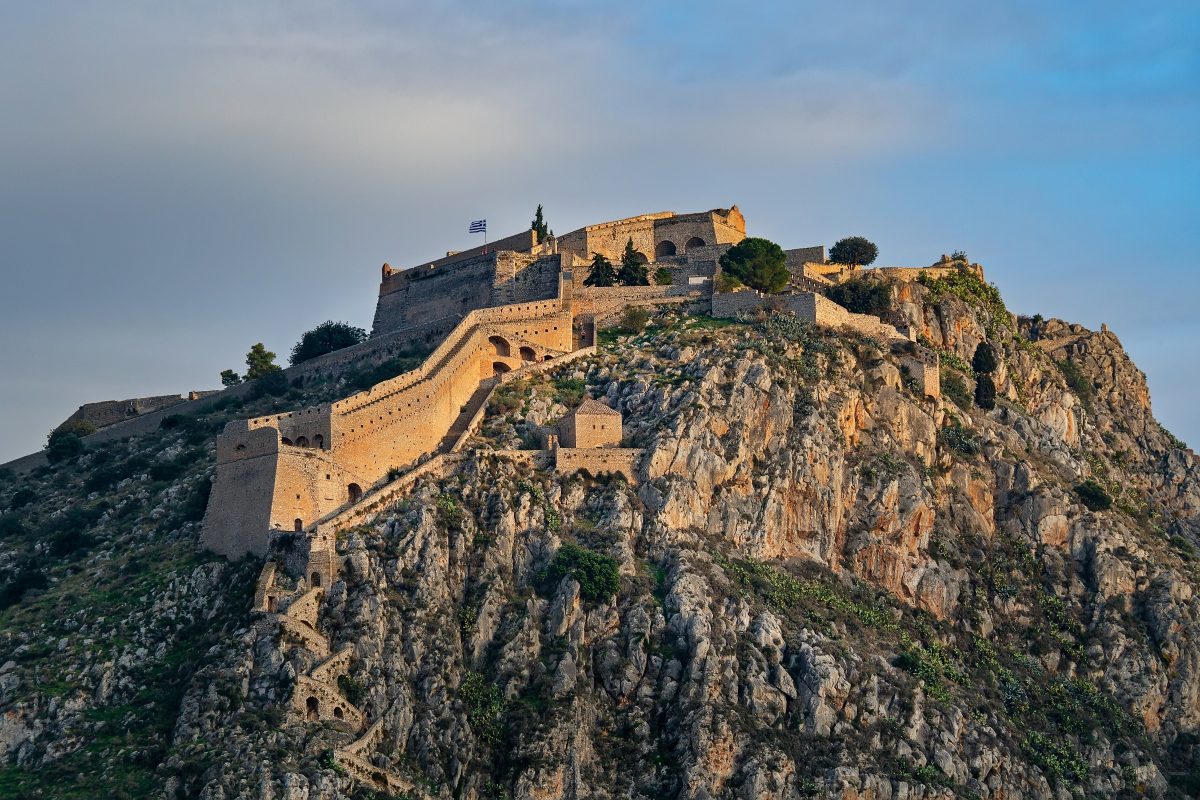
Palamidi Fortress: A Venetian masterpiece perched 216 meters above the town. You can drive up or brave the 999 steps for a breathtaking view of the Argolic Gulf.
Bourtzi Castle: A small fortress located on an islet in the middle of the harbor. You can take a quick boat ride to explore it.
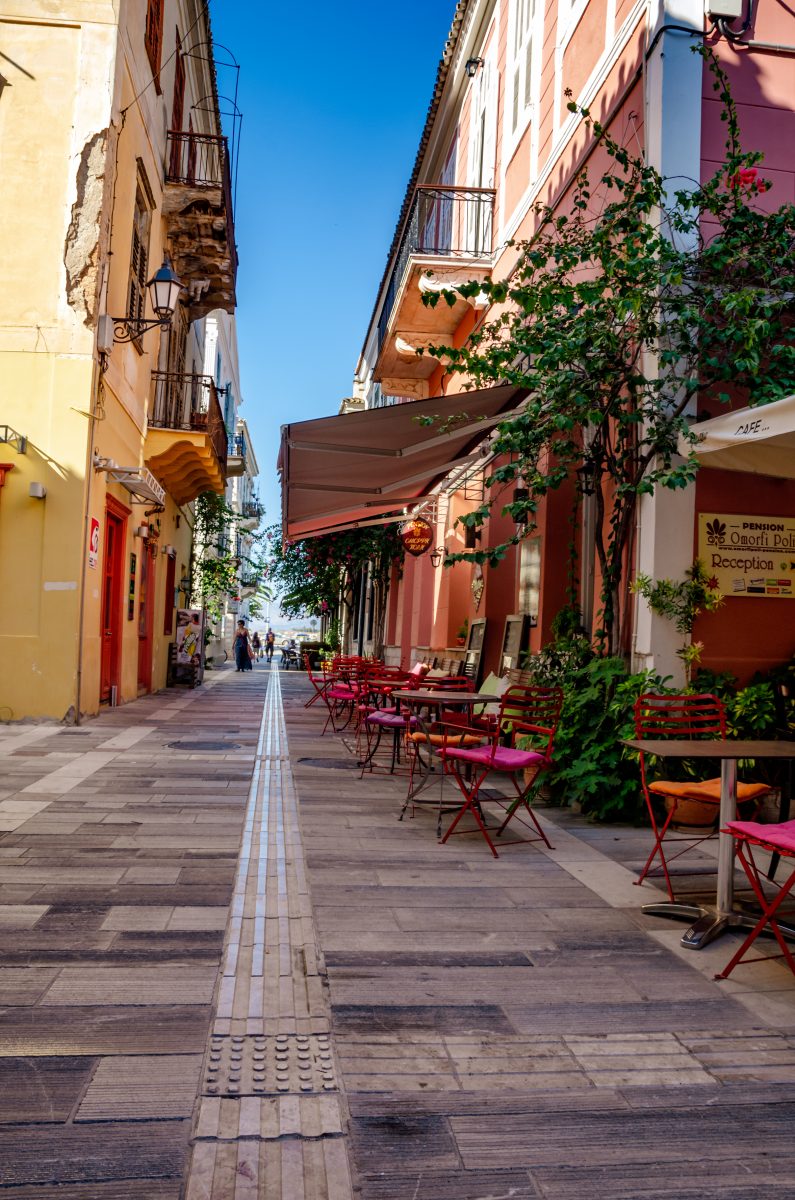
The Old Town: A maze of neoclassical mansions, bougainvillea-lined alleys, and the historic Syntagma Square.
Coastal Escapes & Beaches
While history is the main draw, the Argolic coast is dotted with excellent swimming spots.
Tolo: A former fishing village turned popular resort. It has a long, sandy beach with shallow, warm water—perfect for families.
Karathona Beach: A massive, horseshoe-shaped beach just behind the Palamidi hill in Nafplio. It’s lined with palm trees and local tavernas.
Kondili Beach: Often cited as the best beach in the prefecture, it offers deep blue waters and a mix of sand and fine pebbles.
The Sunken City (Ancient Epidaurus): You can snorkel over the ruins of an ancient Roman villa and harbor structures just a few meters off the coast of Kalymnios Beach.
Hidden Gems & Local Secrets
Tip: If you visit during the summer (July–August), try to catch a performance at the Athens & Epidaurus Festival. Watching an ancient Greek tragedy in the original theater at night is a bucket-list experience.
Laconia
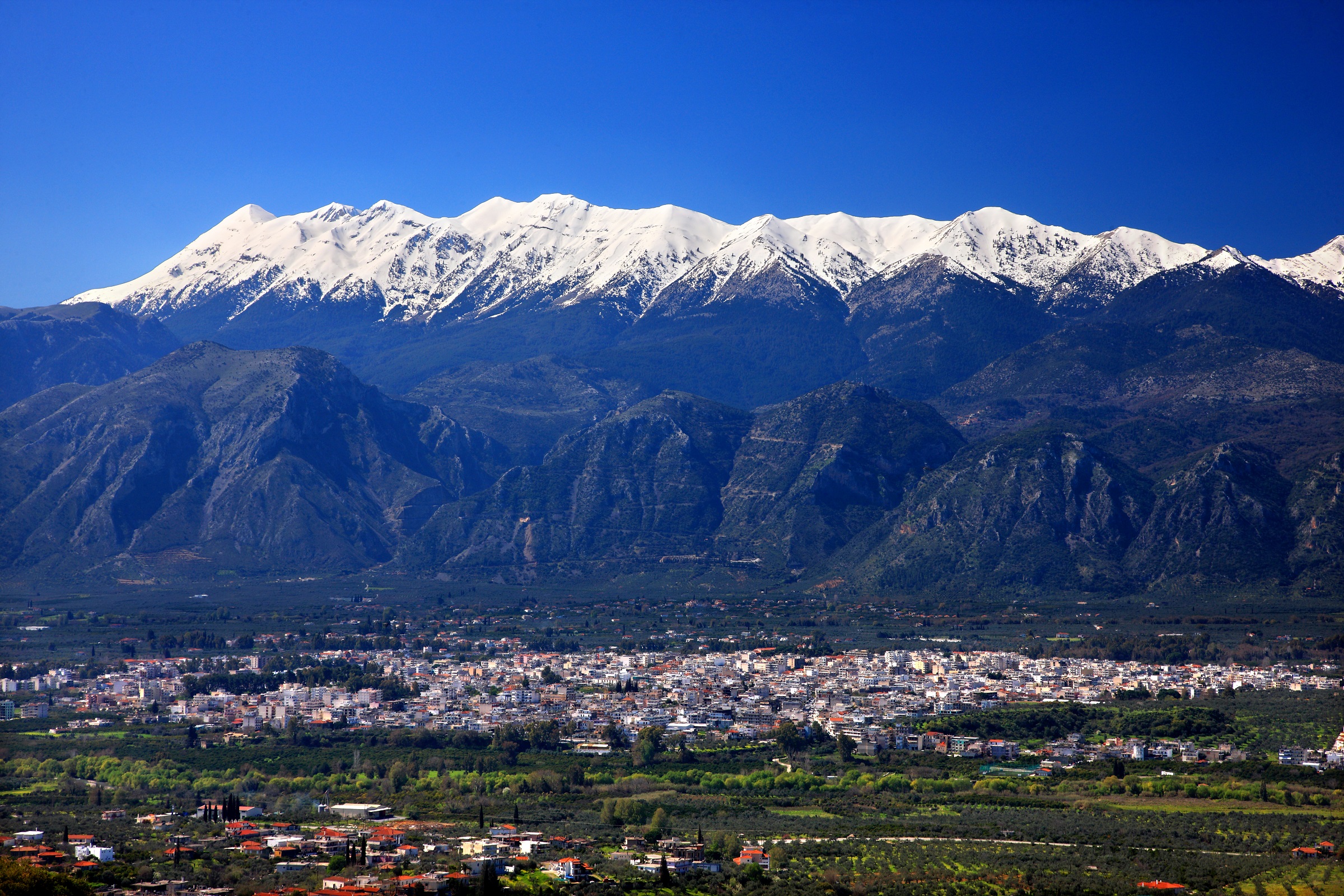
Laconia offerss diverse landscapes ranging from dramatic peaks of the Taygetos and Parnon mountain ranges and between them the fertile Eurotas River valley, famous for its world-class olive oil and citrus. The prefecture is home of the two out of the three iconic peninsulas (“fingers”) of the Peloponnese, home to wild, sun-drenched coastal cliffs of the Mani Peninsula and the emerald waters. It is most famous for being the heart of Spartan civilization.
Historical & Archaeological Marvels
Mystras: The Byzantine Ghost Town
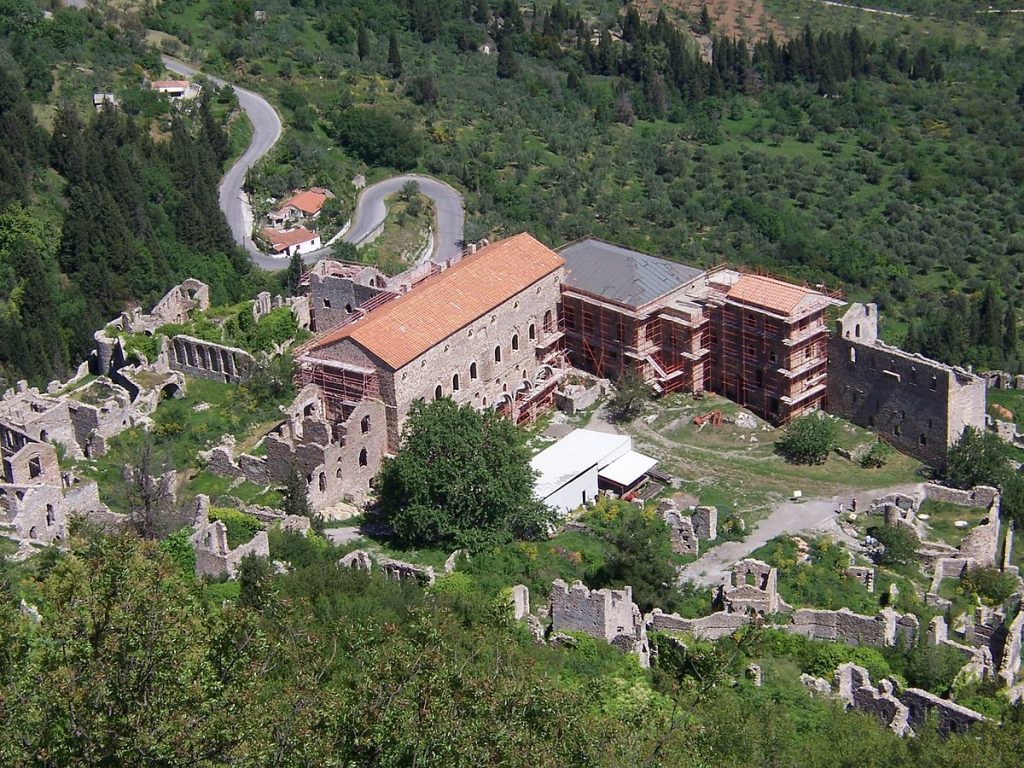
Just a stone’s throw from modern Sparta, this UNESCO World Heritage site is a sprawling, abandoned medieval city cascading down the side of Mt. Taygetos. It was once the center of Byzantine power in the Peloponnese.
Don’t Miss: The Pantanassa Monastery (still inhabited by nuns), the Despot’s Palace, and the stunning frescoes in the Church of Agios Demetrios.
Click for more info on Mystras
Monemvasia: The “Gibraltar of the East”
A massive rock island connected to the mainland by a single causeway. Hidden behind its medieval walls is a perfectly preserved stone town with no cars, only winding alleys.
The Experience: Hike up to the Upper Town (Ano Poli) to see the Church of Agia Sophia perched on the cliff’s edge. At sunset, the stone buildings turn a deep honey gold.
Click for more info on Monemvasia
Ancient & Modern Sparta
While the ancient Spartans didn’t leave behind massive marble temples like the Athenians, the history here is palpable.
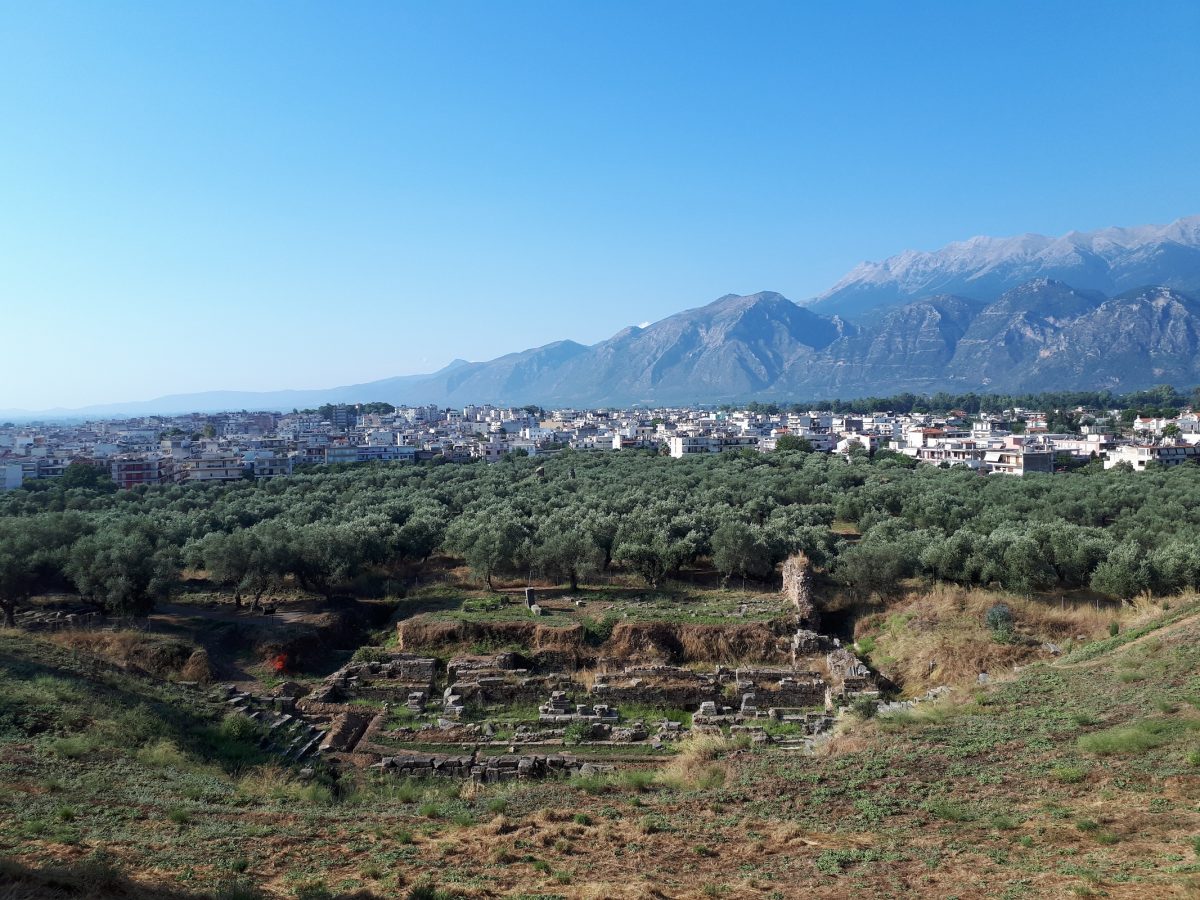
Key Sites: The Acropolis of Sparta, the Statue of Leonidas, and the Museum of the Olive and Greek Olive Oil—one of the best industrial museums in Europe.
Coastal Gems & Natural Wonders
Elafonisos & Simos Beach
A tiny island just off the coast, reachable by a 10-minute ferry. It is home to Simos Beach, widely considered one of the best in the Mediterranean. It features twin horseshoe bays, fine white sand, and vibrant turquoise water.
The Caves of Diros (Vlychada)
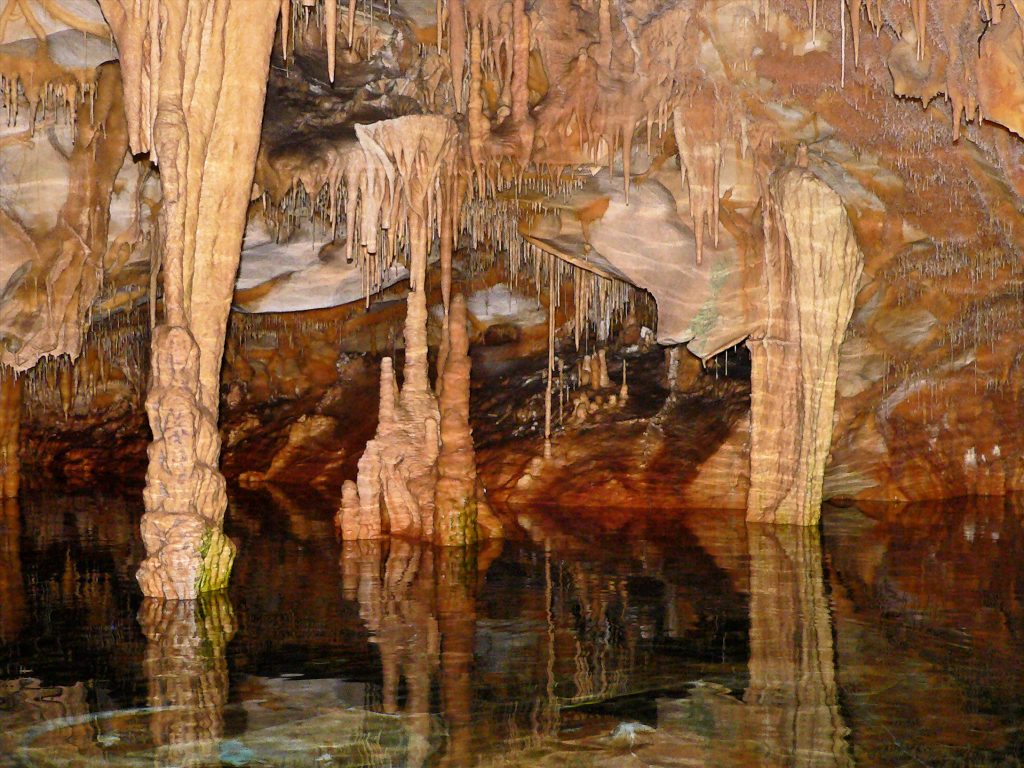
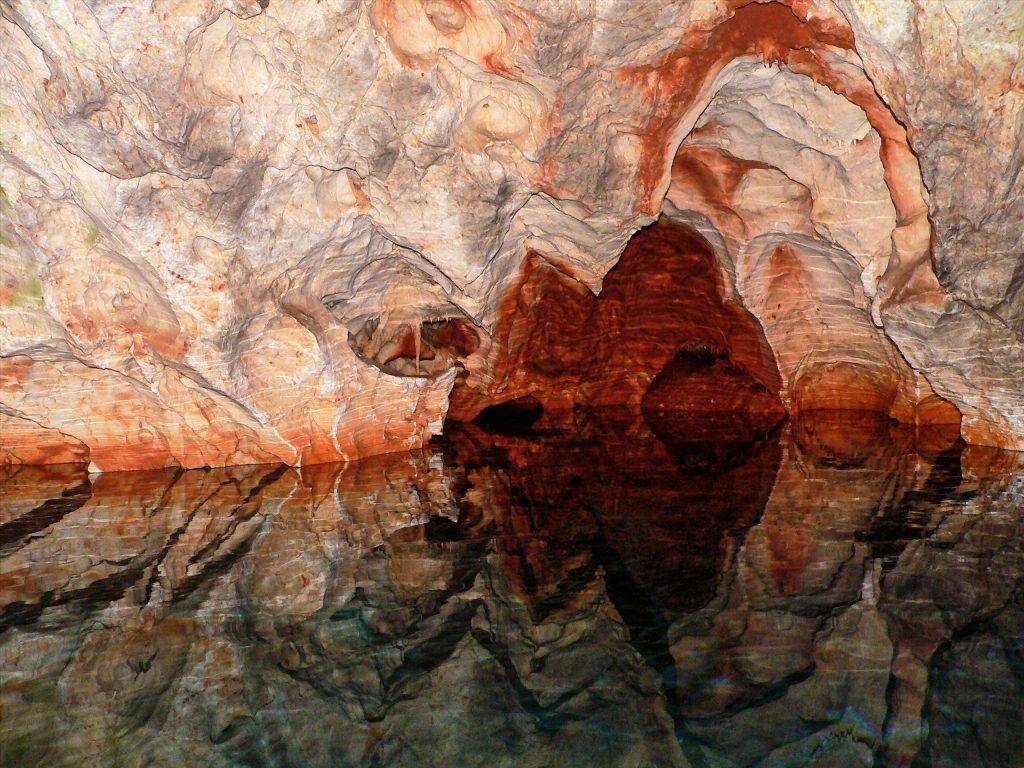
This is one of the most beautiful lake caves in the world. You tour the cave in a small boat, gliding through narrow tunnels filled with shimmering white stalactites and stalagmites that have been forming for millions of years.
Tip: Caves of Diros are reached from Messinia prefecture, from Kalamata.
The Mani Peninsula (Laconian side)
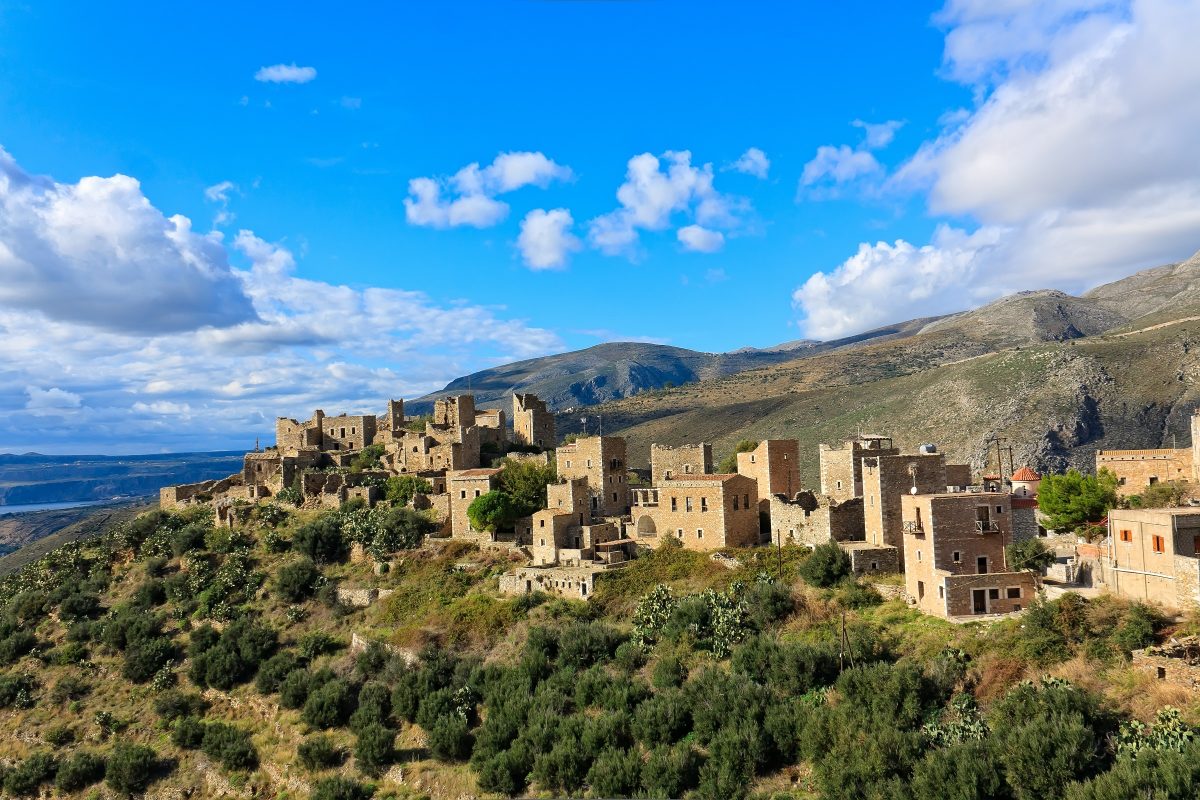
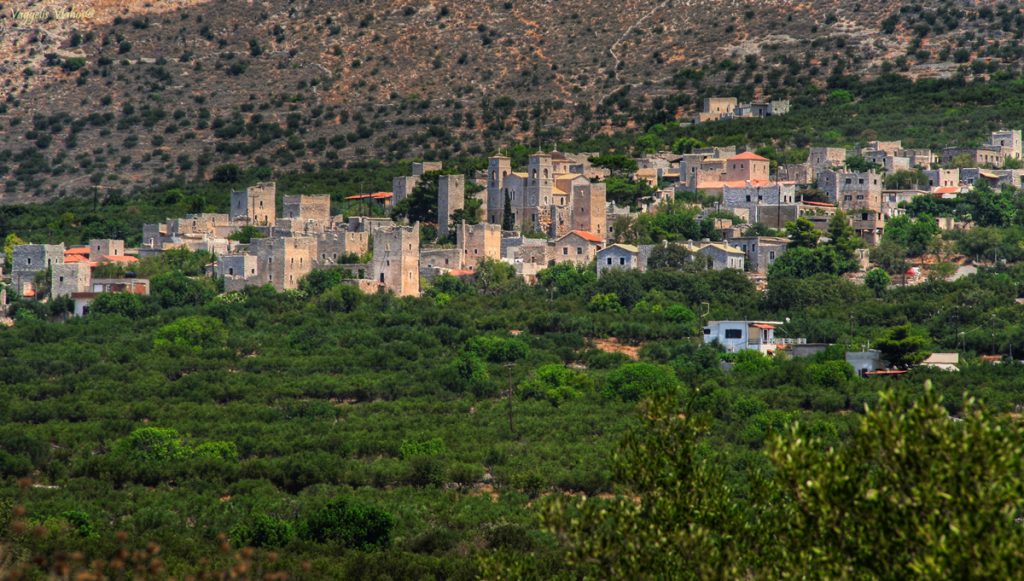
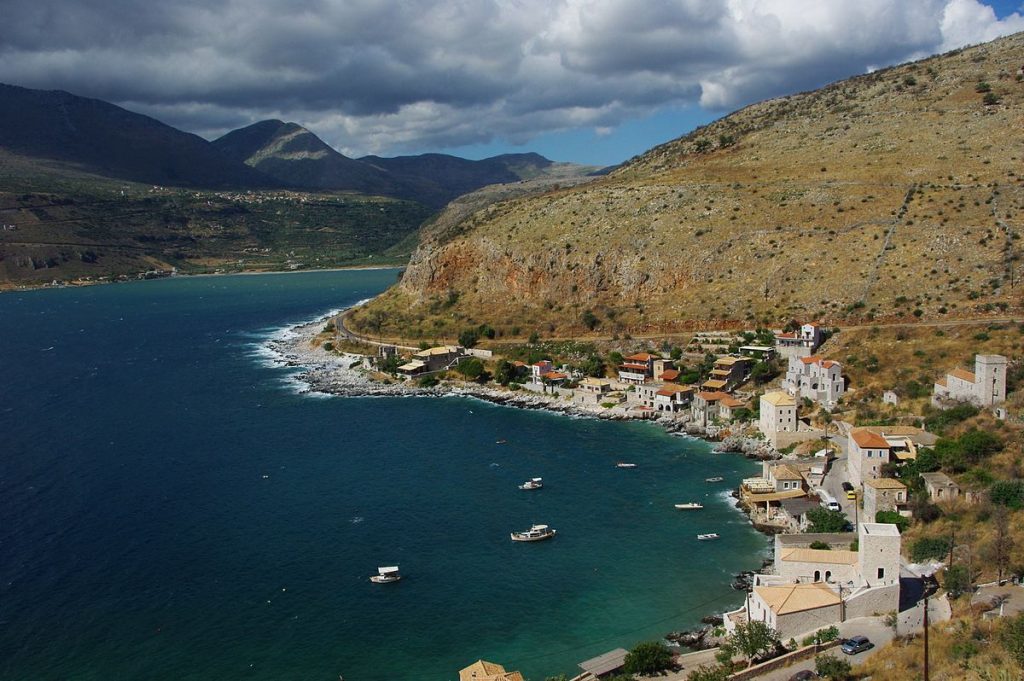
The Mani is a world of its own—wild, rocky, and famous for its tower houses (Maniot forts).
Gytheio: A charming port town with neoclassical houses and the mythical islet of Cranae.
Cape Tainaro: The southernmost point of mainland Greece and, according to legend, one of the entrances to the Underworld (Hades).
Outdoor & Scenic Routes
Mount Taygetos: Perfect for hikers, the “Great Peak” offers trails that lead through alpine forests to high summits.
Langada Pass: A breathtaking drive between Sparta and Kalamata. It’s a winding road through deep gorges and steep mountain faces—not for the faint of heart, but visually stunning.
The Petrified Forest of Agia Marina: Near the southern tip, you can walk among fossilized tree trunks and shells that are over 2 million years old.
Travel Tips
Best Time to Visit: May to June or September to October. The summer heat in the Mani can be intense, while spring offers wildflowers and cooler hiking weather.
Base Yourself: Stay in Gytheio for a coastal feel, or Mystras if you want to be close to the mountains and history.
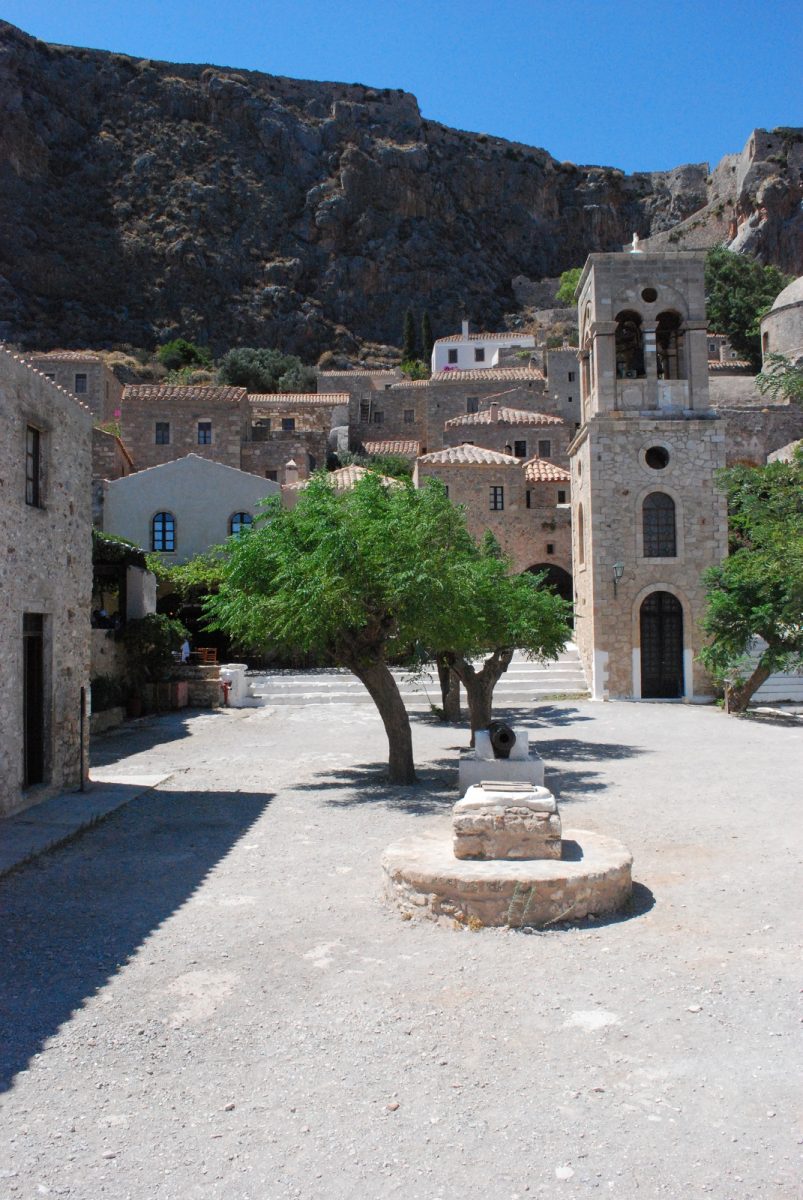
In Monemvasia time here appears to have stopped, as nearly all of the buildings date from the Byzantine, Venetian or Ottoman eras. Painted largely in earth tones of ochre and russet and boasting graceful arches and red-tiled rooftops, Monemvasia’s buildings are truly enchanting. Today, the majority serve as vacation homes, souvenir shops, cafés or bar-restaurants, with only a handful of year-round residences; off-season life in this small walled town isn’t for everyone.
The town’s main thoroughfare starts at the main gate and is lined the whole way with cafés, restaurants and shops. The walkway ends at the East Gate, although a path continues the short distance to the lighthouse outside the walls, where you can enjoy a quiet moment looking out at the Myrtoan Sea.
There used to be another main lane that linked the Portelo, a gate on the seafront, to Ano Poli (Upper Town), but over the years, that lane disappeared, although the gate is still there. Today it’s used to reach the other side of the stout town walls, where a stone ramp and an outcropping of rocks comprise Monemvasia’s only in-town swimming spot.
Put on some comfortable walking shoes and head to Ano Poli, up the footpath known as “Voltes.” Settled before Kato Poli (Lower Town), Ano Poli was gradually deserted in the years following the second period of Venetian rule (1685-1715). Today, the entire area is considered publicly owned land and is administered by the Greek Archaeological Service.
Its key monument is the Church of Hagia Sophia, dating from 1150, which is widely believed to be a copy of the famous church of the same name in Istanbul. In fact, that’s not true, as this church was originally dedicated to the Virgin Mary rather than Saint Sophia. It is, nevertheless, a beautiful church and a valuable part of Monemvasia’s architectural treasure trove.
The castle of Mystras, along with Monemvasia represented the core of the illustrious Despotate of Morea, the Byzantine Empire’s semi-autonomous province in the Peloponnese. The rocky, naturally-defensible islet of Monemvasia served as the initial seat of the region’s renewed Byzantine administration until 1262, when this role was transferred to Mystras — whose own impressive fortifications had first been built by the Franks some 13 years earlier. As militarily strategic locations, both castles were successively claimed or reclaimed by the Franks, Byzantines, Venetians and Turks, resulting in their changing hands several times during their history.
Mystras’ authority was strengthened in 1349 when it became the capital of the despotate — essentially the entire Peloponnese. Although the Byzantine Empire was already beginning to collapse from external enemies and internal intrigue, Mystras was reaching its floruit, becoming one of the most important economic and cultural centers of Byzantium and offering the hope of rebirth to the rest of the empire. In the end, however, Mystras could only manage to prolong the empire’s life a little longer, to be its last “glimmer” and final stronghold.
Today, as visitors stand facing the Hill of Myzythras, on which Mystras was built, one immediately grasps the significance of the place. Crowned with a mighty citadel and walls that descend around its Upper and Lower towns and their many painted churches, Mystras is rightly considered one of Greece’s greatest archaeological sites, worthy of its ranking as a UNESCO World Heritage Monument.
Access to the Mystras castle can be gained through either of two gates. Most visitors choose to enter through the Lower Gate that leads directly to the Lower Town; afterward, ascending to the Upper Gate by car, they visit the Upper Town.
In the Lower Town are several historic mansions and the site’s most important churches. Inside are precious works of Byzantine art, many of which are kept under lock and key for security reasons. Always open, however, is the Metropolitan church and the interesting museum housed in its courtyard. The museum features artifacts excavated in the town and strives to illuminate the connections and complex influences that once existed between Byzantium and the West. In the Upper Town stands the Church of Aghia Sophia, the famous Palace of the Palaiologoi (under restoration) and the fortress, from which the views of Mt Taygetus and the Evrotas River Valley are incomparable.
Of course, visitors who choose to climb from the Lower to the Upper Town and the citadel, strolling on well-marked paths, gain something even more special. The feeling of walking along historic, stone-paved lanes, surrounded by lush vegetation and absolute quiet is itself a monumental experience.
Messinia
Messinia is widely considered the crown jewel of the Peloponnese, blending a staggering depth of history with some of the most photographed natural landscapes in the Mediterranean. Whether you’re here for the legendary olive oil or the Mycenaean ruins, it is a region that feels both grand and intimate.
Historical & Archaeological Marvels
Messinia’s history stretches from the Bronze Age to the Medieval era, leaving behind some of Greece’s most well-preserved monuments.
Ancient Messene: Often overlooked in favor of Olympia, this is one of the most complete ancient city-states in Greece. You can walk through a massive 3rd-century BC stadium, a theater, and the imposing Arcadian Gate.
The Palace of Nestor: Located near Pylos, this is the best-preserved Mycenaean palace in Greece. It is the legendary home of King Nestor from Homer’s Odyssey and features incredible floor frescoes and the famous “Archive Room” where Linear B tablets were discovered.
The “Eyes of Venice” (Methoni & Koroni): These two massive seafront castles were strategic Venetian outposts.
Methoni: Features the Bourtzi, an octagonal sea tower connected by a stone bridge.
Koroni: Still inhabited today, offering a charming, lived-in feel with a monastery tucked inside its walls.
Niokastro (Pylos): A massive Ottoman fortress overlooking Navarino Bay, house to a superb underwater archaeology museum.
World-Class Beaches
The coastline of Messinia is diverse, ranging from hidden rocky coves to expansive sandy arcs.
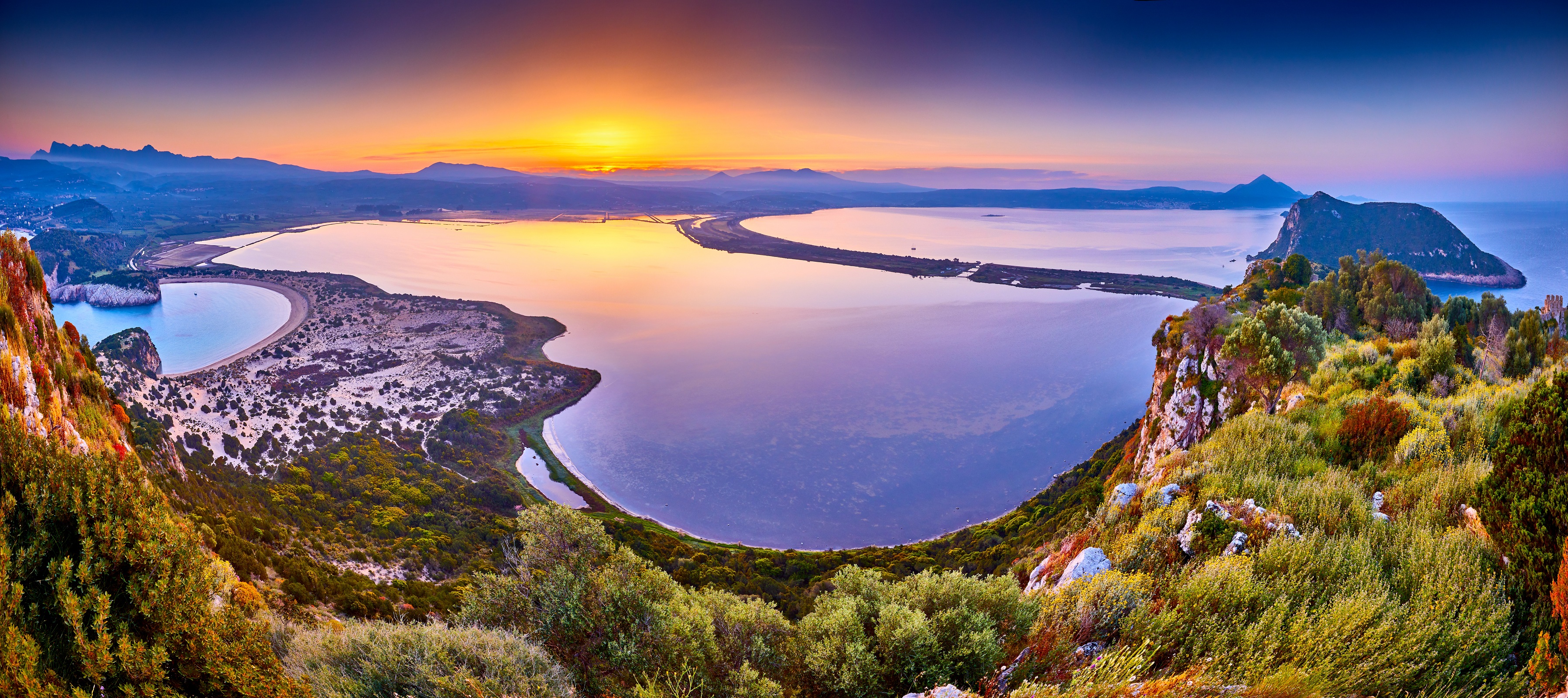
- Voidokilia (Pylos): Arguably the most famous beach in Greece, shaped like a perfect Greek letter omega (Ω). It is a Natura 2000 protected area with fine white sand and turquoise water. Tip: Hike up to Nestor’s Cave or the Old Navarino Castle for the iconic overhead view.
- Foneas (Mani/Kardamyli): A dramatic pebble cove defined by a massive rock in the center that swimmers love to jump from. The water is deep, cool, and emerald green.
- Kalogria (Stoupa): Famous for its freezing underwater springs that keep the water crystal clear. It is very organized but gets crowded; it’s the place to be if you want a vibrant summer vibe.
- Gialova / Divari (Golden Coast): A massive, shallow sandy stretch perfect for toddlers. It faces the Bay of Navarino and is usually very calm.
- Mavrovouni (Finikounda): A long, wide sandy beach with plenty of space. It’s a favorite for windsurfers and families who enjoy organized beach bars and camping facilities.
- Peroulia (near Koroni): A “hidden” paradise surrounded by lush greenery. It has golden sand and a lift (elevator) at one of the main tavernas to help you get down the cliff side.
- Zaga & Memi (Koroni): Located right under the Venetian castle of Koroni, this 4km stretch of sand is a nesting ground for Caretta caretta sea turtles.
Nature
- Voidokilia Beach: An almost perfect semicircular bay with turquoise water and dunes. Also known as the “Omega” beach is the poster child of Messinia, but its neighbor is the real ecological star. Fun Fact: Parts of the upcoming 2026 film The Odyssey were filmed here, so expect a bit of “cinematic” energy.
- Gialova Lagoon: Separated from the beach by a thin strip of sand, this is one of Europe’s most important wetlands. It is the only place in Europe where you can find the African Chameleon. Best for: Birdwatching (over 270 species) and shallow swims. Tip: Hike up to the Old Navarino Castle (Palaiokastro) overlooking the bay for a panoramic view that justifies every drop of sweat.
- Polylimnio Waterfalls: Near the village of Charavgi, this “many lakes” system feels like a secret garden hidden in a gorge. The Vibe: A series of 15 tiered freshwater lakes connected by cascades. The most famous is the Kadi Waterfall, which drops into a heart-shaped pool. Activity: You can swim here, but be warned: the water is bracingly cold even in August. Tip: The trail is rocky and can be slippery. Wear actual shoes, not flip-flops, unless you want to become part of the local geology.
- Mount Taygetos &: The “Roof of the Peloponnese” offers a rugged contrast to the olive groves below. Summiting: The Profitis Ilias peak ($2,407m$) offers a unique phenomenon at sunrise—a “pyramid” shadow cast perfectly over the Messinian Gulf.
- The Mani Gorges: Ridomo & Viros Gorges: These deep limestone canyons offer some of the best hiking in Greece. Ridomo is known for its dramatic rock formations and the “Great Stairs” (Biliovo trail). Best for: Serious hikers and those looking to escape the summer heat.
- Neda River & Waterfalls: The only river in Greece with a female name, Neda is steeped in mythology (supposedly where Zeus was hidden as an infant). The Experience: River trekking through the Neda Gorge is a highlight. You’ll navigate turquoise pools, narrow passages, and a stunning 20-meter waterfall. Access: It’s a bit of a drive towards the border with Elis, but the lush, jungle-like scenery is worth the detour.
The Messinian “Soul”: Kalamata & Mani
To experience the culture, you must visit the urban and rural hubs of the prefecture.
Kalamata: The Vibrant Capital
Kalamata isn’t just about the olives (though the Kalamata Olive Oil Routes are a must). It’s a lively seaside city with:
The Old Town: Cobbled streets under the shadow of a 13th-century Frankish castle.
The Railway Park: An open-air museum of vintage trains.
International Dance Festival: A world-renowned event held every July.
Kardamyli: The Gateway to Mani
Located in East Messinia, this stone-built village was the home of travel writer Patrick Leigh Fermor. It’s the starting point for hiking the Vyros Gorge or exploring the Tower Houses of the Mani peninsula.
Travel Insights
Messinia has officially been named one of the “Hottest Travel Destinations for 2026” due to its expansion of sustainable luxury tourism and the restoration of traditional hiking paths connecting UNESCO-listed sites.Tip: If you are visiting in the autumn, look for “Agrotourism” experiences where you can participate in the Olive Harvest, a tradition that defines the local identity.
PYLOS
Built amphitheatrically on the slopes of two hills, the town of Pylos took its present form after the naval Battle of Navarino (1827). Almost every part of the town has a view of the bay and the small island of Sfaktiria to the west.
One of the town’s grandest buildings is the mansion where Kostas Tsiklitiras – an early 20th century Olympic champion – first lived. Today it houses a collection of paintings and other items amassed by the French philhellene, historian and journalist René Puaux (1878-1936).
CASTLES
There are two impressive castles near Pylos: Palaiokastro, which was built in the 13th century AD by the Franks, and Niokastro, which was built in the 16th century by the Ottomans. The first is located between Voidokilia Beach and Golden Beach in a location with a magnificent view of Navarino Bay; however it is difficult to explore, as it has not been properly conserved and there are some dangerous spots.
Niokastro is located on a hill west of Pylos and is one of the best-preserved castles in Greece, housing the Archaeological Museum of Pylos and exhibitions by the Ephorate of Underwater Antiquities.
NESTOR’S PALACE
One of the best preserved Mycenaean palaces lies 18km north of Pylos. Nestor’s Palace reached the peak of its powers between 1300 and 1200 BC and is located in a prime spot of Messinian land with a breathtaking view of Navarino Bay.
It first came to light during excavations that were carried out in the area during the 1930s and 1940s. The throne room with its large circular hearth, a well-preserved marble bath and the various pottery used to store products such as olive oil and essential oils, are truly impressive. The new roof installed in 2016 to protect the entire archaeological site adds to the grandeur.
King Nestor of Pylos was one of the Achaean chieftains who, according to the Iliad, went with his fleet to wrest Menelaus’ wife Helen back from Paris, and was one of the few to return safely. There was for a long time debate as to whether his palace was in Elis, near Olympia, as Homer describes in the Iliad or by the shore, as described in the Odyssey, but in 1939 Carl Blengen found the remains of a Mycenaean Palace 10 miles north of modern Pylos at Epano Englianos, and this is now believed to be Nestor’s.
The castle of Methoni -actually a fortified city- is one of the most important and the most beautiful castles in Greece. It was built by the Venetians after 1209 at a strategic location, on a rock penetrating the sea and is separated from the land by an artificial moat.
The castle occupies the whole area of the cape and the southwestern coast to the small islet that has also been fortified with an octagonal tower and is protected by the sea on its three sides. Its north part, the one that looks to land, is covered by a heavily fortified acropolis.
Strategically situated Methoni and Koroni were long prized jewels of the Republic of Venice. The two small towns in the southwestern Peloponnese are only a half-hour drive from each other, and always had a common fate. Their castles flourished during the Venetian occupation (under Venetian rule from 1207 – 1500), developing into important stops for merchant ships traveling from the West to the East, as well as for pilgrims heading to the Holy Land.
The castle of Methoni is one of the most important fortress complexes in Greece, and today is a beautiful archaeological site that covers 9.3 hectares and ends at the Bourtzi, an octagonal tower surrounded by the sea on all sides.
The walk begins at the imposing gate of the castle, along the length of which survive two domed buildings that housed Ottoman baths, the base of a ruined minaret and other traces of its centuries-long history. Methoni was once an important citadel, with large numbers of people living within its walls. Indeed in the foundations and walls of the first buildings of the modern town built beginning in 1828, large stones were used that were salvaged from the old homes in the castle.
Elis
Elis (also known as Ilia) is the western gateway to the Peloponnese, offering a rare blend of world-class archaeology, lush oak forests, and some of the longest sandy coastlines in Greece.
Whether you’re a history buff chasing the origins of the Olympics or a nature lover looking for “mythical” landscapes, here are the highlights of the region.
Archaeological & Historical Gems
The crown jewel of Elis is, without doubt, the birthplace of the Olympic Games, but the region holds other significant ruins that are often much quieter.
Ancient Olympia (UNESCO World Heritage Site): Walk through the Altis (the sacred precinct), the Stadium where athletes first competed in 776 BC, and the Temple of Zeus, which once housed one of the Seven Wonders of the Ancient World. Tip: Don’t miss the Archaeological Museum of Olympia, home to the masterpiece Hermes of Praxiteles.
Ancient Elis: Often overlooked, this was the capital city of the region in antiquity and the place where athletes trained for a month before the Games. It features a fascinating ancient theater and an onsite museum.
Chlemoutsi Castle: A remarkably well-preserved 13th-century Frankish fortress located on the westernmost point of the Peloponnese. It offers stunning 360-degree views of the Ionian Sea and the islands of Zakynthos and Kefalonia.
Temple of Apollo Epicurius at Bassae: While technically just across the border in Messenia/Arcadia, it is most commonly visited via the mountain village of Andritsaina in Elis. This UNESCO site is famous for its unique architecture and the massive tent currently protecting it.
Natural Wonders
Elis is surprisingly green, characterized by fertile plains and unique ecosystems.
Foloi Oak Forest: Known as the “Forest of the Centaurs,” this is a rare, flat plateau covered in thousands of tall oak trees. It is one of the oldest and largest oak forests in Europe, perfect for easy hiking and cycling.
Kaiafas Lake & Thermal Springs: A stunning lagoon separated from the sea by a thin strip of pine forest. You can visit the thermal springs inside a natural cave for their therapeutic properties.
Neda Waterfalls: Located on the border with Messenia, the Neda River is one of the few in Greece with a female name. The gorge features lush vegetation and crystal-clear waterfalls that are a hiker’s paradise in the summer.
Nemouta Waterfalls: A hidden “jungle” area near the Alfeios River featuring dozens of vertical waterfalls tucked away in a deep, green canyon.
Coastline & Beaches
The coast of Elis consists almost entirely of vast, golden sandy beaches that stretch for miles, often backed by pine forests or dunes.
| Beach | Best For… | Key Feature |
| Kourouta | Vibrant atmosphere | “The Mykonos of Ilia”—lined with beach bars, cafes, and a lively promenade. |
| Zacharo | Endless space | One of the longest beaches in Greece; you can always find a quiet spot. |
| Skafidia | Families | A small, sheltered cove with shallow turquoise waters and lush surroundings. |
| Kyllini | Relaxation | Famous for its proximity to luxury resorts and the nearby thermal baths. |
| Agios Andreas | Scenic sunsets | A rocky and sandy mix near the port of Katakolo, great for a quick dip and a cocktail. |
Towns & Local Culture
Pyrgos: The bustling capital city. Visit the Latsis Municipal Mansion and the traditional central market.
Katakolo: A picturesque port town and the primary stop for cruise ships. It’s a great place for a seaside lunch and a visit to the Museum of Ancient Greek Technology.
Andritsaina: A traditional mountain village with stone houses, narrow alleys, and a historic library that feels like stepping back in time.
Mercouri Estate: Located near Skafidia, this is one of the most beautiful wineries in Greece, known for its peacocks and excellent Refosco wine.
Olympia , is a small town in Elis on the Peloponnese peninsula in Greece, famous for the nearby archaeological site of the same name, which was a major Panhellenic religious sanctuary of ancient Greece, where the ancient Olympic Games were held.
Ancient Olympia is the place where the Olympic Games took place every four years for over 1100 years, until their abolition by Emperor Theodosius I in AD 393. The Olympic flame is still lit here for the modern Games. Thanks to the destruction ordered by Theodosius II in AD 420 and various subsequent earthquakes, little remains of the magnificent temples and athletic facilities, but enough exists to give you a hint of the sanctuary’s former glory. It is one of Greece’s most evocative ancient sites.
Walking amid the tree-shaded ruins, you can almost picture the blood and smoke of oxen sacrificed to Zeus and Hera, the sweaty, oiled-up athletes waiting inside the original stadium, the jostling crowds, and the women and slaves watching the proceedings from a nearby hill. It’s worth remembering that some structures precede others by centuries; a visit to the archaeological museum before or after will provide context and help with visualizing the ancient buildings.
On your right as you descend, the first ruin encountered is the gymnasium, which dates from the 2nd century BC. South of here are the columns of the partly restored palaestra (wrestling school), where contestants practised and trained. Beyond is Pheidias’ workshop, where the gargantuan ivory-and-gold Statue of Zeus, one of the Seven Wonders of the Ancient World, was sculpted by the Athenian master. The workshop was identified by archaeologists after the discovery of tools and moulds; in the 5th century AD it was converted into an early Christian church. Next is the leonidaion, an elaborate structure that accommodated dignitaries, built around 330 BC.
The Altis, or Sacred Precinct of Zeus, lies on the left of the path you came down. Its most important building was the immense 5th-century-BC Doric Temple of Zeus, which enshrined Pheidias’ statue, later removed to Constantinople by Theodosius II (where it was destroyed by fire in AD 475). One column of the temple has been restored and re-erected, and helps put into perspective the sheer size of the structure. To the east of the temple is the base for the Nike (Victory statue) that you can admire in the archaeological museum.
South of the Temple of Zeus is the vouleuterion (council house), which contains the altar of oaths, where competitors swore to abide by the rules decreed by the Olympic Senate and not to commit foul play. Here were kept the official records of the Games and its champions.
East of the temple is the echo stoa, with a Doric colonnade leading towards the stadium. Its remarkable acoustics meant that a sound uttered within was repeated seven times. Just east of the portico are the remains of a lavish villa used by Emperor Nero during his participation in the Games in AD 67; it replaced the original Sanctuary of Hestia.
The stadium lies to the east of the Altis and is entered through a stone archway. It is rectangular, with a track measuring 192.27m; the stone start and finish lines of the sprint track and the judges’ seats still survive. The stadium could seat at least 45,000 spectators; slaves and women, however, had to be content to watch from outside on the Hill of Kronos. The stadium was used again in 2004, when it was the venue for the shotput at the Athens Olympics.
To the north of the Temple of Zeus was the Pelopion, a small, wooded hillock with an altar to Pelops, the first mythical hero of the Olympic Games. It was surrounded by a wall containing the remains of its later Classical-period Doric portico. Many artifacts now displayed in the museum were found on the hillock. There’s also a large third-millennium-BC burial site here.
Further north is the late 7th-century-BC Doric Temple of Hera, the site’s oldest temple. An altar in front of the temple would have maintained a continuous fire during the Games, symbolising the fire stolen from the gods by Prometheus; today, the Olympic flame is lit here.
Near the altar is the Nymphaeum (AD 156–60), erected by the wealthy Roman banker Herodes Atticus. Typical of buildings financed by Roman benefactors, it was grandiose, consisting of a semicircular building with Doric columns flanked at each side by a circular temple. The building contained statues of Herodes Atticus and his family, though Zeus took centre stage. Despite its elaborate appearance, the Nymphaeum had a practical purpose; it was a fountain house supplying Olympia with fresh spring water.
Beyond the Nymphaeum and up a flight of stone steps, a row of 12 treasuries stretched to the stadium, each erected by a city-state for use as a storehouse for offerings to the gods; these were mainly used to advertise the city-state’s prestige and wealth.
At the bottom of these steps are the scant remains of the 4th-century-BC Metroön, a temple dedicated to Rhea, the mother of the gods. Apparently the ancients worshiped Rhea in this temple with orgies.
The foundations of the Philippeion, west of the Temple of Hera, are the remains of a circular construction with Ionic columns built by Philip of Macedon to commemorate the Battle of Chaironeia (338 BC), where he defeated a combined army of Athenians and Thebans. The building contained gold-and-ivory-covered statues of Philip and his family, including his son, Alexander the Great.
North of the Philippeion was the 5th-century-BC Prytaneum, the magistrate’s residence. Here, winning athletes feasted and were entertained. This was also where the fire of Hestia burned eternally, symbolizing the common hearth of all Greeks.
It is worth visiting first thing in the morning or in the late afternoon; it’s a magical experience to be there without the crowds. Information panels are in Greek, English and German. The entrance ticket also gives access to the superb archaeological museum and excellent museum of the ancient Games.
Archaeological Museum
This superb museum features finds from the adjacent archaeological site of Olympia. Visiting it in conjunction with the ruins helps to put the ancient site into perspective. The museum’s exhibits span the Olympic sanctuary’s past, from the prehistoric to the Roman periods. Artifacts include increasingly sophisticated ceramics, votive offerings to Zeus and Hera, sacrificial cauldron adornments and statuary from the Temple of Hera.
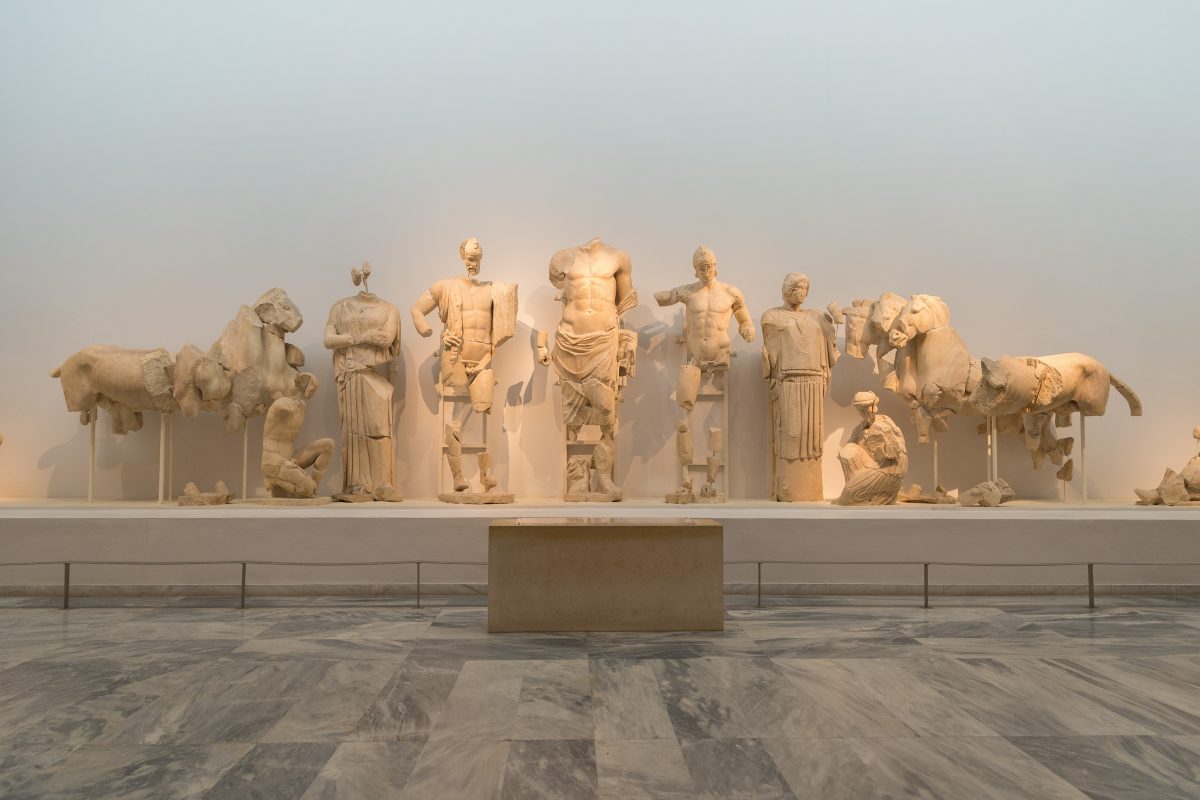
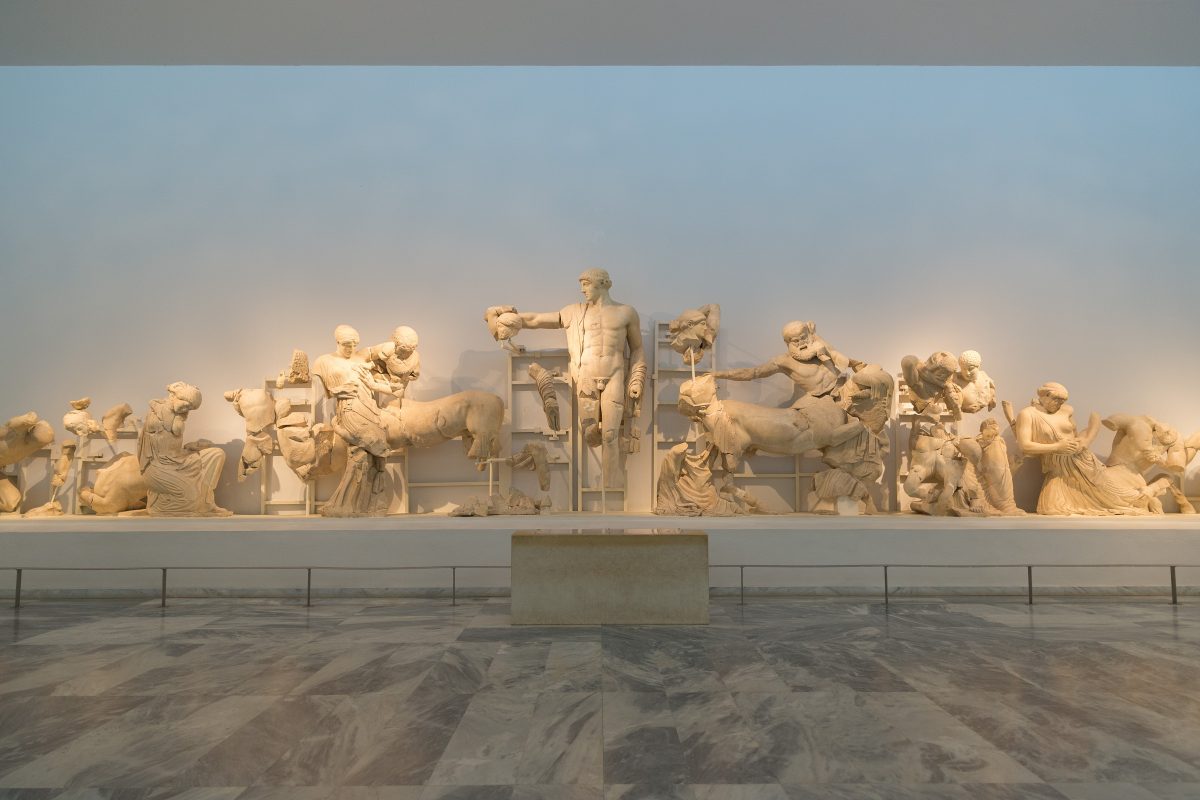
The main hall dramatically displays the biggest highlight: reassembled pediments and metopes from the Temple of Zeus.
The quality of finds from is remarkable, with far more bronze artifacts recovered than at other ancient sites. Numerous votive offerings – ceramic and bronze animals, cauldrons, statues – display remarkable craftsmanship, while the terracotta decoration that survives from the various treasury buildings is a reminder that most of the buildings would have been quite brightly colored.
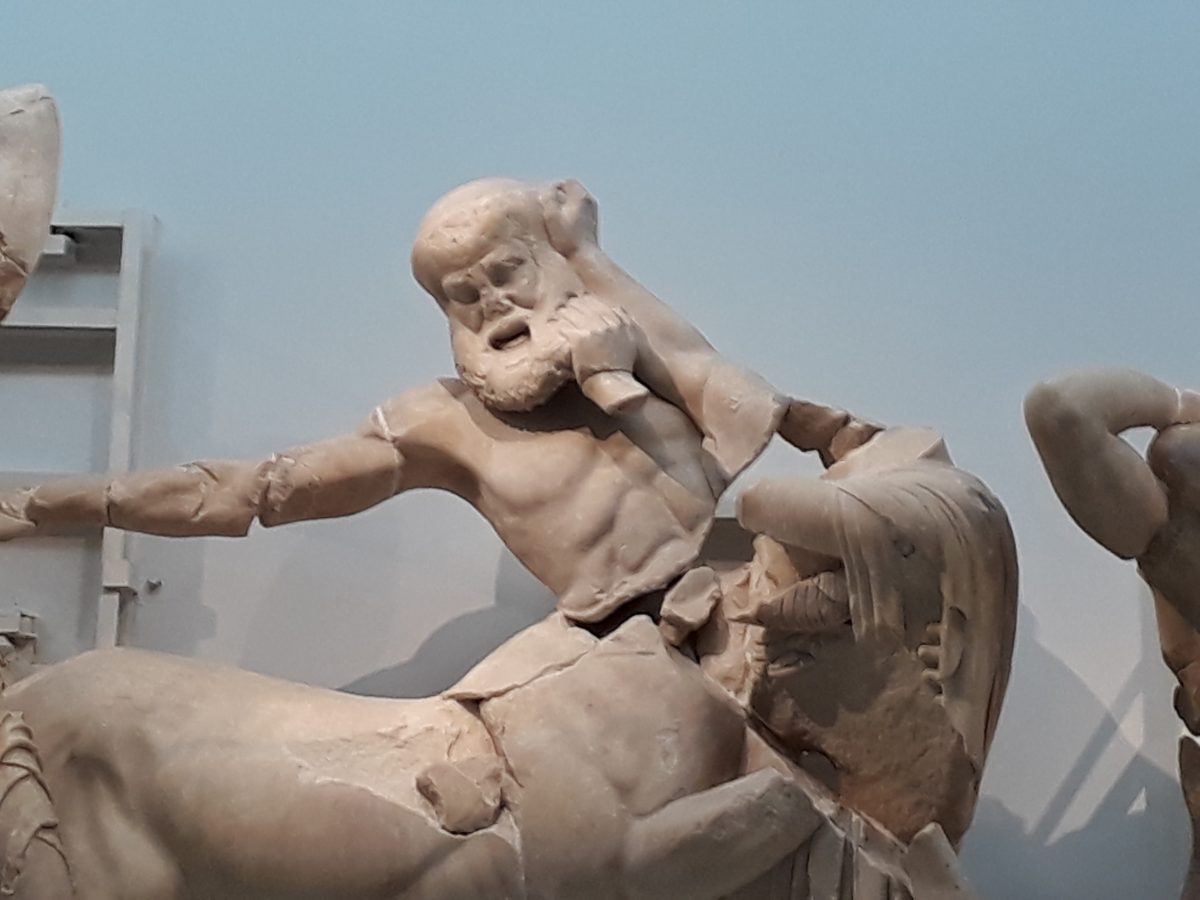
The eastern pediment of the Temple of Zeus depicts the chariot race between Pelops and Oinomaos, while the western pediment shows the fight between the centaurs and Lapiths at the wedding feast of Pirithous (the centaurs got drunk and tried to abduct the women; the story can be seen as an allegory for Classical Greek values and victories over ‘barbarians’). The metopes depict the Twelve Labours of Hercules; half the fun is trying to work out which is which from the remains alone.
Another highlight, in a room of its own, is the majestic 4th-century Parian marble statue of Hermes carrying baby Dionysus, carved by Praxiteles. The imposing Nike by Paionios (around 420 BC) is another stunner.
continued below…
Achaea
Achaea (or Achaia) is the gateway to the Peloponnese, balancing a vibrant urban energy in its capital, Patras, with some of Greece’s most dramatic mountain scenery and engineering feats.
Whether you’re looking for historic wine, snowy peaks, or world-class engineering, here are the highlights of the region.
Patras: The Vibrant Capital
As Greece’s third-largest city, Patras is a bustling port with a rich history and a legendary nightlife.
St. Andrew’s Cathedral: One of the largest churches in the Balkans, this Byzantine-style basilica houses the relics of Saint Andrew. Its interior is a masterpiece of gold-plated icons and intricate mosaics.
Patras Castle: Built on the ruins of the ancient Acropolis in the 6th century, it offers sweeping views of the city and the Ionian Sea.
Roman Odeon: A beautifully restored ancient theater that still hosts performances during the summer months.
Achaia Clauss Winery: Founded in 1861, this is the oldest winery in Greece. Famous for its Mavrodaphne dessert wine, the estate looks like a medieval village with stone cellars and giant carved oak barrels.
Nature & Engineering Marvels
Achaea is home to some of the most unique transport and natural formations in Greece.
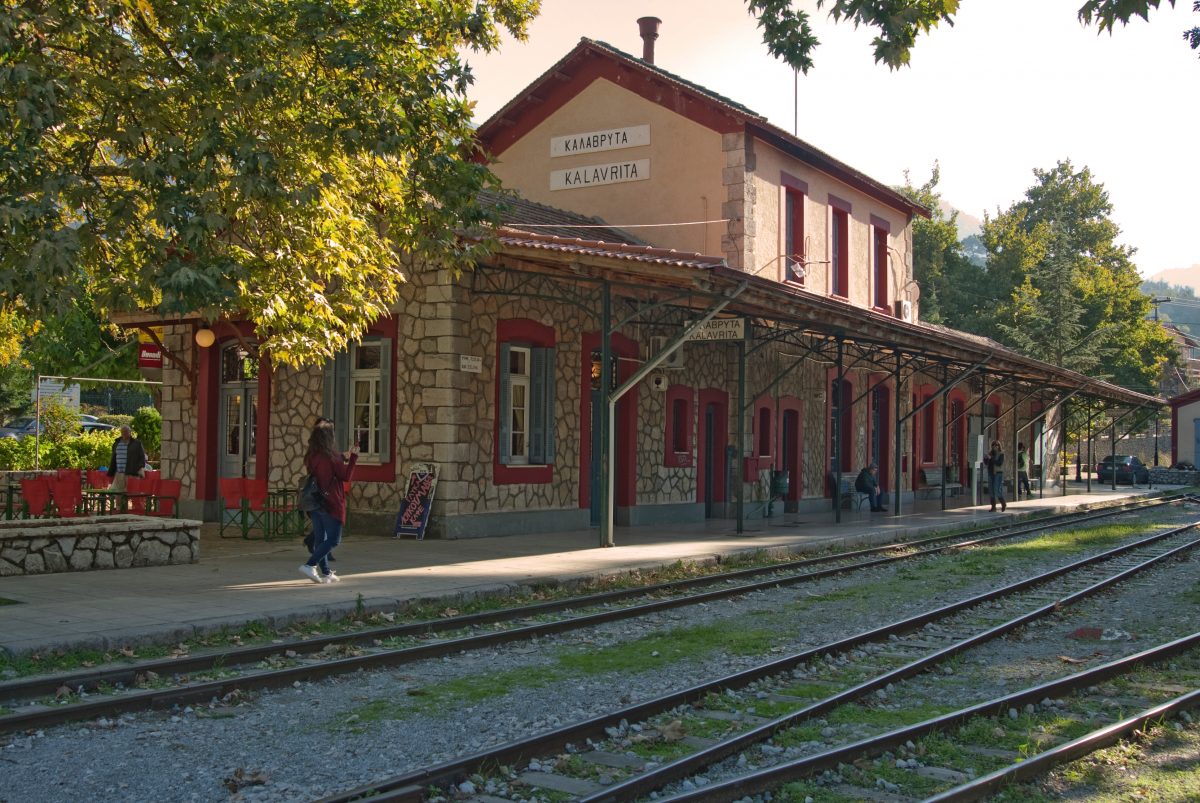
Odontotos Rack Railway: This historic cogwheel train runs from the seaside town of Diakopto up to Kalavryta. It winds through the narrow Vouraikos Gorge, passing over bridges and through tunnels carved directly into the rock.
The Rio-Antirrio Bridge: A modern engineering icon. It is one of the world’s longest multi-span cable-stayed bridges, connecting the Peloponnese to mainland Greece.
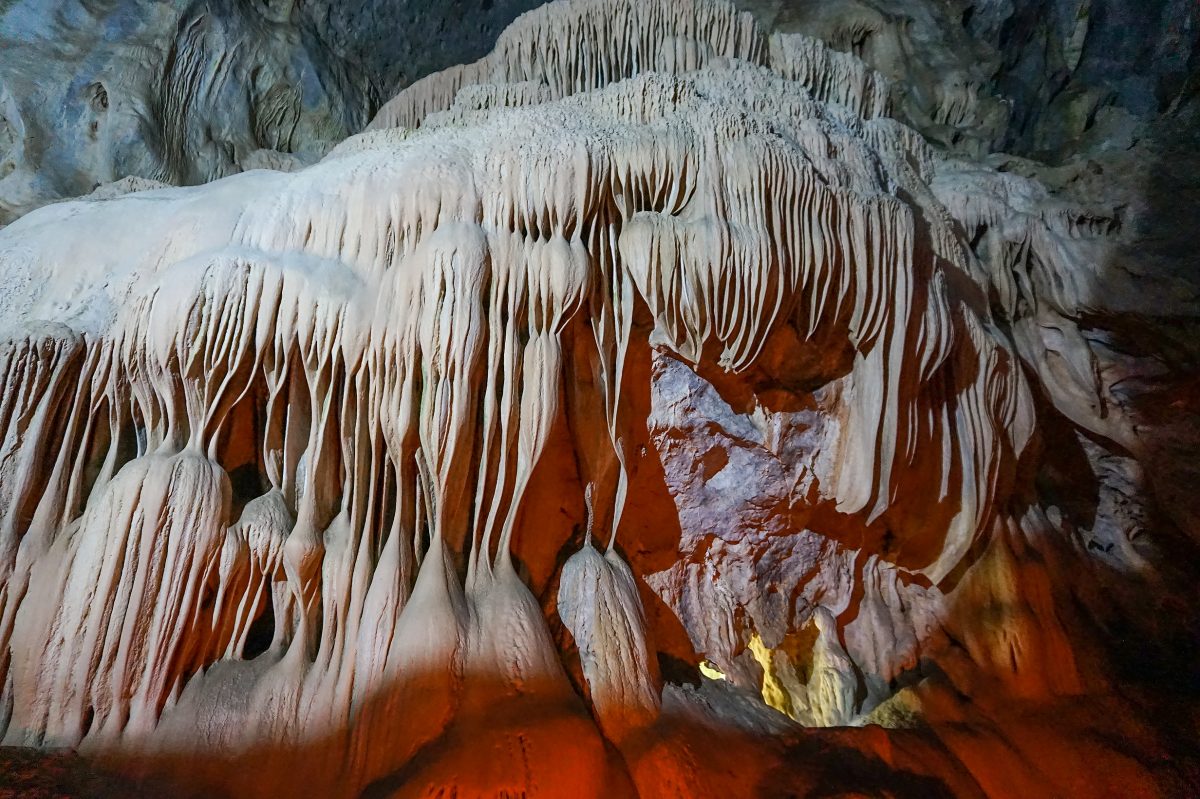
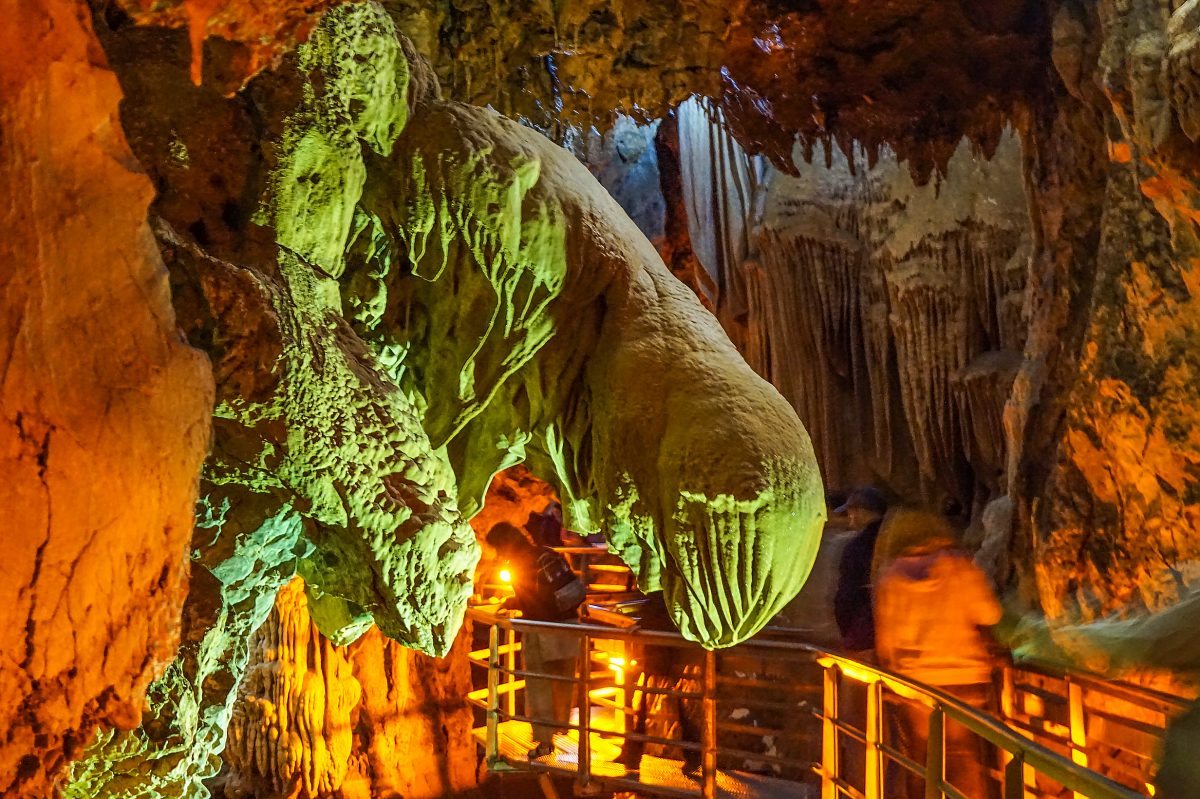
Cave of the Lakes (Kastria): Located near Kalavryta, this cave is unique for its 13 stepped lakes formed within the cavern. The stalactite formations reflect beautifully in the still waters.
Kalavryta: Mountains & Memory
Kalavryta is a year-round destination, popular for both its natural beauty and its heavy historical significance.
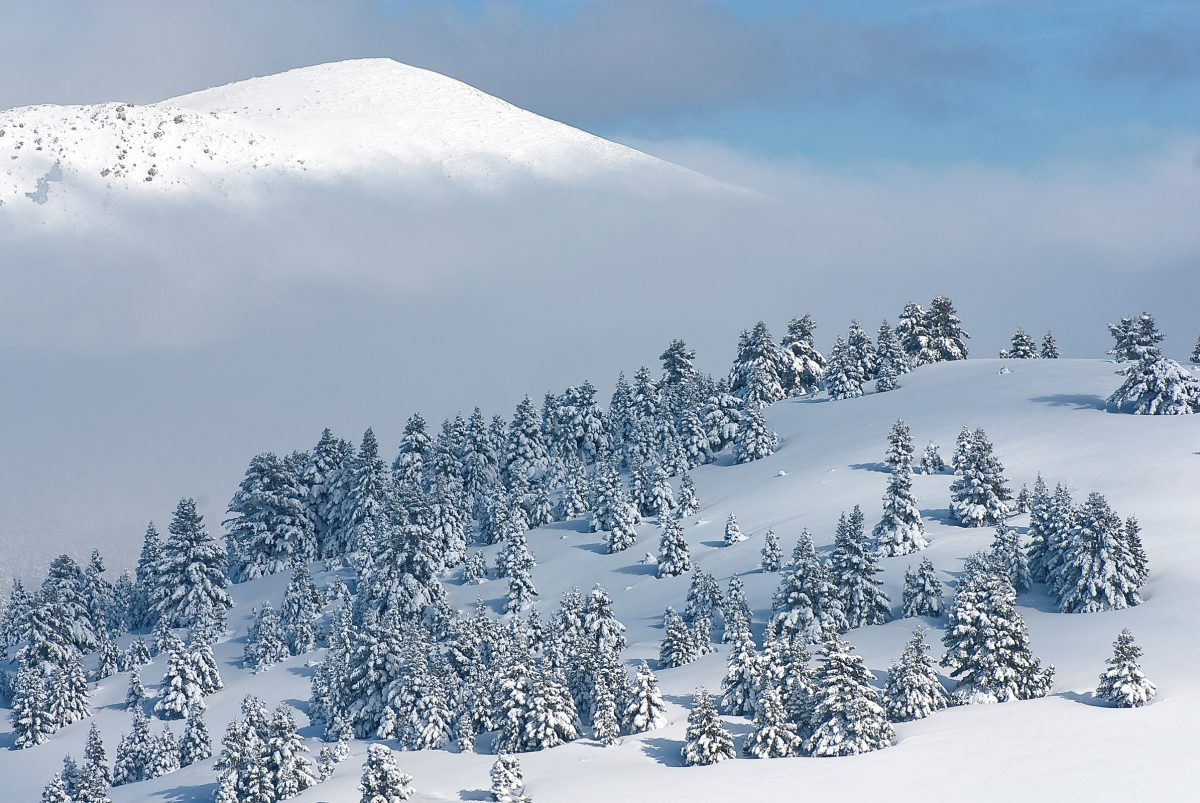
Kalavryta Ski Center: One of the best-organized ski resorts in Greece, located on Mount Helmos.
Monastery of Agia Lavra: A symbol of Greek independence; it is where the banner of the 1821 Revolution was famously raised.
Mega Spileo (Grand Cave): Built into a vertical rock face at an altitude of 924 meters, this is considered the oldest monastery in Greece (founded in 362 AD).
Holocaust Museum: A sobering memorial dedicated to the tragic events of 1943 during the Nazi occupation.
Special: Patras Carnival
If you are visiting in early 2026, you cannot miss the Patras Carnival (Patrino Karnavali). It is the largest of its kind in Greece and one of the biggest in Europe.
Peak Dates: In 2026, the festivities reach their climax on February 22nd (Grand Parade).
What to expect: Expect weeks of street parties, “hidden treasure” hunts, and massive satirical floats that culminate in the ceremonial burning of the Carnival King at the port.
Coastal Escapes
While Achaea is mountainous, its coastline offers clear waters and pebbled beaches:
Kalogria: Famous for its vast sandy beach and the nearby Strofylia Forest, a protected ecosystem of stone pines.
Akoli & Selianitika: Popular summer spots near Aigio with seaside tavernas and a relaxed atmosphere.
Kalavryta is one of the few places in Greece where you can enjoy a view from the mighty mountaintops over a gorge as beautiful as Vouraikos, without having to risk life and limb clinging to a climbing rope. And this is thanks to the rack railway, a small train on cogs that sets off from the seaside town of Diakofto in the northern Peloponnese, makes a stop at the verdant village of Kato Zachlorou and at the impressive Mega Spilaio (Big Cave) monastery, to end an hour later, 22k further along the track and 700m up in the historical town of Kalavryta.
As the train leaves the terminus at Diakofto (160k from Athens), the low brush and the calm waters of the Gulf of Corinth give no indication of the wild beauty that you will soon encounter. Leaving behind farms and olive groves, the walls of the gorge start to get narrower, almost impassable. The electric-powered train makes its way through tunnels bored into the rock and dark underpasses, clings to narrow bridges and, most importantly, crawls its way up steep inclines thanks to the tooth-like cogs of the middle rail that keeps the train in place along the more precipitous parts of the route.
On most days three trains depart, and five on holidays. It is worth knowing that the gorge through which the line runs forms part of the Helmos – Vouraikos Geopark. Hikers will also enjoy the section of the E4 path that runs parallel to the tracks, which will allow them to enjoy being immersed in nature and every detail of this rich microcosm.
The gorgeous natural landscape around the town of Kalavryta in the northern Peloponnese hides many options for the traveler: Mount Helmos, superb caverns with lakes, as well as smaller caves, some of which have been turned into places of worship.
In Kalavryta itself, the liveliest area is the street of Aghiou Alexiou, the main pedestrian thoroughfare that features cafe-bars, tavernas, delicatessens, ski equipment shops and a few trees around the square which one hopes will be left in place after its planned renovation. These plane and fir trees charmingly highlight the alpine character of this small town that was essentially rebuilt from rubble after the Second World War and today is a popular ski resort destination on Mount Helmos.
If you are ready for the Peloponnese (Peloponnisos), reach out below…