
Welcome to Custom Greece Tours Blog
Information to enrich your travel experience
Blog Categories
The Olive Tree
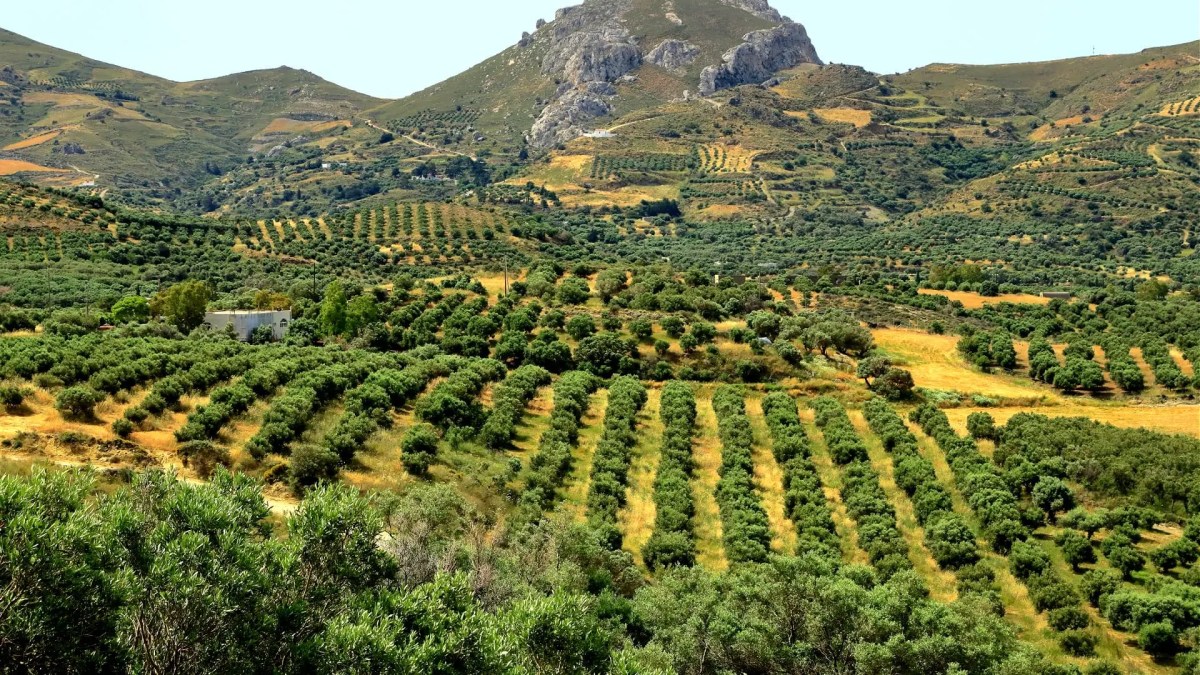
The olive was first cultivated around 5000 BCE, or even earlier, on the Carmel coast of ancient Israel. Here simple olive presses have been excavated at the Neolithic site of Kfar Samir. The success of the industry is attested by records of olive oil exports to Greece and Egypt throughout the 3rd millennium BCE. Greece started to produce its own olives on Minoan Crete and Cyprus in the Late Bronze Age and, thereafter, on the mainland. The Greeks, like the peoples of the Levant, were soon producing a surplus of olives and olive oil so that they built up a lucrative export industry. Such was its importance that it was the only permissible export in the celebrated laws created by Solon (c. 640 – c. 560 BCE). With the process of Phoenician and Greek colonization olive trees (Olea europea) sprang up across the ancient Mediterranean where all that was needed was warm summers and relatively light rainfall for these hardy trees to thrive.
Story of Honey in Greece
Scholars report that honey and the art of beekeeping came to Greece from Ancient Egypt.
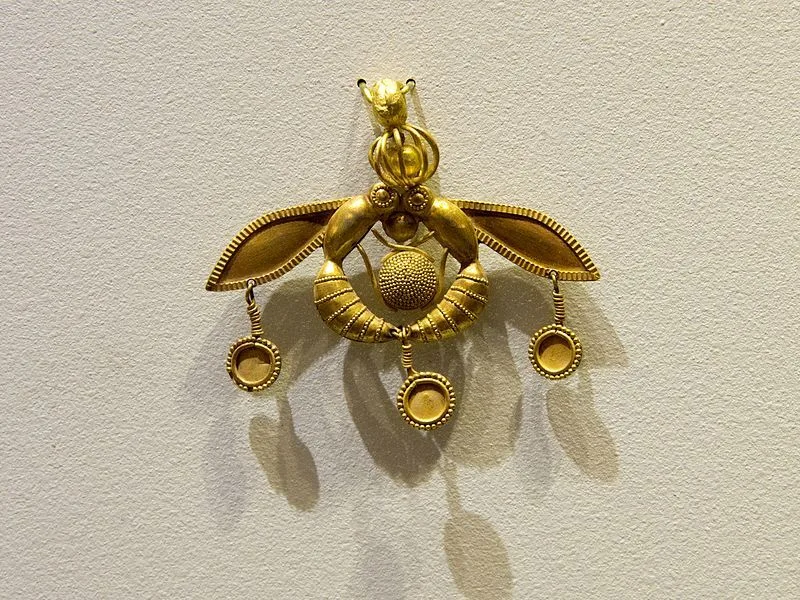
In Phaistos, a famous city of the Minoan civilization, ceramic beehives were found dating back to 3400 BC. The exquisitely known gold jewel of Knossos, where two bees hold a honeycomb, also dates to the same period.
The bee is deified. She is the nymph to whom Rhea gave the infant “Cretan-born” Zeus, who she raised with milk and honey in the Diktaean cave of Crete. Melissa was also the nymph who discovered the art of beekeeping and the preparation of mead, and later taught it to the beekeeper Aristaeus, a demigod, who undertook to convey this knowledge to humans. Melissa is the nurturer of the father of the Gods Zeus, who is also called Melisseus and Melissaeus, and mead (=nectar) was the food of the Olympian Gods.
The Odyssey mentions “Melikraton”, a mixture of honey and milk, which they drank as a fine drink. In addition to Homer, there is a rich reference to it in theatrical and poetic works by Hesiod, Pindar, Callimachus, Apollodorus, Euripides, Archelaus, Athenaeus, Herodotus and so on, and from Byzantium with monks and travelers and writers to our days.
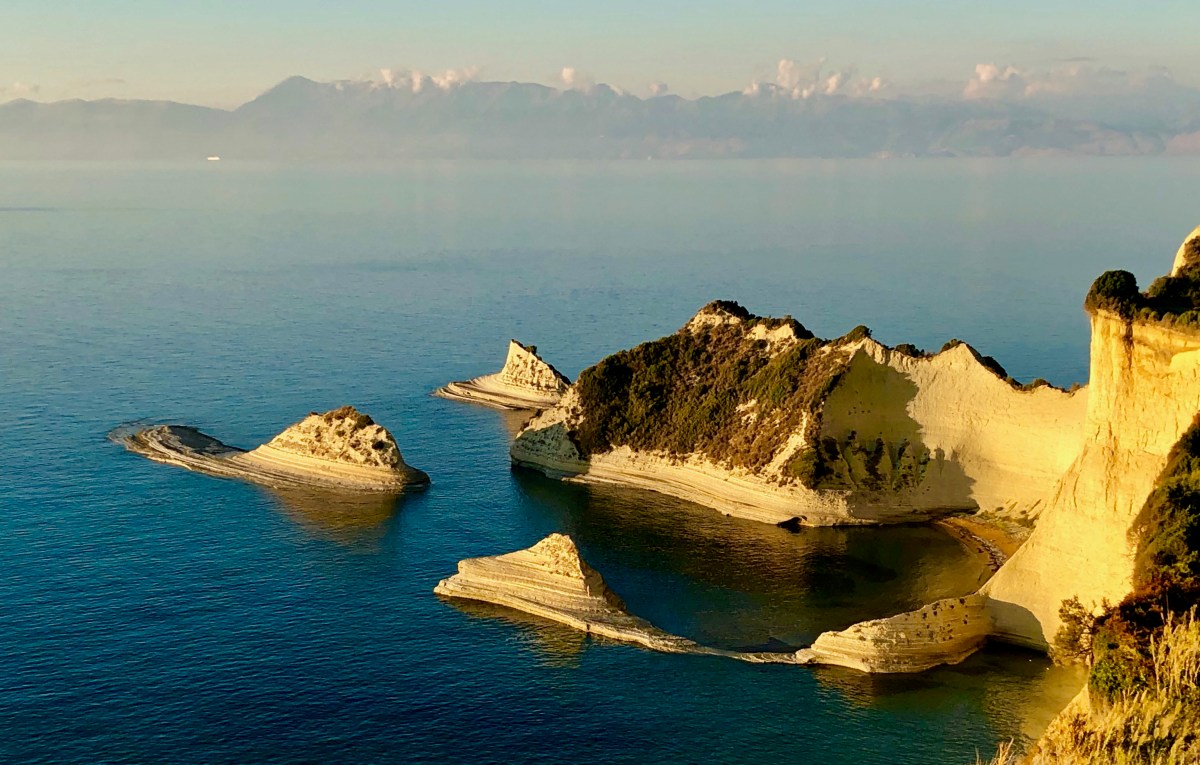
Island of Corfu
Corfu, often called the “Emerald Isle” of the Ionian Sea, is defined by its vibrant greenery and diverse coastline. Unlike the dry, white-washed landscapes of the Cyclades, Corfu is characterized by millions of ancient olive trees, cypress forests, and rolling hills that stay verdant year-round thanks to its mild, humid climate. Its northern region is dominated by rugged mountains, while the south transitions into gentler, fertile plains and long stretches of golden sandy beaches.
Corfu serves as a unique cultural crossroads, bearing the distinct architectural and social imprints of the Venetians, French, and British. This multicultural heritage is evident in its capital, Corfu Town, with its architecture, famous philharmonic bands, games of cricket on the Spianada square—a legacy of British rule. Finally, Corfu cuisine is a marriage of Greek flavors and Italian influences.
Meteora
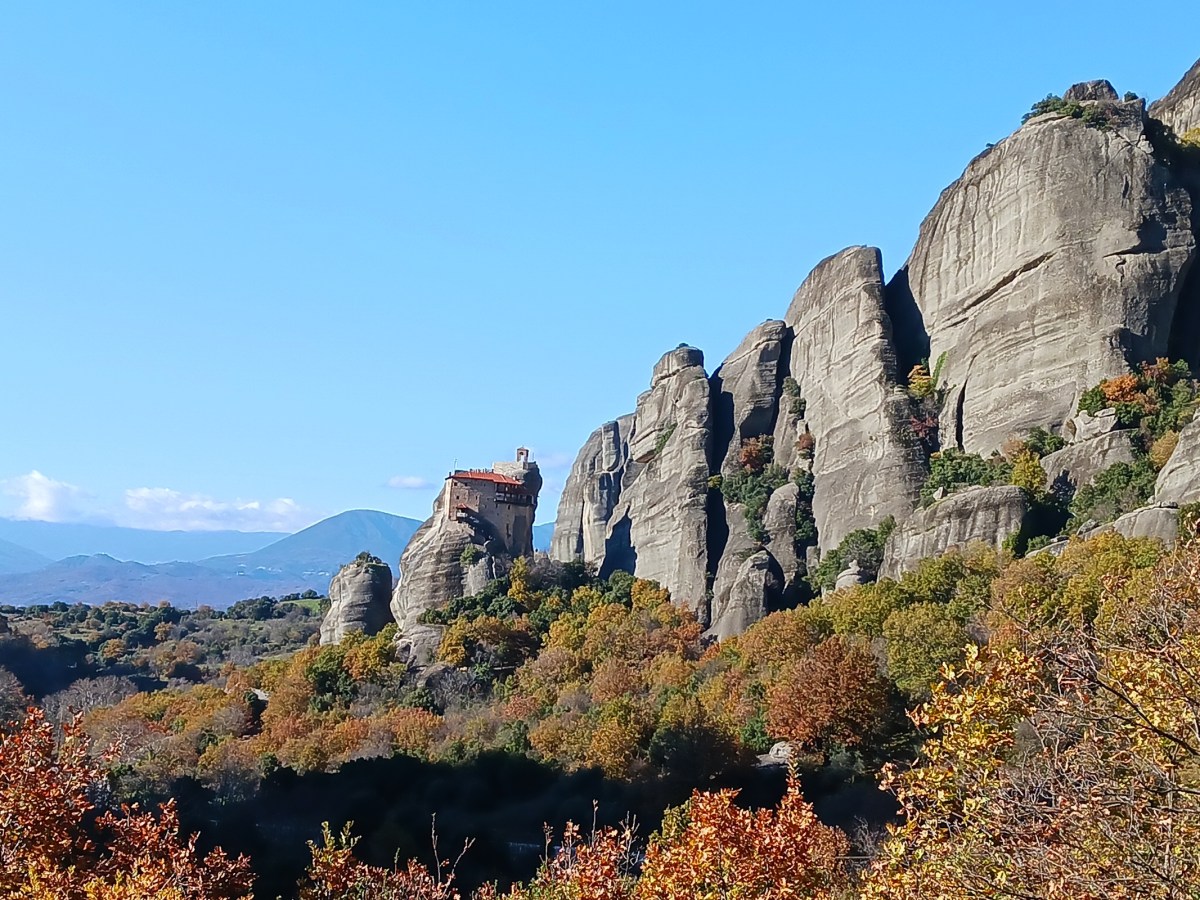
Meteora is a unique site, combining visually stunning landscapes and Christian spirituality. Located in central Greece its name literally translates to “suspended in the sky,” which perfectly describes the massive, monolithic pillars of smooth sandstone that rise abruptly from the Peneas valley.
Perched precariously atop these 400-meter-high cliffs are Eastern Orthodox monasteries, a profound testament to human faith and resilience. Starting in the 14th century, monks sought refuge on these inaccessible peaks to escape political instability and find spiritual isolation. In the early days, the only way to reach the summits was via removable wooden ladders or large nets hauled up by ropes. Today, six of the original twenty-four monasteries remain active and are accessible to visitors via stairs carved directly into the rock.